Ford Versus Toyota Which is Better (Complete Guide)
Ford versus Toyota: A Brand Overview
This section looks at the history and general reputation of Ford and Toyota. We’ll explore what each company is known for in the car world. Think of it as getting to know the two main players before we compare their specific models.
We’ll cover their long-standing presence in the automotive industry and what that means for drivers today.

Bando USA
Bando USA 3330 Precision Engineered V-Belt
- Designed to provide the positive no-slip drive requirements needed on demanding overhead cam applications
- Precision molded teeth are protected by durable fabric facing for long life
- Tensile cord is engineered and tested for maximum load carrying capabilities
As an Amazon Associate I earn from qualifying purchases.
The Ford Legacy
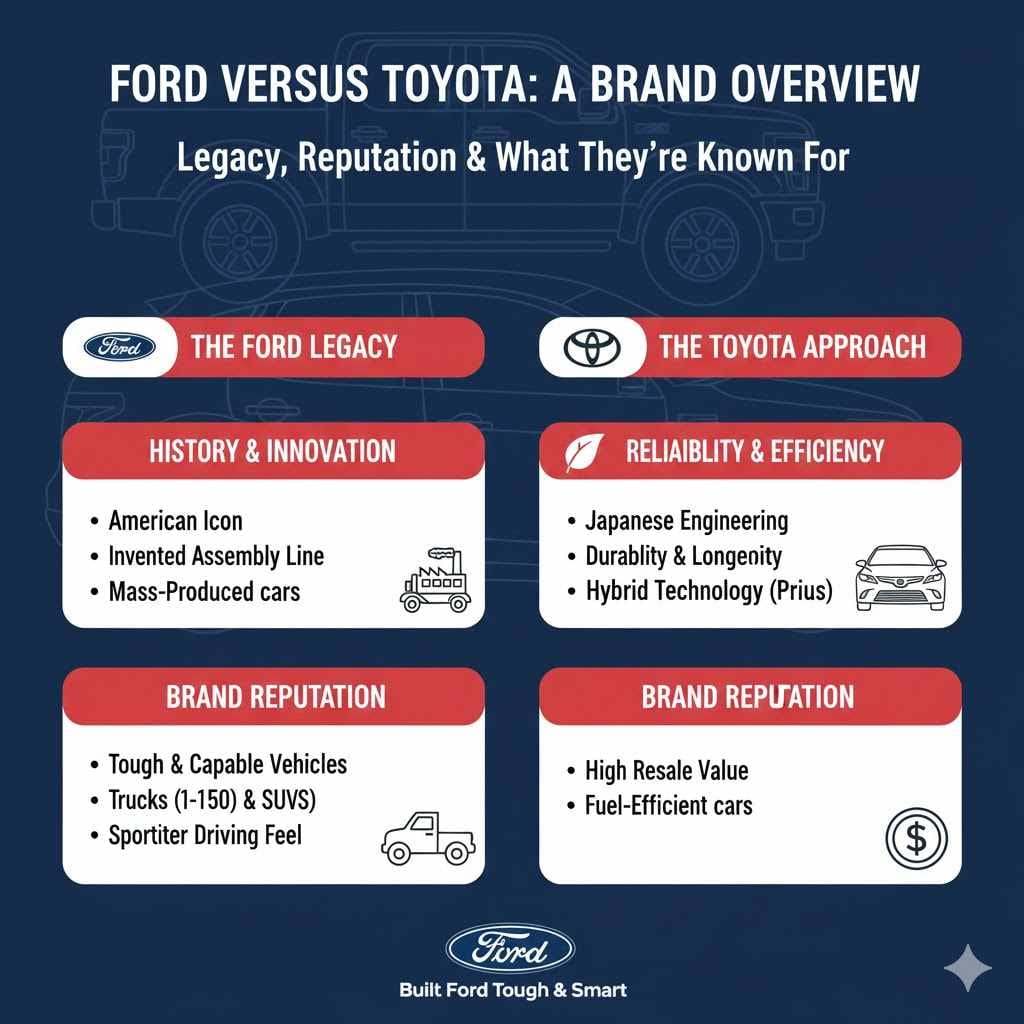
Ford has a very long history in making cars. It started with Henry Ford and the Model T, which made cars affordable for many families. Ford is often seen as an American icon.
They are known for trucks like the F-150, which is a best-seller, and for cars that offer a bit more power or a sportier feel.
- Ford’s history is tied to innovation. They introduced the moving assembly line, which changed how cars were made forever. This allowed them to produce vehicles faster and cheaper than ever before.
- They have a reputation for building tough and capable vehicles, especially their trucks and SUVs. Many drivers choose Ford when they need something strong for work or for adventurous trips.
- Ford often focuses on performance and driving experience. Some models offer more powerful engines and sportier handling, appealing to those who enjoy a more dynamic ride.
The Toyota Approach
Toyota is a Japanese brand that has built a strong name for itself. They are famous for making cars that are very reliable and last a long time. Toyota also has a big focus on being fuel-efficient and often has advanced hybrid technology.
- Toyota is world-renowned for its dependability and durability. Cars like the Camry and Corolla are known to run for hundreds of thousands of miles with proper care.
- They are pioneers in hybrid technology, with the Prius being a prime example. This focus on fuel economy appeals to budget-conscious and environmentally aware buyers.
- Toyota vehicles often have a high resale value. This means that when you decide to sell your Toyota later, you’ll likely get more money for it compared to many other brands.
Comparing Reliability and Durability
Reliability is how well a car works without problems over time. Durability is about how long the car’s parts will last before needing to be replaced. Both Ford and Toyota are popular, but they are often seen differently when it comes to these two important features.
We will look at which one typically has fewer issues and lasts longer.
What Reliability Means for You
Reliability is super important for any car owner. A reliable car means you spend less time and money on repairs. It also means you can count on your car to start every morning and get you where you need to go without unexpected breakdowns.
For beginners, this is one of the first things to think about.
- Fewer Repair Costs: A reliable car breaks down less often. This means you save money on mechanic bills and replacement parts.
- Peace of Mind: Knowing your car is dependable gives you peace of mind. You don’t have to worry about being stranded or being late for important events.
- Predictable Ownership: Reliable cars make ownership predictable. You can budget for regular maintenance like oil changes and tire rotations, rather than unexpected, costly fixes.
Toyota’s Reputation for Longevity
Toyota has a stellar reputation for being incredibly reliable. Many studies and owner surveys consistently place Toyota at the top for dependability. They tend to have fewer mechanical issues compared to many other car brands.
This focus on reliability comes from their manufacturing philosophy, known as the Toyota Production System. It emphasizes continuous improvement and a deep commitment to quality at every step of building a car. They test their vehicles rigorously to catch problems before they reach the customer.
- Owners often report driving their Toyotas for well over 200,000 miles. This means you can keep a Toyota for many years, saving you money on buying a new car.
- Common Toyota models like the Camry, Corolla, and RAV4 frequently appear in lists of the longest-lasting vehicles. Their engines and transmissions are known for their endurance.
- The strong resale value of Toyota cars is a direct result of their reliability. People are willing to pay more for a used Toyota because they know it’s likely to be dependable.
Ford’s Reliability Scores
Ford has improved its reliability over the years. While they might not always reach the very top ranks like Toyota, many Ford models are quite dependable. They focus on building strong vehicles, and for many owners, their Fords are very reliable workhorses.
Ford also puts its vehicles through tough testing. They often conduct extreme weather testing and long-term durability trials to ensure their cars can handle a lot of use. The goal is to make vehicles that are tough and can withstand daily demands.
- While some older Ford models might have had more issues, recent models have shown significant improvements in reliability. Consumer reports and owner feedback show this trend.
- Ford trucks, in particular, are built for heavy-duty use and are known to be durable when maintained properly. They are designed to last through demanding jobs and tough conditions.
- The cost of repairs for Fords can sometimes be a bit higher than for Toyotas. However, many owners find that their Ford vehicles don’t require frequent, costly repairs if they are maintained well.
| Brand | Typical Reliability | Durability Reputation |
|---|---|---|
| Toyota | Very High | Excellent, known for lasting hundreds of thousands of miles. |
| Ford | Good to Very Good (improving) | Good, especially for trucks and SUVs built for tough use. |
Fuel Efficiency and Eco-Friendliness
When you buy a car, how much gas it uses is a big deal. It affects how much money you spend on fuel and how much pollution the car makes. This section compares Ford and Toyota on their gas mileage and their efforts to be good for the environment.
We’ll look at gas engines, hybrids, and electric options.
Understanding MPG and Emissions
MPG stands for miles per gallon. It tells you how many miles a car can travel on one gallon of gas. A higher MPG means the car is more fuel-efficient, using less gas to go the same distance.
Emissions refer to the gases a car releases into the air, which can affect the environment. Cars with lower emissions are generally considered more eco-friendly.
- Fuel Savings: Cars with better MPG cost less to drive because you buy less fuel. This can save you a lot of money over the life of the car.
- Environmental Impact: Lower emissions mean less pollution. This is good for air quality and helps reduce the impact of cars on climate change.
- Hybrid and Electric Vehicles: These types of vehicles use electricity, either fully or partly, to power the car. They typically offer much better fuel efficiency and lower emissions than traditional gasoline cars.
Toyota’s Green Initiatives
Toyota has been a leader in fuel efficiency for a long time. They are especially known for their hybrid vehicles, which combine a gasoline engine with an electric motor. This technology helps them achieve excellent MPG.
Their hybrid system is very advanced and has been perfected over many years. This makes their hybrids smooth to drive and highly efficient. Toyota is also investing in electric vehicles and hydrogen fuel cell technology, showing a strong commitment to a greener future.
The Toyota Prius is one of the most famous hybrid cars ever made. It helped introduce the concept of fuel-saving hybrids to the mainstream market. Many other Toyota models now offer hybrid versions, making fuel efficiency accessible across their lineup.
- Toyota’s hybrid models often achieve over 50 MPG combined. This is significantly higher than most gasoline-only cars, leading to substantial fuel cost savings.
- They offer a wide range of hybrid options, from sedans like the Camry Hybrid to SUVs like the RAV4 Hybrid. This means you can choose a hybrid that fits your lifestyle and needs.
- Toyota is actively developing electric vehicles (EVs) and investing in hydrogen fuel cell technology, demonstrating a broad commitment to reducing their environmental footprint.
Ford’s Fuel-Conscious Options
Ford is also working hard to improve its fuel efficiency. They offer many gasoline engines that are designed to be more efficient. Ford has also been expanding its lineup of hybrid and fully electric vehicles.
The Mustang Mach-E is a popular all-electric SUV, and Ford has also introduced hybrid versions of some of its best-selling models, like the F-150 truck. This shows they are committed to offering greener choices to their customers.
Ford’s EcoBoost engines are a good example of their focus on efficiency. These turbocharged engines provide good power while using less fuel than traditional, larger engines. They offer a balance between performance and economy.
- Ford’s EcoBoost engines offer a good balance of power and fuel efficiency for their gasoline vehicles. They aim to provide good MPG without sacrificing performance.
- They have several hybrid models, including the Ford Escape Hybrid and the F-150 Hybrid, offering better MPG for popular vehicle types.
- Ford’s commitment to electric vehicles is growing, with models like the Mustang Mach-E gaining popularity. They are investing heavily in EV technology and infrastructure.
| Brand | Hybrid Leadership | Electric Vehicle Offerings | Typical Gas MPG (Non-Hybrid) |
|---|---|---|---|
| Toyota | Very Strong, industry pioneer with Prius and wide range. | Growing, with models like bZ4X. | Good, with efficient engines across the lineup. |
| Ford | Increasing, with popular hybrid versions of core models. | Growing rapidly, with Mustang Mach-E and F-150 Lightning. | Good, with EcoBoost engine technology. |
Performance and Driving Experience
How a car drives is a big part of enjoying it. This section compares Ford and Toyota in terms of how they feel on the road, their engine power, and their handling. If you like a sporty ride or need something powerful for towing, this will help you decide.
We’ll look at what makes each brand’s driving feel unique.
What Defines Performance
Performance in a car can mean a few different things. It’s about how quickly the car can accelerate from zero to a certain speed, like 0 to 60 miles per hour. It also includes how the car handles, meaning how well it steers and stays steady around corners.
Engine power and responsive acceleration are also key parts of performance.
- Acceleration: This is how fast a car can speed up. Cars with stronger engines and lighter weights tend to accelerate faster.
- Handling: This refers to how a car responds to steering inputs. Good handling means the car feels stable and predictable, especially when turning.
- Engine Power: More powerful engines usually mean quicker acceleration and better ability to tow or carry heavy loads. This is important for drivers who need extra strength from their vehicle.
Ford’s Sporty and Powerful Image
Ford often appeals to drivers who like a bit more excitement on the road. They are known for offering powerful engine options, especially in their trucks and performance cars like the Mustang. Ford vehicles often have a reputation for feeling strong and capable.
The suspension and steering in many Ford models are tuned to provide a more engaging driving experience. This can mean they feel more connected to the road. For those who enjoy driving and want their car to feel dynamic, Ford often provides that feeling.
When it comes to trucks, Ford’s F-Series is legendary for its towing and hauling capabilities. This power is a key part of what many buyers look for in a Ford truck. Their SUVs also often offer robust performance for their class.
- Ford offers a wide range of engine options, including powerful V6 and V8 engines, which provide strong acceleration and towing capacity.
- Models like the Ford Mustang are built for performance enthusiasts, offering high horsepower and responsive handling for a thrilling driving experience.
- Ford trucks are renowned for their power and capability. They are designed for demanding work and recreational activities, offering impressive towing and payload capacities.
Toyota’s Smooth and Comfortable Ride
Toyota vehicles are generally known for providing a smooth and comfortable ride. They focus on making cars that are easy and pleasant to drive for everyday use. The goal is often to reduce driver fatigue on long trips.
While not typically seen as performance-focused as some Fords, Toyota cars offer competent acceleration and stable handling. They are built to be predictable and safe, which is a priority for many drivers. Their hybrid systems also contribute to a quiet and smooth driving experience.
Toyota models often feature advanced comfort features and quiet cabins. This makes them excellent choices for commuting or family road trips. The emphasis is on practicality and a relaxed driving atmosphere.
- Toyota cars are designed for comfort and ease of use. They offer a smooth ride, making them ideal for daily commutes and long journeys.
- While not as performance-oriented as some competitors, Toyota vehicles provide capable acceleration and stable handling for everyday driving needs.
- Many Toyota models come with advanced safety features and comfortable interiors, enhancing the overall driving pleasure and reducing stress.
| Brand | Performance Focus | Handling Style | Engine Options |
|---|---|---|---|
| Toyota | Comfort, smooth ride, predictable. | Stable, easy to manage, refined. | Efficient, capable for everyday driving. |
| Ford | Power, acceleration, engaging driving. | Responsive, often sportier feel. | Wide range including powerful V6/V8 options and EcoBoost. |
Technology and Features
Modern cars come packed with technology, from entertainment systems to safety features. This section compares what Ford and Toyota offer in terms of gadgets and driver aids. We’ll look at infotainment, connectivity, and the advanced safety systems each brand provides to its customers.
The Role of Automotive Technology
Technology in cars is designed to make driving safer, more convenient, and more enjoyable. This includes things like touchscreens for music and navigation, Bluetooth for phone calls, and advanced driver-assistance systems (ADAS). ADAS can help prevent accidents by warning drivers or even taking control of the car in certain situations.
- Infotainment Systems: These are the car’s entertainment and information centers, usually controlled by a touchscreen. They handle music, navigation, and smartphone integration.
- Connectivity: This includes features like Apple CarPlay and Android Auto, which allow you to use your smartphone apps on the car’s screen. Wi-Fi hotspots and USB ports are also common.
- Driver Assistance Systems: These are safety technologies like automatic emergency braking, lane keeping assist, blind-spot monitoring, and adaptive cruise control, which help make driving safer.
Ford’s Tech Offerings
Ford has been actively updating its technology features. They offer large touchscreens, user-friendly infotainment systems, and good smartphone integration with Apple CarPlay and Android Auto. Ford’s SYNC system is their main infotainment platform.
Ford also offers a suite of driver-assistance technologies called Ford Co-Pilot360. This includes features like automatic emergency braking, blind-spot monitoring, and lane-keeping assist as standard on many new models. Their goal is to make driving safer and less stressful.
For connectivity, Ford vehicles often come with multiple USB ports and available Wi-Fi hotspots, making it easy to stay connected on the go. They are also looking into advanced semi-autonomous driving features for the future.
- Ford’s SYNC infotainment system is known for its ease of use and good integration with smartphones. It allows drivers to control music, calls, and navigation via voice commands or the touchscreen.
- Ford Co-Pilot360 is a comprehensive suite of driver-assistance technologies that come standard on many new Ford vehicles, enhancing safety and convenience.
- Many Ford models offer advanced connectivity options, including wireless charging pads, multiple USB ports, and available Wi-Fi hotspots, keeping occupants connected and entertained.
Toyota’s Tech Integration
Toyota has also been enhancing its technology offerings. Their infotainment systems are designed to be intuitive and easy to use, with standard Apple CarPlay and Android Auto on most models. Toyota’s Safety Sense is a comprehensive suite of advanced safety features that typically comes standard.
Toyota Safety Sense includes features like pre-collision systems with pedestrian detection, dynamic radar cruise control, and lane departure alert. These systems are designed to help prevent accidents and provide greater peace of mind for drivers and passengers.
Toyota often focuses on practical technology that benefits the driver directly. While they might not always have the flashiest tech, what they offer is generally reliable and useful for everyday driving. They are also investing in connected car services and over-the-air updates.
- Toyota’s standard safety suite, Toyota Safety Sense, includes advanced features like automatic emergency braking and adaptive cruise control, usually at no extra cost.
- Their infotainment systems are user-friendly and come equipped with Apple CarPlay and Android Auto, making it easy to connect your smartphone for music, navigation, and calls.
- Toyota is steadily increasing its offerings in connected car technology, with features like remote start and vehicle status checks available through mobile apps on many models.
| Brand | Infotainment System | Standard Safety Features | Connectivity |
|---|---|---|---|
| Toyota | User-friendly, standard Apple CarPlay/Android Auto. | Toyota Safety Sense (comprehensive suite). | Good, with standard smartphone integration. |
| Ford | SYNC system, available large touchscreens. | Ford Co-Pilot360 (standard on many models). | Good, with available Wi-Fi hotspots and multiple USB ports. |
Cost of Ownership and Value
Buying a car is a big expense, but the costs don’t stop there. This section looks at how much it costs to own a Ford versus a Toyota over time. We’ll consider the purchase price, insurance, maintenance, and how much you can expect to get back when you sell it.
This helps understand the true value of each brand.
What Factors Influence Cost of Ownership
The cost of owning a car includes many things beyond the initial price tag. It’s important to think about these costs to get a full picture. For beginners, this is a key area to understand so they can budget wisely for their vehicle.
- Purchase Price: The sticker price of the car is the first major cost. Different models and trim levels will vary significantly in price.
- Insurance Costs: Car insurance rates depend on the car’s make, model, safety ratings, and your driving history. Some cars are more expensive to insure than others.
- Maintenance and Repairs: Regular maintenance like oil changes and tire rotations are necessary. Unexpected repairs can add significant costs, especially for less reliable vehicles.
- Fuel Costs: How much gas a car uses directly impacts your monthly expenses. More fuel-efficient cars cost less to run.
- Resale Value: When you sell your car, you get some money back. Cars that hold their value well mean you lose less money over time.
Toyota’s Strong Resale Value
One of Toyota’s biggest strengths is its excellent resale value. Because Toyota cars are known for being so reliable and durable, they are highly sought after on the used car market. This means that when you decide to sell your Toyota, you will likely get a good portion of its original price back.
This high resale value helps reduce the overall cost of ownership. Even if the initial purchase price is similar to a competitor, the money you get back later can make a big difference. It’s a sign that Toyota vehicles are seen as a sound long-term investment by many car buyers.
This factor is very important for budget-conscious buyers. It means that the depreciation—the loss of value over time—is slower for Toyotas compared to many other brands. This makes them a financially smart choice for many people.
- Toyota vehicles consistently rank high in studies for holding their value. This means you lose less money over the years you own the car.
- The strong demand for used Toyotas ensures that you can often sell your current car for a better price, lowering the total cost of buying your next vehicle.
- This predictable value makes Toyota a financially sound choice, especially for those who like to upgrade their car every few years.
Ford’s Value Proposition
Ford vehicles can offer good value, especially when considering their capabilities and features. While their resale value might not always match Toyota’s top-tier performance, they often provide more power or features for a similar price.
Ford’s purchase prices can sometimes be more competitive, especially for their trucks and SUVs that offer strong utility. The cost of maintenance can be reasonable, though sometimes parts might be a bit more expensive than for Toyota. For buyers looking for specific features or performance that Ford excels at, they can be a great deal.
The overall value of a Ford depends a lot on the specific model and how it’s used. For example, a work truck that’s heavily used might see a different cost of ownership than a family SUV. Ford’s focus on durability means many of their vehicles can last a long time with proper care.
- Ford vehicles can offer a strong bang for your buck, especially in terms of performance and utility for their price point.
- While resale values are generally good, they might not always reach the highest levels seen by Toyota, meaning a bit more depreciation.
- The cost of maintenance and repairs for Ford can be competitive, but it’s wise to compare specific model costs when making a decision.
| Brand | Purchase Price Range | Average Resale Value | Typical Maintenance Cost |
|---|---|---|---|
| Toyota | Mid to High | Excellent (holds value very well) | Generally Lower |
| Ford | Mid to High (can be competitive on trucks/SUVs) | Good (holds value well) | Moderate |
Ford vs Toyota Which Car Is Better? Making Your Choice
So, which car is better, Ford or Toyota? The truth is, there isn’t one simple answer for everyone. The best car for you depends on what you need and what you value most in a vehicle.
We’ve looked at reliability, fuel efficiency, performance, technology, and cost. Now, let’s put it all together to help you decide.
Choosing the Right Car for You
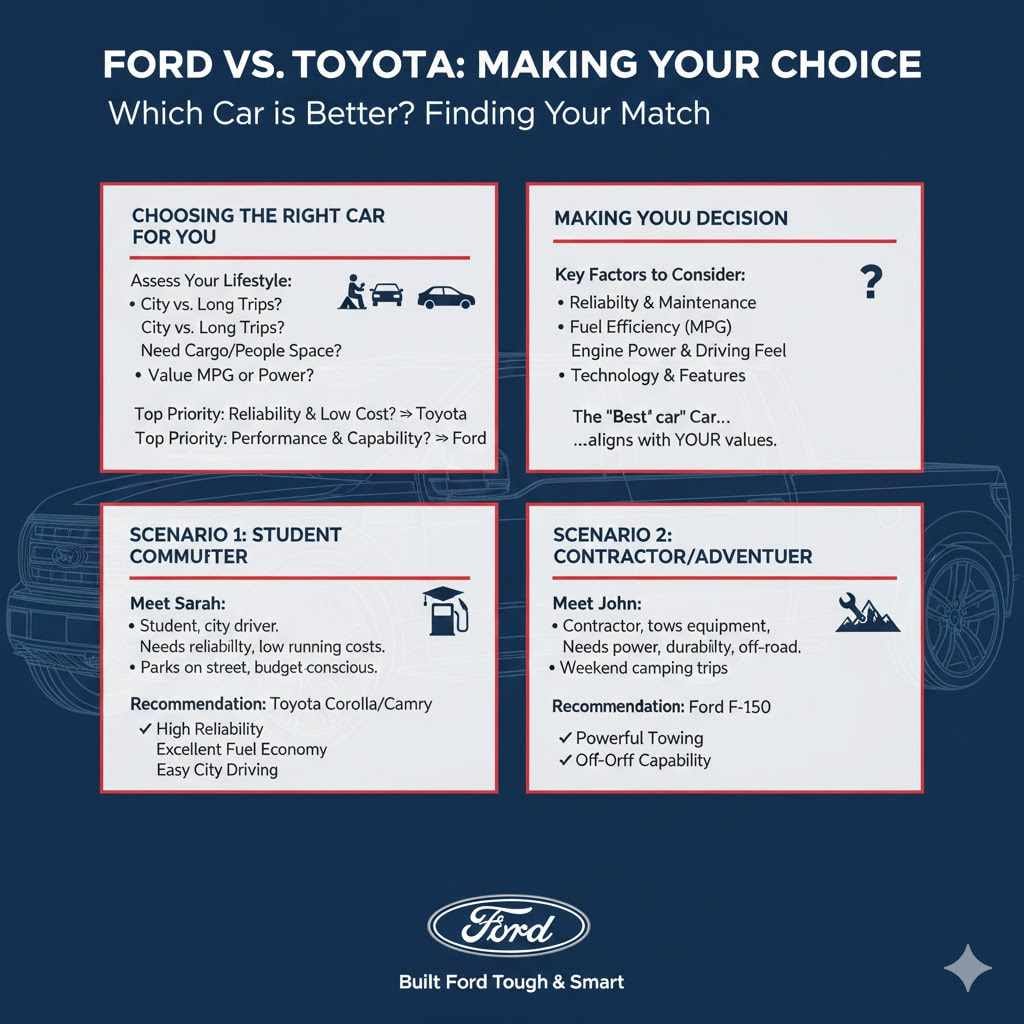
When you’re trying to pick between Ford and Toyota, think about your daily life. Do you drive mostly in the city or do you take long road trips? Do you need to carry a lot of people or cargo?
Do you care more about saving money on gas, or do you enjoy a powerful driving feel? Answering these questions will point you in the right direction.
If your top priority is long-term reliability and low running costs, Toyota is often the go-to choice. Their cars are known for lasting a very long time with minimal issues, and their hybrid technology saves you money at the pump. For many people, this peace of mind is invaluable.
On the other hand, if you’re looking for a more engaging driving experience, powerful engines, or the capability of a tough truck, Ford might be a better fit. They often offer a wider range of performance options and vehicles built for demanding tasks. The feeling of driving a Ford can be more exciting for some people.
- For unparalleled reliability and strong resale value, lean towards Toyota.
- If you seek powerful performance, capability, and a more dynamic driving feel, consider Ford.
- Think about your daily commute, family needs, and how you plan to use the car.
Sample Scenarios
Let’s look at a couple of examples to see how these brands might fit different needs.
- Scenario 1: Sarah is a student who needs a reliable car for her daily commute to college and part-time job. She lives in a city and parks on the street. She doesn’t have a lot of extra money for repairs and wants to save on gas.
A Toyota Corolla or Camry would likely be an excellent choice for Sarah. Their renowned reliability means fewer unexpected repair bills. Their excellent fuel economy will save her money on gas. They are also relatively easy to maneuver and park in urban environments. - Scenario 2: John is a contractor who needs a truck that can tow his equipment and handle rough job sites. He also enjoys weekend camping trips and needs a vehicle that can handle varied terrain. He values power and durability.
A Ford F-150 would be a strong contender for John. Ford trucks are legendary for their toughness, towing capacity, and powerful engine options. The F-150 is built to work hard and can handle demanding conditions, making it ideal for his professional and recreational needs.
These scenarios show how different priorities can lead to different brand choices. It’s about matching the car to your life.
Frequently Asked Questions
Question: Which brand is generally more affordable to buy initially
Answer: While both brands offer a range of prices, Toyota models often have a slightly higher starting price, especially for their most popular, reliable cars. Ford can sometimes be more competitive on initial pricing, particularly for their trucks and larger SUVs, or during promotional periods.
Question: Is one brand significantly cheaper to insure than the other
Answer: Insurance costs vary widely based on the specific model, driver history, and location. However, due to their strong reliability and lower average repair costs, Toyotas might sometimes lead to slightly lower insurance premiums on average, though this is not always the case.
Question: Which brand offers better warranty coverage
Answer: Both Ford and Toyota typically offer similar basic warranty coverage, often around 3 years or 36,000 miles for bumper-to-bumper and 5 years or 60,000 miles for powertrain. It’s always best to check the latest warranty details for specific models.
Question: Are Ford or Toyota cars better for city driving
Answer: For city driving, both can be good. Toyota’s smaller cars are very fuel-efficient and easy to park. Ford also has many compact and mid-size cars that are great for city use, offering comfortable rides.
Question: Which brand is considered more innovative in automotive technology
Answer: Both brands are innovative. Toyota has been a leader in hybrid technology for decades. Ford is pushing forward with electric vehicles and advanced driver-assistance systems.
Innovation can be seen in different areas for each company.
Summary
Choosing between Ford and Toyota depends on your needs. Toyota excels in reliability and resale value, perfect for budget-conscious, long-term owners. Ford offers strong performance, capability, and a more engaging drive, especially in trucks.
Consider your priorities for fuel economy, driving feel, and total cost to make the best choice for you. See also how much does a ford car cost full price range breakdown.
Related pick: Check today's price on Amazon
Products related to this article
Sponsored / affiliate links. As an Amazon Associate I earn from qualifying purchases. I may earn additional commission from eligible campaigns.