What Car Does Ford Use In Nascar? The Real Answer
For NASCAR, Ford uses specially built race cars that are based on production models but are heavily modified for competition. Currently, the Ford Mustang is the primary model representing Ford in the NASCAR Cup Series.
Understanding NASCAR’s Ford Models
When you ask “What car does Ford use in NASCAR?”, you’re tapping into a long history. Ford has been a big part of NASCAR for a very long time. They’ve brought many different cars to the track over the years.
Each era had its own iconic Ford racers. Think about the classic models that used to dominate.
Today, the focus is on making cars that are both safe and fast. NASCAR has rules about car designs. This helps keep races fair and exciting.
Ford works hard to build cars that meet these rules. They also want these cars to show off the Ford brand. It’s a balance of performance and looks.
My First Time Truly Understanding NASCAR Cars
I remember being a kid, totally mesmerized by the roar of the engines. My dad loved NASCAR, and I’d sit beside him, even though I didn’t understand much. I’d just point and say, “That blue one!” We were watching a race, and there was a Ford that looked pretty tough.
I asked him, “Is that a Ford Fairlane?” He laughed and said, “Sort of, but it’s a race car now.”
That moment stuck with me. It wasn’t just a street car with a paint job. It was something different.
He tried to explain how they change them. How they take a car that looks familiar and make it into a specialized machine. It was like magic to me back then.
The wheels, the spoiler, the way it hugged the track. It was clear this was more than just a regular car. It was a purpose-built athlete.
Ford’s NASCAR Evolution: Key Models Through Time
The Early Days (1950s-1960s): Ford Fairlanes and Galaxies were common sights, known for their size and power.
The Muscle Car Era (1960s-1970s): Ford Torino and Mercury Cougar (a Ford brand) dominated, embodying the spirit of performance.
Aerodynamic Shift (1980s-2000s): Ford Thunderbird, then the Ford Taurus, brought a more modern, aerodynamic shape to the track.
The Next Gen Era (2000s-Present): Ford Fusion held the line for a while, paving the way for the current Mustang.
The Current King: The Ford Mustang in NASCAR
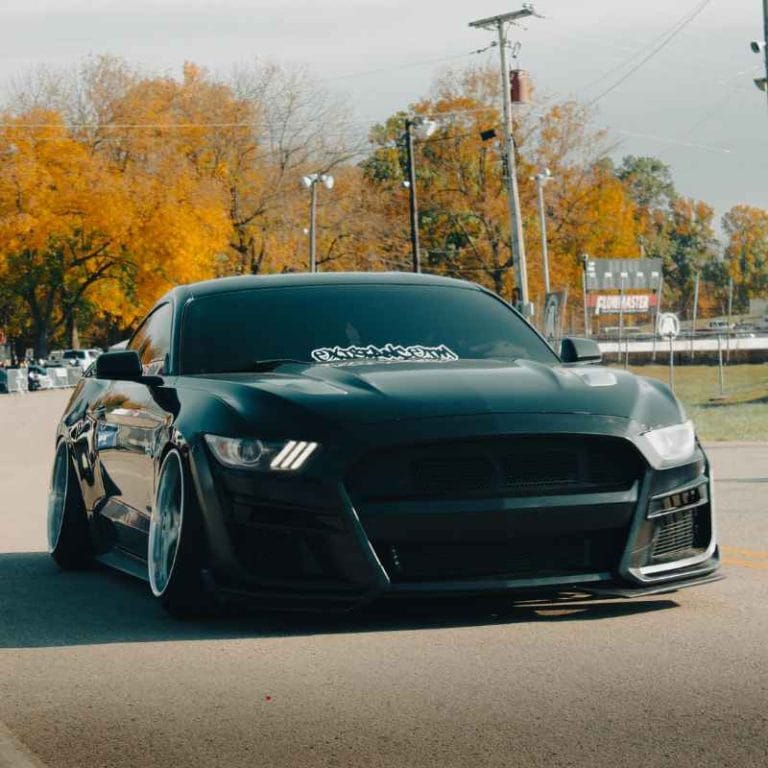
Right now, the car you’ll see representing Ford in the top NASCAR Cup Series is the Ford Mustang. This isn’t your everyday Mustang from the dealership, though. NASCAR has a set of rules called the “Next Gen” car rules.
These rules apply to all manufacturers: Ford, Chevrolet, and Toyota.
The goal of these rules is to make the cars look more like their street versions. They also aim to make the cars more competitive and durable. So, while it’s called a Mustang, it’s a highly specialized race car built to these strict standards.
It has a unique chassis, safety features, and engine that are all approved by NASCAR.
The Mustang body is designed to fit over this standard race car platform. This means the shape is there, giving it that Mustang feel. But the engineering underneath is all about racing.
It’s a cool way to connect the excitement of the track with the cars people know.
Why the Mustang? Ford’s Brand Connection
Ford chooses the Mustang for NASCAR because it’s one of their most famous and sporty cars. The Mustang has a long history of performance and racing. It’s known for its power and its look.
Putting the Mustang on the NASCAR track is a smart move for Ford.
It helps them connect with fans who love performance cars. It shows that the Mustang isn’t just for street driving. It can handle the intense world of professional racing.
This helps build brand loyalty and excitement. People see the Mustang winning or competing hard, and it makes them feel good about the car.
Ford engineers work with NASCAR to ensure the Mustang race car fits the regulations. They want it to look like a Mustang. They want it to perform like a Mustang.
But most importantly, they want it to be a strong competitor for Ford.
What Does “Based On” Really Mean?
This is where things can get a bit tricky for people. When we say the NASCAR Ford is “based on” the Mustang, what does that truly imply? It means the overall shape and styling cues are meant to resemble the production Mustang.
Think of the grille, the headlights, the general silhouette. These are designed to evoke the familiar look of the street-legal car.
However, beneath that familiar skin lies a completely different beast. The chassis, for example, is a purpose-built, high-strength steel structure designed for maximum safety and rigidity under extreme G-forces. The engine is a V8, but it’s a highly specialized, sealed unit built to strict NASCAR specifications, not something you’d find in a road-going Mustang.
The suspension, brakes, and safety equipment are all top-tier racing components.
So, while the visual connection to the Mustang is strong and intentional, the actual engineering and performance systems are entirely race-focused. It’s a brilliant piece of marketing and engineering, creating a recognizable link while adhering to the demanding requirements of professional motorsports.
The “Next Gen” Car: A Shared Platform
Chassis: All manufacturers use a common chassis design. This is a major change.
Body Panels: Each brand (Ford, Chevy, Toyota) creates unique body panels to mimic their production cars.
Engine: V8 engines are used, but they are sealed and regulated by NASCAR.
Suspension & Brakes: Standardized components ensure parity.
Wheels: Larger, 18-inch wheels are now standard, replacing older 15-inch wheels.
A Look Under the Hood (The NASCAR V8)
Let’s talk about the heart of the machine: the engine. In NASCAR’s Cup Series, all cars, including the Ford Mustang, use a 5.8-liter V8 engine. This isn’t just any V8, though.
These are highly engineered racing powerplants. They are built to be incredibly powerful and durable.
NASCAR mandates that these engines are sealed. This means once they are built and approved by NASCAR officials, no one can tamper with them. This rule is crucial for keeping the competition fair.
It prevents teams from gaining an unfair advantage by modifying their engines beyond what’s allowed. It ensures that the race is won by the driver and the team, not just the engine builder.
The horsepower figures are impressive, typically ranging from around 750 to over 900 horsepower, depending on the track configuration and whether restrictor plates are used. This massive amount of power is what allows these cars to reach speeds well over 200 miles per hour on certain tracks. It’s a symphony of engineering designed for one purpose: to go as fast as possible. For how much the engines actually differ between manufacturers, see are all NASCAR engines the same?
Safety First: The Unseen Engineering
While speed is what draws many fans, the safety of the drivers is paramount in NASCAR. The “Next Gen” car has significantly upgraded safety features. The Ford Mustang race car incorporates many of these advancements.
The car features a much stronger roll cage. This is a network of steel tubes designed to protect the driver in a crash. There are also advanced seat belts and a HANS (Head and Neck Support) device that drivers wear.
This device connects the helmet to the car, helping to prevent severe neck injuries.
The car’s structure is also designed to absorb impact energy. This means that in a collision, the car itself is engineered to crumple in specific ways, directing the force away from the driver’s compartment. The windows are made of strong, shatter-resistant material.
All these elements work together to create a protective shell around the driver, providing peace of mind for everyone involved.
Inside the Ford Mustang Race Car: Key Components
Safety Cell: The reinforced cockpit protecting the driver.
Fuel Cell: A specialized tank designed to prevent leaks or explosions.
Aerodynamics: The body shape, spoiler, and splitter are all crafted for downforce.
Tires: Special racing slicks provide maximum grip on the track.
Driver’s Seat: A custom-molded seat for maximum support and safety.
The Role of Aerodynamics
In NASCAR, aerodynamics plays a huge role. It’s not just about having a powerful engine. How the car moves through the air can make a massive difference.
The shape of the Ford Mustang race car is carefully designed to create downforce.
Downforce is a force that pushes the car down onto the track. This gives the tires more grip. More grip means the car can corner faster and accelerate harder.
The large rear spoiler is a very visible part of this. It helps create drag but also pushes the rear of the car down.
The front splitter and the car’s overall body shape also contribute. Engineers spend countless hours in wind tunnels. They test different designs to find what works best.
They have to balance downforce with drag. Too much drag slows the car down. It’s a constant battle to get the perfect aerodynamic package.
Tires and Grip: Where the Rubber Meets the Road
The tires on a NASCAR race car are unlike anything you see on a street car. They are specially designed racing slicks. This means they have no tread pattern.
This is to maximize the amount of rubber that touches the track surface. More rubber contact means more grip.
The Ford Mustang race cars use 18-inch wheels, a change from older models. These larger wheels also require different tire designs. The tires are made of a special rubber compound.
This compound is designed to wear down quickly but provide incredible grip during their lifespan.
Teams have to manage their tires very carefully. A pit stop involves changing all four tires very quickly. The condition of the tires can make or break a race.
A driver might save their tires early on, or they might push them hard to gain track position. It’s a critical part of the race strategy for any Ford team.
Myth vs. Reality: NASCAR Ford Cars
Myth: NASCAR Fords are just regular Mustangs with a paint job.
Reality: They are highly specialized race cars built on a common NASCAR platform, with Mustang styling cues.
Myth: Teams can build any engine they want.
Reality: Engines are sealed, standardized V8s built to strict NASCAR specifications.
Myth: Aerodynamics is only about looking cool.
Reality: Aerodynamics is crucial for downforce, grip, and speed, making cars corner faster.
A Day at the Track: My Ford NASCAR Experience
I finally got to see a race in person a few years back. It was at Charlotte Motor Speedway. I was so excited.
I had my Ford hat on, ready to cheer. I had studied up on the cars, and I knew the Mustang was the current racer. But seeing it live was something else entirely.
The sound was deafening, even from the stands. It was a deep, powerful rumble that vibrated through my chest. And the speed!
They came around the turns so fast, looking almost glued to the asphalt. You could really see how the spoiler on the back of the Ford Mustang was doing its job. It seemed to dig into the track.
During a pit stop, I watched the crew. They were like a perfectly choreographed dance. Tires changed in seconds.
Fuel flowed. It was amazing to see how much work went into each car. It truly hammered home that these were not just cars; they were finely tuned machines operated by skilled professionals.
It was an unforgettable experience that solidified my understanding of what a NASCAR Ford truly is.
When is it NOT a Ford Mustang?
It’s important to remember that NASCAR has different series. The top level is the Cup Series. This is where the Ford Mustang competes.
However, there are other racing series, like the Xfinity Series or the Truck Series.
In the past, Ford has used different models in these other series. For example, you might have seen Ford F-150 trucks in the Truck Series. Or different sedan models in the Xfinity Series.
These cars also have to meet the rules for their specific series.
So, if you’re watching a race and don’t see a Mustang, it might be a different Ford model in a different racing series. Or, it could be a car from another manufacturer like Chevrolet or Toyota. Always check which series you are watching to know for sure what cars are competing.
What This Means for You as a Fan
For fans like us, knowing what car Ford uses in NASCAR is pretty cool. It connects the cars we see on TV to the cars we might aspire to own. The Ford Mustang is a symbol of performance and excitement.
When you see a Mustang on the track, you’re not just seeing a race car. You’re seeing a piece of Ford’s racing heritage. You’re seeing a car designed to push the limits.
It’s a reminder of the passion and engineering that goes into motorsports.
This also means that Ford uses these racing efforts to test new technologies. While they can’t directly put NASCAR parts on street cars, the lessons learned about materials, aerodynamics, and performance can trickle down. It’s a win-win for Ford and for car enthusiasts.
Quick Checks for Identifying Ford NASCAR Cars
While the Mustang is the primary car now, here are some quick things to look for:
- Body Shape: Does it have the distinct profile of a Mustang?
- Grille and Lights: Do the front-end design elements resemble a Mustang?
- Badging: While not always visible on race cars, the overall design should speak “Mustang.”
- Manufacturer Decals: Official Ford logos will be present.
Remember, all cars in the Cup Series share a common chassis. So, the differences you see are primarily in the body panels and styling, carefully crafted to represent their production counterparts.
Frequently Asked Questions About Ford NASCAR Cars
What year did the Ford Mustang start racing in NASCAR?
The Ford Mustang made its debut in the NASCAR Cup Series with the introduction of the Next Gen car platform in 2022. Prior to this, Ford used other models like the Fusion and the Taurus.
Are the engines in Ford NASCAR cars the same as production Mustangs?
No, the engines are very different. NASCAR uses a standardized, sealed 5.8-liter V8 engine built to specific racing regulations. These are much more powerful and durable than production car engines.
Does Ford use the same car in all NASCAR series?
No. The Ford Mustang is currently used in the Cup Series. Ford has used other models, like the F-150 in the Truck Series, in different NASCAR divisions.
How much does a NASCAR Ford race car cost?
A NASCAR Cup Series car, including the Ford Mustang, can cost anywhere from $300,000 to $500,000 or more. This includes the chassis, engine, body, and all the specialized racing components.
What are the main differences between a street Mustang and a NASCAR Mustang?
The biggest differences are in the chassis, engine, suspension, brakes, safety equipment, and overall purpose. The NASCAR Mustang is a pure race car built for speed and safety on the track, while the street Mustang is designed for road use and comfort.
Can I buy a Ford Mustang race car used in NASCAR?
It’s highly unlikely. NASCAR race cars are extremely expensive and specialized. While some teams might sell older or “show” versions, a genuine, track-used Cup Series car is a rare and costly item, usually only available to serious collectors or racing enthusiasts.
Final Thoughts on Ford’s NASCAR Presence
So, to sum it up, when you see a Ford tearing it up on the NASCAR track today, it’s almost certainly a Ford Mustang. It’s a car that blends iconic styling with cutting-edge racing technology. Ford’s commitment to NASCAR is clear through the development and racing of this legendary nameplate.
It’s a fantastic representation of their performance brand.
For a broader explanation of how NASCAR controls power while still allowing manufacturer programs, see our guide on whether NASCAR engines are all the same. See also how to turn off a ford car the right way all models . See also best ford car for beginners easy and safe models to drive.