Car Light Stopped Working? Here’S the Most Likely Cause
Few things are more frustrating than discovering your car light has suddenly stopped working, especially when you need it most. Whether it’s a headlight, brake light, or interior bulb, malfunctioning car lights can compromise safety, invite costly traffic tickets, and complicate your daily routine.
Understanding what typically causes this common problem empowers you to diagnose issues quickly, save money on repairs, and minimize downtime.
Most drivers assume a burnt-out bulb is the culprit, but the reality is often more nuanced. The underlying cause could range from a blown fuse to corroded connectors or even a more complicated wiring fault. In my experience, even seasoned DIYers can overlook simple fixes or misdiagnose the root problem, leading to unnecessary frustration and expense.
This guide will cut through confusion by pinpointing the most likely causes, offering data-driven comparisons, and providing step-by-step solutions, all grounded in the latest automotive best practices.
Key Takeaways
- Burnt-out bulbs and blown fuses are the most common reasons car lights stop working.
- Wiring issues, faulty switches, and corroded connectors can cause intermittent or total failure.
- Diagnosing the problem systematically saves time, reduces repair costs, and increases safety.
- Preventive maintenance can dramatically reduce the likelihood of future light failures.
- Professional help may be necessary for complex electrical or computer-related issues.
Credit: cboardrepair.com
The Most Common Causes Of Car Light Failure
Car lights are integral to vehicle safety, but their failure is often misunderstood. While a blown bulb is usually suspected, a range of other factors can be at play.
Burnt-out Bulbs
The simplest and most frequent cause of car light failure is a burnt-out bulb. Halogen, LED, and HID bulbs all have finite lifespans, which can vary dramatically based on usage and type.
- Halogen bulbs typically last 450-1,000 hours.
- LED bulbs can last up to 30,000 hours but are still susceptible to electronic failures.
- HID bulbs offer around 2,000 hours, but ballasts or igniters can fail.
Most vehicle manuals recommend replacing bulbs in pairs, as both sides often age similarly. Visual inspection, looking for a broken filament or blackened glass, can confirm a burnt-out bulb.
Blown Fuses
A blown fuse is another common issue. Fuses protect electrical circuits from surges or short circuits. When a fuse blows, it interrupts power to the light circuit.
- Fuses are inexpensive and often easy to access, typically found in the fuse box under the dashboard or hood.
- Each light circuit usually has a dedicated fuse; refer to your owner’s manual for locations.
If a replacement fuse blows immediately, it may indicate a deeper wiring or component issue.
Faulty Switches
The headlight, brake, or interior light switches can wear out over time, leading to partial or total loss of function.
- Switches may fail mechanically or electronically.
- Symptoms include lights that work intermittently or require jiggling the switch.
Testing with a multimeter can help confirm switch failure.
Wiring Problems
Electrical wiring issues, including broken wires, short circuits, and corroded connectors, can be the underlying cause of persistent light failures.
- Look for visible damage, such as frayed insulation or melted wires.
- Corrosion at connectors is common, especially in humid or coastal environments.
Wiring problems often manifest as intermittent failures or affect multiple lights.
Faulty Relays
Relays act as electrically operated switches. A faulty relay can prevent power from reaching the lights, especially on high-current circuits like headlights or fog lights.
- Relays may click audibly when working; silence may indicate a fault.
- Swapping relays with a known good one can confirm the diagnosis.
Computer Or Module Failures
Modern vehicles often rely on body control modules (BCMs) or similar computers to manage lighting. A failure in these modules can lead to erratic behavior or total light loss.
- Symptoms include multiple electrical issues or lights failing despite good bulbs and fuses.
- Diagnostic tools may be required for troubleshooting.
Comparison Table: Common Causes Vs. Symptoms
To help you quickly pinpoint the likely cause, compare symptoms to typical failures:
| Symptom | Most Likely Cause | DIY Difficulty | Estimated Cost (USD) |
|---|---|---|---|
| Single light out | Burnt-out bulb | Easy | $5, $30 |
| Multiple lights out | Blown fuse, wiring issue | Moderate | $1, $50 |
| Intermittent light | Faulty switch, wiring problem | Moderate | $10, $80 |
| All lights out | Main relay, BCM failure | Difficult | $50, $500+ |
How To Diagnose A Non-working Car Light
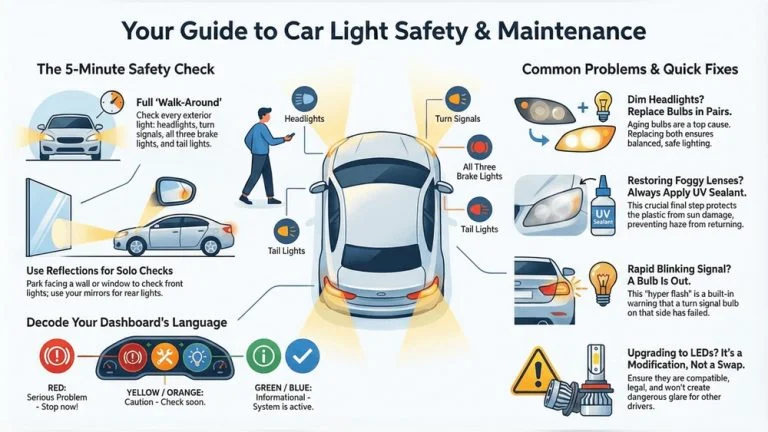
Proper diagnosis is essential to avoid replacing parts unnecessarily or overlooking hidden faults. The following step-by-step approach can help you efficiently identify the source of the problem.
Step 1: Visual Inspection
Start with a visual check of the affected light and surrounding area.
- Look for obvious signs of damage, such as cracked lenses or burnt bulbs.
- Check for moisture inside the light housing, which can cause corrosion.
Step 2: Test The Bulb
Remove the bulb and inspect the filament or contacts.
- Replace with a new bulb to see if the issue resolves.
- If the new bulb doesn’t work, the problem lies elsewhere.
Step 3: Check The Fuse
Locate the corresponding fuse using the owner’s manual.
- Use a fuse puller or needle-nose pliers to remove and inspect the fuse.
- Replace blown fuses with ones of the same rating.
Step 4: Inspect Wiring And Connectors
Check for loose, corroded, or disconnected wiring.
- Wiggle connectors to see if the light flickers on.
- Clean corrosion with electrical contact cleaner.
Step 5: Test The Switch
Use a multimeter to check for continuity through the switch.
- If the switch fails, replace it.
Step 6: Consider Relays And Modules
If all else fails, test relays or scan for error codes with a diagnostic tool.
- Swapping relays can confirm a faulty unit.
- Persistent issues may require professional diagnosis.
Example: Diagnosing A Brake Light Failure
A driver noticed their right brake light was out. After replacing the bulb with no result, they checked the fuse, intact. Closer inspection revealed corrosion at the socket. Cleaning the contacts restored function, highlighting the importance of thorough diagnosis.
Credit: www.motor1.com
Real-world Case Studies And Examples
Understanding how these issues play out in actual vehicles can make diagnosis less daunting.
Case Study 1: The Headlight That Wouldn’t Turn On
A 2015 Honda Accord owner found their left headlight out. Assuming a burnt-out bulb, they replaced it, no luck. The fuse was intact. Upon further inspection, the socket showed signs of overheating. Replacing both the socket and bulb solved the problem, confirming a poor electrical connection had burned out the socket.
Case Study 2: Intermittent Dashboard Light Failure
A Toyota Camry’s dashboard lights flickered on and off. Suspecting a wiring issue, the owner removed the dash, revealing a loose ground wire. Tightening the connection fixed the lights, demonstrating how even minor wiring faults can create frustrating symptoms.
Case Study 3: Multiple Rear Lights Out
A Ford F-150 lost all rear lights. Fuses and bulbs checked out. The issue traced back to a failed body control module. After professional replacement, all lights worked again, proving that sometimes, modern electronics are the root cause.

Credit: www.jaywolfeacura.com
Preventive Maintenance For Car Lights
Most car light failures are avoidable with regular preventive maintenance. Taking these steps can extend the life of your lighting system and reduce the chance of unexpected outages.
Inspect And Clean Light Housings
- Remove debris, moisture, and road grime from lenses.
- Clean electrical connectors with contact cleaner annually.
Replace Bulbs In Pairs
- Bulbs dim over time; replacing both ensures even brightness.
- For headlights, this also maintains balanced night vision.
Check Fuses And Wiring Regularly
- Inspect fuse boxes for signs of corrosion or overheating.
- Examine wiring harnesses in exposed areas, especially if you drive in wet or salty conditions.
Upgrade To Modern Bulbs
- Consider switching to LED or longer-lasting halogen bulbs.
- These often offer improved longevity and brightness.
Keep An Eye On Warning Lights
- Modern cars display dashboard warnings for lighting failures.
- Don’t ignore warning lights, investigate promptly.
Example: Proactive Maintenance Pays Off
One fleet operator scheduled quarterly light system checks. Over a year, unexpected light failures dropped by 70%, saving on repairs and reducing safety incidents.
When To Seek Professional Help
While many car light problems are DIY-friendly, some require specialized expertise and equipment.
Persistent Or Intermittent Failures
If the problem persists after bulb and fuse replacement, or lights work only sporadically, it may indicate a deeper issue.
- Professional mechanics use diagnostic tools to trace faults.
- Hidden wiring issues often require advanced troubleshooting.
Module Or Computer-related Issues
Modern vehicles use complex modules to control lighting. When these fail, DIY solutions are often impractical.
- Module replacement typically requires programming and specialized tools.
- Seek help from a dealership or certified technician for these repairs.
Example: Cost Comparison Table
Compare typical DIY and professional repair costs:
| Repair Type | DIY Cost | Professional Cost | Time Required |
|---|---|---|---|
| Bulb Replacement | $5, $30 | $20, $80 | 15, 30 min |
| Fuse Replacement | $1, $5 | $10, $50 | 5, 15 min |
| Socket or Wiring Repair | $10, $50 | $50, $150 | 30, 90 min |
| Module Replacement | N/A | $200, $600+ | 1, 2 hours |
Warning:
Attempting advanced repairs without proper tools or knowledge can worsen the problem or create new safety hazards. When in doubt, consult a qualified technician.
Advanced Troubleshooting Tips
For those comfortable with basic repairs, deeper troubleshooting can sometimes resolve stubborn issues.
Use A Multimeter
A multimeter can help trace voltage drops, continuity, and grounds.
- Test for power at the light socket.
- Verify that ground connections are solid.
Inspect For Water Intrusion
Moisture can cause intermittent failures and corrosion.
- Remove light housings and check for water.
- Dry out components and reseal as necessary.
Check For Tsbs (technical Service Bulletins)
Manufacturers sometimes issue TSBs for known electrical issues.
- Search the National Highway Traffic Safety Administration (NHTSA) database or manufacturer sites.
- TSBs may cover free or discounted repairs for known faults.
Example: Diagnosing A Complex Issue
A 2018 Subaru Outback owner faced recurring headlight failures. After replacing bulbs and fuses, the problem persisted. Research revealed a TSB for faulty wiring harnesses. The dealer replaced the harness under warranty, resolving the issue.
Understanding Modern Lighting Systems
Car lighting has evolved beyond simple bulbs and switches. Familiarity with these advances can aid in troubleshooting and repair.
Led And Hid Systems
Modern vehicles increasingly use LED and HID lighting for improved longevity and performance.
- LEDs require electronic drivers; failure in these components can mimic bulb burnout.
- HID systems use ballasts and igniters, which may fail independently of the bulb.
Can Bus And Smart Lighting
Many vehicles use CAN bus systems, where computers monitor and control lighting.
- These systems can detect bulb failures automatically.
- Some aftermarket LED bulbs require resistors to avoid warning messages or flickering.
Adaptive And Matrix Lighting
High-end vehicles may feature adaptive headlights or matrix LED arrays.
- These systems adjust beam pattern based on speed or steering.
- Repairs often require dealer-level diagnostics.
Comparison Table: Traditional Vs. Modern Lighting
| Feature | Traditional Bulbs | LED/HID Systems | Smart Lighting (CAN Bus) |
|---|---|---|---|
| Lifespan | 450, 2,000 hours | 2,000, 30,000 hours | 2,000, 30,000 hours |
| DIY Repairability | High | Moderate | Low |
| Cost | Low | Moderate, High | High |
| Diagnostic Tools Needed | Basic | Moderate | Advanced |
Pro Tip:
If you’re upgrading to LED bulbs in a vehicle with a CAN bus system, always use compatible bulbs or add a load resistor to prevent error messages.
Safety And Legal Implications Of Light Failure
Ignoring a non-working car light is not just inconvenient, it can be dangerous and illegal.
Safety Risks
- Reduced visibility increases the risk of accidents, especially at night or in poor weather.
- Brake light failure means other drivers may not know you’re stopping.
- Non-functional turn signals can lead to misunderstandings on the road.
Legal Consequences
- Most states require all exterior lights to function for legal operation.
- Police can issue citations for broken headlights, taillights, or turn signals.
- Repeated offenses may result in higher fines or failed vehicle inspections.
Insurance Implications
- Accidents caused by non-functional lights may lead to denied insurance claims.
- Documentation of timely repairs can support your case in disputes.
Example: Legal Trouble Over A Simple Bulb
A driver in California received a $197 ticket for a broken taillight. The violation was dismissed after proof of repair, but the inconvenience and risk of higher penalties underline the importance of quick fixes.
External Resource
For state-specific laws on vehicle lighting, consult the National Highway Traffic Safety Administration.
Frequently Asked Questions
What Should I Do If Replacing The Bulb And Fuse Doesn’t Fix The Car Light?
If both the bulb and fuse are good, the issue likely lies in the wiring, connectors, or control modules. Check for corrosion or loose connections at the socket. If you’re comfortable, use a multimeter to verify power at the socket.
For modern cars with complex electronics, professional diagnosis may be required.
Can I Drive With A Car Light Out Temporarily?
Legally, it depends on your state’s regulations and which light is out. Driving without functioning headlights, taillights, or brake lights is unsafe and often illegal. Even if you aren’t stopped immediately, you risk accidents and insurance complications. Always repair faulty lights as soon as possible.
Are Led Replacement Bulbs Always Better Than Halogen?
LED bulbs last longer and use less energy than halogen, but compatibility is key. Some vehicles’ electrical systems may not recognize LEDs without additional resistors or adapters, potentially causing warning lights or flickering. Always choose bulbs designed for your specific make and model.
Why Do My Car Lights Keep Burning Out Quickly?
Frequent burnouts can indicate high voltage, poor-quality bulbs, or vibration in the mounting. Check for voltage regulator issues, use quality bulbs from reputable manufacturers, and ensure that bulbs are installed securely. In some cases, moisture intrusion can also shorten bulb life.
How Can I Find Out If My Car Has A Recall Or Service Bulletin For Lighting Issues?
You can check for recalls and Technical Service Bulletins (TSBs) by entering your Vehicle Identification Number (VIN) at the official NHTSA recall database. Manufacturers and authorized dealers can also provide this information.
Addressing car light problems promptly not only keeps you safe but also helps you avoid legal headaches and expensive repairs. By understanding the most likely causes, using systematic diagnostics, and knowing when to seek expert help, you can keep your vehicle lighting in top condition and enjoy peace of mind on every drive.