Car Battery Group Size Explained for Beginners
Car battery group size is a fitment code that states the battery’s outside dimensions, terminal location, and hold-down style, so the correct one fits the tray and cables. Get it wrong and you may buy a battery that will not mount, connect, or crank reliably. This guide shows how to read the label and check tray space, terminal layout, and starting specs before you buy.
What does car battery group size mean?
Car battery group size is commonly used as a BCI fitment code in North America. It identifies the case footprint, height limits, and often the terminal layout for a battery that should fit a specific tray and cable arrangement. It is a fit check, not a performance grade. See the Battery Council International battery group size explanation for the standard’s physical-sizing purpose.
What the number tells you
A Group 24, 35, 48, 49, or 65 battery may look similar at a glance, but the label code tells you more than the shape. It points you to a standard case size and a typical post layout, which is why two batteries with the same voltage can still be wrong for the vehicle.
That matters because the tray, hold-down, and cables are physical parts. If the battery is too long, too tall, or reversed at the posts, it can fail the fit check even if the engine is small and the electrical system is ordinary.
Where do you find the right size?
Start with the owner’s manual, then confirm with a parts catalog lookup or VIN-based fitment search. You can also read the group size from the old battery label, but that only helps if the battery already matched the vehicle and nobody changed the tray or cables. Manufacturer guidance in owner manuals commonly points you to the specified battery size rather than a “close” substitute.
Use more than one source
A vehicle fitment guide helps because battery groups can change by engine, option package, and market. Some listings also note AGM versus flooded lead-acid requirements, which matters when the same group size is offered in more than one construction. For a manufacturer example, see the Ford battery service guidance that emphasizes matching the vehicle’s specified battery requirements.
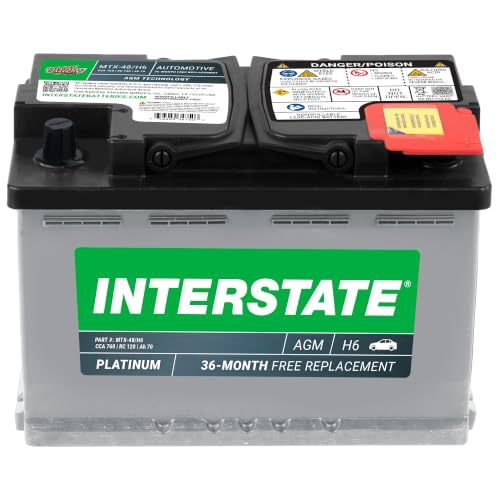
On the existing battery, look for the group size marking, CCA, RC, polarity symbols, and warranty text. If the label is worn off, do not guess from battery voltage alone. Many car batteries are 12V, so voltage by itself does not identify the correct fit.
Why do dimensions matter more than voltage?
Battery case dimensions decide whether the battery physically fits the tray. Length, width, and height must leave room for the tray walls, the hold-down hardware, and any nearby brackets or covers. A battery can be 12V and still be the wrong shape for the car.
Tray space and hold-down clearance
The battery tray sets the main boundary. Some vehicles also need extra height clearance for the terminal posts, top cover, or vent routing. If the case is taller than the available space, the hold-down may not clamp it correctly or the hood may close onto the battery.
Hold-down hardware varies by platform. J-bolts, clamps, and brackets all do the same basic job: keep the battery from moving under vibration and hard braking. If the mounting style does not match the vehicle, the battery may fit loosely or shift enough to damage cables.
Terminal orientation and cable reach
Terminal orientation matters because positive and negative posts must line up with the cable reach and polarity. Top-post and side-terminal batteries are not the same layout. A battery with the right case size but reversed posts can leave the cables stretched, crossed, or unable to reach safely.
Picture a Group 35 battery that matches the tray length but has the positive post on the opposite side from the original battery. The case may slide into place, but the cable may not reach without strain, and crossing the cables is a bad fix. The group size was close; the fit was still wrong.
What should I check before I buy a battery?
Use this checklist when you are buying online and cannot compare the battery in person. Match the fitment code first, then verify the label numbers and the mounting details. A correct listing should pass every step before you click buy.
| Group size | Dimensions | Terminal orientation | CCA | RC | Hold-down type | Vehicle requirement | Pass/fail |
|---|---|---|---|---|---|---|---|
| Match the manual or VIN lookup exactly | Fits tray length, width, height, and hood clearance | Posts on the correct side and in the correct style | Meets or exceeds the required cold-cranking amps | Provides appropriate reserve capacity for the vehicle | Matches the clamp, bracket, or J-bolt style used by the car | Battery must fit the tray, connect safely, and meet the spec | Pass if every item matches. Fail if the battery is “close,” reversed, too tall, too short, or uses the wrong mounting style. |
| Wrong group code, even if the battery looks similar | Too long, too tall, or too narrow for the tray or hood | Positive and negative posts swapped from the original layout | Below the vehicle minimum or missing from the listing | Ignored on vehicles with higher electrical demand | Hardware cannot secure the case without movement | Common beginner mistake: buying by appearance instead of fitment | Fail if one or more items do not match the vehicle requirements. |
- Confirm the group size in the manual, parts catalog, or VIN search.
- Compare the battery case dimensions with the tray and hood clearance.
- Check terminal orientation, polarity, CCA, RC, and hold-down type on the label.
A common first-timer mistake is buying a battery because the group size and voltage look right, then discovering the posts are on the wrong side. Another is ordering a taller case that fits the tray floor but hits the hold-down bracket or hood brace.
Can AGM and flooded batteries share a group size?
Yes, AGM and flooded lead-acid batteries can share the same group size because the outside case can be standardized. That does not mean they are always interchangeable. Venting needs, height differences, terminal hardware, and warranty terms can still separate one from the other in a real vehicle fitment. For an overview of battery specifications and construction differences, see Battery University’s car battery selection guide.
Same case size, different construction
AGM batteries often tolerate vibration well and may be listed with different reserve capacity or charging needs than flooded batteries. Some vehicles specify one construction because of start-stop use, electrical load, or under-hood heat. A matched group size does not override those requirements.
When the answer changes
Check whether the vehicle calls for a vent tube, a specific height limit, or a battery with sealed construction. In some platforms, an AGM battery in the same group may sit taller or carry different warranty terms than a flooded version. The fitment code is the starting point, not the final answer.
What happens if you choose the wrong size?
The wrong battery size can create fitment problems immediately or damage parts over time. A case that is too large may not drop into the tray. A case that is too small may shift under braking. Wrong posts, weak cable reach, or an incorrect hold-down can turn a simple swap into a bad install. For how capacity and starting power are defined, see Interstate Batteries on CCA and reserve capacity guidance.
Fitment problems inside the tray
If the tray is too small for the case, the battery may sit crooked or refuse to clamp down. If the case is too short or too narrow, the hold-down hardware may not secure it. Movement can wear through the case, stress the terminals, or loosen the cable connections.
Polarity, cable, and starting problems
Wrong terminal orientation can force the cables to cross or stretch, which is a safety and service problem. Wrong CCA can also cause slow cranking or no-start issues even when the battery physically fits. Reserve capacity matters too, especially if the alternator fails or the vehicle carries heavy electrical loads.
Suppose a vehicle calls for a Group 35 battery with about 550 CCA, but a shopper orders a different Group 35 battery with only 450 CCA. The case may fit, yet cold starts can suffer because group size and starting power are separate checks. The label must pass both.
Frequently asked questions
How do I find the right battery group size for my car?
Check the owner’s manual first, then confirm with a parts catalog or VIN-based fitment search. Read the existing battery label if the current battery was correct. If those sources disagree, use the vehicle fitment guide over a guess from the old battery alone.
Is battery group size the same as battery capacity?
No. Group size is a physical fitment code, while capacity is typically described with ratings such as CCA and reserve capacity. Two batteries can share a group size and still have different performance numbers. Treat the label as two separate checks: fit and output.
Can I use a different battery group size if it fits?
Only if the tray, hold-down, cable reach, polarity, and vehicle spec all still check out. A battery that “almost fits” may still be wrong if the posts, venting, or height are off. Do not choose a different group just because the case can be squeezed into place.
Where is the battery group size on the label?
It is usually printed on the top or side label near the model or part number. The same label often lists CCA, reserve capacity, polarity, and warranty details. If the code is missing or unreadable, use the vehicle fitment guide rather than guessing from the battery shape.
How do cold-cranking amps relate to group size?
They are separate numbers. Group size tells you whether the battery fits the car physically. CCA tells you how much starting power it can deliver in cold conditions, measured in amps. A battery can match the group and still fail the vehicle’s minimum CCA requirement.
Products related to this article
Sponsored / affiliate links. As an Amazon Associate I earn from qualifying purchases. I may earn additional commission from eligible campaigns.