Ford Battery Light on While Driving: Should You Stop?
Yes. If your Ford battery light stays on while driving, treat it as a charging-system failure: pull over soon, and stop immediately if power steering, brakes, temperature, or engine performance change. Ignoring it can leave you stranded with a dead battery, stalled engine, or lost assist systems. This guide explains when to keep rolling to a safe spot, when to shut off accessories, and what Ford charging faults to check next.
What the Ford battery light means

On a Ford, the battery light is really a charging-system warning, not a battery-only warning. The alternator has stopped charging the battery, so the car is now running on reserve power from the 12V battery. That makes the warning moderate-to-high urgency, because the electrical system can fade as reserve power runs down.
The charging system has four parts you need to think about together: alternator output, battery reserve power, wiring between the battery and alternator, and a charging-voltage test. The alternator is the most common cause, but loose battery cables, corroded battery terminals, belt problems, and wiring faults can all trigger the same light.
Ford displays can also point to low voltage in a more specific way. Some models can show a Battery Low See Manual warning, and low battery voltage can limit electrical features. On some Ford models, including the Escape, Auto Start-Stop can become unavailable when voltage drops.
Should you stop now?
Stop now if the dash is dimming noticeably, the engine stumbles, the temperature gauge climbs, the brakes feel unusual, or steering effort changes. Those symptoms mean the charging fault is no longer just a warning lamp problem. You may already be on borrowed voltage, and keeping the engine running may not prevent a stall.
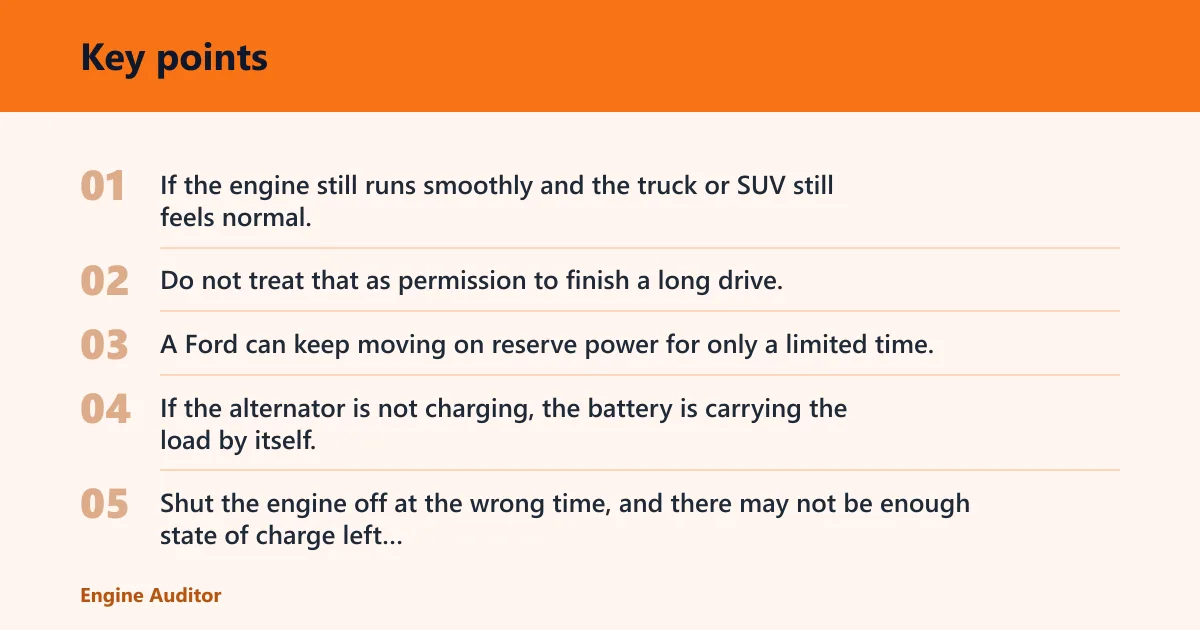
If the engine still runs smoothly and the truck or SUV still feels normal, continue only far enough to reach a safe place. Do not treat that as permission to finish a long drive. A Ford can keep moving on reserve power for only a limited time, and shutting it off too early can create restart risk.
That restart risk matters. If the alternator is not charging, the battery is carrying the load by itself. Shut the engine off at the wrong time, and there may not be enough state of charge left to restart.
Ford battery light while driving: stop now, continue briefly, or head to a safe spot
| Symptom | Likely fault path | Recommended action | Restart risk |
|---|---|---|---|
| Dimming dash or headlamps | Alternator output dropping, belt slip, or wiring loss | Pull over as soon as traffic allows | High |
| Loss of accessories or reduced electrical features | Low voltage, loose cables, corroded terminals, or weak battery reserve | Turn off loads and head to a safe spot | Moderate to high |
| Rough running or misfire feel | Charging failure affecting engine control voltage, belt slip, or wiring fault | Stop now if possible | High |
| Stalling or near-stall behavior | Charging system has failed to support engine operation | Immediate pull-over | Very high |
| Battery light on, but no symptoms yet | Early alternator failure or a cable, terminal, or belt issue | Drive only to the nearest safe place with loads reduced | Unknown, but real |
Say your Explorer shows the battery light on a city street, but the engine still feels normal. That is a case for a short, careful drive to the nearest safe parking area, not a long detour. If the battery warning light comes on, turn off the A/C, heated seats, and radio first.
What causes the warning
The most common cause is alternator failure. When the alternator quits charging, the battery carries the car until reserve power drops too far. That is why a charging-voltage test comes first. It tells you whether the alternator, battery, belt, or wiring is the failed part.
A serpentine belt problem is another listed cause. If the belt is worn, loose, slipping, or broken, the alternator may spin too slowly or not at all. Belt replacement is a separate repair path, and it often costs less than alternator replacement, though labor and model choice can move the price around.
Battery terminals and cables matter too. Loose battery cables, corroded battery terminals, and wiring faults between the battery and alternator can all interrupt charging. A weak battery can contribute to a no-start and other symptoms, but a weak battery alone does not explain a battery light while driving as well as a charging fault does.
Suppose a Bronco Sport shows the battery light after a wet drive, then the radio cuts out and the dash message changes to a low-battery warning. That pattern points first toward a charging or connection problem, not a simple battery age issue.
Can you keep driving briefly?
Yes, but only with a clear plan. City traffic gives you more chances to pull into a lot or shoulder, while highway speed can help you reach a safer exit faster. Night driving and heavy electrical load make the situation worse because lights, blower motor, and other systems consume more reserve power.
Keep rolling only if the engine feels normal, the dash stays stable, and you are close to a safe stop. If the warning appears at low speed in a neighborhood, it is often smarter to reach the nearest parking lot than to stop in the travel lane. If it appears on the highway with dimming lights or rough running, pull over at the first safe shoulder or exit.
Do not shut the engine off on the shoulder just to “see what happens” unless you are already at a safe place and ready for a no-restart event. If the alternator has stopped charging, the battery may not have enough state of charge to start the vehicle again.
What to switch off first
Turn off unnecessary electrical loads right away. That gives the battery more reserve time and may buy enough time to reach a safe spot. Start with the A/C, heated seats, and radio. Then shut off other nonessential loads such as phone chargers, rear defrost, and extra interior lighting if they are on.
- Turn off the A/C.
- Switch off heated seats.
- Turn off the radio and infotainment extras.
- Disable other nonessential loads.
- Drive steadily to a safe place.
This is electrical load shedding. It does not fix the fault, but it can stretch the remaining battery reserve while the alternator is not charging. Ford models with a Battery Low See Manual warning can benefit from that step immediately, because low battery can limit electrical features and Auto Start-Stop may drop out.
Charging-voltage test and likely repairs
The recommended first diagnostic step is a charging-voltage test. A technician can do it with a multimeter or scanner. That test confirms whether alternator output is missing, whether the battery is still carrying proper reserve power, and whether the wiring or belt path is causing the drop.
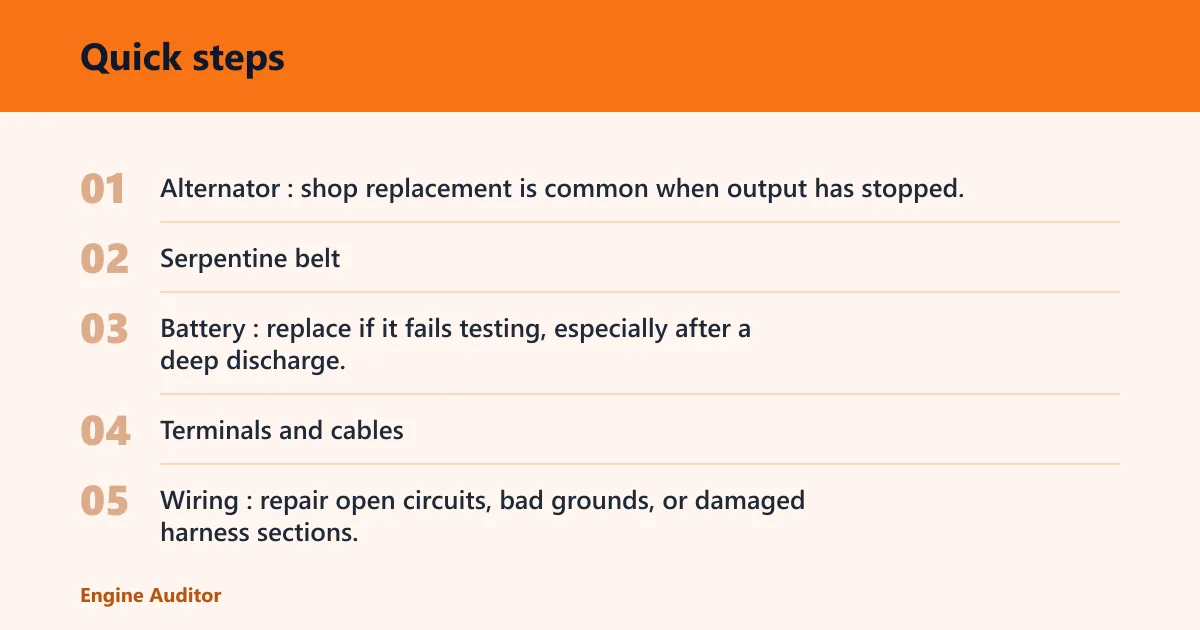
If the test points to the alternator, that is the most common repair path. If it points to the belt, the belt may need replacement and inspection of the tensioner and pulleys. If it points to the battery, the battery may be weak or damaged, but the charging system still has to be verified before a replacement makes sense. If it points to terminals or wiring, cleaning, tightening, or repair may solve the problem.
Typical repair paths tied to the fault mode look like this:
- Alternator: shop replacement is common when output has stopped.
- Serpentine belt: replace the belt if it is worn, loose, or broken; this is a separate item from alternator work.
- Battery: replace if it fails testing, especially after a deep discharge.
- Terminals and cables: clean corrosion, tighten connections, or replace damaged cables.
- Wiring: repair open circuits, bad grounds, or damaged harness sections.
A Ford battery light is not a guess-and-replace situation. The charging-voltage test should decide whether the alternator, battery, belt, or wiring gets the next repair. That approach avoids buying a battery when the alternator is the part that stopped charging in the first place.
Frequently asked questions
Can I keep driving if my Ford battery light comes on while driving?
Yes, but only briefly and only if the vehicle still feels normal. Turn off nonessential loads and head to a safe place. If the dash dims, the engine stumbles, or steering and braking change, stop as soon as you can safely do so.
What does the battery light mean on a Ford?
It means the charging system has a problem. In practice, that usually means the alternator has stopped charging the battery, so the car is running on reserve power. Ford may also show a low-battery message or reduce features when voltage drops.
How long can I drive with the battery light on?
Often only minutes to about an hour, depending on battery state, electrical load, and whether the alternator is completely out. Heavy loads, night driving, and stop-and-go traffic can shorten that window. Do not assume you have a full commute left.
Should I turn off accessories when the battery light comes on?
Yes. Turn off the A/C, heated seats, radio, and any other nonessential load right away. That can stretch remaining battery reserve and may give you enough time to reach a safer stop. It does not repair the charging fault.
What causes a Ford battery light to stay on while driving?
The alternator is the most common cause, but belt wear or breakage, loose battery cables, corroded terminals, and wiring faults can also do it. A charging-voltage test with a multimeter or scanner is the fastest way to sort those paths out.
Will my Ford restart if I shut it off after the battery light comes on?
Maybe, but not safely guaranteed. If the alternator is not charging, the battery may already be low enough that a shutdown leaves no restart reserve. That is why you should avoid turning the engine off unless you are already at a safe place and ready for a possible no-start.
Products related to this article
Sponsored / affiliate links. As an Amazon Associate I earn from qualifying purchases. I may earn additional commission from eligible campaigns.