Best Cars with the Biggest Trunks: Cargo Space Comparison
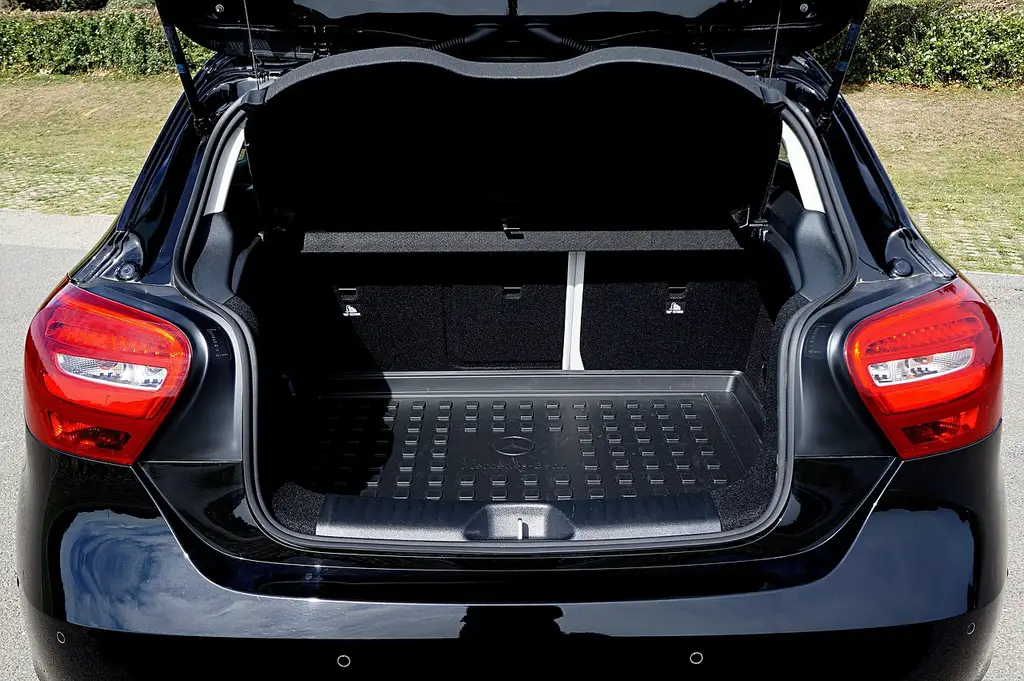
The biggest cargo areas among mainstream cars usually come from wagons, liftbacks, and boxy hatchbacks, not just traditional sedans. But trunk opening shape matters as much as cubic feet. A large number can still fail to fit a stroller, suitcase, or golf bag if the opening is too narrow or the liftover is too high. This guide ranks the largest car cargo areas and shows how those numbers translate to real loading space.
Biggest trunks, ranked by real use
Cargo space is usually published in cubic feet, but the number changes depending on whether the rear seats are upright or folded. Seats-up volume matters for daily driving. Max cargo volume matters when you are loading boxes, folding a stroller flat, or carrying long items that need the rear seat area.
For comparability, the figures below follow the way manufacturers and measurement standards typically describe cargo capacity: seats-up volume for normal use, and maximum cargo volume with the rear seat area opened up or folded. SAE J1100-style cargo measurement tries to define the usable volume inside the vehicle envelope, but automaker methods still vary in details such as reference points, cargo nets, seatback angle, and whether small cavities are counted. Do not compare mixed standards without checking the source methodology first.
The rankings below place the largest numbers next to the details that affect actual loading. That means body style, opening type, seats-up space, max space, and a practical-use rating that reflects stroller, luggage, and moving-box fit. A quick sanity-check for any trunk spec: look at opening width, liftover height, floor length, and the shape the folded seatback creates. Those four details often tell you more than cubic feet alone.
Cargo space comparison matrix
This matrix compares a broader set of car-based cargo performers across body styles. The practical-use rating is a judgment based on how likely the shape, opening, and volume are to handle common items without awkward packing. Source notes are included for each model so the numbers can be checked against manufacturer specs and EPA estimates.
| Model | Body style | Opening type | Cargo volume with seats up | Max cargo volume | Practical-use rating | Source notes |
|---|---|---|---|---|---|---|
| Audi RS 6 Avant performance | Wagon/estate | Liftgate | 30.0 cubic feet | 59.3 cubic feet | Excellent for luggage, strollers, and long boxes | Audi USA cargo specifications; manufacturer MSRP varies by trim and options; EPA fuel economy ratings vary by model year |
| Subaru Outback | Wagon | Liftgate | 32.6 cubic feet | 75.6 cubic feet | Excellent for bulky cargo, pet crates, and moving boxes | Subaru cargo specifications; EPA fuel economy estimates; MSRP varies by trim |
| Kia Soul | Wagon-like hatchback | Liftgate | 24.2 cubic feet | 62.1 cubic feet | Very good for bulky gear and upright items | Kia cargo specifications; EPA fuel economy estimates; MSRP varies by trim and model year |
| Volkswagen Arteon | Liftback | Liftback | 27.2 cubic feet | 56.2 cubic feet | Very good for suitcases and mid-size moving loads | Volkswagen cargo specifications; EPA fuel economy estimates; MSRP varies by trim and availability |
| Honda Civic Hatchback | Compact hatchback | Liftgate | 24.5 cubic feet | 46.2 cubic feet | Very good for a stroller, several bags, or folded boxes | Honda cargo specifications; EPA fuel economy estimates; MSRP varies by trim |
| Toyota Prius | Liftback | Liftback | 23.8 cubic feet | 50.5 cubic feet | Very good for luggage, groceries, and travel gear | Toyota cargo specifications; EPA fuel economy estimates; MSRP varies by trim and drive system |
| Volkswagen Golf | Compact hatchback | Liftgate | 19.9 cubic feet | 34.5 cubic feet | Good for daily bags, groceries, and light travel gear | Volkswagen cargo specifications; EPA fuel economy estimates; MSRP varies by trim and model year |
| Mazda3 Hatchback | Compact hatchback | Liftgate | 20.1 cubic feet | 47.1 cubic feet | Good for daily cargo and moderate road-trip loads | Mazda cargo specifications; EPA fuel economy estimates; MSRP varies by trim and powertrain |
| Hyundai VELOSTER | Coupe with hatch practicality | Liftgate | 19.9 cubic feet | 44.5 cubic feet | Good for luggage and smaller moving tasks | Hyundai cargo specifications; EPA fuel economy estimates; MSRP varies by model year and trim |
| Kia K4 Hatchback | Compact hatchback | Liftgate | 22.2 cubic feet | 59.3 cubic feet | Very good for a stroller, stacked luggage, and moving boxes | Kia cargo specifications; EPA fuel economy estimates; MSRP varies by trim and model year |
Two things stand out. First, boxier body shapes usually waste less space than sleek sedan trunks. Second, seats-up volume matters a lot if you drive with passengers most of the time, because folded-seat numbers can flatter a car that is less useful in daily use. A large max number is helpful, but a usable seats-up figure often tells you more about everyday practicality.
Top models by max cargo volume
The Subaru Outback leads this list at 75.6 cubic feet, followed by the Audi RS 6 Avant performance at 59.3 cubic feet and the Kia K4 Hatchback at 59.3 cubic feet. The Volkswagen Arteon follows at 56.2 cubic feet, with the Toyota Prius at 50.5 cubic feet and the Mazda3 Hatchback at 47.1 cubic feet. Those numbers put several car-based body styles into territory many shoppers expect from larger utility vehicles.
The Honda Civic Hatchback posts 46.2 cubic feet, the Hyundai VELOSTER 44.5 cubic feet, the Volkswagen Golf 34.5 cubic feet, and the Kia Soul 62.1 cubic feet. That is a wide spread, but all of them can still be useful because hatch and liftback openings usually make loading easier than a small sedan trunk opening.
Seats-up cargo volume versus folded seats
Seats-up volume is the number that affects errands. Folded-seat volume is the number that matters when you need the rear cabin to become part of the cargo bay. The Subaru Outback shows how wide the gap can be: 32.6 cubic feet with seats up versus 75.6 cubic feet maximum.
The Kia K4 Hatchback has 22.2 cubic feet with seats up and 59.3 cubic feet maximum. The Kia Soul has 24.2 cubic feet with seats up and 62.1 cubic feet maximum. The Toyota Prius has 23.8 cubic feet with seats up and 50.5 cubic feet maximum. Those gaps are useful, but they can also hide how much folding and reconfiguring is required.
Practical-use ratings for common cargo
A stroller needs opening height and hatch width as much as raw volume. A large suitcase needs load-floor length. Moving boxes need a clean shape and a low lip. That is why the Subaru Outback and Audi RS 6 Avant performance rate very well: they combine a long cargo floor with an opening that is easier to use than a conventional sedan trunk.
A common first-timer mistake is to chase the highest cargo number and ignore the opening. A car can post a strong volume figure yet still make a hard turn for a stroller handle or a long golf bag if the hatch is narrow or the load floor rises sharply near the bumper.
How cargo space is measured
SAE J1100-style cargo measurement is intended to standardize how cargo volume is described, but automakers still vary in what they include and how they interpret the boundaries of the cargo area. Some count small recesses more generously. Some publish figures that assume a specific seat position or cargo floor setting. That is why two cars with similar published numbers can feel different in practice.
Most published cargo figures also depend on whether the seats are upright or folded. For wagons, hatchbacks, and liftbacks, max cargo space usually means the area with the rear seat folded or the cabin opened up behind the front row. For sedans, the rear opening is fixed and more limited, which is why hatchbacks and wagons often jump far ahead in real-world usability even when the published numbers are closer than expected.
Why cubic feet can mislead without shape data
Cubic feet count space, not usability. A tall cargo bay may hold more air, but if the opening is short or the floor tapers, the real load can be smaller than the spec suggests. That is especially important for strollers, pet crates, and moving boxes with fixed corners.
Check opening height, load-floor length, and hatch width together. Those three dimensions tell you whether the big number will actually swallow a folded stroller, two roller bags, or a stack of medium moving boxes without awkward angles. Also check whether the folded seatback creates a flat floor or a stepped transition, because that shape affects what can slide in and what has to be lifted.
What to check beyond the spec sheet
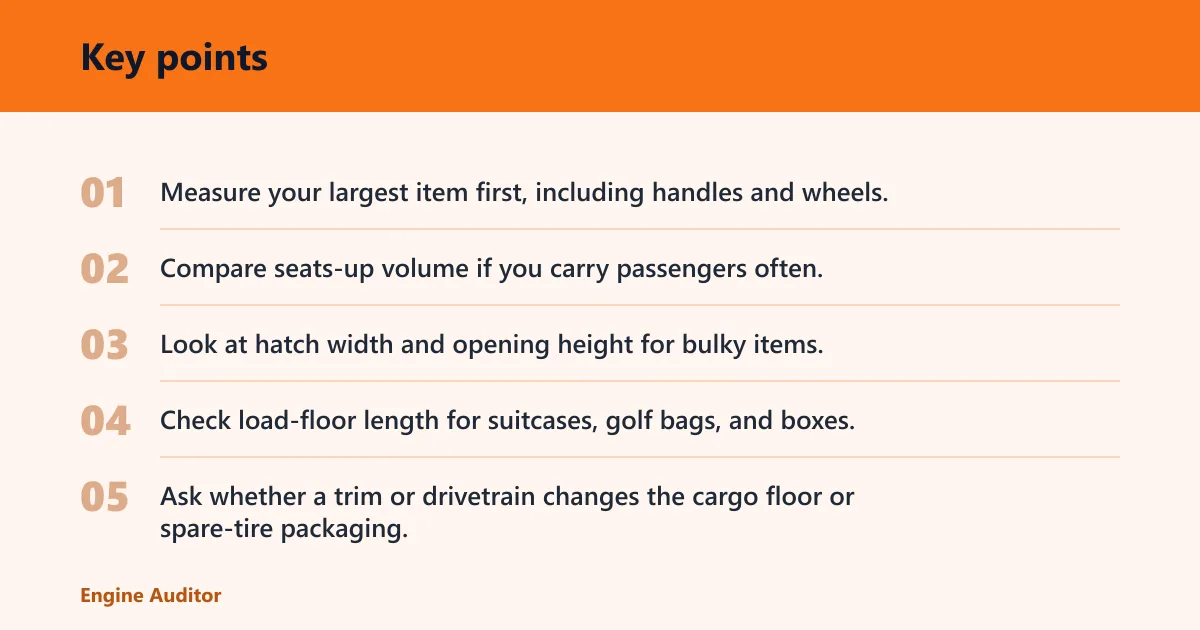
- Measure your largest item first, including handles and wheels.
- Compare seats-up volume if you carry passengers often.
- Look at hatch width and opening height for bulky items.
- Check load-floor length for suitcases, golf bags, and boxes.
- Ask whether a trim or drivetrain changes the cargo floor or spare-tire packaging.
Suppose your airport run includes two checked bags, a carry-on, and a folded stroller. A hatchback with a flatter opening can fit that load more cleanly than a sedan with a larger published trunk number, because the bag handles and stroller frame do not have to bend around a narrow trunk mouth.
Which cars have the biggest trunks for everyday use?
For everyday use, the best cargo cars are the ones that combine a large opening, a flat floor, and enough seats-up space to stay useful during normal commuting. The Subaru Outback and Audi RS 6 Avant performance are the strongest examples here, while the Toyota Prius, Volkswagen Arteon, and Kia K4 Hatchback are easier fits for shoppers who want passenger-friendly packaging.
The Subaru Outback’s 75.6 cubic feet makes it a practical choice for bulky daily cargo, and the Audi RS 6 Avant performance goes next at 59.3 cubic feet. The Kia K4 Hatchback at 59.3 cubic feet and the Volkswagen Arteon at 56.2 cubic feet give you strong load room in lower-slung bodies, while the Toyota Prius balances cargo space and efficiency with 23.8 cubic feet with seats up and 50.5 cubic feet at maximum.
How daily loading changes the rankings
Daily use often favors the car that is easiest to load, not the one with the biggest folded-seat number. A stroller, a pet crate, or a stack of groceries can be easier to place in a hatchback or wagon than in a sedan with more published trunk volume but a smaller opening.
That is why the practical ranking can differ from the spec-sheet ranking. The wagon shape of the Subaru Outback, the wagon body of the Audi RS 6 Avant performance, the liftback rear of the Arteon, and the liftgate packaging of the Kia Soul can all turn strong numbers into easier loading.
How do hatchbacks compare with sedans?

Hatchbacks usually carry more flexible cargo than sedans because the rear opening is larger and the folded rear seat expands into the cabin. Sedans can still post big trunk numbers, but their fixed decklid opening can make the same space harder to use for strollers, boxes, and tall luggage.
The Kia K4 Hatchback shows the advantage clearly with 22.2 cubic feet of seats-up space and 59.3 cubic feet maximum. The Volkswagen Golf at 19.9 cubic feet seats-up and 34.5 cubic feet maximum is smaller, but its hatch shape still makes it more adaptable than a comparable sedan trunk. The Mazda3 Hatchback adds 20.1 cubic feet seats-up and 47.1 cubic feet maximum, while the Hyundai VELOSTER posts 19.9 cubic feet seats-up and 44.5 cubic feet maximum.
Hatchbacks versus a typical sedan trunk
A typical sedan trunk may give you enough cubic feet for groceries and two suitcases, but not much forgiveness for awkward shapes. Hatchbacks are easier when the item is tall, long, or slightly wider than expected. The difference shows up the moment you try to angle in a stroller or a box that will not clear the trunk opening.
For shoppers who care about pets or road trips, the hatchback advantage is often about access. You can load a crate or bag through the rear opening without fighting a trunk lid and narrow pass-through.
When a hatchback fits more than the spec suggests
Say your carry-on is standard size, but your pet crate is several inches too tall for a sedan trunk opening. A hatchback with less published volume can still win because the opening is taller and the floor extends into the cabin. That makes the space easier to use without rearranging every bag.
Which compact and midsize cars lead?
The compact leader here is the Kia K4 Hatchback at 59.3 cubic feet maximum, with the Mazda3 Hatchback at 47.1 cubic feet and the Honda Civic Hatchback at 46.2 cubic feet close behind. In midsize cars, the Volkswagen Arteon leads this group at 56.2 cubic feet, helped by its liftback-style packaging. The Toyota Prius is also strong for its class, with 50.5 cubic feet maximum and a much more efficiency-friendly footprint.
These figures show why body style matters. The Kia K4 Hatchback is the compact cargo leader in this set, while the Mazda3 Hatchback and Honda Civic Hatchback remain strong compact answers. The Golf remains a compact hatchback benchmark because its cargo room is competitive and its shape is still easy to use.
What buyers give up to get more cargo room
More cargo space can mean a larger body, a higher rear deck, or less rear-seat space. The K4 Hatchback, Arteon, and Outback offer strong cargo numbers, but the trade-off may be a bigger footprint or less rear-passenger stretch room than buyers expect from a car-first layout.
The Prius trades some maximum cargo depth for excellent efficiency. The Golf sits in the middle. It offers less cargo than the K4 Hatchback, but it remains a clean answer for buyers who want a compact car that loads more like a small utility vehicle.
Choose the Kia K4 Hatchback if… / Choose the Mitsubishi Mirage hatchback if…
Choose the Kia K4 Hatchback if you want one of the strongest cargo rooms in the compact-car group, plus 22.2 cubic feet with seats up for daily errands. Its 59.3 cubic feet maximum makes it the better fit for strollers, stacked luggage, and occasional moving boxes. The MSRP varies by trim and model year, and EPA fuel economy estimates vary by configuration.
Choose the Mitsubishi Mirage hatchback if your priority is a smaller footprint, strong efficiency, and still usable cargo space. It gives you 47 cubic feet maximum and 17.1 cubic feet with seats up, which is enough for many daily loads without moving to a larger car. Its EPA fuel economy is among the stronger entries in this group, which helps it suit buyers who want cargo space without giving up fuel economy.
Choose the Kia K4 Hatchback if rear-seat flexibility matters more than minimum exterior size. Choose the Mirage if parking ease and fuel use matter more than maximum capacity. Choose neither if you need frequent full-house moving loads; at that point, a wagon or utility vehicle may be the better fit.
Frequently asked questions
How much cargo space do hatchbacks have compared with sedans?
Hatchbacks usually offer more usable cargo flexibility because the rear opening is larger and the folded rear seat connects to the cabin. A sedan can have a strong trunk volume number, but a hatchback often loads strollers, suitcases, and boxes more easily thanks to better access.
Is cargo volume measured the same way across automakers?
No. SAE-style guidance exists, but automakers are not required to use it identically, and published cargo figures can vary in how they treat seat position, cargo floor height, and interior boundaries. That is why the shape of the opening, load floor, and cabin transition should be checked alongside the spec.
Which compact car has the most cargo space?
In this comparison, the Kia K4 Hatchback leads the compact-car group with 59.3 cubic feet maximum and 22.2 cubic feet with seats up. That makes it the strongest compact answer for buyers who want cargo room without moving into an SUV.
Which midsize car has the most cargo space?
The Volkswagen Arteon leads the midsize-car group here at 56.2 cubic feet. Its liftback-style packaging is the key advantage, since the rear opening is more useful than a sedan trunk lid when loading suitcases, boxes, or a folded stroller.
Are wagons better than SUVs for cargo room?
Wagons can be better than SUVs for certain loads because they often have lower load floors, longer cargo floors, and easier access. SUVs and minivans can still carry more overall, but a wagon can be easier to load and more stable for everyday packing.
What is the difference between cargo space with seats up and seats folded?
Seats-up cargo space tells you what fits when the car is still carrying passengers. Seats-folded max cargo space tells you how much room opens up when the rear seat area becomes cargo space. The second number is much bigger, but it is less useful for daily commuting.
Which cars give the most cargo space and still get good mpg?
Among the models listed here, the Toyota Prius stands out for fuel economy and still offers 50.5 cubic feet of max cargo space. The Honda Civic Hatchback and Mazda3 Hatchback also balance cargo and efficiency well, while the Kia K4 Hatchback offers a stronger max-volume figure if cargo room matters more than top-tier mpg.
Products related to this article
Sponsored / affiliate links. As an Amazon Associate I earn from qualifying purchases. I may earn additional commission from eligible campaigns.