When a Heater Problem Means You Should Stop Driving Immediately
Stop driving immediately if the heater quits and the temperature gauge climbs, steam appears, coolant smell enters the cabin, or the windshield will not defrost; those are overheating or visibility failures, not simple comfort issues. Ignore them and you can end up with engine damage, a breakdown, or a blind windshield. This guide separates harmless heater faults from symptoms that mean you should pull over now.
When should you stop driving now?
Stop now if the heater failure comes with a red warning light, a rapidly rising temperature gauge, steam from the hood, or a coolant smell inside the car. Those signs point to engine overheating, low coolant, or a leak that can worsen fast. If the windshield will not clear enough to drive safely, that is also a reason to stop driving.
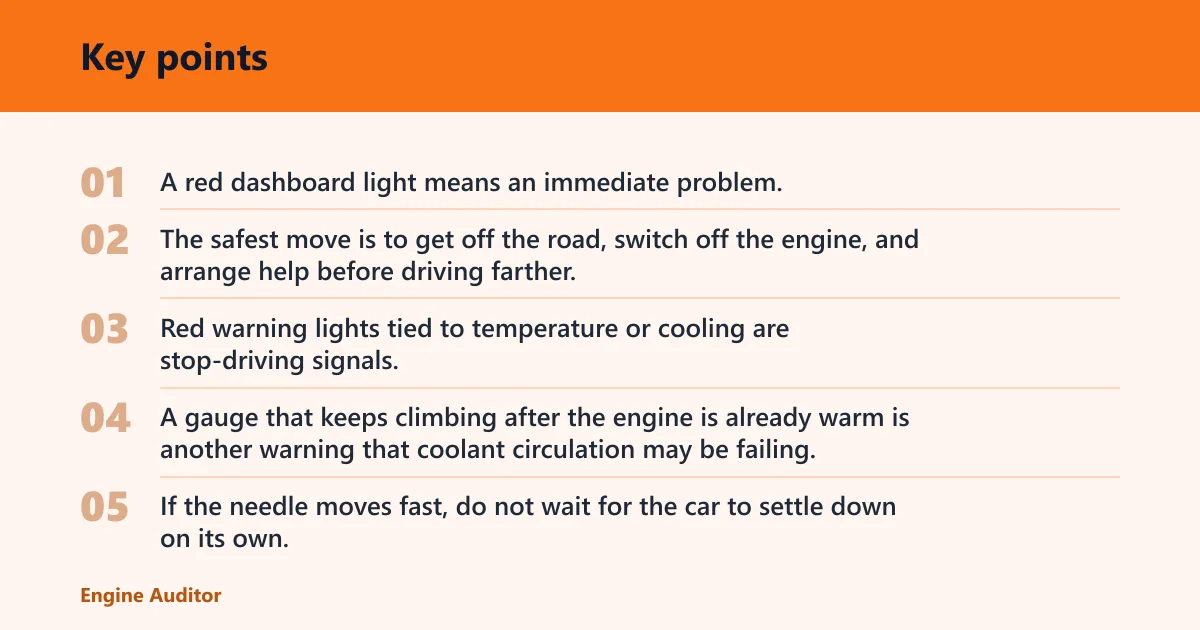
A red dashboard light means an immediate problem. An amber light usually means caution, but it still matters if the temperature gauge is climbing or the heater has failed at the same time. If the gauge moves into the red zone, or climbs quickly after only a few minutes of driving, it can be a sign to pull over before more damage occurs.
Suppose the heater starts blowing cold air, then the temperature gauge climbs halfway to the red mark during the next mile. That combination points away from a simple cabin fault and toward a cooling-system issue. The safest move is to get off the road, switch off the engine, and arrange help before driving farther.
Red warning lights and a rising temperature gauge
Red warning lights tied to temperature or cooling are stop-driving signals. A gauge that keeps climbing after the engine is already warm is another warning that coolant circulation may be failing. If the needle moves fast, do not wait for the car to settle down on its own.
Amber lights are different. They may mean a fault that needs attention soon, but they do not always require an immediate stop on their own. When amber appears together with no heat, a sweet smell, or a fogging windshield, treat the whole picture as a possible overheating or visibility problem.
Steam from the hood or coolant smell
Steam from the hood usually means coolant is escaping onto hot engine parts. A sweet smell can also point to coolant, either from a leak in the engine bay or a heater core issue inside the cabin. Both clues deserve a stop now, because the leak can grow worse within minutes.
Coolant loss can also show up as a damp spot under the car or a reservoir level that looks lower than expected. That loss can explain why the heater goes cold, since low coolant often leaves the heater core with too little hot fluid to warm the cabin.
When to move off the road and call breakdown help
Move to a safe place as soon as the warning signs appear. Then call breakdown help before driving farther. AA says, “make sure you’re in a safe place before calling,” and lists a UK breakdown 24/7 helpline. AA also says you can “report online and track your rescue.”
Use roadside assistance when the engine is overheating, the windshield will not stay clear, or a leak may be active. The same source lists the UK breakdown number as “0800 88 77 66.” If you are outside the UK, AA gives a Europe breakdown helpline: “00 800 88 77 66 55.”
Cold heater, hot engine
No cabin heat can be a warning sign, not an annoyance. It often means low coolant, air in the system, or a fault that is also hurting engine cooling. If the temperature gauge is normal and the car stays safe to drive, no heat alone may not be an emergency. But if the gauge rises, stop.
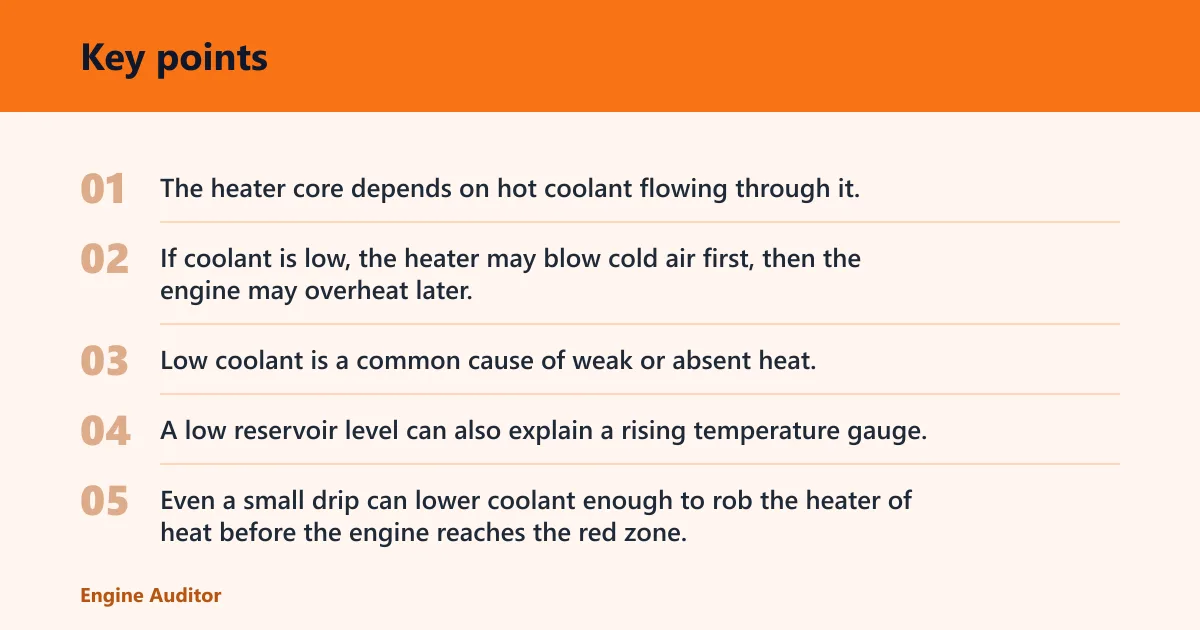
The heater core depends on hot coolant flowing through it. If coolant is low, the heater may blow cold air first, then the engine may overheat later. That is why no heat plus a rising gauge is a different problem from no heat with a stable gauge and no warning lights.
Why no cabin heat can point to low coolant
Low coolant is a common cause of weak or absent heat. Check the reservoir level only when the engine is cool, and look for signs of a leak such as puddles, drips, or dried residue near hoses and fittings. A low reservoir level can also explain a rising temperature gauge.
A leak can be slow or fast. Even a small drip can lower coolant enough to rob the heater of heat before the engine reaches the red zone. That is why cabin heat loss and overheating risk often show up together.
What a rapid gauge climb means
A coolant temperature gauge should usually settle in its normal range once the engine is warm. If it rises steadily after a few minutes of driving, or jumps toward the red zone, the cooling system is not controlling heat well. Treat that as a stop-driving sign, even if the heater still works for a moment.
Do not keep driving in the hope that the gauge will drop on its own. A rapid climb can mean low coolant, a thermostat fault, a fan problem, or another cooling-system failure. The safe decision is to pull over, switch off the engine, and arrange help.
When no heat is still safe to drive short-term
No heat by itself does not always mean the car is unsafe. If the temperature gauge stays normal, there are no warning lights, no steam, no sweet smell, and the windshield still clears, the problem is more likely a blower, blend door, or thermostat fault that needs repair soon rather than an immediate stop.
Even then, keep watching the gauge and the reservoir level if the engine is cool enough to inspect. A heater that suddenly goes cold after normal output can be the first sign of a cooling-system problem, so the drive should stay short and purposeful.
Sweet smell and fogging
A sweet smell from the heater can mean coolant is leaking into the cabin or into the engine bay. If the smell comes with fogging windows, the heater core may be leaking. That can create a visibility problem and, in some cases, a health concern from coolant vapour inside the car.
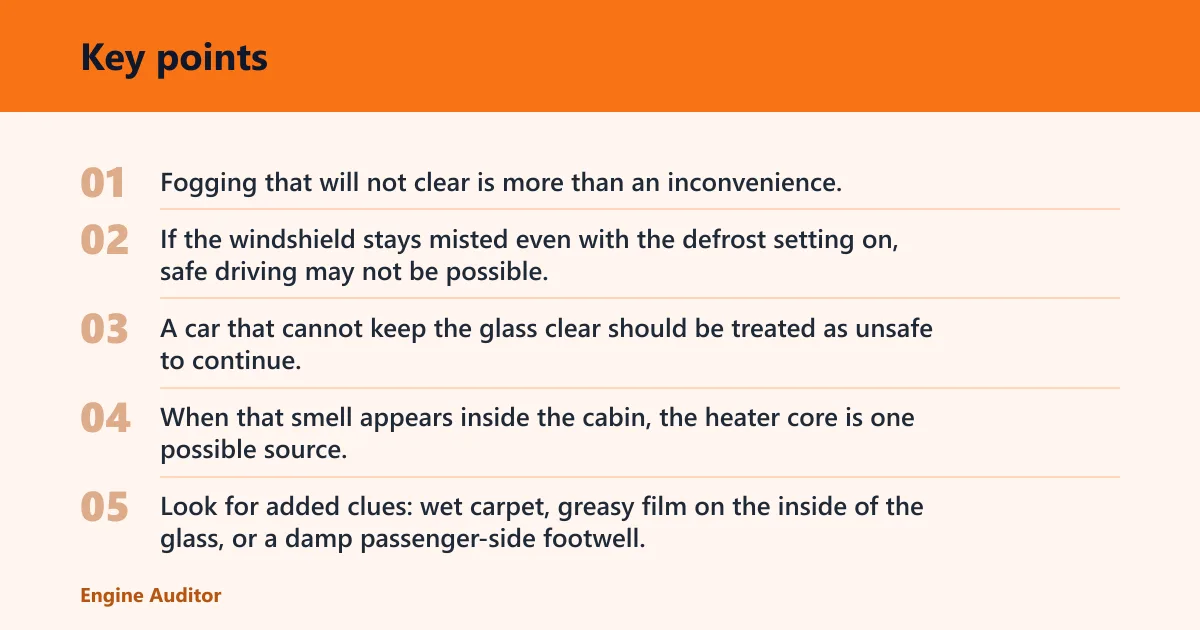
Fogging that will not clear is more than an inconvenience. If the windshield stays misted even with the defrost setting on, safe driving may not be possible. A car that cannot keep the glass clear should be treated as unsafe to continue.
Why a sweet smell can point to coolant
Coolant often has a sweet odour. When that smell appears inside the cabin, the heater core is one possible source. It can also come from a leak under the bonnet, where hot coolant may steam off before you see obvious puddles.
Look for added clues: wet carpet, greasy film on the inside of the glass, or a damp passenger-side footwell. Those signs make a heater core leak more likely. A leak can also reduce coolant enough to trigger overheating later on the same trip.
When fogging turns into a visibility stop
If the windshield fogs so badly that the defroster cannot keep a clear view, it is safest to stop driving. Visibility is a safety requirement, not a comfort feature. Winter conditions make this worse, because cold glass and damp air can overwhelm a weak defrost system very quickly.
Use the defrost setting right away, but do not assume it will fix the problem if the heater core has failed or coolant is low. If the screen keeps misting over within minutes, the car is no longer safe to continue in traffic.
Heater warning decision table
| Symptom cluster | Likely risk level | Action | Safe to drive? | Call tow/breakdown? |
|---|---|---|---|---|
| No heat alone | Low to moderate | Continue only if the temperature gauge stays normal, no warning lights appear, and the windshield clears. Book a repair soon. | Yes, short-term | No, unless other symptoms appear |
| No heat plus rising temp gauge | High | Pull over safely, switch off the engine, and do not keep driving. Check for coolant loss only after the engine cools. | No | Yes |
| Sweet smell plus fogging | High | Assume possible heater core or coolant leak. If the glass will not stay clear, stop driving and arrange help. | No if visibility is poor | Yes |
| Steam from hood | Critical | Stop immediately in a safe place. Do not open a hot system. Call breakdown help before restarting. | No | Yes |
| Heater works but defrost fails | High in winter or wet weather | Use defrost once, but stop if the windshield stays misted or the view is unsafe. Visibility comes first. | Only if the glass clears | Yes if clearing fails |
Safe roadside checks
Before deciding whether to continue, keep the checks simple and safe. Stay clear of hot parts, do not open a hot cap or reservoir, and do not touch hoses or the radiator while the engine is hot. Use only the cabin controls and a visual scan from outside the car.
-
Check the gauge and lights.
Look at the coolant temperature gauge and any warning lamps before you do anything else. A red light, a red-zone gauge, or a needle that keeps climbing can mean it is time to stop driving now. -
Look for leak clues.
Scan the ground for puddles or drips, and glance at the coolant reservoir only if the engine has cooled enough to inspect safely. A low reservoir, wet residue, or sweet smell suggests a leak that can worsen quickly. -
Test the defrost setting.
Turn on defrost and see whether the windshield clears enough for safe driving. If the glass fogs again within minutes, or the system cannot clear the main field of view, do not continue in traffic.
Breakdown help is the right call when the car is unsafe to drive further. A safe place, a clear description of the symptoms, and prompt contact can prevent a small fault from becoming a stranded-on-the-shoulder problem. The same source says wrong-fuel help is available “24/7,” and its Europe breakdown helpline is “00 800 88 77 66 55.”
Can you keep driving?
That depends on the symptom set. No heat alone may allow a short drive if the gauge stays normal and the windshield clears. But once no heat is paired with overheating, fogging, steam, or a warning light, the answer changes to stop now. The deciding factor is safety, not comfort.
No heat alone
If the heater only blows cold air and nothing else is wrong, the car may still be drivable for a short distance. Keep the trip short, monitor the gauge, and avoid treating the fault as harmless if it appears suddenly after normal cabin heat. Low coolant, a thermostat fault, or a blend door issue can still need repair soon.
Heater works but defrost fails
A working cabin heater does not guarantee safe driving if the defroster cannot clear the glass. In damp or cold weather, a failed demister can make the windshield unsafe even while the engine runs normally. If visibility does not stay open, stop and get help.
Broken heater core symptoms
A broken heater core can cause sweet smell, fogging, damp carpet, and weak heat. It can also lead to low coolant and engine overheating if the leak is large enough. If those signs appear together, treat the fault as more than a heating inconvenience and arrange a tow.
Say your car has lukewarm air for five minutes, then the windshield starts misting and a sweet smell comes through the vents. That combination points toward coolant in the HVAC system, not a simple fan problem. If the glass will not clear, the safe choice is to stop driving.
What usually causes heater faults?
Common causes include low coolant, a leak, a stuck thermostat, a blower fault, a blend door problem, or a heater core issue. Some are minor comfort faults. Others are linked to overheating or poor visibility, so the cause matters less than the warning signs beside it.
A blower that fails can leave you without airflow. A blend door fault can stop warm air from reaching the cabin. A heater core clog or leak can cause no heat, sweet smell, or fogging. If any of those happen with a rising temperature gauge, the priority changes from repair planning to immediate stopping.
Low coolant or a leak
Low coolant is one of the most common reasons for no heat. It also creates overheating risk, because the engine depends on coolant circulation to carry heat away. Look for reservoir level clues, drips under the car, or residue around hoses and caps.
Thermostat or blower faults
A thermostat that sticks can keep coolant from flowing correctly. A blower fault can leave the air coming from the vents too weak to clear the windshield, even if the engine temperature stays normal. These faults still deserve repair, but they do not always mean the car must stop immediately.
Blend door or heater core issues
A blend door controls how much heated air reaches the cabin. If it sticks, you may get cold air even with a healthy engine. A heater core fault is more serious when it brings coolant smell, wet carpet, or fogging, because that can point to a leak rather than a simple air-mix problem.
Frequently asked questions
When does a car heater problem mean I should pull over immediately?
Pull over immediately if the heater failure comes with a rising temperature gauge, a red warning light, steam from the hood, a strong coolant smell, or a windshield that will not clear. Those are signs of overheating or unsafe visibility. Do not keep driving to see whether the problem settles.
Can I keep driving if my heater is blowing cold air?
Yes, sometimes, but only if the temperature gauge stays normal, there are no warning lights, and the windshield still clears safely. Cold air alone can point to a blower, blend door, thermostat, or low-coolant issue. If the gauge rises or the view worsens, stop driving.
What warning lights mean I should stop driving with a heater problem?
Any red warning light tied to temperature or cooling should trigger an immediate stop. Amber lights need caution, but they become more serious when paired with no heat, a climbing gauge, fogging, or steam. The combination matters more than the colour by itself.
Does no cabin heat mean low coolant or an engine overheating risk?
It can. Low coolant is a common cause of no heat, and it can also cause the engine to overheat because the system has less fluid to move heat away. If the reservoir level looks low or the gauge rises, treat the heater fault as a cooling-system warning.
Is a sweet smell from the heater dangerous while driving?
It can be. A sweet smell often points to coolant, which may mean a leak in the heater core or engine bay. If the smell comes with fogging, damp carpet, or a dropping coolant level, the car may be unsafe to keep driving, especially if visibility is affected.
What should I do if my windshield keeps fogging up and the heater stops working?
Use the defrost setting right away, but stop if the glass keeps misting over or the system cannot clear the main view. Poor defrost can make the car unsafe even if the engine is fine. In cold or wet weather, visibility failure is a stop-driving issue.
Can I drive with a broken heater core?
Only if the fault is mild and the car still has normal temperature, no coolant smell, no damp carpet, and clear glass. A leaking heater core can lower coolant and lead to overheating. If it causes fogging or a sweet smell, arrange repair or a tow rather than pushing on.
What checks can I do safely at the roadside before deciding to continue driving?
Check the temperature gauge, look for warning lights, scan for puddles or drips, and test the defrost setting. Do not open a hot cooling system or touch hot components. If the gauge is rising, the windshield will not clear, or you smell coolant, stop and call breakdown help.
Products related to this article
Sponsored / affiliate links. As an Amazon Associate I earn from qualifying purchases. I may earn additional commission from eligible campaigns.