DIY Winter Heater Checks You Can Do Before Visiting a Mechanic
Check coolant level first, then set the heater to full hot with the engine fully warm; if the blower works but air stays cold, you may have a coolant-flow, thermostat, blend-door, or heater-core problem that can often be narrowed down in about 15 minutes. Weak heat can also leave you with poor defrost, unsafe visibility, and a repair bill that grows after the first freeze. This guide gives you a strict, step-by-step triage sequence, so you can sort the likely fault before you visit a mechanic.
What you can check first?


Start with the engine cold, then look at the coolant reservoir, warning lights, and obvious leaks before you run the heater. That first pass tells you whether the problem is likely low coolant, a circulation issue, or something inside the HVAC system. Do not open a hot radiator cap.
Check the coolant reservoir
- Confirm the engine is cold. Open the hood only after the car has sat long enough for the engine bay to cool. Coolant should be checked only when the engine is cool, because hot pressurized parts can spray scalding fluid.
- Read the reservoir level. Find the coolant reservoir and compare the level to the cold fill line. A low level is an early clue that the heater may not have enough coolant to circulate through the heater core.
- Look for warning signs. Check the driveway, the radiator area, and the passenger footwell for wet spots or dried residue. Also note any low-coolant warning light or temperature warning light on the dash, since either one changes how cautious you should be.
Look for obvious leak clues
Say your reservoir sits below the cold mark and the temperature light is on after a short drive. That combination points away from a simple airflow issue and toward a coolant problem that can affect both engine cooling and cabin heat.
If the reservoir is full and there are no warning lights, move to the heater hoses after the engine reaches normal operating temperature. A full tank does not rule out every fault, but it makes low coolant less likely.
Does the heater problem point to coolant flow?
Yes, often it does. Once the engine is warm, compare the two heater hoses at the firewall and watch how the heat behaves at idle and at road speed. A weak heater that stays weak can mean low coolant or a stuck thermostat, while a hose that stays cold points to a circulation problem.
Compare the heater hoses
- Warm the engine fully. Let the engine run about 10 to 15 minutes, or until the temperature gauge reaches its normal range. The quick check list depends on a fully warm engine, because a cold engine cannot tell you much about heater output.
- Find both firewall hoses. Locate the two heater hoses at the firewall. They should feel similarly warm when coolant is flowing normally through the heater core.
- Use the temperature clue. If one hose is much colder than the other, that difference points to a circulation problem. A cold heater hose suggests a circulation problem, which can come from low coolant, a blocked passage, or a thermostat fault.
Use warm-up behavior as a clue
A stuck-open thermostat can make the engine warm up slowly and leave the cabin heat weak for too long. A stuck-closed thermostat can keep coolant from circulating the way it should and can push the engine toward overheating.
Picture a car that gives lukewarm air after 15 minutes, then the heat improves only while cruising at 45 mph. That pattern often points to weak circulation at idle, not a simple blower complaint.
Watch for heat that changes with speed
Heat that improves only while driving suggests coolant flow is stronger at higher engine speed or that the system is borderline low on coolant. Heat that fades at idle but returns on the highway is more informative than a simple cold-vent complaint.
What airflow clues point to the cabin side?
If the engine is warm and both heater hoses are similarly hot, shift your attention to airflow. A blocked cabin air filter, a blower problem, or a failed blower resistor can reduce heat at the vents even when the cooling system is doing its job.
Inspect the cabin air filter
- Find the filter access. Check the owner’s manual if needed, then remove the cabin air filter cover. Most filters sit behind the glove box or in a cowl housing.
- Inspect for clogging. Hold the filter to light and look for heavy dirt, leaves, or collapsed pleats. A clogged filter can restrict airflow and make the heater seem weak.
- Replace if blocked. If the filter is packed with debris, replace it before paying for heater repair. A quick replacement can restore airflow and give you a cleaner symptom read on the rest of the system.
Check blower speeds and resistor symptoms
A blower that only works on the highest setting often points to a failed resistor. Low and medium fan speeds can disappear first, while high speed still works because it uses a different circuit path.
- Cycle each fan speed. Turn the fan through every setting with the key on and the engine running. Note any speed that drops out, sputters, or only works at one setting.
- Listen for fan changes. A healthy blower should change pitch with each speed. If low and medium are dead but high works, the resistor is a strong suspect.
Listen for blower noise
A noisy blower motor can still move air, but a motor that slows, cuts out, or squeals can mimic heater failure. If the air volume changes sharply with fan speed, the cabin side deserves attention before you assume a coolant fault.
Heater core warning signs
The heater core is part of the coolant circulation path that warms cabin air. When it leaks, coolant can show up in the cabin instead of just the engine bay, and the clues are often more specific than simple weak heat.
Sweet coolant smell in the cabin
A sweet coolant smell is a key clue for heater-core leakage. If that smell appears with the heater on, treat it as more than an odd odor and look for other leak signs.
Damp passenger carpet or wet insulation
A leaking heater core can cause dampness on the passenger floor and may also lead to foggy windows or a sweet coolant smell. Moist carpet, wet insulation, or a sticky feel under the dash points toward an internal leak rather than a filter or resistor fault.
Foggy windows that return
Foggy windows can point to a leaking heater core. If the glass clears and then fogs again with a sweet smell or damp carpet, the heater core moves higher on the list.
A common first-timer mistake is blaming every foggy windshield on outside humidity. If the glass keeps misting inside the car with no rain or wet shoes involved, the cabin may be getting coolant vapor from the heater core.
Winter heater triage table
Use this table as a fast, owner-safe decision aid. Start at the top with the symptom you actually see, then follow the safest check and the next action that fits the result.
| Symptom | Safe check | Expected reading | Likely failure | Next action |
|---|---|---|---|---|
| Cold vents with hot engine | Confirm coolant level is at the cold fill line and compare heater hoses at the firewall | Reservoir full; both hoses similarly warm | Blend door, blower airflow issue, or heater-core flow restriction | Check cabin filter and fan speeds first; if hoses differ in warmth, book a mechanic |
| One heater hose colder than the other | Feel both firewall hoses after 10 to 15 minutes of running | Both should be similar in warmth | Circulation problem, low coolant, or blockage | Do not keep driving hard; arrange repair soon |
| Sweet smell plus wet carpet | Smell the cabin and check the passenger floor and insulation | No sweet odor; dry carpet | Heater core leak | Schedule repair promptly; monitor coolant level before driving |
| Blower only works on high | Cycle low, medium, and high fan speeds | All speeds should work | Failed blower motor resistor | Plan repair; heat may be usable only on high for now |
| Heat improves only while driving | Compare idle heat with highway heat | Heat should stay steady at idle and speed | Low coolant, weak circulation, or thermostat issue | Check coolant when cool; if level is low or temp rises, seek help |
| Heat takes too long to appear | Watch warm-up time and gauge movement | Cabin heat should start after normal warm-up | Stuck-open thermostat | Have the thermostat tested or replaced |
| Engine warms quickly, vents stay cold | Check for clicking behind dash and blend changes at the controls | Air should shift from cold to hot with control changes | Blend door actuator | Book HVAC diagnosis |
| Foggy windows with sweet odor | Inspect glass, carpet, and defrost performance | Glass should clear and stay clear | Heater core leak | Limit driving if visibility is poor; repair soon |
Could the HVAC controls be the fault?
Yes. If coolant level is normal, the engine reaches temperature, and airflow seems fine, the HVAC control side becomes more likely. Blend door actuators, clicking from behind the dash, and simple fuse problems can all leave you with warm engine coolant and cold air at the vents.
Blend door actuator symptoms
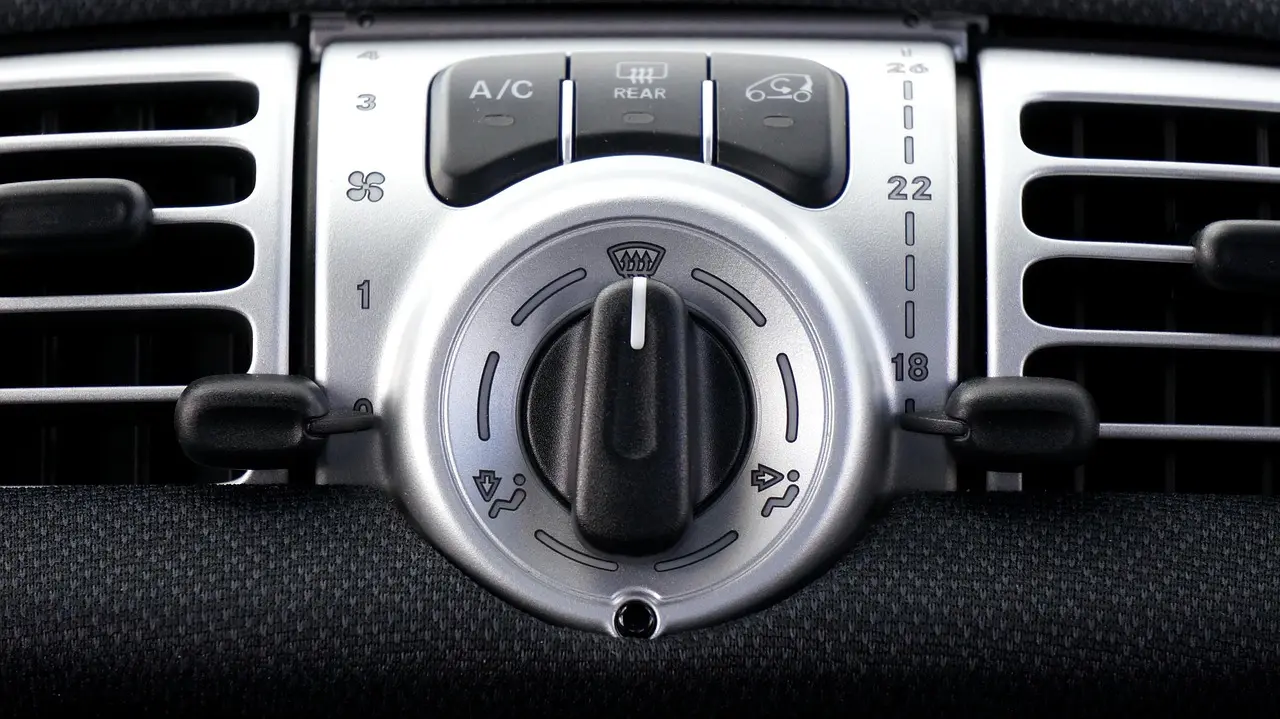
A blend door actuator controls how much air passes through the heater core and how much bypasses it. A warm engine with cold vents, especially when the temperature knob or display changes nothing, often points to that air-mix control.
- Change the temperature setting. Move the control from full cold to full hot while the blower runs. Listen for movement behind the dash.
- Watch for response lag. If the air stays cold or changes only after repeated input, the actuator may be stuck or stripped.
Clicking or knocking behind the dash
Clicking or knocking noises behind the dash are common actuator clues. If the sound repeats when you change temperature or defrost mode, the control mechanism is likely searching for position or failing to move the door.
HVAC fuse checks
Fuse checks are a basic electrical screen, not a cure-all. The fuse panel is often under the dash or in the engine bay, and a blown fuse can stop a blower, control head, or actuator circuit from working.
- Locate the fuse panel. Use the fuse-cover diagram or owner’s manual and find the HVAC-related fuses.
- Inspect for failure. Look for a broken metal strip or dark burn mark. Replace only with the listed rating if a fuse is blown.
- Watch for repeat failures. If a new fuse blows again, stop the DIY check. That points to a deeper electrical fault.
When should you stop DIY checks?
Stop at home when the fault stops looking simple. If coolant is low and you cannot find the leak, if the heater core seems to be leaking, or if the car overheats or the defroster stops working, the safe move is professional help. A heater fault can become an engine-cooling fault fast.
Drive carefully or stop driving
- Drive carefully. If the heater only weakens at idle but the engine stays in range and the reservoir is full, a careful drive to a shop is usually reasonable.
- Stop and tow. If the engine overheats, the coolant level is dropping quickly, or the windshield will not clear, do not keep driving. Visibility and engine damage both become immediate concerns.
- Do not open hot parts. Never remove a hot radiator cap or open any pressurized cooling-system part.
Frequently asked questions
What can I check on my car heater before I take it to a mechanic?
Check the coolant reservoir when the engine is cold, run the engine about 10 to 15 minutes, feel both heater hoses at the firewall, and test every fan speed. Then inspect the cabin air filter and look for sweet smell, damp carpet, or foggy windows. That sequence sorts most common faults quickly.
How do I tell if low coolant is the reason my heater is blowing cold air?
Low coolant is likely if the reservoir is below the cold fill line, the heat is weak at idle and speed, or one heater hose feels colder than the other. Weak heat that stays weak can mean low coolant or a stuck thermostat, so check the level only when the engine is cool.
Can I safely check heater hoses myself when the engine is cold?
Yes. A cold engine is the right time to look at the heater hoses and coolant reservoir, because hot pressurized coolant can burn you. Once the engine is warm, both heater hoses at the firewall should feel similarly warm. A cold hose points to a circulation problem that needs more attention.
What symptoms point to a bad heater core versus a blower problem?
A bad heater core usually brings sweet coolant smell, damp passenger carpet, wet insulation, or foggy windows, along with weak heat. A blower problem shows up as poor airflow, noisy fan behavior, or a fan that only works on high. Those clues point to different parts of the system.
Why does my car heater smell sweet in winter?
A sweet smell in the cabin is a classic heater-core warning sign. Coolant vapor can enter the HVAC case through a leaking core, then show up as odor, fogged glass, or damp carpet on the passenger side. If the smell appears with weak heat, check coolant level and stop guessing.
Should I check the cabin air filter before booking heater repair?
Yes. A clogged cabin air filter can cut airflow enough to make a healthy heater feel weak. It is a quick, safe inspection and often a simple replacement. If airflow is still poor after that, move on to fan speeds, resistor symptoms, coolant flow, and heater-core clues.
What heater problems are not safe to diagnose at home?
Do not keep digging if coolant is low and you cannot find the leak, if the engine overheats, or if the car needs pressurized cooling-system parts opened. Do not remove a hot radiator cap. If the heater core seems to be leaking or the defroster fails, a mechanic should take over.
How long should I let my car run before judging heater performance?
Let the engine run about 10 to 15 minutes before you judge heat, and wait for the temperature gauge to reach its normal range. A cold engine cannot tell you much about heater output. If heat is still weak after that, the fault is more likely in coolant flow, airflow, or HVAC control.
Products related to this article
Sponsored / affiliate links. As an Amazon Associate I earn from qualifying purchases. I may earn additional commission from eligible campaigns.