What Car Does Chevy Use In Nascar? Full Breakdown Here
Chevrolet primarily uses the Chevrolet Camaro ZL1 in NASCAR’s top Cup Series. This high-performance race car is specially built for competition. It shares a name and styling cues with its road-going counterpart but is a purpose-built racing machine.
It has a long history in NASCAR, representing Chevrolet’s commitment to motorsports.
The Chevrolet Camaro ZL1: NASCAR’s Bowtie Champion
When you see a Chevrolet car on the NASCAR track, chances are it’s a Chevrolet Camaro ZL1. This car is a legend. It’s built specifically for the high demands of stock car racing.

OLIKIUS
NASCAR - 75th Anniversary Limited Edition -…
- NASCAR Collectible – Official Daytona 500 75th Anniversary air freshener set. Showcase your racing passion while keeping your car…
- Invigorating "Moonshine Frost" Scent – Crisp fragrance with a cool twist that neutralizes stale odors. Leaves your car smelling fr…
- Long-Lasting Odor Control – Advanced fragrance formula continuously eliminates odors instead of masking them, delivering lasting f…
As an Amazon Associate I earn from qualifying purchases.
It’s not just any Camaro you see on the street. This is a race-tuned beast. It’s engineered for speed, durability, and performance on the oval tracks.
The ZL1 name itself has a rich history. It dates back to the muscle car era of the 1960s. Back then, it was a symbol of extreme power and performance for the original Camaro.
Chevrolet decided to bring back this iconic badge for their modern NASCAR entry. This connects the past with the present. It honors the racing heritage of the Camaro brand.
In NASCAR, the car isn’t just about looking good. It’s about winning. The Chevrolet Camaro ZL1 is designed with aerodynamics in mind.
Every curve, every spoiler, and every vent serves a purpose. These elements help the car cut through the air efficiently. This is super important at speeds over 200 miles per hour.
Less drag means more speed. It also means better handling.
The chassis is a robust, purpose-built roll cage. It’s designed to keep the driver safe. It also provides a rigid platform for the suspension.
This helps the car grip the track. The suspension itself is finely tuned. It allows for adjustments.
This is done to suit different tracks and changing conditions. It’s a delicate balance. They need to be stable yet agile.
Under the hood, the engine is a marvel of engineering. While NASCAR rules dictate many engine specifications, Chevrolet’s teams work within those rules. They develop powerful V8 engines.
These engines deliver immense horsepower. They also need to be reliable. A blown engine can end a race in an instant.
Endurance is key. The goal is consistent power lap after lap.
The brakes are another critical component. Stopping power is just as important as acceleration. NASCAR tracks often require hard braking.
This is especially true on restarts or when navigating traffic. The ZL1 uses advanced braking systems. They are designed to withstand extreme heat and stress.
They help drivers gain an advantage in cornering.
The interior is stripped down. It’s all about function. Safety equipment is paramount.
You’ll find racing seats, a fire suppression system, and a full suite of gauges. The driver is strapped in tight. They are focused on the race.
There’s no room for distractions. Every detail is geared towards optimizing the driver’s performance and safety.
My First Race Day: The Roar and the Red
I remember my first time attending a big NASCAR race. It was at Charlotte Motor Speedway. The air vibrated with the sound.
It was a deep, guttural roar. It wasn’t just loud; it was physical. You could feel it in your chest.
I was standing near the pit road. The smell of hot oil and burning rubber filled the air.
Suddenly, the pace car pulled in. The green flag waved. The pack of cars surged forward.
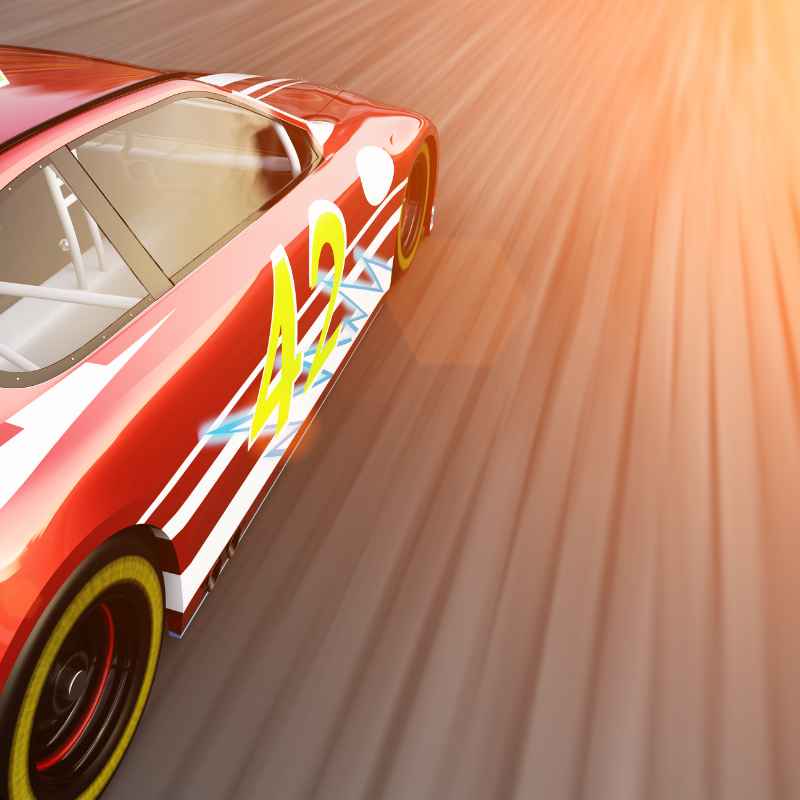
I distinctly remember seeing a row of Chevrolet Camaros. They were all painted in bright, bold schemes. One, in particular, caught my eye.
It was a deep red with silver accents. It looked incredibly aggressive. It was one of the Chevrolet Camaro ZL1 cars.
As it flew past, I noticed something. It wasn’t perfectly smooth. There was a slight wobble.
It seemed to happen as it went into the corner. My mind immediately went to “uh oh.” Was something wrong? Was it going to crash?
My stomach did a little flip. I felt a surge of anxiety for the driver. This was my first real taste of the on-the-edge excitement of NASCAR.
But then, something amazing happened. The car corrected itself. It hugged the line perfectly.
It was like it was on rails. The driver had clearly made a quick adjustment. They were back in the pack.
They were fighting for position. It was a moment of pure skill and machine working together. That wobble, which looked like a problem, was actually just the car reacting.
It was responding to the immense forces at play. It showed me how precise these machines and their drivers have to be. It was a stark reminder that racing is a constant battle against physics.
And the Chevrolet Camaro ZL1 was right in the thick of it.
The Evolution of Chevy’s NASCAR Racers
Early Days: Chevrolet’s NASCAR journey started with models like the Impala and Chevelle. These cars were closer to their production counterparts.
The Monte Carlo Era: For many years, the Monte Carlo was Chevrolet’s iconic NASCAR car. It dominated tracks for decades.
Shift to the Impala (again): Later, the Impala name returned to the track. It represented a modern take on a classic nameplate.
Introduction of the Camaro: In recent years, the focus shifted to the Camaro. This brought a sportier, more aggressive look to Chevrolet’s NASCAR fleet.
The ZL1 Designation: The current Chevrolet Camaro ZL1 is the pinnacle of this evolution. It’s a purpose-built race car that pays homage to its heritage.
The Road to the Track: From Showroom to Speed Demon
It’s easy to see a race car and think it’s just a stripped-down street car. That’s not quite how it works for NASCAR. While the Chevrolet Camaro ZL1 race car wears the same iconic name and styling as the production ZL1, they are worlds apart in their construction.
The goal is to look like the car people can buy. But the performance needs are vastly different.
The production Chevrolet Camaro ZL1 is already a high-performance machine. It has a powerful engine and sharp handling. But the NASCAR version is taken to an extreme.
The chassis is not a unibody construction like a street car. Instead, it’s a purpose-built tube frame. This frame is incredibly strong.
It’s designed to absorb impacts and protect the driver. It also provides a rigid structure for the suspension system.
Aerodynamics play a huge role in NASCAR. The race car’s bodywork is sculpted to create downforce. Downforce pushes the car into the track.
This helps with grip, especially at high speeds. The front splitter, the rear spoiler, and the underbody all work together. They manage airflow.
This is crucial for stability and speed. Even small changes to these parts can have a big impact on performance.
The engine in the NASCAR ZL1 is a V8. However, its specifications are heavily regulated by NASCAR. Teams work with engine builders to develop powerful, reliable motors.
These engines must fit within strict cubic inch and horsepower limits. They are designed for maximum output over long races. Fuel efficiency is also a consideration, though it’s secondary to raw power and durability.
Suspension is another area where race cars differ greatly. Instead of springs and shocks you might find in a street car, NASCAR uses specialized racing components. These include heavy-duty control arms, sway bars, and adjustable shocks.
The goal is to allow teams to fine-tune the car’s handling. This is done for each specific track. A track like Daytona requires different settings than Martinsville.
Brakes are built for extreme conditions. They need to handle constant high temperatures and heavy loads. The carbon-ceramic brake systems used are far more advanced than anything on a typical production car.
They offer incredible stopping power. But they also require careful management during a race. Overheating can lead to brake fade.
This means a loss of stopping power.
Safety is paramount. The driver sits in a custom-molded seat. They are surrounded by a robust roll cage.
A multi-point harness secures them. Fire suppression systems are standard. All these elements are designed to protect the driver.
This is in case of crashes or other incidents. The driver’s helmet and HANS device (Head and Neck Support) are also critical safety gear.
Key Differences: Production Camaro ZL1 vs. NASCAR Camaro ZL1
| Feature | Production Camaro ZL1 | NASCAR Camaro ZL1 |
| Chassis | Unibody structure | Purpose-built tube frame |
| Engine | Supercharged V8 (production specs) | NASCAR-spec V8 (regulated performance) |
| Aerodynamics | Street-focused, some downforce | Extreme race-focused, maximum downforce |
| Suspension | Performance street suspension | Highly adjustable race suspension |
| Brakes | High-performance street brakes | Advanced carbon-ceramic race brakes |
| Interior | Luxury and comfort features | Stripped-down, safety-focused |
Real-World Tracks and Chevrolet’s Dominance
Chevrolet has a long and storied history in NASCAR. The brand has seen success on virtually every type of track. From the high-speed super-speedways like Daytona and Talladega to the tight, twisty road courses, Chevrolet has been a consistent contender.
The Chevrolet Camaro ZL1 continues this legacy. It’s designed to be versatile enough to compete everywhere.
On the super-speedways, raw horsepower and drafting are key. The ZL1’s aerodynamic design helps it slip through the air. Drivers work in packs, using the slipstream of other cars to gain speed.
The power from the Chevrolet engine is crucial here. It allows them to maintain high speeds and make passes. Crashes can happen suddenly on these tracks.
Safety features of the ZL1 are put to the ultimate test.
At intermediate tracks, like Bristol or Michigan, the balance of power and handling is vital. These tracks feature longer straightaways and sweeping turns. The ZL1’s suspension setup is critical here.
Teams work to find the right balance. This allows them to accelerate hard off the corners. It also helps them maintain grip through the turns.
Tire wear becomes a significant factor. The ZL1 needs to be tough on its tires.
Short tracks, such as Martinsville or Richmond, are a different beast. These are tight, often bumpy tracks. Racing here is close-quarters and intense.
Drivers must be precise with their steering and throttle control. The ZL1’s ability to maneuver in traffic is paramount. Quick reflexes and excellent braking are necessary.
The car needs to be nimble. It needs to respond instantly to driver inputs.
Road courses, like Sonoma or Watkins Glen, bring a new set of challenges. These tracks involve multiple left and right turns, braking zones, and elevation changes. The Chevrolet Camaro ZL1, while a stock car, must perform like a sports car.
Handling is the absolute priority. Teams focus on braking performance and suspension tuning. They want the car to turn sharply and hold its line through complex corners.
Chevrolet’s success across these diverse track types is a testament to their engineering and the dedication of their race teams. The development of the Chevrolet Camaro ZL1 has been a collaborative effort. It involves engineers, designers, and mechanics working together.
They refine the car based on race data. They constantly seek small advantages. This pursuit of perfection is what keeps Chevrolet at the front of the pack.
Chevrolet’s NASCAR Model History (Cup Series)
- 1960s-1970s: Chevrolet Impala, Chevrolet Chevelle
- 1970s-1980s: Chevrolet Monte Carlo
- 1980s-1990s: Chevrolet Lumina, Chevrolet Monte Carlo
- 1990s-2000s: Chevrolet Monte Carlo, Chevrolet Impala
- 2007-2012: Chevrolet Impala (Cup Series debut), Chevrolet Malibu (Xfinity)
- 2013-2017: Chevrolet SS (Cup Series)
- 2018-Present: Chevrolet Camaro ZL1 (Cup Series)
What This Means for You: From Fan to Future Driver
So, what does knowing that Chevrolet races the Chevrolet Camaro ZL1 mean for you? First, it connects you more deeply to the sport. When you watch a race, you’re not just seeing generic race cars.
You’re seeing a specific model. You can appreciate the engineering and design that goes into it. You can see how it’s derived from a car that has a sporty image.
It also highlights the dedication Chevrolet has to racing. Pouring resources into developing a specific NASCAR model shows a long-term commitment. This passion for performance can trickle down.
It can influence the features and capabilities of the Camaros you see on the road. The technology and lessons learned on the track often find their way into production cars. You might get better handling or more durable parts.
For aspiring racers, understanding the ZL1’s construction is inspiring. It shows what’s possible when you focus on performance and safety. The principles of aerodynamics, engine power, and chassis strength are fundamental.
These are concepts you can learn about and apply, even in different forms of motorsport or automotive engineering.
Even if you’re not a gearhead, seeing the Chevrolet Camaro ZL1 on the track adds a layer of excitement. It’s a powerful, American-made car. It’s competing on one of the biggest stages in motorsports.
It represents a brand that has a long heritage in racing. It’s a symbol of speed, competition, and engineering prowess.
If you’re a fan of the Camaro, seeing it as the chosen vehicle for Chevrolet’s Cup Series effort is a big deal. It reinforces the car’s performance credentials. It shows that this model is capable of excelling in the most demanding racing environment.
This can only add to its appeal and desirability.
Myth vs. Reality: NASCAR Car Comparisons
Myth
NASCAR cars are just regular cars with cages.
Reality
NASCAR race cars, like the Chevrolet Camaro ZL1, are purpose-built machines. They have tube frames, specialized engines, and extreme aerodynamics.
Myth
The race car looks exactly like the street car.
Reality
While they share styling cues, the race car’s body is designed for maximum aerodynamic downforce. It’s a functional sculpture for speed, not just appearance.
Quick Checks and Simple Tips for Fans
If you’re a fan following the Chevrolet Camaro ZL1 in NASCAR, there are a few simple things you can look for. They help you appreciate the race even more. And they can help you understand what the teams are trying to achieve.
Watch the Tires: Pay attention to how the tires look during a race. Are they showing a lot of wear? Are they overheating?
This tells you about the car’s setup. It also shows how hard the driver is pushing it. Teams work hard to manage tire wear.
It’s a critical part of race strategy. You might see a pit stop focused on new tires. This is because the old ones are toast.
Listen to the Engine Sound: While all V8s sound powerful, listen for changes. Does the engine sound smooth? Does it sound strained?
Any unusual noises can signal a problem. It might mean a team needs to bring the car in for service. Or it could mean the end of the race for that car.
Observe Aerodynamic Adjustments: If you watch closely, especially on pit road, you might see mechanics adjusting the car’s wings or spoilers. These are tiny adjustments. But they can make a big difference in how the car handles.
It’s teams trying to get the perfect balance for the track conditions.
Note the Driving Lines: Watch where the drivers choose to go on the track. Do they stick to the bottom? Do they use the high side?
This often depends on the track. It also depends on the car’s setup. A well-handling Chevrolet Camaro ZL1 might be able to take different lines.
This allows drivers to make more passes.
Understand Pit Stop Strategy: Pit stops aren’t just about fuel and tires. Teams also make adjustments. They might change tire pressures.
They might adjust the car’s suspension. These changes are based on how the car is performing. They are also based on what the driver is reporting.
It’s a high-speed chess match happening in seconds.
Fast Facts: The NASCAR Camaro ZL1
Full Name: Chevrolet Camaro ZL1
Series: NASCAR Cup Series
Engine: V8 (NASCAR regulated)
Key Feature: Purpose-built race chassis for safety and performance
Aerodynamics: Designed for maximum downforce and speed
Legacy: Continues Chevrolet’s long history in NASCAR
For a broader explanation of how NASCAR controls power while still allowing manufacturer programs, see our guide on how NASCAR engines differ by series and manufacturer.
Frequently Asked Questions About Chevy’s NASCAR Car
What engine does the NASCAR Chevrolet Camaro ZL1 use?
The NASCAR Chevrolet Camaro ZL1 uses a V8 engine. However, its specifications are strictly regulated by NASCAR rules. Teams work with engine builders to maximize power and reliability within these limits.
The exact cubic inch displacement and horsepower are controlled to ensure competitive racing.
Is the NASCAR Camaro ZL1 the same as the street version?
No, they are very different. While the NASCAR Chevrolet Camaro ZL1 shares styling cues and the ZL1 nameplate with the production car, it is a purpose-built race car. It features a tube frame chassis, racing-specific aerodynamics, a highly specialized engine, and race-tuned suspension, unlike the unibody construction and street-oriented components of the production model.
When did Chevrolet start racing the Camaro in NASCAR?
Chevrolet introduced the Chevrolet Camaro ZL1 as their Cup Series entry starting in the 2018 season. Before that, they raced other models like the Chevrolet SS. The move to the Camaro brought a sportier and more recognizable silhouette to the track for Chevrolet.
How much horsepower does a NASCAR Camaro ZL1 have?
NASCAR doesn’t release exact horsepower figures for each manufacturer’s engines. However, Cup Series engines are estimated to produce around 750-850 horsepower. The exact number can vary slightly based on engine builder and specific track configurations, but it’s always within regulated limits.
Can you buy a Chevrolet Camaro ZL1 race car?
No, you cannot directly buy a fully-built Chevrolet Camaro ZL1 race car used in NASCAR. These are custom-built, extremely expensive machines designed purely for competition. Chevrolet does offer high-performance production versions of the Camaro ZL1 that enthusiasts can purchase for street use, but these are not race-spec vehicles.
What were Chevrolet’s NASCAR cars before the Camaro ZL1?
Before the Chevrolet Camaro ZL1, Chevrolet raced several other models in the NASCAR Cup Series. Notable examples include the Chevrolet SS from 2013 to 2017, the Chevrolet Impala, and historically, the Chevrolet Monte Carlo and Lumina. Each model represented Chevrolet’s commitment to racing during its respective era.
Wrapping Up: The Heart of Chevrolet Racing
So, there you have it. The car Chevrolet races in NASCAR is the mighty Chevrolet Camaro ZL1. It’s more than just a car; it’s a symbol.
It represents Chevrolet’s dedication to performance. It carries a legacy of speed and competition. Seeing it fly around the track is a thrill for any fan.
It showcases cutting-edge engineering and driver skill. It’s a true racing machine.
Related pick: Check today's price on Amazon
Products related to this article
Sponsored / affiliate links. As an Amazon Associate I earn from qualifying purchases. I may earn additional commission from eligible campaigns.