Does Running the Heater Affect Fuel Economy in Cold Weather?
Usually no, the cabin heater itself has a small effect on fuel economy once the engine is warm. Idling and defrost use cost more. Skip that distinction and you can blame the heater for MPG losses caused by cold starts, thick fluids, tire pressure loss, and longer warm-up. This guide explains what the heater draws, what winter really does to MPG, and when low heat output points to another problem.
Cabin heat in a gasoline car
In a gasoline car, the cabin heater usually uses waste heat from the engine cooling system, so its direct fuel use is small after warm-up. The blower motor uses a little electricity, but the hot air itself comes from heat the engine already made. That is why the heater is rarely the main cause of a winter MPG drop.
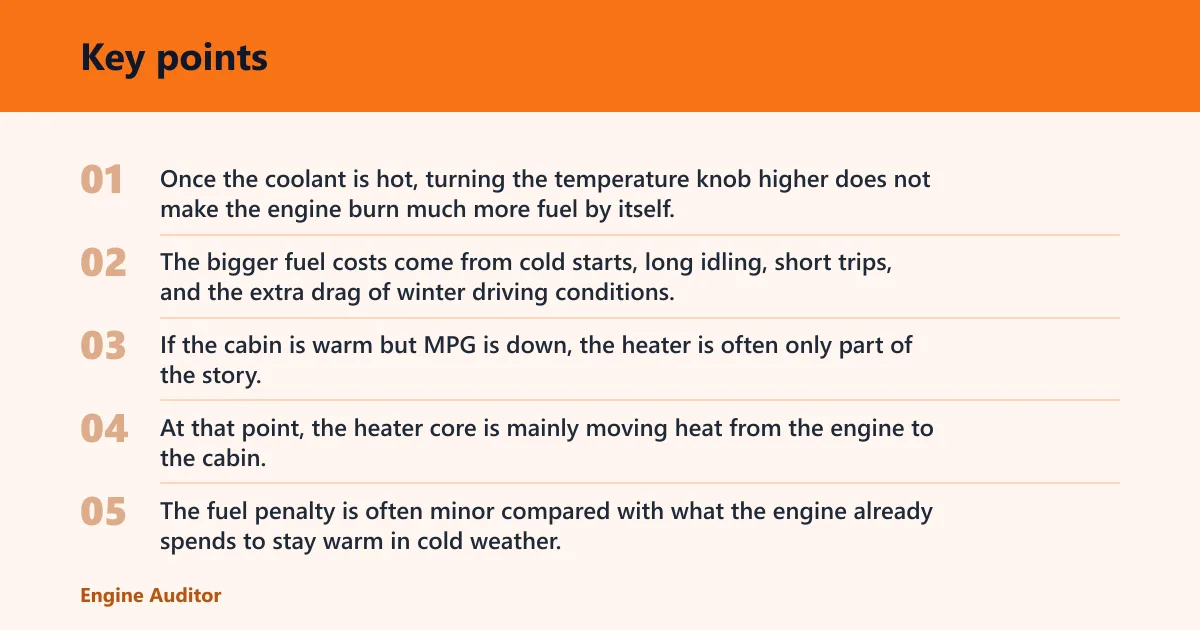
Once the coolant is hot, turning the temperature knob higher does not make the engine burn much more fuel by itself. The bigger fuel costs come from cold starts, long idling, short trips, and the extra drag of winter driving conditions. If the cabin is warm but MPG is down, the heater is often only part of the story.
When the heater load is small
The heater load is usually small after the coolant reaches operating temperature and the thermostat is regulating normally. At that point, the heater core is mainly moving heat from the engine to the cabin. The fuel penalty is often minor compared with what the engine already spends to stay warm in cold weather.
That changes if the trip is very short. Short trips take the biggest hit because the heater works hardest during the first warm-up phase, before the engine, transmission, and coolant settle into steady operating temperature. In that window, the problem is still mostly warm-up loss, not the heater itself.
Why the answer changes in EVs
Electric vehicles are different because cabin heat draws directly from the battery. Driver notices often appear right away when the heater turns on, and EV range can drop 10% to 30% depending on temperature and driving conditions. Resistance heaters use electricity almost one-for-one as heat, while heat pumps can do better in milder cold.
Heat pumps can produce two to three units of heat for every unit of electricity consumed, but they become less effective in extremely cold temperatures. In an EV, cabin heat is a direct range cost, so seat heaters and preconditioning matter more than they do in a gasoline car.
Why winter mpg drops
Winter MPG falls for several reasons at once. Cold temperatures can increase fuel use because the engine needs more time to reach normal operating temperature, cold air is denser and increases drag, tire pressure drops, and drivers often idle more. That means the heater may be present in the same trip, but it is usually not the main reason fuel economy falls.
Engine warm-up losses
The first miles after startup are inefficient because a cold engine runs richer and takes longer to reach normal temperature. Thick oil, cold transmission fluid, and cold metal parts add drag until everything warms up. That effect is strongest on short errands and stop-and-go driving.
Say a 12-mile commute includes a 5-minute idle at the start on a 20-degree morning. The fuel penalty comes mostly from the idle and warm-up time, not from the heater blowing warm air once the coolant is hot. The same car on a long highway trip may show a smaller winter penalty.
Idling and remote start
Idling burns fuel without moving the car, so a remote-start habit or long warm-up in the driveway can cost more than the heater core itself. Cold weather invites longer idle time, but that fuel is spent with zero miles covered. It is one of the fastest ways to lose MPG in winter.
Air density and rolling resistance
Cold air is denser, so the car pushes through more air at the same speed. That raises aerodynamic drag, especially on the highway. Cold pavement, deeper winter tread, snow, and slush can add rolling resistance too, so the car works harder even if the heater setting stays the same.
Tire pressure and winter fuel use
Under-inflated tires can decrease fuel efficiency, especially in colder weather. Tire pressure drops as air temperature falls, and low pressure raises rolling resistance. A driver may assume the heater is causing the MPG loss when the real issue is underinflation.
- Check tire pressure cold. Measure before driving, after the tires have sat for several hours. Use the door placard pressure, not the sidewall maximum, because the placard matches the vehicle’s load and handling target.
- Watch short-trip habits. Compare one 3-mile errand with a longer 20-mile drive. If MPG is much worse on the short trip, warm-up loss is likely doing more damage than cabin heat.
- Reduce idle time. Start the car, clear the glass, and drive gently as soon as it is safe. A long driveway warm-up often wastes more fuel than a steady low heater setting.
Running heater affect fuel decision table
This table separates winter MPG loss into four buckets. Use it to sort out whether the problem is warm-up loss, idling, cabin heat and defrost load, or a vehicle condition that needs attention.
| Bucket | Likely MPG impact | Telltale symptoms | Fastest fix or test |
|---|---|---|---|
| Engine warm-up | Often the biggest loss on short trips; strongest in the first few miles | Low MPG only on cold starts; heat gets better after several minutes; engine feels sluggish at first | Combine trips, avoid long idle warm-ups, and compare a short route with a longer steady drive |
| Idling | High fuel burn with no miles covered; can outweigh cabin heat use | Remote start, driveway warm-ups, or long waits with the engine running | Limit idle time when safe; clear windows and leave sooner rather than later |
| Cabin heat and defrost load | Small in a warmed gasoline car; larger in EVs; defrost can add extra load | Heat feels normal, but defrost mode drops MPG more than plain heater mode | Use seat heaters first, lower fan speed, and switch out of defrost once the glass is clear |
| Vehicle condition | Can mimic heater-related MPG loss and stay present even on mild days | Weak heat, slow warm-up, coolant temp stays low, tire pressure warning, or rough running | Check thermostat health, coolant level, and tire pressure; fix obvious faults before chasing the heater |
Does defrost use more fuel?
Yes, defrost can use more fuel than cabin heat alone because many vehicles use the air conditioner compressor to dry the air, even in winter. That extra load helps clear fogged glass faster, but it can add consumption beyond the heater core’s normal heat output. The effect is usually modest in a gasoline car, but it can still be real.
Why defrost can add compressor load
Defrost mode often switches on the A/C system to remove moisture from the incoming air. Dry air clears the windshield better than warm moist air, which is why defrost can feel stronger than the regular heater. The tradeoff is extra engine load from the compressor in many cars.
That is why a driver may see a larger MPG dip during heavy windshield clearing than during ordinary cabin heating. If the glass is already clear, returning to a normal vent setting can reduce that added load.
When windshield clearing costs more than cabin heat
Picture a sedan with a fogged windshield at 18 degrees Fahrenheit. If defrost runs for 10 minutes on every morning commute, the compressor load can matter more than the heater setting itself. Once the glass clears, switching back to floor or dash vents usually saves fuel compared with staying in full defrost mode.
Does idling with heat on waste fuel?
Yes. Idling with the heat on wastes fuel because the engine burns gasoline without moving the car, and the heater gets its warmth from that running engine. The cabin may feel better, but the fuel cost comes from the idle itself, especially during long warm-ups and remote-start routines.
Why long warm-ups hurt economy
A long idle lets the engine consume fuel while the car covers zero distance. In cold weather, that is often worse than driving gently after a short warm-up. The heater only needs the engine to be running; it does not require the car to sit in the driveway for about 10 or 15 minutes.
Short idle periods for safety or visibility are one thing. A long habit of remote starting every morning is another. If the cabin is already warm enough to drive safely, moving off sooner usually improves winter efficiency.
Short trips versus longer drives
Short trips suffer the most because they may end before the powertrain fully warms up. On a longer commute, the warm-up penalty gets spread over more miles, so the heater’s share of the total fuel use becomes smaller. That is why the same temperature setting can look worse on a 4-mile errand than on a 30-mile commute.
What vehicle problems can look like heater loss?
Weak cabin heat and poor MPG do not always point to the heater. A stuck-open thermostat, low coolant, or underinflated tires can create the same complaint pattern. If the engine never reaches normal temperature, the heater feels weak and fuel economy can stay low at the same time.
Stuck-open thermostat
A weak thermostat or stuck-open thermostat can keep the engine too cool. That slows warm-up, hurts cabin heat, and can make the car burn more fuel than normal on winter trips. If the temperature gauge stays below its usual midpoint or takes far too long to rise, the thermostat deserves attention.
That fault is easy to confuse with heater trouble. The heater is doing its job, but the coolant never gets hot enough for strong output. In that case, replacing the thermostat often fixes both symptoms at once.
Low coolant or heater core issues
Low coolant can leave the heater core starved of hot fluid, which cuts cabin heat without solving the MPG complaint. A partially blocked heater core can do the same thing. If one vent blows warmer than another, or heat fades at idle, the problem may be in the cooling system rather than in fuel economy.
Underinflated tires
Underinflated tires increase rolling resistance and can be mistaken for a heater problem because the MPG loss appears after the weather turns cold. A quick pressure check is a better first move than assuming the heater is at fault. Check all four tires, and do not forget the spare if the vehicle uses a monitored full-size spare.
- Read the temperature gauge. If it stays unusually low, suspect the thermostat before blaming the heater. A cold-running engine often means more fuel use and weaker heat together.
- Inspect coolant level. Check only when the engine is cold enough to be safe. Low coolant can reduce heater output and point to a leak that needs repair.
- Recheck tire pressure. Use a gauge after the car has sat overnight. Correct pressure removes a common winter MPG loss and is quick to rule out.
How to stay warm with less fuel use
Use the heated seat and steering wheel first if the vehicle has them. They warm the driver directly and usually use less energy than blasting the whole cabin. Preconditioning before departure can also reduce the initial heating load, especially in EVs and on short trips.
- Precondition before leaving. Warm the cabin while plugged in if the vehicle supports it, or while still on shore power in an EV. That shifts part of the heat cost away from the battery and reduces the first few minutes of heavy demand.
- Use seat heat first. Turn on seat and wheel heaters before raising the cabin temperature. These surfaces make the car feel warm sooner, so you can keep the fan and temperature setting lower.
- Limit idle time. Start moving once the windows are clear and visibility is safe. Gentle driving warms the powertrain faster than waiting in place.
- Keep the glass clear smartly. Use defrost only as long as needed, then return to a normal vent setting. That trims compressor load where the vehicle uses A/C for drying.
Suppose a compact SUV is set to full heat and full defrost for the first 15 minutes of every trip. If the glass clears in 3 minutes, the extra 12 minutes of defrost may cost more than the cabin heat alone. Switching modes sooner is an easy fix.
For gasoline cars, the best efficiency habit is simple: warm the car enough to drive safely, then let the engine do the rest of the warming under load. For EVs, the best habit is even simpler: precondition, use seat heat, and keep cabin heat lower when possible.
Frequently asked questions
Does running the heater use more gas in a cold car?
Usually only a little, and mostly before the engine is warm. In a gasoline car, cabin heat comes from waste engine heat, so the heater itself is not the main MPG drain. Cold starts, idle time, and short trips usually matter more.
Why does my fuel economy drop in winter when I use the heater?
The drop is usually a mix of warm-up loss, denser air, lower tire pressure, and more idling. The heater may be in use at the same time, but it is often a passenger in the problem rather than the cause. Short trips show the biggest hit.
Does idling the car with the heat on waste fuel?
Yes. Idling burns fuel without moving the car, so a long warm-up in the driveway is usually expensive for the miles gained. If safe, start driving once the windows are clear. The engine warms faster under light load than while sitting still.
Is there a difference between defrost and heater for fuel economy?
Yes. The heater mostly uses engine waste heat in a gasoline car, while defrost often adds A/C compressor load to dry the air. That extra load can cost more than cabin heat alone, especially during long windshield-clearing sessions.
How much fuel does cabin heat use in cold weather?
In a warmed gasoline car, the cabin heater usually uses little extra fuel compared with the rest of the winter penalty. The larger costs are warm-up, idling, drag from dense air, and low tire pressure. In EVs, cabin heat can reduce range much more directly.
How can I stay warm without hurting fuel economy too much?
Use seat and steering wheel heaters first, precondition before departure, and keep idle time short when safe. In a gasoline car, once the engine is warm, lower cabin heat settings usually have a small effect. In an EV, those same habits can save noticeably more range.
Products related to this article
Sponsored / affiliate links. As an Amazon Associate I earn from qualifying purchases. I may earn additional commission from eligible campaigns.