Block Heater vs Battery Heater: Which Winter Upgrade Helps More?
Choose a Block Heater when cold oil and slow engine warm-up are the problem. Choose a Battery Heater when cranking power is the problem. Use both only if severe overnight cold threatens both. Ignoring the wrong one can mean slow starts, drained batteries, and extra wear in deep cold. This guide shows how each works, when each helps most, and when both are worth plugging in.
| Factor | Block Heater | Battery Heater | Winner |
|---|---|---|---|
| Primary job | Warms engine coolant or oil so the engine block starts from a less severe cold-soak state. | Warms the 12-volt battery so it can deliver better starter current in subfreezing weather. | Tie |
| Best failure mode | Cold, thick oil and a frozen-feeling engine that cranks hard but still needs heat. | Slow cranking, low voltage, or a battery that cannot supply enough current. | Tie |
| Best use case | Very cold climates, diesel engines, outdoor overnight parking, and short-trip cars that struggle to warm up. | Vehicles with weak batteries, sensitive starting systems, or cold-start trouble that looks electrical rather than mechanical. | Tie |
| Limit | Does little for a bad battery, a worn starter, or a charging-system fault. | Does little for thick oil, cold coolant, or an engine that needs preheating to start cleanly. | Tie |
Block heater vs battery heater
A block heater and a battery heater solve different cold-weather failures. One helps the engine start warmer, the other helps the battery crank harder. That split matters because a vehicle can have one problem, the other, or both at the same time.
What each one warms
A block heater warms engine coolant or oil, which helps the engine block shed less heat into the air before startup. A battery heater wraps or pads the 12-volt battery so chemical output stays higher in subfreezing temperatures.
What problem each one solves
Block heat is for cold oil, cold coolant, and an engine block that has absorbed too much cold overnight. Battery heat is for low starter power, low cold-cranking amps, and a battery that drops voltage before the starter can turn the engine fast enough.
Where the comparison breaks down
The comparison fails when the symptom is not starting at all. A battery heater will not fix coolant freeze risk, oil viscosity, or a worn starter. A block heater will not rescue a weak battery that cannot deliver enough current.
What the cold is doing to your start
Cold weather changes several parts of the starting system at once. The engine block holds a large metal mass that absorbs heat, oil thickens, battery output falls, and diesel engines often become harder to light off than gasoline engines. The right accessory depends on which of those is causing the no-start.
Cold oil and a colder engine block
When the engine block and coolant are cold, the engine has to spin through thicker oil and colder metal. That makes warm-up slower and can increase wear during the first moments after startup. A block heater reduces that burden by warming coolant or oil before you turn the key.
Battery voltage drop and CCA loss
Cold-cranking amps, or CCA, is the battery starting-performance rating that matters most in winter diagnosis. As ambient temperature drops, battery voltage and available current drop too. A battery heater does not create a stronger battery; it helps the battery deliver more of its normal starting ability in the cold.
Why diesel starts are harder
Diesel engines often need more help in winter because they are more cold-start sensitive than many gas engines. They can benefit from block heat, and some also rely on glow plugs for starting support. If a diesel sits outside overnight in deep cold, block heat usually matters first.
Do you need a block heater or a battery heater?
Start with the symptom, not the part. If the engine cranks slowly because the battery is weak, a battery heater may help. If the starter spins but the engine is reluctant because oil is thick and the engine is stone-cold, a block heater is the better fix. If both symptoms appear, both accessories may be justified.
Slow cranking vs no cranking
Slow cranking points toward battery power, cable resistance, or starter load. No cranking can still be battery-related, but it can also point to a failing battery, a bad connection, or another electrical fault. A battery heater only helps the first category.
Short-trip driving and weak batteries
Short trips can leave a 12-volt battery undercharged, especially in winter when the battery works harder and the vehicle uses more electrical load during startup. If the battery keeps falling weak after short drives, a battery heater may help starting, but the charging system still needs a check.
Outdoor overnight parking
Outdoor overnight parking raises both risks because the vehicle cools all the way down. In that setting, a block heater helps the engine and a battery heater helps the starter battery. If there is no outlet access, neither accessory can be used, so battery condition and coolant freeze protection matter more.
Winter heater decision matrix
This matrix uses symptoms, parking style, and vehicle type to separate the two upgrades. The ambient temperature range is a guide, not a universal cutoff, because thresholds vary by vehicle, battery age, and local climate.
| Temperature range | Parking style | Vehicle type | Symptom | Best upgrade | When it is not worth installing |
|---|---|---|---|---|---|
| Above freezing to about 20°F | Garage or short outdoor stop | Gas car | Battery feels lazy; engine otherwise starts normally | Battery Heater | Skip it if the battery is healthy and the issue is actually a starter or charging fault. |
| Below freezing, especially near 0°F | Outdoor overnight parking | Gas car | Thick-sounding start and slow oil circulation | Block Heater | Not worth it if the car has no outlet access and only mild cold is expected. |
| Below freezing | Outdoor overnight parking | Diesel vehicle | Hard starting, extended cranking, cold-soak problems | Block Heater | Skip the install if the vehicle is garaged and never sees deep cold, unless the manufacturer recommends it. |
| Any subfreezing night | Repeated overnight parking | Weak battery | Voltage drop, slow cranking, no-start after sitting | Battery Heater | Not worth it if the battery is near end of life; replacement may solve the issue better. |
| Very cold, repeated overnight exposure | Outdoor parking with outlet access | Diesel or gas vehicle | Both slow cranking and cold engine behavior | Block Heater | Use both only if both problems show up and you can plug in safely. |
Gas cars
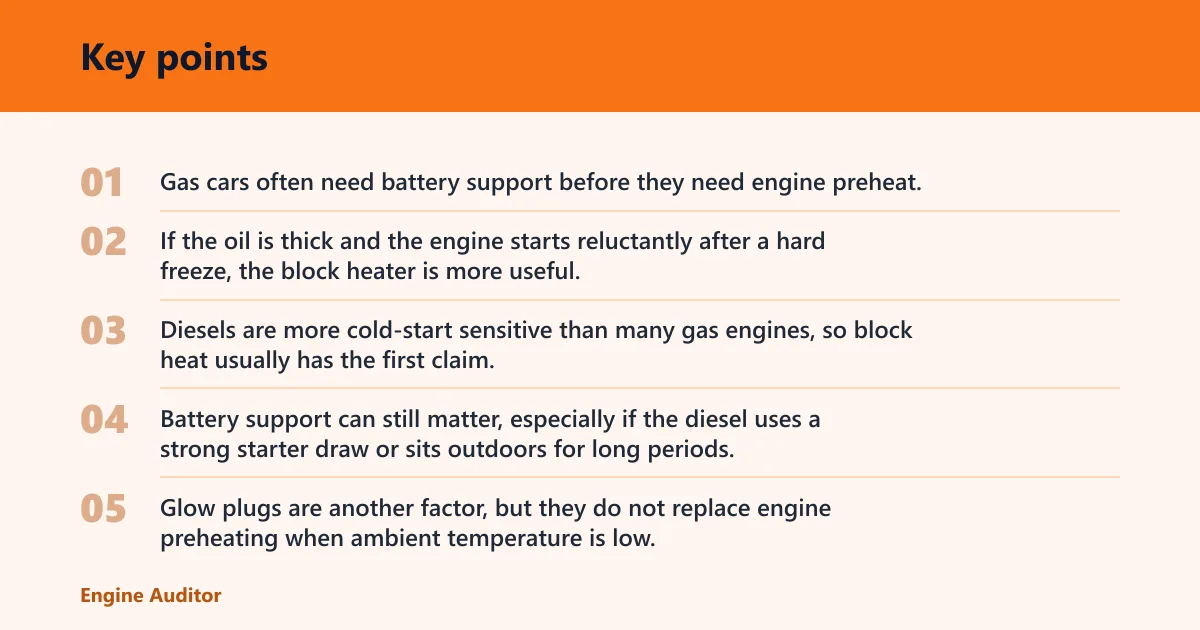
Gas cars often need battery support before they need engine preheat. If the symptom is weak cranking and the engine otherwise runs fine once started, a battery heater is the more targeted choice. If the oil is thick and the engine starts reluctantly after a hard freeze, the block heater is more useful.
Diesel vehicles
Diesels are more cold-start sensitive than many gas engines, so block heat usually has the first claim. Battery support can still matter, especially if the diesel uses a strong starter draw or sits outdoors for long periods. Glow plugs are another factor, but they do not replace engine preheating when ambient temperature is low.
Weak batteries
If the battery is the weak link, engine heat will not solve the no-start. A battery heater can help a marginal 12-volt battery deliver more useful current, including AGM and flooded lead-acid designs, but it cannot fix a battery that is already worn out. Replacement may be the right answer instead.
Extreme-cold overnight parking
Extreme cold makes both failure modes more likely. The engine block cools fully, the coolant gets colder, and the battery loses output. In that setting, using both accessories is reasonable if the vehicle has the right kit and safe outlet access.
Can you use both together?
Yes, if they solve different cold-weather failures on the same vehicle. A block heater warms the engine side, while a battery heater supports cranking power. Together they make sense when the vehicle is parked outside in severe cold and both the engine and the battery are vulnerable.
When both tools solve different failures
Use both when you have a cold-soak engine and a battery that also loses power in the same weather. That is common on outdoor overnight parking in very low ambient temperatures, especially for diesels or older vehicles with modest batteries.
When one accessory is enough
If the only issue is slow cranking from a weak battery, a battery heater is the more direct fix. If the battery is healthy but the engine starts hard because oil and coolant are too cold, a block heater is enough. Do not add both just because it feels safer.
Outlet access and timer use
Both accessories depend on safe plug-in access. An outlet timer can limit plug-in duration so the vehicle is warm enough without wasting electricity all night. That matters most when the vehicle parks outdoors for long stretches and the temperature only drops hard near dawn.
-
Check the symptom first. Note whether the vehicle cranks slowly, cranks normally but resists starting, or fails in a way that points to a battery, starter, or engine cold-soak issue. The right heater depends on that difference.
-
Match the accessory to the failure. Choose a block heater for cold oil and engine warm-up problems. Choose a battery heater for low cranking power and winter voltage drop.
-
Confirm outlet access. Make sure the parking spot can safely reach power with the proper cord length. If the cord must cross a walkway or snow pile, the setup becomes less practical and less safe.
-
Use a timer when possible. A timer can cut wasted runtime during overnight parking. Many drivers only need a few hours of preheat, not an entire night of electricity use.
Choose Block Heater if… / Choose Battery Heater if…
Choose Block Heater if the engine is the problem. Choose Battery Heater if cranking power is the problem. If both problems happen together in severe cold, use both and set up the plug-in routine around your parking pattern.
Choose block heater if…
- Your engine cranks but starts hard after long cold parking.
- You drive a diesel and see stronger cold-soak sensitivity.
- The vehicle sits outside in low ambient temperatures and the oil seems thick at startup.
- You want less cold-start wear and faster warm-up from a cold engine block.
Choose battery heater if…
- The starter turns slowly and the battery is the weak point.
- Cold weather exposes a borderline 12-volt battery, including AGM or flooded lead-acid types.
- The vehicle makes short trips and the battery often starts the next morning undercharged.
- You need help with winter no-starts that look electrical rather than mechanical.
If your gas sedan sits outside at 10°F overnight and the starter sounds lazy every morning, a battery heater is often a better match. If the engine would normally run well once it catches, a battery heater fits the symptom better than a block heater. If the same sedan cranks hard but coughs before firing on a 0°F morning, the block heater is often the better pick.
A common first-timer mistake is buying the wrong accessory because the symptom looks similar. A battery heater will not fix thick oil, and a block heater will not rescue a weak battery that has lost CCA. If the vehicle still struggles after the right accessory is installed, inspect the battery, starter, charging system, coolant level, and cable connections.
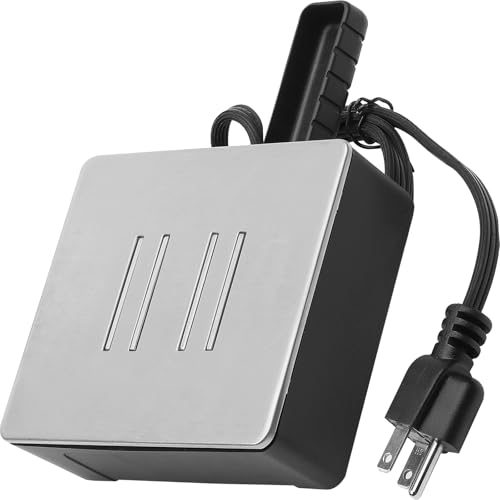

How to install and use each safely
Safety matters because both accessories run from household power. Use the kit made for your vehicle, follow the manufacturer instructions, and check that cords, plugs, and timers are rated for outdoor use. A damaged cord or a loose connection can create more trouble than the heater solves.
-
Inspect the cord and plug. Look for cuts, brittle insulation, bent prongs, or loose connectors before every cold spell. Replace damaged parts before plugging in.
-
Keep the cord clear. Route it away from tires, sharp edges, and snow removal tools. A trapped cord can fail or become a trip hazard.
-
Use the right extension cord. If an extension is needed, use one rated for outdoor use and suitable current capacity. Avoid daisy-chaining cords, which adds resistance and risk.
-
Set a realistic timer. Start with a few hours before departure, then adjust based on weather and the vehicle’s starting behavior. The goal is enough heat, not continuous all-night power.
-
Verify fit before cold season. Battery heaters need room around the battery case, and some vehicles use AGM batteries or vehicle-specific trays that change fit and routing. Confirm the kit matches the battery layout before winter arrives.
How long should you plug in a block heater before starting?
A common rule of thumb is a few hours before startup, not all night. Many vehicles do not need extended runtime, especially with an outlet timer. The right interval depends on ambient temperature, engine size, and how far the temperature has fallen below freezing.
How much electricity does a block heater use overnight?
Power draw depends on the heater rating, which is usually listed on the element or in the manual. Since the wattage varies by vehicle and kit, a timer is the practical way to reduce unnecessary use. If the heater does not need to run all night, do not leave it on all night.
Frequently asked questions
Do I need a block heater or a battery heater for winter?
Choose based on the failure mode. If the engine is hard to warm up and cold oil is the issue, use a block heater. If the starter struggles because the battery cannot supply enough current, use a battery heater. Severe overnight cold can justify both.
Will a battery heater help my car start in freezing weather?
Yes, if the problem is battery output. A battery heater can improve cranking performance in subfreezing temperatures by keeping the 12-volt battery warmer. It will not fix thick oil, coolant freeze risk, or a failing starter, so the symptom still matters.
Is a block heater worth it if my battery keeps dying in winter?
Not by itself. A block heater helps the engine warm up, but a weak battery still has to supply starter current. If the battery keeps dying, check battery age, CCA, charging output, and cable condition. A battery heater or replacement may be the better fix.
Can I use both a block heater and a battery heater at the same time?
Yes, when both cold oil and low battery output are likely. That combination makes sense for severe overnight parking, especially with diesels or vehicles that live outside. Use a timer and safe cord routing so the setup stays practical and low risk.
What temperature is cold enough to need a block heater?
There is no single cutoff for every vehicle. The need rises as ambient temperature drops below freezing and becomes stronger near 0°F (-18°C), especially for diesel engines and cars parked outdoors. Local climate, battery condition, and engine design all affect the threshold.
Does a battery heater work on an AGM battery?
Yes, a battery heater can be used on many AGM batteries if the kit fits the battery case and the manufacturer allows it. AGM batteries have different charging behavior from flooded batteries, so confirm compatibility before installation. Fit and heat control matter more than the label alone.
Products related to this article
Sponsored / affiliate links. As an Amazon Associate I earn from qualifying purchases. I may earn additional commission from eligible campaigns.