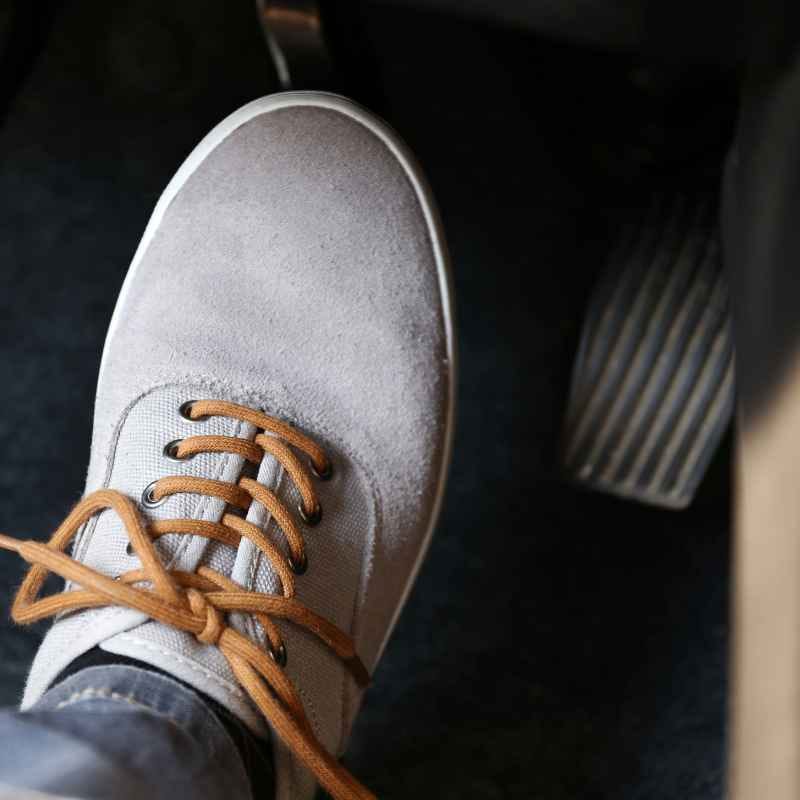
How to Stop a Start-Stop Car Smoothly Every Time
Stopping a start-stop car smoothly requires a slightly different technique than a conventional vehicle, especially when you want to avoid jerky halts and premature system activation. This guide explains exactly how to master the pedal control so your passengers never feel a jolt and the auto stop-start engages flawlessly.
Simply put, you stop a start-stop car smoothly by applying steady, progressive brake pressure until the final few meters, then easing off slightly just before complete stop. This triggers the auto-stop without a sudden lurch and keeps the ride comfortable for everyone inside.
Key Takeaways
- Stopping a start-stop car smoothly demands gentle, graduated brake pedal pressure rather than a single hard press.
- The auto-stop system engages best when you release a tiny bit of brake pressure milliseconds before the wheels stop turning.
- Common mistakes like braking too early or too hard trigger abrupt stops and can disengage the start-stop feature.
- Understanding your car’s specific stop-start logic helps you adapt the technique for maximum comfort and fuel savings.
- Practice on flat, empty roads to build muscle memory before driving in traffic or with passengers.
What You Need Before You Start
Before you can stop a start-stop car smoothly, you need to know a few basics about your vehicle’s system. Modern start-stop systems rely on a reinforced battery, a robust starter motor, and sensors that monitor brake pressure, wheel speed, and engine temperature.

UltraEra
UltraEra Auto Start Stop Eliminator for Ford…
- 【Designed as the Ultimate Auto Start Stop Eliminator for Ford F150 2015 2016 2017 2018 2019 2020】Engineered specifically for the F…
- 【Plug-and-Play Installation】Enjoy a hassle-free setup with this universal auto stop start eliminator. It requires no cutting, spli…
- 【100% Safe & Non-Invasive, Protects Your Warranty】Designed with a safety-first approach, this auto stop start eliminator integrate…
As an Amazon Associate I earn from qualifying purchases.
Ensure your car is in good mechanical condition—low battery charge, a faulty alternator, or an engine that hasn’t warmed up can prevent auto-stop from activating at all. If the system isn’t working, you won’t see the fuel economy benefits, and stopping may feel unpredictable.
- Check your owner’s manual for the specific start-stop logic (e.g., some models require the steering wheel to be straight).
- Make sure the battery is fully charged and the vehicle is at operating temperature.
- Practice in a safe, open area without distractions.
- Wear comfortable shoes that allow fine pedal modulation.
- Disable the start-stop system initially to practice smooth braking, then re-enable it for the genuine technique.
Once you’re ready, move on to the step-by-step process.

Step 1: Approach the Stop with Gradual Deceleration
Start easing off the accelerator well before you reach your stopping point. The key is to let the car slow down naturally using engine braking—this reduces the brake effort needed later. In most start-stop cars, the system will not engage until you apply the brakes, so early deceleration is purely for smoothness.
As you lift your foot off the gas, keep your right foot hovering over the brake pedal. Look far ahead at the stop line or traffic lights to gauge your timing. A good rule: begin lifting off the accelerator about 50–100 meters before the stop, depending on speed.
Tip: If you approach a traffic light that changes to green before you stop, simply reapply the accelerator gently. The auto-stop system won’t have intervened, saving a start cycle and prolonging battery life.
Gradual deceleration also gives your passengers time to brace naturally—no one likes a sudden nose-dive.
Step 2: Apply the Brakes in Two Phases
The secret to a smooth stop lies in splitting your brake application into two phases. First, apply moderate pressure to slow the car from your current speed to about 5–8 km/h. At this point, the start-stop system is usually ready to activate but hasn’t yet triggered.
Second, as you near the final 2–3 meters, gradually release brake pressure by about 10–20% while still keeping the pedal engaged. This “feather” technique lets the car settle gently. Many drivers push harder at the last moment, which causes a sharp stop.
Instead, think of squeezing the brake pedal gently, like squeezing a lemon until the last drop.
- Press brake gently from a distance to slow to walking speed.
- As the car gets close to stopping, ease off the brake slightly.
- Keep a steady, light pressure until the car comes to a complete halt.
- The engine will shut off automatically if conditions are met.
Warning: Never fully release the brake at a stop, or the engine may restart immediately, causing a surge. Keep your foot firmly on the pedal—just with reduced pressure.
Step 3: Use the Right Brake Timing for Auto-Stop Engagement
Most start-stop systems require the car to be fully stationary for 1–2 seconds before the engine cuts off. However, some modern systems (like those in BMW, Audi, and Ford vehicles) can kill the engine before you fully stop if you apply brakes decisively. Understand your car’s logic.
If your car uses the older “stop at zero” logic, you must bring the vehicle to a complete stop first. If you ease off the brake too early, the engine may stay running. Experiment in a parking lot: try braking firmly until you stop, then wait—the engine should turn off after a moment.
Then try the feather technique and see if the engine shuts off sooner or later.
| Car Brand | Auto-Stop Trigger | Best Braking Technique |
|---|---|---|
| Volkswagen / Škoda / Seat | After car stops, wait 1 sec | Squeeze and hold steady |
| BMW (EfficientDynamics) | Anticipates stop, cuts before full halt | Firm early press, then feather |
| Ford (Auto Start-Stop) | After full stop + brake pressure | Gradual increase to final hold |
The table shows that one technique doesn’t fit all. Test your own car’s reaction and adapt accordingly.
Step 4: Time Your Brake Release for a Smooth Restart
When the traffic light turns green or you want to move, the engine will restart automatically. How you release the brake determines whether the car lurches forward or glides smoothly. Always release the brake pedal gently—let the starter engage, then wait half a second before pressing the accelerator.
Many drivers stomp on the gas the instant the engine fires, causing a jerky takeoff. Instead, treat the restart like a rolling start. As the engine runs, the transmission engages, and then you apply throttle smoothly.
This also reduces wear on the starter and belts.
- At a stop, keep foot on brake with light pressure.
- When ready to move, slowly lift your foot from the brake pedal.
- Wait for the engine to restart (about 0.5–1 second).
- Gently press the accelerator to accelerate away.
Important: Some cars (like certain Mazda i-ELOOP systems) restart the engine using a capacitor, which is almost instant. In those, you can release the brake and apply gas in one fluid motion—no delay needed.
Smooth restarts also conserve fuel, as aggressive acceleration wastes the fuel saved by the auto-stop.
Common Mistakes That Cause Jerky Stops in Start-Stop Cars
Even experienced drivers often make these errors. Avoiding them will instantly improve your stopping smoothness.
- Braking too late — Forces a hard press at the end, causing the nose to dip and the engine to cut off abruptly (or not at all).
- Braking too early — You then have to release and reapply, which confuses the stop-start system and often results in a lurch.
- Holding constant pressure throughout — Doesn’t allow the “feathering” that smooths the final roll-out.
- Lifting off the brake completely — The engine restarts and the car may roll forward unexpectedly.
- Pumping the brake pedal — Causes the system to deactivate or restart the engine repeatedly.
Practice on a flat surface with a friend watching from outside—they can tell you if the car rocks back and forth or if the brake lights flick erratically.
Warning: Avoid using the parking brake to stop the car unless you’re parked. Using it while moving can damage the brake system and confuse the start-stop module.
Pro Tips for Mastering the Technique
Beyond the basic steps, these advanced pointers will make you a start-stop smoothness expert.
- Use engine braking before applying brakes. Downshift early in manual cars or leave the transmission in Drive (automatic) to let engine drag slow you down.
- Anticipate the stop. If you see a red light far ahead, coast in neutral (manual) or lift off the gas early (auto) to reduce speed without braking.
- Watch the tachometer. When the revs drop to idle, you know the engine is about to shut off—time your feathering for that moment.
- Keep your steering wheel straight. Many cars won’t activate auto-stop if the wheel is turned more than a few degrees (to prevent loss of power steering during a turn).
- Use light shoes. Thick-soled shoes reduce pedal feel. Practice with thin-soled driving shoes or even barefoot (safely) to sense the brake point.
Some luxury models (Mercedes, Lexus) have adjustable start-stop sensitivity. Check your vehicle settings to customize how early or late the engine cuts off.
How Auto Stop-Start Affects Fuel Economy and Emissions
According to the U.S. Department of Energy, start-stop systems can improve fuel economy by 3–10% in city driving and reduce CO2 emissions by roughly 5–10%. The Environmental Protection Agency (EPA) estimates that an average driver saves about 0.5–1 gallon of fuel per month from auto-stop alone.
However, these benefits are only realized if you stop smoothly. Jerky stops cause the system to engage unpredictably, sometimes disabling itself for several stops. The battery also suffers if the engine restarts harshly, shortening its lifespan.
By mastering the smooth technique, you not only improve comfort but also maximize the system’s efficiency.
Some critics argue that start-stop damages engines, but studies by SAE International show that modern starters and batteries are designed for over 300,000 cycles—far beyond normal use. The real wear comes from abrupt restarts, which you can avoid with proper pedal control.
What to Do If Your Start-Stop System Isn’t Engaging
If your car’s auto stop-start doesn’t activate despite your smooth braking, check these common culprits:
- Engine not at operating temperature (usually above 70°C/160°F).
- Battery charge below a certain threshold (often below 75% state of charge).
- Air conditioning or defroster running at high demand (system may keep engine running to power the compressor).
- Steering wheel turned more than 30 degrees from center.
- High electrical load from lights, heated seats, or audio system.
- Vehicle in a steep incline (some systems disable on grades above a certain angle).
- Driver’s seatbelt not fastened or door ajar.
Once these conditions are met, the system should work. If it still doesn’t, consult a mechanic—there may be a fault with the battery, starter, or control module.
Frequently Asked Questions
Does the start-stop system shorten my battery life?
No, modern AGM (Absorbent Glass Mat) or EFB (Enhanced Flooded Battery) types are built to handle frequent cycling. A properly maintained battery lasts 4–6 years even with heavy auto-stop use. However, a weak battery will fail faster if the system keeps engaging.
Can I permanently disable the start-stop feature?
Most cars allow you to press a button (often with an “A” in a circle) to temporarily disable it. However, the system generally resets each time you start the engine. Aftermarket modules can permanently disable it, but check local regulations—some emissions standards require the system to function.
Does the starter motor wear out faster with start-stop?
No, manufacturers reinforce the starter motor with stronger bearings and brushes. SAE reports that typical start-stop starters last 150,000–200,000 stops—equivalent to about 10 years of city driving. Smooth technique reduces stress further.
Why does my engine restart when I hold the brake at a stop?
This often happens if you slightly lift the brake pedal, if the battery voltage drops, or if the air conditioner demands power. Keep your foot steady or increase pedal pressure slightly to prevent unwanted restarts.
Is it okay to use start-stop on a steep hill?
Yes, but practice extra caution. On a steep incline, the engine may shut off after you stop. When you release the brake, the hill-hold assist (if equipped) should keep the car from rolling back.
Always be ready to apply the gas promptly. Some cars automatically disable start-stop on steep grades.
Final Thoughts
Mastering the smooth stop in a start-stop car comes down to one principle: brake with intention and release with grace. By decelerating early, feathering the pedal at the last moment, and timing your restarts, you’ll enjoy a comfortable ride and maximize fuel savings. Practice these steps during low-traffic drives, and soon it will become second nature.
Your passengers—and your car’s components—will thank you.
See also ford car not detecting key here’s how to fix it now. See also the ford car that looks like a truck models explained.
Related pick: Check today's price on Amazon