How to Reset a Chevy Check Engine Light Safely
The safest way to reset a Chevy check engine light is to repair the fault first, then clear the code with an OBD-II scanner; do not clear it if the light is flashing or the engine runs rough. Clearing it too soon can hide a misfire, catalyst damage, or an emissions failure that will return. This guide shows the safe reset steps, when battery disconnect is a bad idea, and when to leave the code alone.
What you’ll need
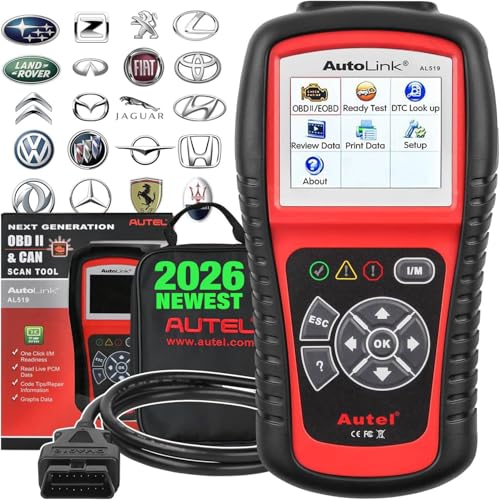

- An OBD-II diagnostic scanner with code clear capability
- A Chevy with the 16-pin diagnostic port under the dash, usually in the driver-side footwell
- Basic hand tools if the fix is a loose gas cap, connector, or visible hose issue
- The owner’s manual for model-specific warnings or reset notes
- A notepad or phone to record the code before clearing it
How do you reset it safely?
Start by checking whether the light is steady or flashing, then read the stored code before you clear anything. A steady MIL often means a stored fault without immediate danger, while a flashing light points to an active misfire that can damage the catalytic converter. If the engine runs rough, stop driving and diagnose first.
1. Check the light behavior
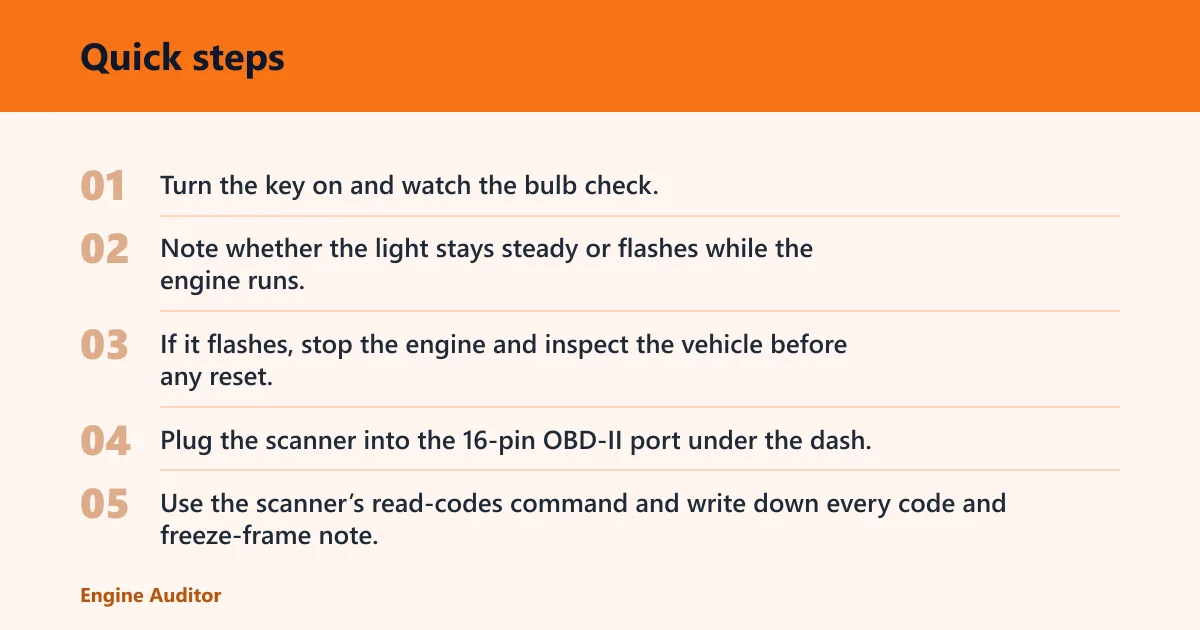
- Turn the key on and watch the bulb check.
- Note whether the light stays steady or flashes while the engine runs.
- If it flashes, stop the engine and inspect the vehicle before any reset.
2. Read the code first
- Plug the scanner into the 16-pin OBD-II port under the dash.
- Use the scanner’s read-codes command and write down every code and freeze-frame note.
- Do not clear anything until you know which system set the light.
3. Fix the fault
- Repair the obvious cause first, such as a loose gas cap or damaged connector.
- Inspect the cap seal, tighten it until it clicks, or replace a cap that will not seal.
- If the code points to a misfire, address the ignition or fuel fault before clearing the MIL.
4. Clear the code with a scanner
- With the repair complete, choose the scanner’s clear-codes or erase-DTC command.
- Cycle the key off, then start the engine and confirm the MIL behaves normally during key-on self-test.
- Drive the vehicle and check whether the light returns.
5. Drive and recheck readiness
- Complete normal trips after the reset so the readiness monitors can run again.
- If an emissions test matters, verify the monitors have had time to complete before inspection.
- If the light returns, treat the reset as only a reset and go back to diagnosis.
Safest Chevy check-engine-light reset path

| Symptom | Safest action | Tools needed | Risk of masking a fault | Readiness monitors may be affected? |
|---|---|---|---|---|
| Steady light | Read the code, repair the cause, then clear it with a scanner | OBD-II scanner | Moderate if you clear before diagnosis | Yes |
| Flashing light | Stop driving, diagnose misfire, and do not clear first | Scanner, basic inspection tools | High | Yes |
| After repair | Clear the stored code with the scanner, then road-test | OBD-II scanner | Low if the repair is confirmed | Yes |
| Loose gas cap | Tighten or replace the cap, then clear the code after the seal is confirmed | Hands, possibly a replacement cap | Low, unless an EVAP leak remains | Yes |
| Battery-replacement reset | Use only as a temporary fallback if a scanner is unavailable | Wrench, memory-saver optional | Moderate, because the fault may still be present | Yes |
Say your Silverado has a steady light after the gas cap was left loose overnight. Tighten the cap until it clicks, then clear the code with a scanner and drive a few normal trips. If the same EVAP code returns, the cap seal or a hose leak still needs attention.
Can I reset a Chevy check engine light by disconnecting the battery?
Sometimes, but that is a temporary method, not the best one. Battery disconnection may reset the light in some older cars, but on modern Chevys it may erase learned data, may not clear every fault the way a scanner does, and can trigger radio or security relearn steps on some vehicles.
If you do use this method, disconnect the negative terminal, wait long enough for stored power to drain, then reconnect it and confirm the MIL still behaves normally during key-on. If the code comes back right away, the fault never left.
Battery disconnect limits on a Chevy
- It may clear the light only briefly.
- It can reset fuel trims and other learned values.
- It can make readiness monitors incomplete again.
- Some vehicles need a radio or theft-deterrent relearn after power loss.
Why does my check engine light come back after I reset it?
If the light comes back, the fault is still present or the repair did not fully solve it. That is common with EVAP leaks, loose caps, misfires, and sensor faults. A scanner clear only turns off the warning; it does not repair the condition that set the code.
Picture a Colorado that gets cleared after a new gas cap, but the light returns after the next fuel fill. That usually points to an EVAP leak, a bad seal, or a hose issue, not a scanner problem. If the same code reappears, inspect the vehicle instead of clearing it again.
If that didn’t work, try this next
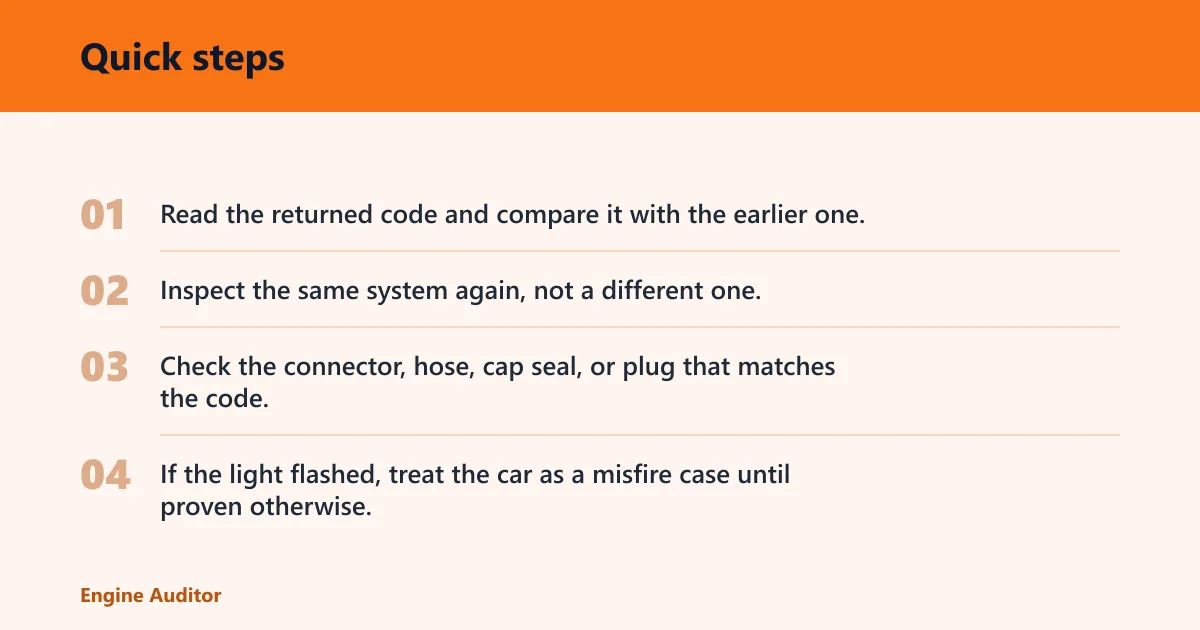
- Read the returned code and compare it with the earlier one.
- Inspect the same system again, not a different one.
- Check the connector, hose, cap seal, or plug that matches the code.
- If the light flashed, treat the car as a misfire case until proven otherwise.
What should I check first before resetting a Chevy check engine light?
Check the gas cap first, then the light behavior, then the stored code. A loose or damaged cap is a common trigger, and the cap is easy to verify. If the light is flashing or the engine stumbles, skip the reset and inspect the ignition or fuel system first.
- Gas cap tightness and seal condition
- Whether the light is steady or flashing
- Whether the engine idles rough, hesitates, or shakes
- The stored code from the OBD-II scanner or parts-store readout
Do I need an OBD2 scanner to clear a Chevy check engine light?
An OBD-II scanner is the best reset tool on 1996-and-newer Chevys because it can read codes and clear them through the 16-pin diagnostic port. A parts store can often read the code for you, but code reading is not the same as a repair. For clearing, a scanner is the practical choice.
Chevy OBD-II models sold in the United States since 1996 use a standard connector, usually under the dash in the driver-side footwell. Many scan tools also show freeze-frame and live data, which helps confirm whether the fault is gone before you clear anything.
What if the Chevy is older or behaves differently?
Model-year differences matter. OBD-II applies to cars sold in the United States since 1996, so 1996-and-newer Chevys usually follow the standard read-and-clear process. Pre-1996 models may use legacy behavior, and different trims or model lines can vary in how they store faults and reset the light.
If you are searching for a Silverado or Colorado, match the instructions to the exact model year and engine. The reset path on one Chevy can differ from another, especially when the vehicle is older, modified, or using a scan tool with brand-specific menus.
Common mistakes
- Clearing the code before writing it down. That can erase useful freeze-frame data.
- Ignoring a flashing light. That can turn a misfire into a converter problem.
- Using battery disconnect as the main fix. It may only hide the problem for a while.
- Expecting the light to stay off forever after one reset. It will return if the fault remains.
- Skipping the drive cycle after the reset. Readiness monitors may still be incomplete.
- Assuming every code means the same thing across every Chevy model year. It does not.
Suppose a Tahoe gets the light cleared after a battery replacement and stays off for a day. That does not prove the fault is gone. If the same code returns after the next cold start, scan it again and check the system that set it.
Frequently asked questions
How long after resetting check engine light
A returned light can come back on the next key cycle if the fault is still active. If the repair is real, the warning may stay off, but readiness monitors can still need one or more trips to complete. Emissions inspection timing depends on that drive cycle.
Can a loose gas cap turn on the Chevy check engine light?
Yes. A loose or damaged gas cap can trigger an EVAP leak code and turn on the light. Tighten the cap until it clicks, then clear the code only after the seal is confirmed. If it returns, inspect the cap seal and related hoses.
Products related to this article
Sponsored / affiliate links. As an Amazon Associate I earn from qualifying purchases. I may earn additional commission from eligible campaigns.
 OBD2 Scanner Diagnostic Tool - Check Engine Light Code Scanner Tool with Reset, DTC, Data Stream, I/M Readiness, Car & Truck Scan Tool for All Vehicles Since 1996, escaner automotriz
 OBD2 Scanner Diagnostic Tool - Check Engine Light Code Reader, Reset Function, Data Stream, I/M Readiness, Full Features, Modes 6 & 8, for All 1996+ Vehicles, Automotriz Scanner