How Long Can a Car Sit on Tires Without Driving?
Many cars can sit about 2 to 4 weeks on properly inflated tires before flat-spot risk starts to rise; after about 3 months, it is generally better to treat it as storage rather than parking. Ignore that window and you can get vibration, uneven wear, cracked sidewalls, or tires that need replacement. This guide gives a time-by-time chart, the exact actions to take at each storage length, and the signs that mean you should move the car sooner.
Flat-spotting risk by parking duration

Short parking periods are usually fine. Risk climbs after a few weeks, then again after months, because one section of each tire carries load the whole time, air pressure slowly drops, and temperature swings stiffen the rubber. The exact limit depends on tire type, vehicle weight, and storage conditions.
Tire storage duration table
| Parked time | Likely tire risk | What to do before parking | What to inspect before driving again | Time-based storage action |
|---|---|---|---|---|
| 1–7 days | Low risk on healthy, properly inflated tires. Brief flat-spot feel is uncommon. | Set all tires to the driver placard PSI with an accurate gauge. Park on a clean, level surface. | Check pressure and inspect for cuts, nails, or bulges. | Check pressure before use; no support needed unless the car will sit again immediately. |
| 2–4 weeks | Flat-spot risk starts to matter, especially in cold weather, on heavy vehicles, or with softer sidewalls. | Inflate to placard PSI, verify no slow leak, and move the car a few feet if possible before parking. | Look for a brief thump or vibration on the first few miles, then recheck pressure. | Check pressure before driving; move the car every 1–2 weeks if it remains parked. |
| 1–3 months | Moderate to high risk of temporary flat spotting and pressure loss. Permanent deformation becomes more likely if the tires are old, underinflated, or cold-soaked. | Set PSI to placard, consider tire cradles or foam pads, and keep the vehicle out of sun and weather. | Inspect sidewalls, tread shape, and steering feel. Watch for repeated vibration at the same speed. | Check pressure every 2–4 weeks; move the car or roll it forward periodically; supports can help. |
| 3+ months | Storage conditions can create flat spots, dry cracking, and age-related tire problems. This is no longer simple parking. | Inflate to placard PSI, use jack stands or tire cradles if appropriate, and store indoors or under cover when possible. | Inspect for cracking, flat spotting, pressure loss, and tread deformation before any highway driving. | Check pressure monthly at minimum; use supports or periodic rotation of the tires if the vehicle stays parked. |
That ladder is the practical answer. A day or two rarely matters. Two weeks can matter on some tires. Once the car sits for months, tire age, load, and storage climate matter as much as the calendar.
How do flat spots form?
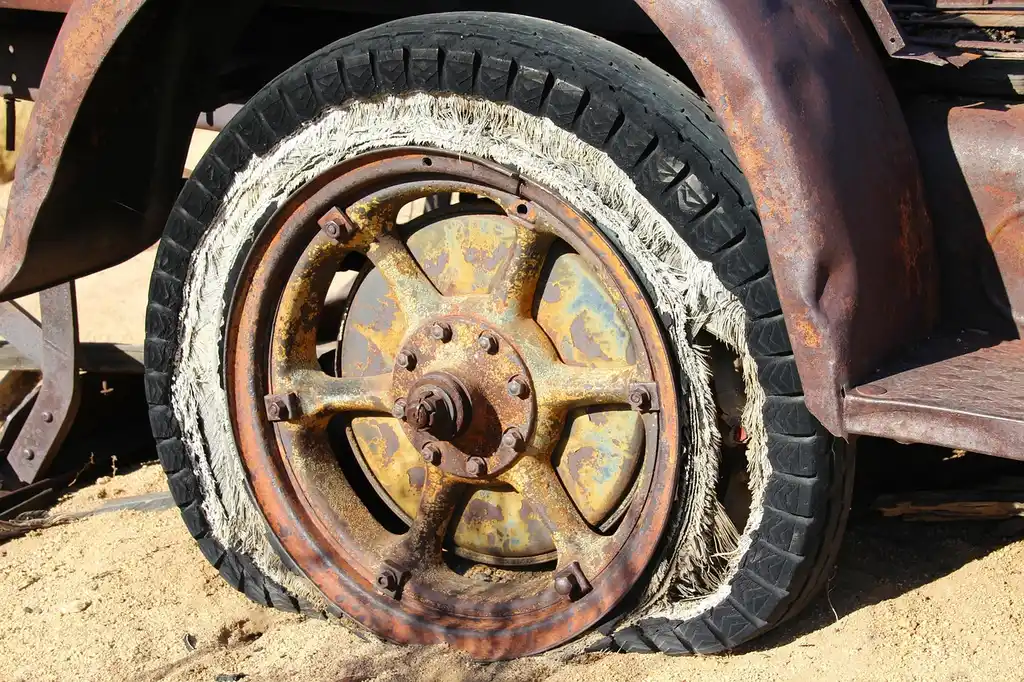
Flat spots form when the tire’s contact patch stays loaded in one place long enough for the rubber to deform. Temporary flat spots often feel like a thump or vibration during the first drive and fade as the tire warms. Permanent deformation is different; the shape change does not fully recover.
Temporary flat spots versus permanent deformation
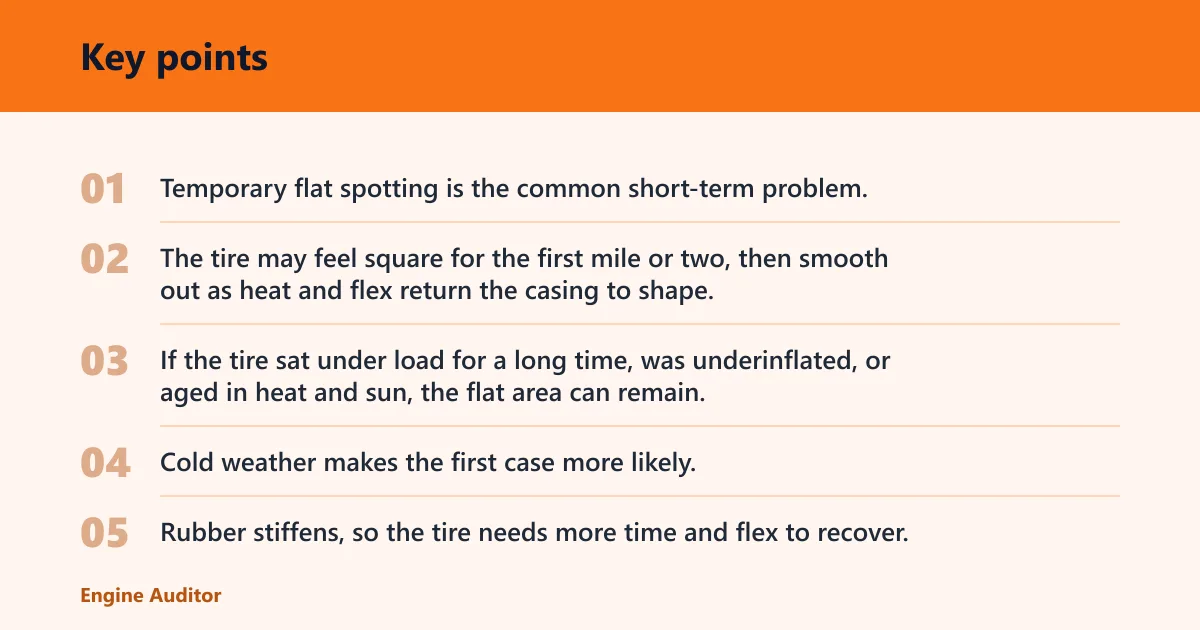
Temporary flat spotting is the common short-term problem. The tire may feel square for the first mile or two, then smooth out as heat and flex return the casing to shape. Permanent deformation is more serious. If the tire sat under load for a long time, was underinflated, or aged in heat and sun, the flat area can remain.
Cold weather makes the first case more likely. Rubber stiffens, so the tire needs more time and flex to recover. A truck, SUV, or performance car with stiffer sidewalls can also transmit the symptom more clearly on the first drive.
What you may feel on the first drive
Common signs include a low-speed thump, steering wheel shake, a rhythmic vibration that matches wheel speed, or a brief wobble that fades after the tires warm. If the sensation stays after several miles, inspect the tires before driving faster.
Say your sedan sits outside for three weeks at 28 psi on a placard that calls for 35 psi. On the first commute, you feel a thump at 25 to 35 mph that fades after five minutes. That points to temporary flat spotting and pressure loss, not immediate tire failure, but it still calls for a pressure check and a visual inspection.
What tire pressure should you keep?
Use the driver placard PSI as a baseline. That number is tied to the vehicle’s curb weight, axle load, and OEM load rating, so it is the right starting point for storage too. Check pressure with an accurate gauge before parking, because even a small loss increases flat-spot risk.
Why pressure loss matters during storage
Air slowly escapes through the tire over time. If pressure falls below the placard value, the sidewall flexes more under the same load, which raises heat, stress, and deformation. That is why a tire that looks fine can still be underinflated after a month of sitting.
Overinflation and underinflation both cause problems. Too much pressure reduces the contact patch and can make the tire more sensitive to localized wear and impact damage. Too little pressure increases casing deflection and flat-spot risk. For storage, the goal is not maximum pressure; it is correct pressure.
How to set pressure for storage
-
Find the placard PSI.
Use the driver-door placard, not the sidewall maximum. The placard lists the cold inflation pressure the vehicle needs for its load. -
Check with a gauge.
Measure when the tires are cold, then adjust each tire to the listed value. If one tire is low, inspect it for a slow leak before the car sits. -
Recheck before use.
Read pressure again after storage, because temperature swings can change PSI enough to matter on the first drive.
How do parking conditions change the risk?
Not all tires sit the same way. Radial tires, which are common on passenger vehicles, usually handle storage better than bias-ply tires. Stiffer sidewalls, higher curb weight, and lower inflation margins all increase sensitivity. Sun, heat, humidity, and cold each change how fast the rubber and air pressure drift.
Radial tires versus bias-ply tires
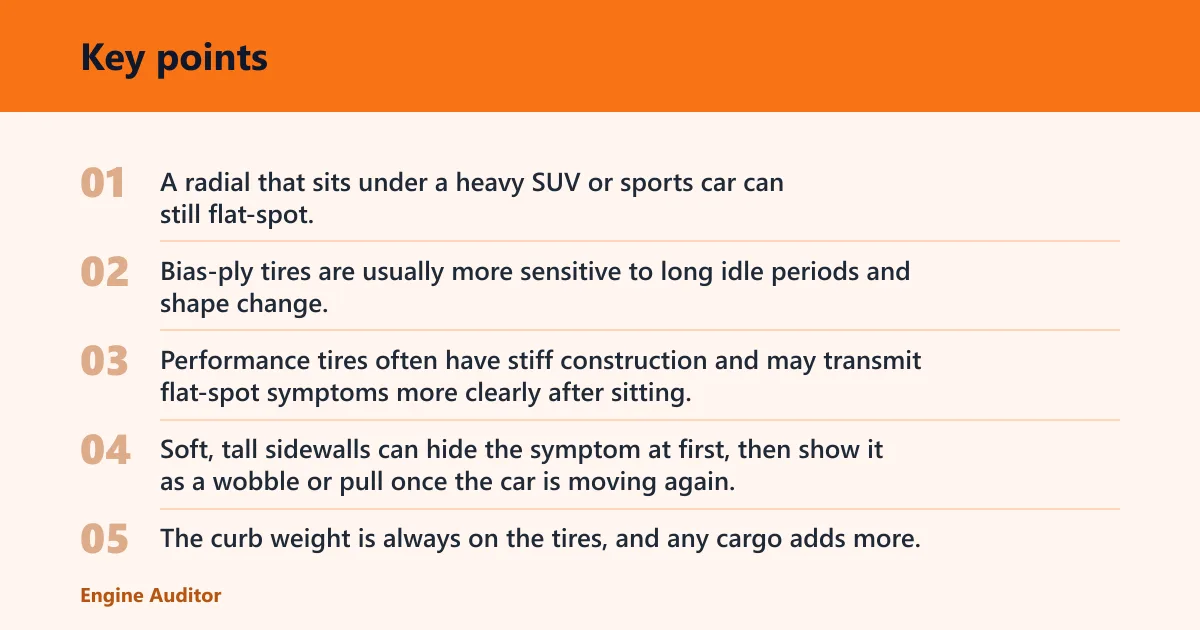
Radial tires generally flex more efficiently and are less prone to severe storage distortion than bias-ply tires, but they are not immune. A radial that sits under a heavy SUV or sports car can still flat-spot. Bias-ply tires are usually more sensitive to long idle periods and shape change.
Sidewall stiffness matters too. Performance tires often have stiff construction and may transmit flat-spot symptoms more clearly after sitting. Soft, tall sidewalls can hide the symptom at first, then show it as a wobble or pull once the car is moving again.
Vehicle weight and load rating
Vehicle load is part of the equation. The curb weight is always on the tires, and any cargo adds more. Parking on one spot for weeks concentrates that load into a small area of tread. A full tank can add noticeable weight compared with a near-empty tank, so long-term storage often benefits from removing extra cargo and avoiding unnecessary load.
A common first-timer mistake is parking a loaded SUV with the tank full, setting the tires a few psi low, and leaving it for six weeks. That combination raises single-spot loading and makes a temporary flat spot more likely on the first drive out.
Temperature, sun, and humidity
Cold storage slows chemical aging but makes pressure drop more visible and can stiffen the rubber. Heat speeds rubber aging and pressure rise during the day, then pressure loss at night. Sun and UV exposure dry the sidewall surface, and long idle storage in humidity can add corrosion around the wheel and valve stem, which makes leaks more likely.
Garage storage or covered parking is better than open sun, even if the car is not driven. It limits UV exposure, reduces temperature swings, and helps the tires retain pressure more evenly.
How to store a parked car
The best prevention is simple: keep the tires inflated correctly, reduce the time each tire spends in one spot, and limit environmental stress. If the car will sit for more than a few weeks, move it periodically. If it will sit for months, consider supports.
Move the car periodically
Moving the car a few feet changes the load point on the tire and can prevent a single patch from carrying weight the whole time. For parking that lasts weeks, moving it every 1 to 2 weeks is a useful target. For longer storage, a short roll every month is often better than leaving it frozen in place.
-
Roll the car slightly.
Move it forward or backward enough to change the contact patch. A few feet is enough to shift the load zone. -
Recheck tire position.
Make sure the tires are not resting in the exact same place after the move. This matters most on heavy vehicles. -
Check pressure again.
Use the same gauge each time if possible. A small loss becomes more important as the storage period gets longer.
Use jack stands, tire cradles, or foam pads
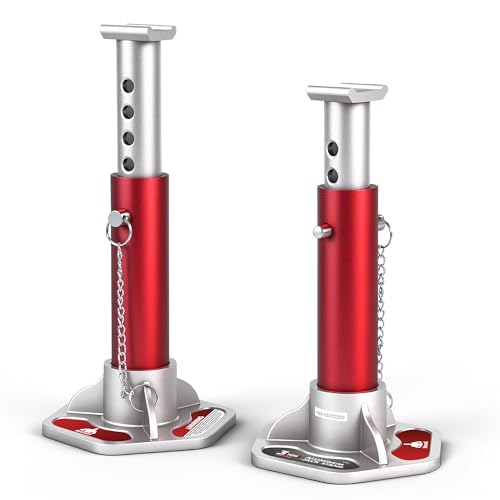
Jack stands can remove load from the tires, but they must be used correctly and on stable surfaces. They are best for long storage, not casual parking. Tire cradles support the tire shape and spread the load. Foam pads can soften single-spot loading, but they do not eliminate weight on the tire.
Each tool has limits. Jack stands do not protect the tire if the car is unstable or poorly supported. Tire cradles help, but they do not fix a leaking tire. Foam pads help less than full stands, but they are easy to place under each tire for moderate storage periods.
-
Choose the support method.
Use jack stands for long storage when the vehicle can safely be lifted. Use tire cradles or pads when you want to reduce contact stress without fully lifting the car. -
Park on a level surface.
A level floor keeps the load even and reduces sidewall twist. Avoid soft ground, which can shift under the supports. -
Verify stability before leaving.
Shake the vehicle gently after placement. If it rocks or shifts, reset the supports before the car remains parked.
What should you inspect before driving again?
Before the car returns to regular use, check pressure, sidewall condition, tread shape, and any vibration on the first drive. If the tires sat for months, also check age code and rubber condition. A tire can still look inflated and be unsafe because of cracks, dry rot, or shape change.
Inspection checklist
-
Check all four pressures.
Measure each tire cold and compare it with the placard. Correct any tire that is low before the car reaches highway speed. -
Inspect sidewalls closely.
Look for cracking, bulges, cuts, or dry rot around the sidewall and shoulder. These are more serious than a brief flat-spot thump. -
Examine the tread surface.
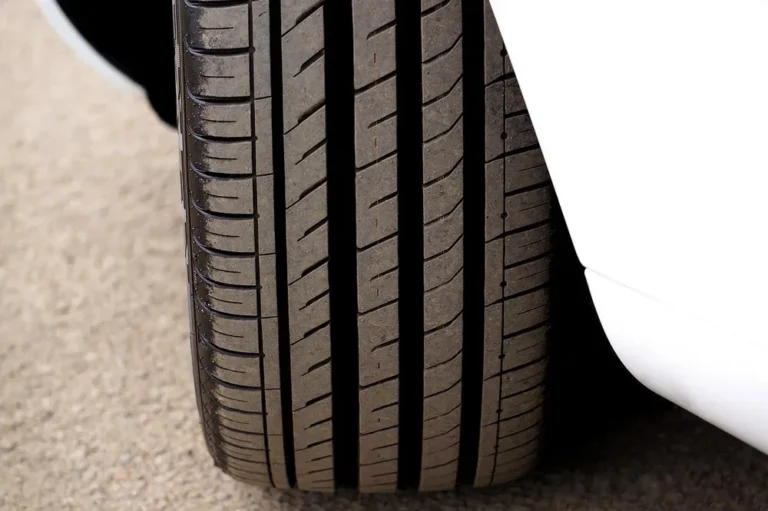
Look for a flat area, a scalloped patch, or uneven wear that matches the stored position. If the shape looks distorted, take the car for a short, low-speed test first. -
Check tire age code.
Find the DOT date code on the sidewall and verify the tires are not aged out. Unused tires still age, and older rubber is more likely to crack during storage. -
Watch for vibration.
If a vibration remains after a few miles, stop and inspect again. Persistent shake suggests more than a temporary flat spot.
Replace tires sooner if you see sidewall cracking, deep dry rot, repeated flat spotting that does not fade, or age that places the tire beyond its useful service life. Storage can speed up the need for replacement, but age and condition matter more than sitting alone.
Frequently asked questions
How long can a car sit on tires without driving?
Most cars can sit about 2 to 4 weeks on properly inflated tires before flat-spot risk starts to rise. A few days is usually fine. Once the car sits for months, treat it as storage and plan on pressure checks, movement, or supports rather than simple parking.
How long can a car sit before tires get flat spots?
Flat spots can start within 2 to 4 weeks, sooner in cold weather, with low pressure, or on heavier vehicles. Temporary flat spots are the most common early issue, and they often fade after the tires warm. Long storage raises the chance that the deformation lasts longer.
Can tires go bad from sitting too long?
Yes. Tires can age even when they are not driven. Dry rot, sidewall cracking, pressure loss, and permanent deformation can all develop during long idle storage, especially with heat and sun exposure. Old tires and damaged tires are at higher risk than newer, healthy ones.
How often should I move a parked car to protect the tires?
Move it every 1 to 2 weeks if it is parked for several weeks, and at least monthly during long storage if it is safe to do so. Shifting the contact patch reduces single-spot loading and lowers the chance of flat spotting. Recheck pressure each time.
What tire pressure should I keep on a car that sits?
Use the driver-door placard PSI as the target. Check with an accurate cold-pressure gauge before parking, then recheck before driving again. Do not inflate to the tire sidewall maximum unless the vehicle placard specifically calls for that value, which is uncommon.
Do jack stands or tire cradles help prevent flat spots?
Yes, both can help. Jack stands remove tire load almost entirely when used correctly, while tire cradles spread the load and reduce deformation. Foam pads help less, but they can still soften single-spot loading. Each option works best with correct pressure and covered storage.
Products related to this article
Sponsored / affiliate links. As an Amazon Associate I earn from qualifying purchases. I may earn additional commission from eligible campaigns.