Why Your Car Shudders When Braking on Icy Roads
If your car shudders while braking on icy roads, that is often ABS pulsing, which is normal; stop and inspect it if the shaking is violent, the ABS light stays on, or braking feels weak. Ignoring a real brake fault can stretch stopping distance and reduce control on a slick road. This guide shows how to tell normal ABS action from ice-related brake problems and when the car is safe to keep driving.
Is shuddering on ice normal?
Yes, it can be. On ice, packed snow, and other low-friction surfaces, the anti-lock braking system can modulate brake pressure to help keep the wheels from locking, and it may feel like a pulse, shake, or chatter through the pedal. That modulation can feel like a pulse, shake, or chatter through the pedal, and at the near-stop stage it can be normal.
What ABS feels like under your foot
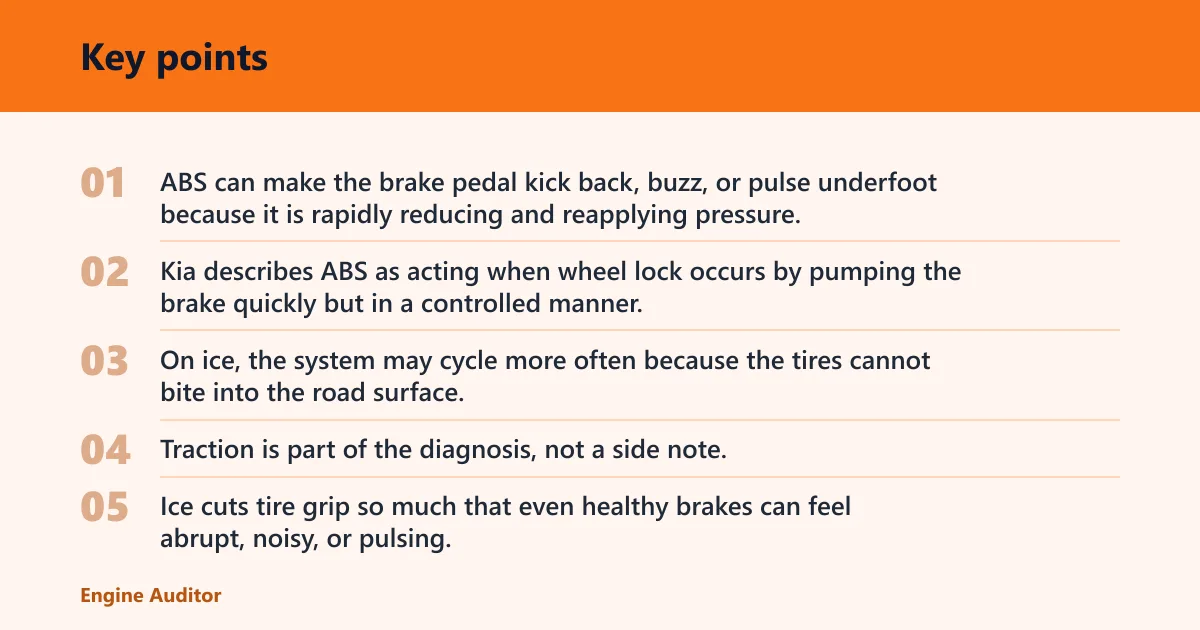
ABS can make the brake pedal kick back, buzz, or pulse underfoot because it is rapidly reducing and reapplying pressure. Kia describes ABS as acting when wheel lock occurs by pumping the brake quickly but in a controlled manner. That action is most noticeable when tire grip is poor.
On ice, the system may cycle more often because the tires cannot bite into the road surface. That does not mean the brakes are failing. It means the car is trying to preserve steering control while stopping distance grows on the slippery surface.
Why low traction changes braking feel
Traction is part of the diagnosis, not a side note. Ice cuts tire grip so much that even healthy brakes can feel abrupt, noisy, or pulsing. Kia also warns that icy-road conditions often cause longer braking times, and a separate shop guide notes stopping distances can be up to 10x longer on icy roads.
That is why the first question is not “Are the rotors bad?” It is “Was the surface low-friction enough to trigger normal ABS action?”
Where the vibration starts
Location matters. Steering-wheel vibration more often points to the front brakes, while brake-pedal pulsing can come from the rear brakes or from ABS activity. The same road can produce different sensations depending on which axle is doing the work and how much grip the tires have.
Steering wheel shake and front brakes
Front rotor issues are described as the most common braking shudder cause at highway speed. That fits the load: front rotors handle about 60 to 70 percent of total braking work, and they are more heat-stressed than rear rotors. At vehicle speeds above 50–70 mph, front-rotor vibration is especially likely to show up in the steering wheel.
Brake rotor disc thickness variation, or DTV, is a common cause of rhythmic braking vibration. The rotor is not necessarily bent. The surface thickness varies around the circumference, and the driver often hears the problem described as “warped rotors” even when the metal is not actually warped.
Brake-pedal pulsing and rear brakes
Rear brakes handle about 30 to 40 percent of braking force, so rear rotor issues often show up as pedal pulsing rather than steering-wheel shake. Parking brake deposits can also affect rear rotors. On ice, ABS can add a similar pulse, so the pedal feel alone does not settle the diagnosis.
If the pulse appears only during a near-stop on snow or ice, ABS is a strong suspect. If the pulse continues on dry pavement, the odds shift toward a mechanical brake fault.
Icy-road shudder triage table
| Symptom pattern | Likely explanation | Next action |
|---|---|---|
| Steering-wheel vibration | Front rotor DTV, pad deposits, or other front-brake unevenness | Check on dry pavement at moderate speed; inspect front brakes if it remains |
| Brake-pedal pulsing | ABS activation on low traction, or rear rotor variation | See whether the pulse stops on dry pavement; inspect rear brakes if it does not |
| Shudder only near stop | Normal ABS cycling as wheel slip increases near the last few feet | Continue cautiously if the ABS light is off and braking is otherwise normal |
| Pull to one side | Sticking caliper, seized slide pins, or uneven pad bite | Stop driving and inspect soon, because one brake may be dragging |
| Soft pedal | Air in lines, low fluid, or a leak | Do not keep driving; brake fluid and line faults need repair and bleeding |
| Shudder that continues on dry pavement | Rotor DTV, pad glazing, caliper trouble, or tire-related issues | Schedule a brake inspection before the next long drive |
How ABS and traction loss feel different
ABS pulsing usually matches wheel slip. It shows up most clearly on ice, packed snow, or wet frozen patches, and it often eases when traction improves. A true brake defect is more stubborn. It tends to repeat on dry pavement, at a similar speed, and sometimes with the same steering or pedal pattern.
Pulsing that matches wheel slip
If the shudder starts when you brake hard on ice and fades as the car slows to a crawl, that points toward ABS behavior. The system is trying to prevent wheel lock, which is why the pedal may throb or chatter right before the vehicle stops. That near-stop sensation can be normal.
Say your sedan pulses hard at 8 mph on an icy side street, then feels smooth once you move onto a dry driveway. That pattern fits ABS much better than a bent rotor. The road surface changed, and the symptom changed with it.
Shudder that keeps happening on dry pavement
A shudder that follows the car onto a dry road deserves a brake inspection. Rotors with DTV, glazed pads, stuck calipers, or contaminated hardware can keep vibrating no matter what the pavement looks like. Ice may have exposed the symptom, but it did not create the underlying fault.
Suppose the pedal still pulses on a dry parking lot at 25 mph and the steering wheel shakes every time you brake. That is not a traction-only problem. It points toward a mechanical issue that needs attention.
Why does my car shudder when I brake on ice?
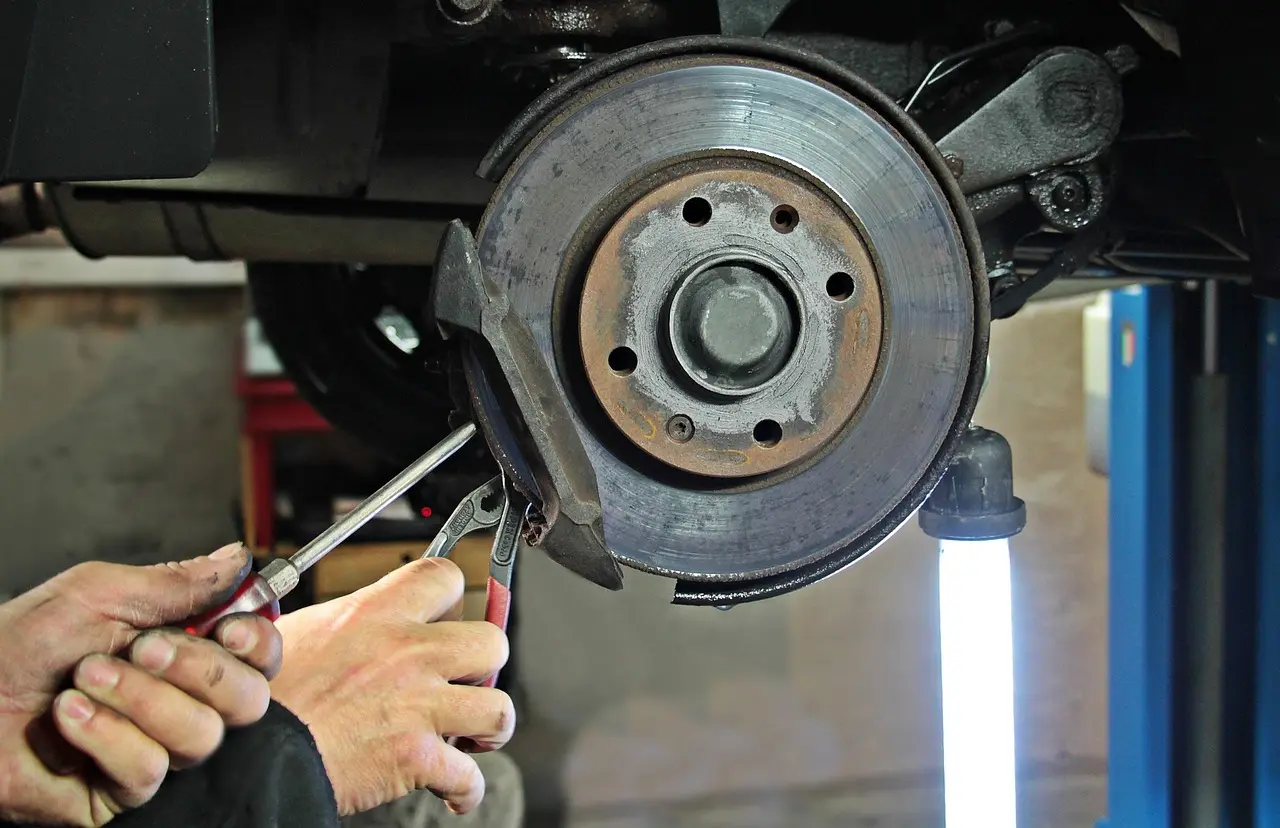
Because ice can trigger both normal ABS action and real brake faults that feel similar. The low-friction surface makes the tires slip sooner, so ABS may pulse the pedal. Winter also exposes worn rotors, thin pads, corrosion, and sticky calipers that would otherwise stay quiet.
Brake faults that winter exposes
Salt, wet slush, and thaw-freeze cycles can push corrosion into slide pins, pad hardware, and rear brake areas. That can make a caliper stick or make one side bite harder than the other. Winter can also leave pad material and rust deposits on rotors, which may turn into shake when braking starts.
Most pages treat this as generic brake shake. That misses the key point: ice can create the sensation, but winter wear often decides whether the sensation is normal or a warning.
Rotor thickness variation
DTV is one of the most common brake-shudder causes. It makes braking feel rhythmic rather than random. Front rotors are the first place to look when the shake shows up at speed, because they carry the larger share of braking force and heat load.
Rear rotor problems can still matter, especially if parking brake deposits affect the rear surfaces. In that case, the pulse may be felt more in the pedal than in the wheel.
Pad wear, glazing, and noise
Brake pads can glaze, wear thin, squeal, or grind when damaged. They should be inspected whenever rotors are serviced, because the pad surface can drive the vibration and noise that the rotor gets blamed for. Thin or uneven pads can also make one wheel bite differently from the others.
Sticking calipers and slide pins
A sticking caliper or frozen slide pins can cause uneven braking force. One rotor may overheat while the other side brakes normally, and the car may pull sideways. Corrosion makes this worse in winter, especially after repeated wet and salty road use.
Brake fluid, air, and a soft pedal
Air in brake lines compresses and makes the pedal soft or spongy. That can follow leaks or poor brake work, and it calls for bleeding the brake system after the fault is corrected. A soft pedal is different from ABS pulsing. It is a warning that hydraulic pressure may be compromised.
Why does my brake pedal pulse at low speed on snow or ice?
At low speed, the car has little tire grip to work with, so ABS may cycle right before the vehicle stops. That near-stop pulse can feel dramatic even when the brake system is healthy. If the pulse disappears once the road turns dry, the behavior is more likely traction-related than mechanical.
Front rotors and heat load
Front rotors take about 60 to 70 percent of total braking work, so they are more heat-stressed than rear rotors. That is why a front-rotor problem often shows up as steering-wheel shake, especially at highway speed or during repeated stops. Heat and load make the front axle a common source of winter brake complaints.
Rear rotors and parking brake deposits
Rear rotors handle about 30 to 40 percent of braking force, so their problems can feel different. They may create pedal pulsing or a mild shake that seems to come from beneath the seat rather than through the wheel. Parking brake deposits can add to that roughness after wet winter driving.
What to check after the road dries
The dry-pavement check is the cleanest way to separate ABS behavior from a true brake fault. Once the road surface changes, repeat the brake feel in a safe, empty area at low to moderate speed. If the shudder disappears, the original problem may have been traction-related. If it stays, the car needs inspection.
Dry-surface brake check
-
Find a safe dry area.
Use an empty parking lot or a quiet dry road with room to stop gradually. Avoid traffic and avoid repeating hard stops on ice just to “confirm” the symptom. -
Brake gently first.
Make one normal stop from a low speed, then another from a moderate speed. A vibration that follows both stops on dry pavement is more likely a rotor, pad, or caliper issue. -
Note the location.
Feel for steering-wheel shake, pedal pulse, pull, or grinding. The location helps separate front-brake issues from rear-brake or ABS behavior. -
Stop if the pedal changes.
If the pedal feels soft, the car pulls, or the stopping distance feels unusually long, do not keep testing. Those signs call for inspection, not more road checks.
Tire grip and winter tire condition
Brake diagnosis starts with tire grip because the tire is the only part touching the road. Uneven wear, low tread, or the wrong winter setup can make brake shudder feel worse on ice. A healthy brake system can still feel unstable if the tires cannot hold the surface.
Common first-timer mistake: blaming the rotors before checking the tires. On packed snow, a worn tire can let the ABS cycle earlier and harder, which feels like a brake fault even when the brake hardware is still serviceable.
When should I stop driving if my brakes shudder on ice?
Stop driving if the car pulls to one side, the brake pedal feels soft, you smell hot brakes, or the vehicle stops poorly even on dry pavement. Those signs point beyond normal ABS action. A persistent shudder after the road dries also needs inspection, because it suggests a brake or tire fault rather than traction alone.
Brake shake after a wet winter is common, and rust can make the problem worse. But that does not make every winter vibration normal. If the symptom changes from “pulse on ice” to “vibration everywhere,” the car should be checked before more driving.
Frequently asked questions
How do I tell ABS pulsing from warped rotors on icy roads?
ABS pulsing usually shows up only when grip is poor and often fades as the car nearly stops. Rotor-related vibration tends to repeat on dry pavement and may be stronger through the steering wheel at speed. DTV, not an actually bent rotor, is a common cause of that rhythmic shake.
Is shuddering when braking on ice normal?
It can be. A pulsing pedal or brief shudder near the stop can be normal ABS activity on ice or packed snow. It is not normal if the car pulls, the pedal turns soft, the ABS light stays on, or the shudder continues once the road is dry.
Does a shudder when braking mean my rotors are bad?
No. Ice can trigger normal ABS behavior that feels like shuddering, so the road condition matters. Rotors are a common cause when the vibration repeats on dry pavement, especially at speed, but the same symptom can come from pads, calipers, fluid issues, or tires.
Products related to this article
Sponsored / affiliate links. As an Amazon Associate I earn from qualifying purchases. I may earn additional commission from eligible campaigns.