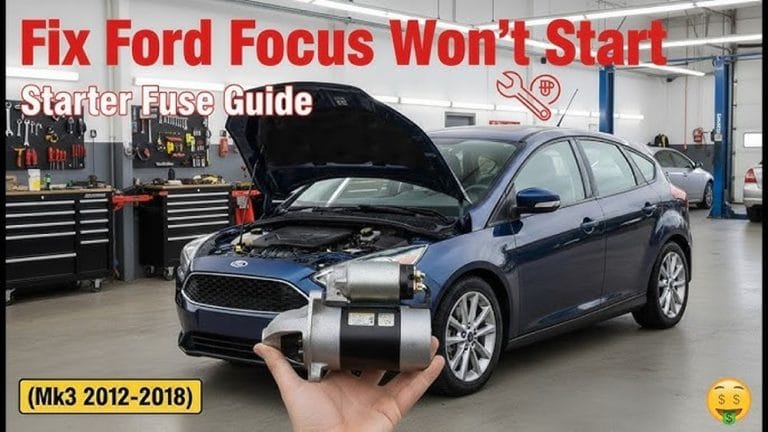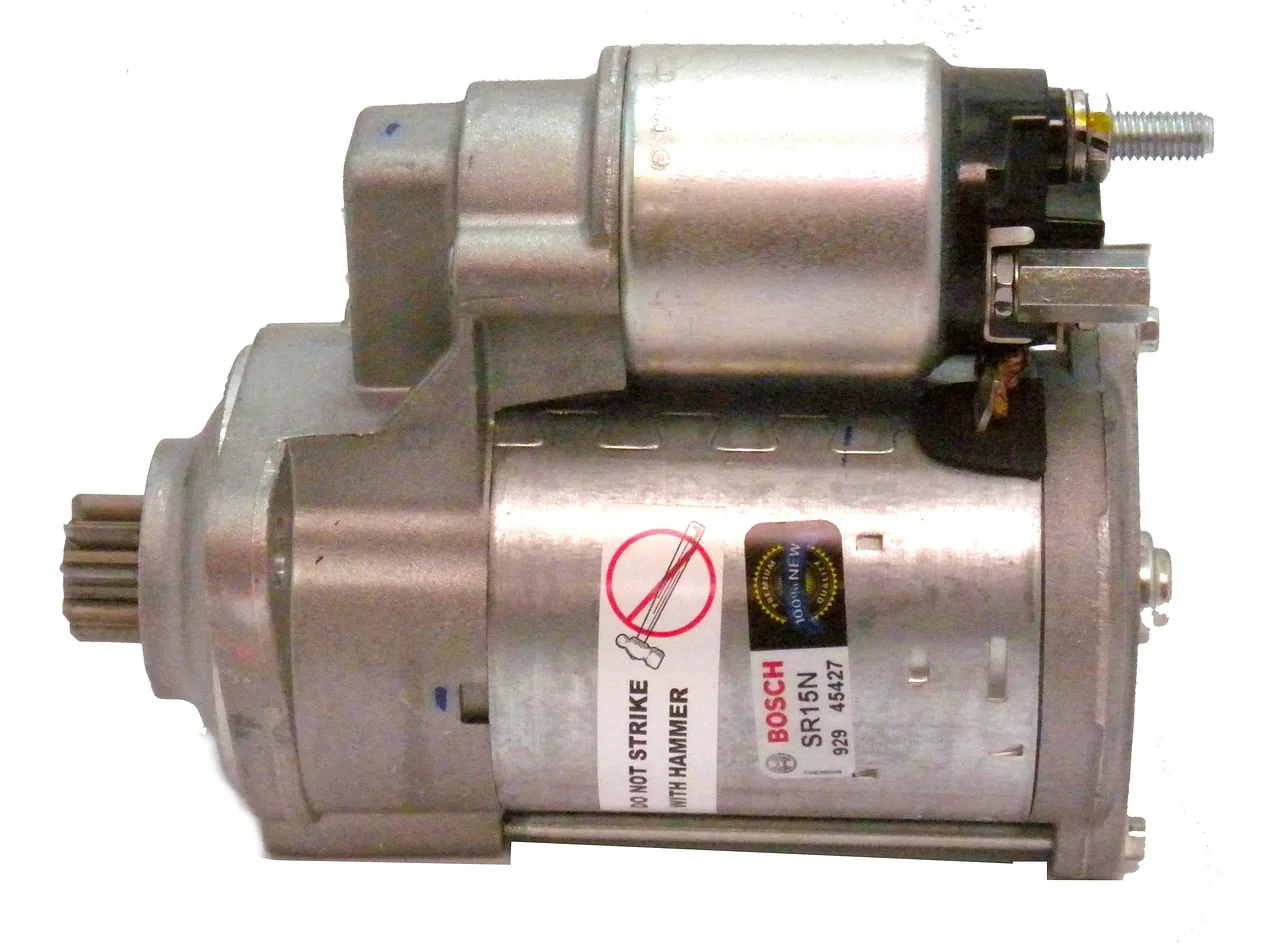
Ford Parts vs Aftermarket Parts: What Should You Choose?
Choose genuine Ford or Motorcraft parts for safety items, fit-critical components, and any repair tied to warranty or collision standards; use quality aftermarket parts for low-risk wear items when the installed cost is lower after labor, paint, and rework. The wrong choice can mean poor fit, extra labor, warning lights, weaker crash performance, or paying twice for the same repair. This guide compares Ford, Motorcraft, and aftermarket parts by risk, cost, warranty, and where each option makes sense.
| Decision factor | Ford parts | aftermarket parts | Winner |
|---|---|---|---|
| Fit and function | Original equipment fit and function from Ford or Motorcraft sourcing | Reverse-engineered to match the vehicle; fit depends on maker and part design | Ford parts |
| Safety and calibration risk | Best choice for airbags, braking, steering, suspension, and ADAS-adjacent parts | Higher comeback risk on sensors, structural pieces, and system-tied electronics | Ford parts |
| Sticker price | Usually higher up front | Usually lower up front | aftermarket parts |
| Total installed cost | Often lower when correct fit avoids rework, but not always | Can win if no paint, calibration, or rework is needed | tie |
| Warranty support | Ford Parts and Motorcraft sold on customer-paid repairs fall under the Service Parts Warranty | Coverage varies widely by brand and seller | Ford parts |
| Best use case | High-risk repairs, warranty repairs, collision parts, lease or resale-sensitive work | Low-risk wear items, older vehicles, and simple repairs where savings survive labor | tie |
Ford OEM, Motorcraft, and aftermarket explained
What counts as Ford OEM parts
Ford OEM parts are the original equipment fit and function parts sold under Ford Parts branding or Ford’s catalog. Ford.com says its parts catalog spans Body, Electrical, Engine, Transmission, Hardware and Fasteners, Brakes, and Suspension, and it lists 179,576 results. Ford.com also says OEM parts are sold as Ford or Motorcraft brands from its catalog.
That matters because OEM parts are built to match the vehicle’s design targets, not only its shape. For a repair that touches crash behavior, sensor placement, or mounting depth, that factory match can matter more than the sticker price.
Where Motorcraft fits
Motorcraft is Ford’s OEM-engineered replacement line for Ford and Lincoln vehicles. Ford says Motorcraft parts are designed specifically for Ford and Lincoln vehicles, engineered by the experts who built your vehicle, and available at local dealers or distributors.
Motorcraft also includes more than 18,000 OEM-engineered parts for Ford and Lincoln vehicles, and those parts come with a two-year unlimited mileage warranty. On customer-paid repairs, all Ford Parts and Motorcraft parts fall under the Service Parts Warranty.
How aftermarket parts differ
Aftermarket parts are made by companies other than Ford. They are usually cheaper because the maker is not building to Ford’s full parts strategy, packaging, and dealer channel, and the source may sell directly or through independent distributors.
Quality changes by manufacturer and by part type. A brake pad or cabin filter can be fine from a strong brand, while a sensor, bumper cover, or structural panel can bring fit problems, warning lights, or extra prep work.
Ford parts decision matrix by part type
| Part category | Recommended choice | Why | Risk level | Extra costs to budget for |
|---|---|---|---|---|
| Airbags | Ford parts | Safety-critical, tied to crash performance and restraint timing | High | Diagnostic scan, labor rework |
| Seat belts | Ford parts | Load path and pretensioner function matter more than price | High | Diagnostic scan, replacement hardware |
| Steering components | Ford parts | Any play or mismatch can affect control and alignment | High | Alignment, labor rework |
| Brake hydraulics and calipers | Ford parts | Fit and sealing are critical to pedal feel and stopping performance | High | Brake fluid, bleed labor, rework |
| Suspension control arms and knuckles | Ford parts | Geometry and bushing quality affect tire wear and steering feel | High | Alignment, extra labor |
| ADAS sensors and related brackets | Ford parts | Mounting angle and calibration can change system performance | High | Calibration, scan time, rework |
| Headlamps and lighting modules | Ford parts | Beam pattern, electronics, and sealing are sensitive to design fit | Medium-high | Calibration, seal checks, labor rework |
| Bumpers and fenders | Certified aftermarket or Ford parts | CAPA or NSF certification matters most here if price is the goal | Medium | Paint, clips, prep work |
| Hoods and doors | Ford parts or used OEM | Fit, corrosion protection, and hinge alignment are hard to fake well | Medium-high | Paint, alignment, labor rework |
| Electronics and modules | Ford parts | Programming, compatibility, and serial-level variation make cheap swaps risky | High | Programming, scan time, comeback risk |
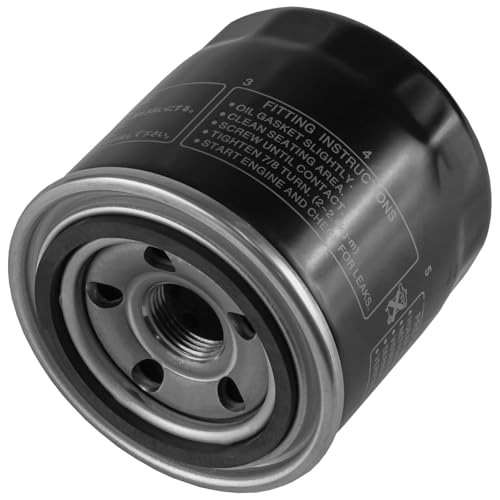
| Wear items such as filters, wipers, pads | Certified aftermarket | Low structural risk and strong price competition | Low | Usually none beyond routine labor |
| Trim and discontinued-model pieces | Used OEM | Factory shape and finish often matter more than a brand-new box | Low-medium | Cleaning, clips, possible cosmetic rework |
Safety-critical parts and structural pieces
Use Ford parts for airbags, seat belts, steering, braking, suspension control parts, and ADAS-adjacent sensors. Those are the places where a small dimensional difference can turn into poor performance, warning lights, or an alignment that keeps drifting out of spec.
Say your F-150 needs a front suspension arm and a wheel-speed sensor after curb damage. The arm can change alignment numbers, and the sensor can trigger a cascade of warning lights if the fit or signal quality is off. That is a poor place to gamble on the cheapest box.
Collision and body panels
Body panels sit in the middle. Ford parts give the most certainty, but CAPA-certified or NSF International certified aftermarket collision parts can be reasonable when the part is a bumper cover, fender, or similar panel and the shop is willing to budget for paint and test fit.
CAPA has certified collision parts since 1987. The value is in the inspection of the plant and tooling, plus serialized seal verification, which helps separate a tested collision part from an unknown copy. That matters most for body panels, not for engines or electronics.
Electronics, sensors, and modules
Electronics are one of the worst places to chase a small savings. The part may physically bolt in, yet still require programming, calibration, or exact signal behavior that an economy part cannot deliver.
Picture a lane-keeping camera bracket that is a few millimeters off. The vehicle may still drive, but the calibration target can fall out of range, and the repair cost rises fast once scan time and redo work enter the bill.
Wear items and trim
Filters, wiper blades, spark plugs, pads, and some trim pieces often make sense as quality aftermarket parts. The load is lower, the fit window is wider, and the cost difference can survive labor.
Used OEM can also fit here for trim or discontinued pieces, especially when the factory version is no longer easy to source. For a plain plastic bezel or interior garnish, factory shape often matters more than zero mileage.
Are aftermarket Ford parts good enough?
Sometimes yes. Aftermarket parts are often close enough for low-risk wear items and for body parts where fit is acceptable, certification is present, and the savings remain after labor and paint. They are less reliable when the repair depends on exact geometry, sensor placement, or software matching.
When fit is usually close enough
Fit is often acceptable on filters, pads, belts, wiper blades, grilles, and many non-structural trim pieces. In those cases, a reputable maker can deliver the same day-to-day result for less money.
When variation creates comeback risk
Variation becomes costly on electronics, crash parts, lighting, and anything near an ADAS sensor or structural mount. A part that is “close” on paper can still need trim work, shim changes, or a return trip.
Why total installed cost matters
Sticker price does not tell the whole story. A cheaper bumper cover can lose its advantage after paint, clips, masking, calibration, or the labor to correct a poor tab or bracket location.
Ford parts warranty, claims, and resale value
Warranty support is one of the clearest reasons to stay with Ford parts. Ford says all Ford Parts and Motorcraft parts sold on customer-paid repairs fall under the Service Parts Warranty, and Motorcraft adds a two-year unlimited mileage warranty.
Insurance repairs and approved parts
For insurance claims, the adjuster’s estimate, the repair method, and the body shop’s parts policy matter. Certified collision parts can be acceptable for some exterior work, but the final choice should match the claim terms and the part’s role in the repair.
Lease return and resale considerations
Lease return and resale can justify a higher-quality part choice. Factory-correct fit, clean panel gaps, and proper warning-light behavior reduce the chance of a return inspection issue or a buyer discount.
That is especially true on late-model trucks and SUVs where visible fit and dash warnings are easy to spot. A part that saves $60 up front can cost more in reduced resale confidence.
Used OEM parts vs new aftermarket parts
Used OEM can be the better buy when the needed part is a closure, trim piece, or discontinued item and the mileage or wear on that part does not affect safety. The salvage-yard pricing guide says used OEM typically prices 25-50% under new, while dealer pricing commonly exceeds comparable aftermarket parts by 40-60%.
When used OEM wins
Used OEM makes sense for doors, hoods, liftgates, interior trim, brackets, and hard-to-find pieces on older vehicles. The factory shape and mounting points are often more valuable than a cheap new substitute with uncertain fit.
When new aftermarket makes more sense
New aftermarket is stronger when the part is a basic wear item and the better brands are easy to identify. If the part is simple, widely produced, and not tied to calibration or crash behavior, new aftermarket can offer the best mix of price and availability.
Where used parts are a bad bet
A used electrical module, sensor, or wear-sensitive component is risky. Mileage matters, hidden damage matters, and coverage is usually limited, so the savings can disappear after one failure or programming problem.
Collision part certification and counterfeit checks
Certification matters most on body panels. CAPA and NSF International are quality markers for collision parts, not blanket proof that every aftermarket part is good. They help narrow the field when you are buying a bumper cover, fender, or similar panel.
CAPA certification
CAPA certification checks collision parts against a standard that is commonly described as including plant and tooling inspection and serialized seal verification. That does not make a panel equal to Ford OEM, but it gives a clearer path than an unverified part with no known test history.
NSF International certification
NSF International certification is another aftermarket collision-parts path. It matters most when you want a documented quality marker for exterior body parts and still want to avoid a full OEM price.
How to spot counterfeit Ford parts
Counterfeit Ford parts are a real issue, and Blue Oval or Motorcraft stamps alone are not enough. Sanity-check the source, compare packaging details, and buy through Ford.com, a dealer, or a distributor with a traceable supply chain. If the price is far below market and the seller cannot explain the origin, treat it as suspect.
Ford parts if or aftermarket parts
Choose Ford parts if…
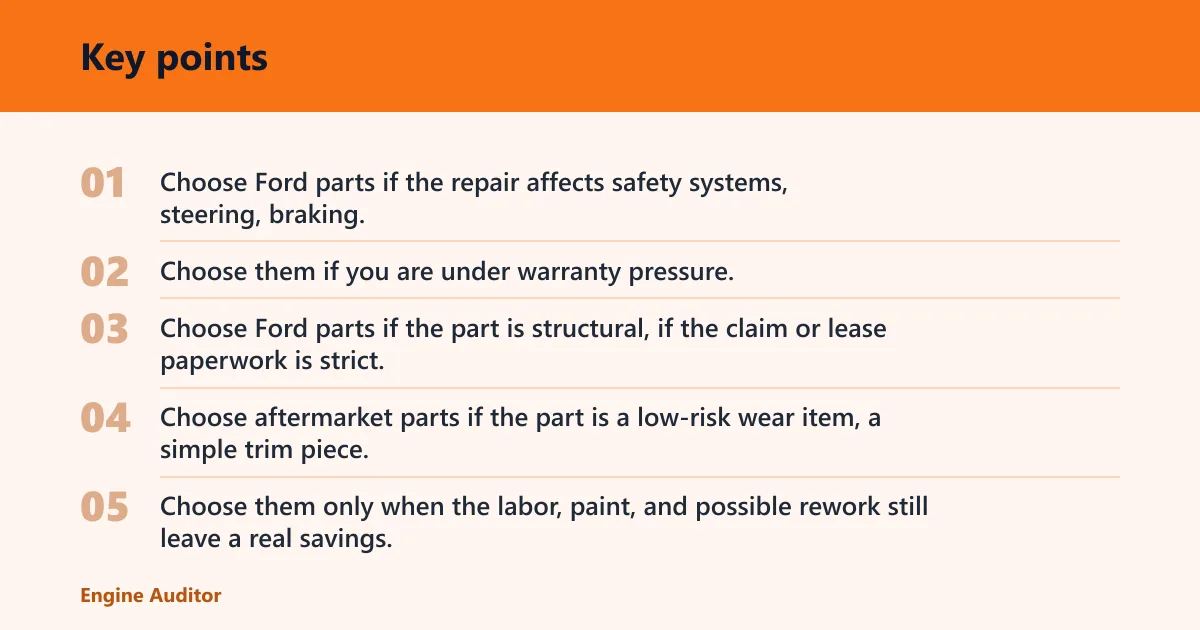
Choose Ford parts if the repair affects safety systems, steering, braking, suspension geometry, ADAS sensors, or any module that needs exact compatibility. Choose them if you are under warranty pressure, if the vehicle is new enough that resale matters, or if the job would be expensive to redo.
Choose Ford parts if the part is structural, if the claim or lease paperwork is strict, or if the vehicle is a late-model Ford where warning lights and calibration costs can erase any savings.
Choose aftermarket parts if…
Choose aftermarket parts if the part is a low-risk wear item, a simple trim piece, or a body panel with CAPA or NSF certification and a clear installed-cost advantage. Choose them only when the labor, paint, and possible rework still leave a real savings.
Choose aftermarket parts if the vehicle is older, the part is easy to replace again, and the risk of a second visit is low. Do not let the box price hide the repair bill.


Frequently asked questions
Are Ford parts better than aftermarket parts?
Ford parts are better for fit certainty, safety-related repairs, and warranty or claim-sensitive work. Aftermarket parts can be the better value for wear items and simple trim, but quality changes widely, so the best choice depends on the part’s role and the total installed cost.
When should I buy OEM instead of aftermarket parts?
Buy OEM when the part affects crash protection, braking, steering, suspension geometry, ADAS calibration, or module compatibility. OEM is also the safer call when the vehicle is newer, the repair is tied to warranty coverage, or a comeback would cost more than the price gap.
Are Motorcraft parts OEM or aftermarket?
Motorcraft is Ford’s OEM-engineered replacement line, not a generic aftermarket brand. Ford says Motorcraft parts are designed specifically for Ford and Lincoln vehicles, and Motorcraft parts come with a two-year unlimited mileage warranty. They are sold through dealers or distributors.
Do aftermarket Ford parts fit as well as genuine parts?
Sometimes they do, especially on simple wear items or certified collision panels. But fit can vary by maker and by part type, and small differences can turn into paint work, alignment changes, calibration trouble, or extra labor.
Which parts should never be bought aftermarket on a Ford?
Airbags, seat belts, steering parts, braking parts, suspension control parts, and ADAS-related sensors should stay with Ford parts unless a qualified repair source has a very specific reason and the part meets the right standard. Those systems carry the highest safety and comeback risk.
Are CAPA-certified aftermarket parts good enough for a Ford?
CAPA-certified parts can be good enough for some collision repairs, especially bumper covers, fenders, and similar exterior panels. CAPA is a quality marker for body parts, not a blanket guarantee for every category, so it should not be used to justify electronics or structural pieces.
Products related to this article
Sponsored / affiliate links. As an Amazon Associate I earn from qualifying purchases. I may earn additional commission from eligible campaigns.