How Often Should I Start My Car In Storage A Genius Guide
Starting a car in storage should be done every two to four weeks, and the engine must run for at least 15-20 minutes to reach full operating temperature. However, for long-term storage (over a month), the best practice is not to start it at all. Instead, properly prepare the vehicle for storage to prevent damage.
Putting your car away for a while? Maybe you have a classic car for sunny days, or you’re traveling for a few months. A big question pops up: should you start it every now and then? It feels like the right thing to do, but you might be surprised by the answer.
Many people worry that letting a car sit will harm it. This is a very common concern! You want to keep your car healthy and ready to go when you need it. Don’t worry, we have a simple, step-by-step guide to help you. We will show you the best way to care for your car in storage, saving you from future headaches and repairs. Let’s get started!
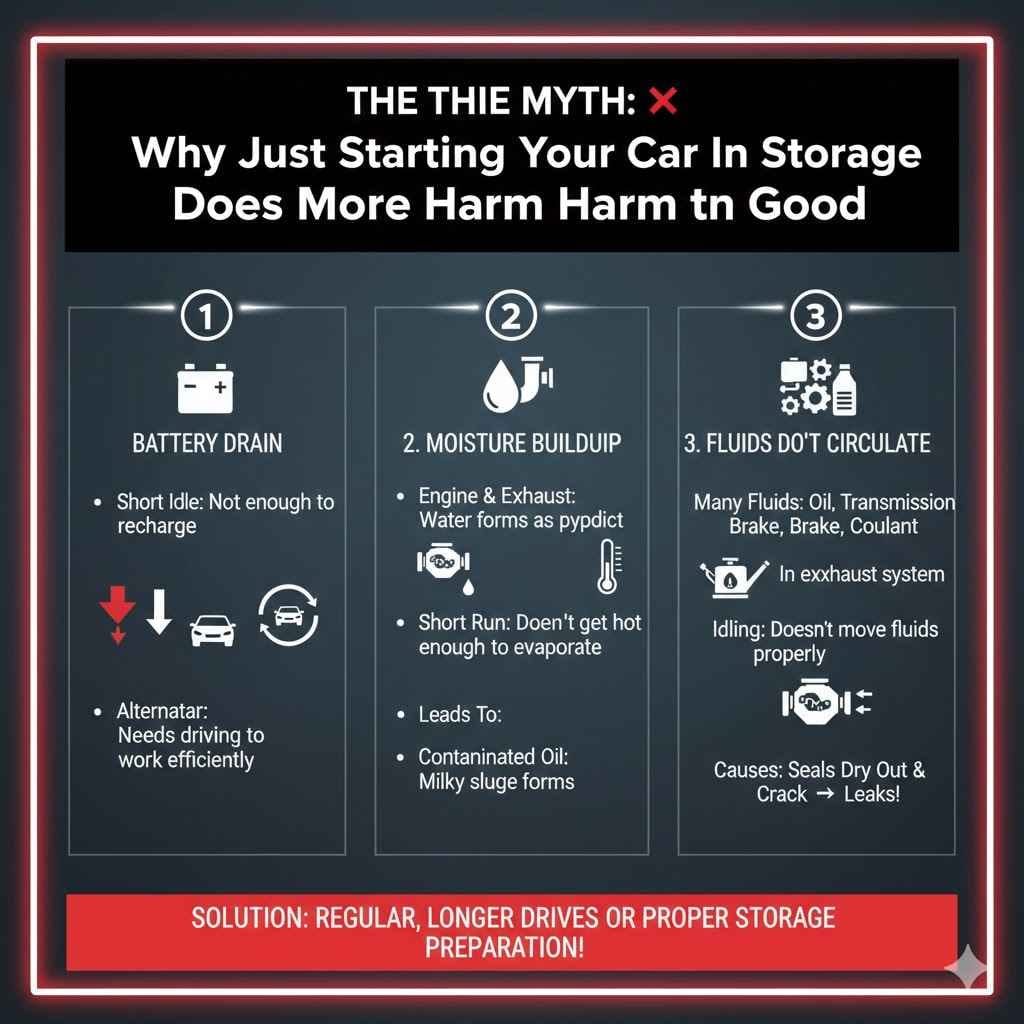
The Big Myth: Why Just Starting Your Car Can Do More Harm Than Good
You’ve probably heard the advice before: “If you’re storing your car, just start it up once a week for a few minutes.” It sounds logical, but it’s one of the biggest myths in car care. A quick, short idle can actually create problems instead of preventing them. Let’s break down why this common advice is flawed.
ECWKVN
ECWKVN Car Front Seat Organizer - Car…
- Handy Car Seat Organizer : Easy Reach for front seat passengers while keeping driving necessities close at hand and clutter under…
- Fit For All Cars, Vans ,SUV, Trucks: Our car seat organizer is designed with ADJUSTABLE STRAPS and Fixed BUCKLE Tightening the str…
- Stable and Heavy Duty: our car organizer storage bag is heavy duty of the most endurance and long lasting REINFORCED fabric in the…
As an Amazon Associate I earn from qualifying purchases.
Problem 1: The Battery Doesn’t Fully Recharge
Your car’s battery needs a lot of power to crank the engine. A short, 5-minute idle in the driveway is not enough to replace that lost energy. The alternator, which recharges the battery, works best when you’re actually driving. So, by starting the car for just a few minutes, you are slowly draining the battery over time. Eventually, you’ll come back to a car that won’t start at all.
Problem 2: Moisture Buildup in the Engine and Exhaust
When your engine runs, it creates water as a byproduct of combustion. This is completely normal. When the engine and exhaust system get hot enough from a proper drive, this water turns into steam and exits through the tailpipe. However, during a short idle, the system never gets hot enough to burn off all that moisture. Instead, water condenses inside your engine and exhaust pipes. This can lead to:
- Internal Rust: Moisture sitting in your exhaust system can cause it to rust from the inside out.
- Contaminated Oil: Water can mix with your engine oil, turning it into a milky sludge. This sludge is a terrible lubricant and can cause significant engine damage over time.
Problem 3: Fluids Don’t Circulate Properly
Your car has many important fluids, not just engine oil. It has transmission fluid, brake fluid, power steering fluid, and coolant. Just idling the car in park doesn’t do much to move these fluids around. For example, the transmission fluid only fully circulates when the car is in gear and moving. Letting these fluids sit can cause seals and gaskets to dry out and crack, leading to future leaks.
So, while the intention is good, starting your car for a short time is a recipe for a weak battery, internal rust, and contaminated oil. There is a much better way to handle car storage.
The Right Way: When and How to Start a Stored Car
If you are storing your car for a short period—say, less than a month—and you don’t want to do full storage prep, starting it can be okay if you do it correctly. The key is to run the engine long enough to solve the problems we just talked about. It’s not about just starting it; it’s about getting it fully warmed up.
The Golden Rule: Go For a Drive
The single best thing you can do is take the car for a 15-20 minute drive. This ensures everything gets up to temperature and all the parts get moving. Here’s a simple step-by-step plan:
- Schedule It: Plan to do this every two to four weeks. Mark it on your calendar so you don’t forget.
- Go for a Real Drive: A quick trip around the block isn’t enough. Aim for at least 15-20 minutes of driving. This will allow the engine oil to get hot enough to burn off any condensation.
- Charge the Battery: Driving for this long gives the alternator plenty of time to fully recharge the battery, replacing the power it used to start the car and then some.
- Circulate Fluids: Driving engages the transmission, power steering, and brakes, circulating their fluids and keeping seals lubricated.
- Use the Brakes: Lightly use your brakes during the drive. This helps clean off any surface rust that may have formed on the brake rotors, preventing them from seizing up.
If you absolutely cannot drive the car, your second-best option is to let it run in place for 15-20 minutes until the engine reaches its normal operating temperature (usually when the temperature gauge is in the middle). This is better than a short idle, but it still doesn’t circulate transmission fluid or clean the brake rotors. Driving is always the superior choice.
The Genius Guide: Proper Long-Term Storage Preparation
For any storage period longer than a month, the professional-grade solution is to prepare the car properly and then leave it alone. Do not start it. This method protects every part of your vehicle and ensures it will be in great shape when you return. It might seem like a lot of steps, but it’s the most reliable way to prevent damage.
Think of it like putting a bear into hibernation. You get it ready for a long sleep, and then you don’t disturb it until spring. Here is your ultimate checklist.
1. Clean Your Car Thoroughly
Wash and wax the exterior of your car. Bird droppings, tree sap, and dirt can eat away at your paint over time. Clean the interior completely, vacuuming up any crumbs or trash. Food particles can attract pests like mice, who can cause major damage by chewing through wires and upholstery.
2. Change the Oil and Filter
Used engine oil contains contaminants that can damage internal engine components if left to sit. Before storing your car, get a fresh oil change. Clean oil will protect your engine’s delicate parts while it rests. This is one of the most important steps for long-term engine health.
3. Manage Your Fuel
You have two excellent options for your gas tank:
- Fill the Tank: Fill the gas tank to about 90% full. This leaves little room for air, which prevents moisture from condensing in the tank and causing rust. It also helps keep the fuel pump and seals from drying out.
- Add a Fuel Stabilizer: Gasoline can go bad in as little as three months. A fuel stabilizer is a chemical additive that prevents the fuel from breaking down and gumming up your fuel system. Follow the instructions on the bottle, which usually involves adding it to the tank and then running the engine for a few minutes to circulate the stabilized fuel through the entire system. You can learn more about how fuel stabilizers work from reliable sources like the Bell Performance blog.
4. Protect Your Battery
A car battery will slowly lose its charge over time, even when the car is off. If it drains completely, it can be permanently damaged. You have two great choices to prevent this:
- Disconnect the Battery: You can simply disconnect the negative battery terminal. This will stop the slow drain from the car’s electronics. However, you will lose your radio presets and other onboard computer settings.
- Use a Battery Tender (Best Option): A battery tender, also known as a trickle charger or battery maintainer, is a smart device that you plug into the wall and connect to your car battery. It monitors the battery’s charge and delivers a small, steady stream of power only when needed. This keeps your battery perfectly charged without overcharging it, which is the absolute best way to preserve its health.
5. Care for Your Tires
If a car sits in one spot for months, its tires can develop “flat spots” where the weight of the car presses down. To prevent this:
- Inflate to Max PSI: Check the sticker on the driver’s side doorjamb for the recommended tire pressure. Inflate your tires to that pressure, or even a few PSI higher. This helps the tires maintain their shape.
- Don’t Set the Parking Brake: Over long periods, brake pads can fuse to the rotors if the parking brake is engaged. Instead of using the parking brake, use wheel chocks to keep the car from moving. This is especially important in humid climates.
6. Keep Pests Out
A stored car can look like a cozy home for rodents. To keep them out:
- Block Entry Points: Gently stuff a bit of steel wool into the exhaust pipe and the engine’s air intake snorkel. This prevents mice from getting inside. CRITICAL: Place a large, bright reminder note on your steering wheel to remove these before you start the car again!
- Use Repellents: You can place mothballs or peppermint oil-soaked cotton balls in the trunk, cabin, and under the hood to deter pests.
7. Choose the Right Location and Cover
Where you store your car matters. The ideal location is a dry, temperature-controlled garage. If you must store it outside, use a high-quality, breathable, and waterproof car cover. Do not use a simple plastic tarp, as it will trap moisture against the car’s paint, causing rust and mold.
Storage Plan: A Quick Comparison
Feeling a bit overwhelmed? Here’s a simple table to help you decide which plan is best for your situation.
| Storage Duration | Recommended Action | Key Steps |
|---|---|---|
| Under 1 Month | Drive Periodically | Drive the car for 15-20 minutes every 2 weeks. |
| 1 to 3 Months | Full Prep or Drive | Driving every 2-4 weeks is an option, but full storage prep with a battery tender is better. |
| 3+ Months | Full Storage Prep (Do Not Start) | Clean the car, change the oil, add fuel stabilizer, use a battery tender, and protect tires. |
Waking Your Car Up After Long-Term Storage
When you’re ready to get back on the road, don’t just jump in and drive away. Follow this simple checklist to wake your car up safely.
- Remove All Blockages: This is the most important step! Remove the steel wool from the exhaust and air intake. Take off the car cover and remove any pest repellents. Double-check your reminder note on the steering wheel.
- Reconnect the Battery: If you disconnected the battery, reconnect the negative terminal. If you used a battery tender, unplug and remove it.
- Check Your Tires: Check the tire pressure and adjust it back to the normal recommended PSI for driving.
- Check Fluids: Do a quick check under the hood. Make sure the oil level and other fluids look okay. Also, glance under the car for any signs of new leaks.
- Start the Engine: Start the car and let it idle for about a minute. Listen for any unusual sounds. The engine might sound a little noisy for a few seconds as the oil circulates—this is normal.
- Test the Brakes: As you first pull away, gently test your brakes at a very low speed to make sure they are working properly. They might make a slight grinding noise at first as they rub off any surface rust from the rotors.
- Take it Easy: For the first drive, take it easy. Allow the car to fully warm up and give all the parts a chance to get back into the swing of things.
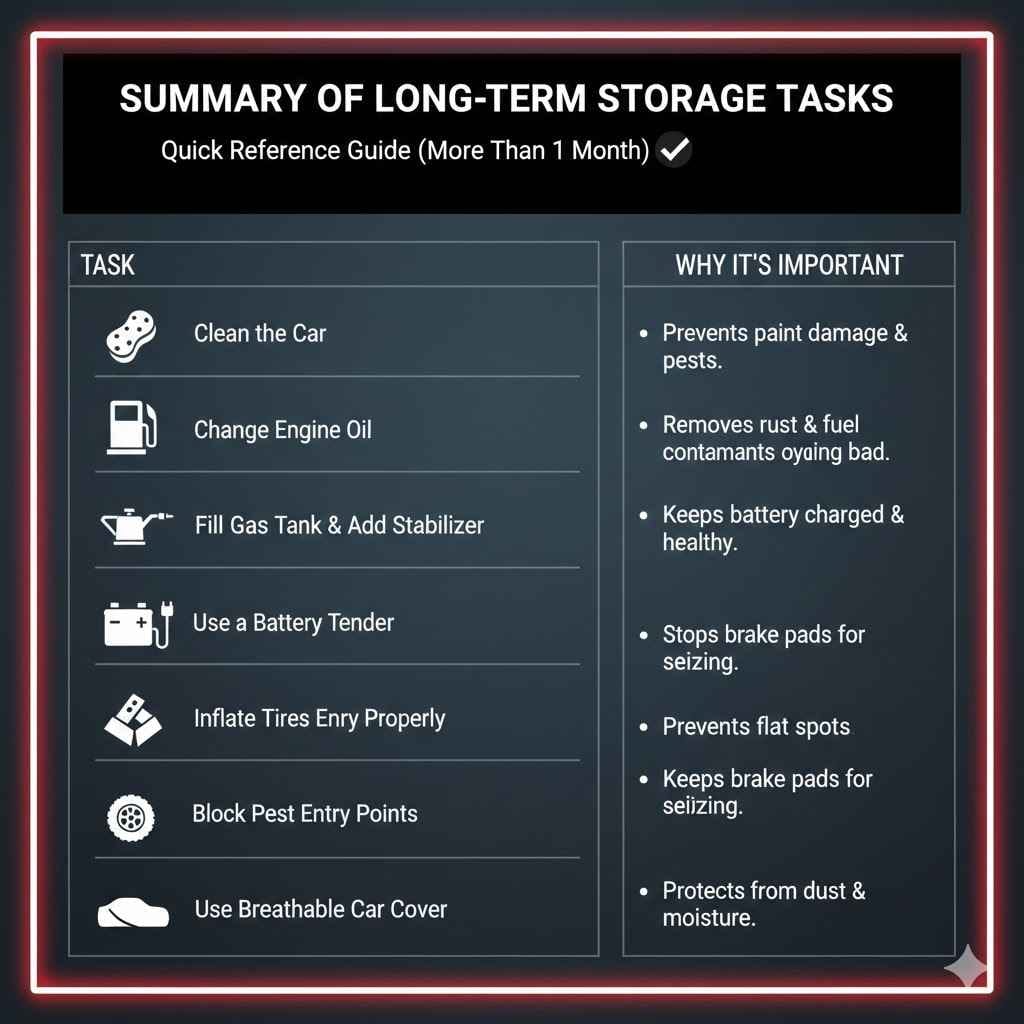
Summary of Long-Term Storage Tasks
Here’s a quick reference guide to the most important preparation steps for storing your car for more than a month.
| Task | Why It’s Important |
|---|---|
| Clean the Car | Prevents paint damage and deters pests. |
| Change Engine Oil | Removes harmful contaminants that can damage the engine. |
| Fill Gas Tank & Add Stabilizer | Prevents rust in the tank and stops fuel from going bad. |
| Use a Battery Tender | Keeps the battery perfectly charged and healthy. |
| Inflate Tires Properly | Prevents flat spots from developing. |
| Use Wheel Chocks (No Parking Brake) | Stops brake pads from seizing to the rotors. |
| Block Pest Entry Points | Keeps rodents from nesting and chewing wires. |
| Use a Breathable Car Cover | Protects from dust and dirt while preventing moisture buildup. |
Frequently Asked Questions (FAQ)
1. Is it bad to start your car and not drive it?
Yes, it is generally bad. Starting your car for just a few minutes without driving it doesn’t allow the engine to warm up enough to burn off moisture, which can cause rust and oil contamination. It also drains the battery more than it recharges it.
2. How long can a car sit without being started?
Most modern cars can sit for about two to three weeks without being started before the battery might become too weak to start the engine. If a car sits for months without proper preparation, you risk flat-spotted tires, bad fuel, and other issues.
3. What is a battery tender?
A battery tender is a small, “smart” charger that you connect to your car’s battery during storage. It provides just enough electricity to keep the battery at an optimal charge level without overcharging it, which greatly extends the battery’s life.
4. Will my tires get flat spots from sitting?
Yes, they can. When a car sits in one position for months, the weight can flatten the area of the tire touching the ground. You can prevent this by inflating the tires to their maximum recommended pressure before storing the vehicle.
5. Should I change the oil before or after storage?
Always change the oil before storage. Used oil contains contaminants that are acidic and can damage engine parts if left sitting for a long time. Storing the car with fresh, clean oil is much better for engine health.
6. Is it okay to just disconnect the battery?
Disconnecting the negative battery terminal is a good option to prevent the battery from draining. However, a battery tender is a better solution because it keeps the battery fully charged and healthy, whereas a disconnected battery will still slowly lose its charge over a very long period.
7. What does a fuel stabilizer do?
A fuel stabilizer is a chemical additive you pour into your gas tank. It prevents the gasoline from breaking down, oxidizing, and forming gummy deposits that can clog up your fuel lines and engine. It essentially keeps the fuel fresh for a year or more. The U.S. Department of Energy provides further information on fuel stability and storage.
Conclusion: Protect Your Investment the Smart Way
Caring for a stored car is simpler than you might think. The old advice of starting it for a few minutes every week is a myth that can cause more problems than it solves. For short-term storage, a proper drive every few weeks is the way to go. For anything longer than a month, the genius move is to prepare it correctly and let it rest peacefully.
By following the steps for long-term prep—cleaning the car, managing the fuel and battery, and protecting the tires—you are taking the best possible care of your vehicle. You’re not just preventing damage; you’re protecting its value and ensuring it will be reliable and ready for you when you return. With this guide, you can feel confident that you know exactly how to keep your car safe and sound, no matter how long it’s stored.
Related pick: Check today's price on Amazon
Products related to this article
Sponsored / affiliate links. As an Amazon Associate I earn from qualifying purchases. I may earn additional commission from eligible campaigns.