Can You Drive with a Bad Transmission Control Module?
Sometimes, yes: a bad transmission control module may stay driveable for a short, low-speed trip if the transmission still shifts. It is tow-only if it slips, bangs into gear, stays in one gear, or shows red warning lights. Keep driving through hard shifts or lost gear control, and you can strand yourself or turn an electronics fault into clutch, valve body, or gear damage. This guide gives a symptom-by-symptom cutoff for driveable, limp-only, and tow-only cases.
Can you drive with a bad TCM?

- Includes dedicated transmission diagnosis and code reading.
- Live data helps verify if TCM fault persists.
- Lifetime updates keep software current for new cars.
Only in limited cases. If the transmission still engages normally, shifts without flare or slam, and the car has no hard fault behavior, a short trip at low speed may be reasonable. If it is in limp mode, stuck in one gear, or loses engagement, stop driving and plan on towing.
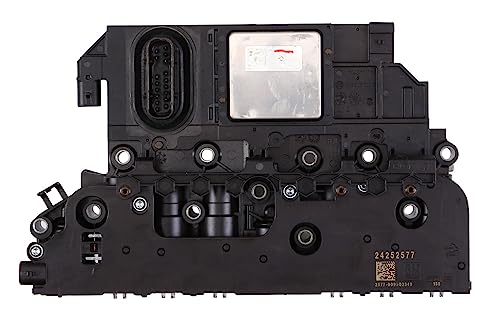
The transmission control module, or TCM, is the automatic-transmission computer. It controls shift timing and pressure. Some vehicles use a standalone module, while others integrate TCM functions into a transmission control unit or mechatronic assembly. A fault can start out intermittent, then turn complete.
When a short drive may be acceptable
A limited drive is the exception, not the plan. The car still needs predictable gear changes, normal engagement, and no warning that the transmission is protecting itself. Keep the route short, avoid highways, and stop if the symptom changes.
If the fault is really low voltage or a loose connector, the problem may come and go. That still does not make high-speed driving smart. It means the failure may be hard to reproduce, not harmless.
When it is tow-only
Tow it if the vehicle will not move off in a normal gear, loses drive at intersections, bangs hard into gear, or drops into limp mode that limits speed or gears. Limp mode is a safety feature on vehicles, and it can leave the car operating in one gear. That makes highway driving unsafe.
If the warning light turns red, or the car stalls when selecting drive or reverse, do not keep trying to drive through it. Repeated attempts can worsen damage and can leave you stuck in traffic or in a lane you cannot clear.
What a TCM does in your transmission
The TCM manages shift timing and hydraulic pressure requests so the transmission can change gears at the right time. It also watches inputs from sensors and other modules. When it fails, the transmission may still have good hard parts but lose control of when and how it shifts.
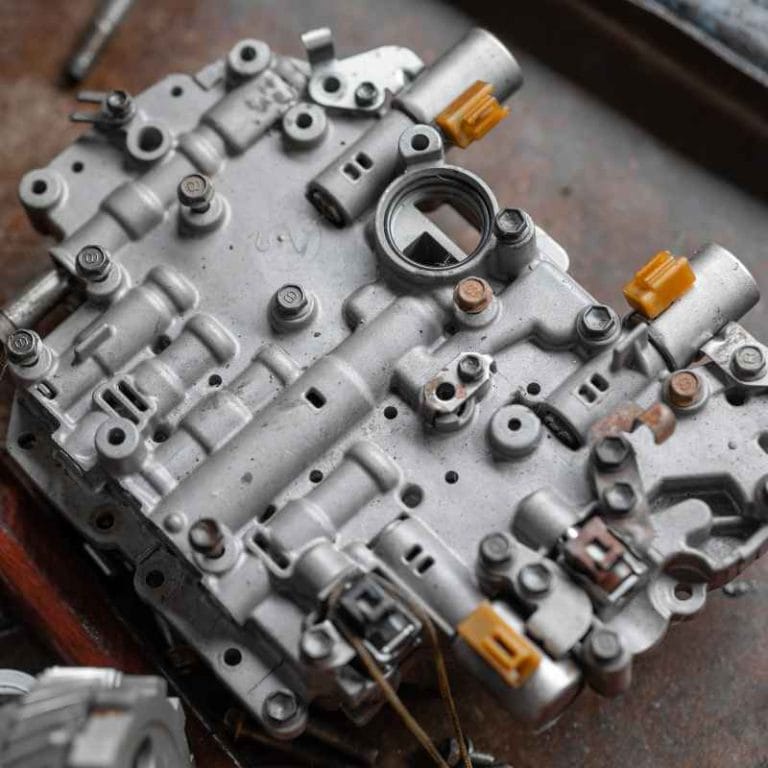
Design matters. A standalone TCM can be replaced separately on some vehicles. Other models use an integrated module or a mechatronic unit, where the electronics and hydraulic section are packaged together. That changes diagnosis, access, and cost.
Standalone, integrated, and mechatronic layouts
Standalone modules are usually easier to identify and sometimes easier to replace. Integrated and mechatronic designs can raise labor time because the module may sit inside the transmission or tie into valve body work. That is why two vehicles with the same symptom can have very different repair paths.
Bad TCM symptoms you can feel
Common symptoms include erratic shifts, delayed shifts, harsh shifts, and gear hunting. A failing TCM can also leave the transmission stuck in one gear. In some vehicles, it can prevent normal engagement or cause intermittent no-start-from-park complaints tied to transmission logic.
Stalling during shifting can happen, but it is vehicle-specific and less common than shift-quality problems or limp mode. Do not assume every stall means the module failed. A low battery, wiring fault, or transmission mechanical issue can create a similar complaint.
Erratic, delayed, or harsh shifts
When shift timing is wrong, the transmission may flare between gears, bang on the upshift, or hold a gear too long. That feels like a computer problem because it often is. It can also come from sensor inputs or voltage problems that confuse the module.
Stuck in one gear or limp mode
Limp mode is the transmission’s fallback strategy. It limits gears and speed to reduce further damage after a module or communication fault. If the car only stays in one gear, you have a major drivability limit and should not treat it as a normal commute condition.
Stalled engagement and no-upshift cases
Some vehicles will not engage drive or reverse consistently. Others will move off and never upshift. That pattern can point to module failure, but it can also come from wiring damage, poor power supply, or a valve body problem that the module is trying to protect against.
Drive, limp, or tow?
This table separates symptoms by immediate risk. Use it as a decision guide, not as a parts list. If the symptom points to loss of gear control, warning lights with limp mode, or failed engagement, treat the car as tow-only.
| Symptom | Likely severity | Immediate risk | Next action |
|---|---|---|---|
| Occasional delayed or harsh shift, but all gears still work | Moderate | Higher wear if driven hard | Drive only a short distance, avoid highways, scan codes soon |
| Erratic shifts that come and go with no lost engagement | Moderate | Unpredictable acceleration | Limit driving, check battery voltage, grounds, and connectors |
| Stuck in one gear | High | Highway driving can be unsafe | Treat as limp mode and arrange towing if travel is not local |
| Limp mode with reduced speed and limited gears | High | Loss of normal traffic speed | Do not continue highway driving; get it towed if safe to do so |
| P0700 with warning light only, but vehicle still drives normally | Moderate | Fault is confirmed at the transmission system level, not the exact part | Scan for the companion code set before replacing parts |
| U0101 or other lost-communication code with no gear control | High | Possible sudden loss of transmission control | Tow and inspect power, ground, and cable routing before module replacement |
| Stalled engagement when selecting drive or reverse | High | Vehicle may not move when expected | Do not keep cycling the shifter; tow for diagnosis |
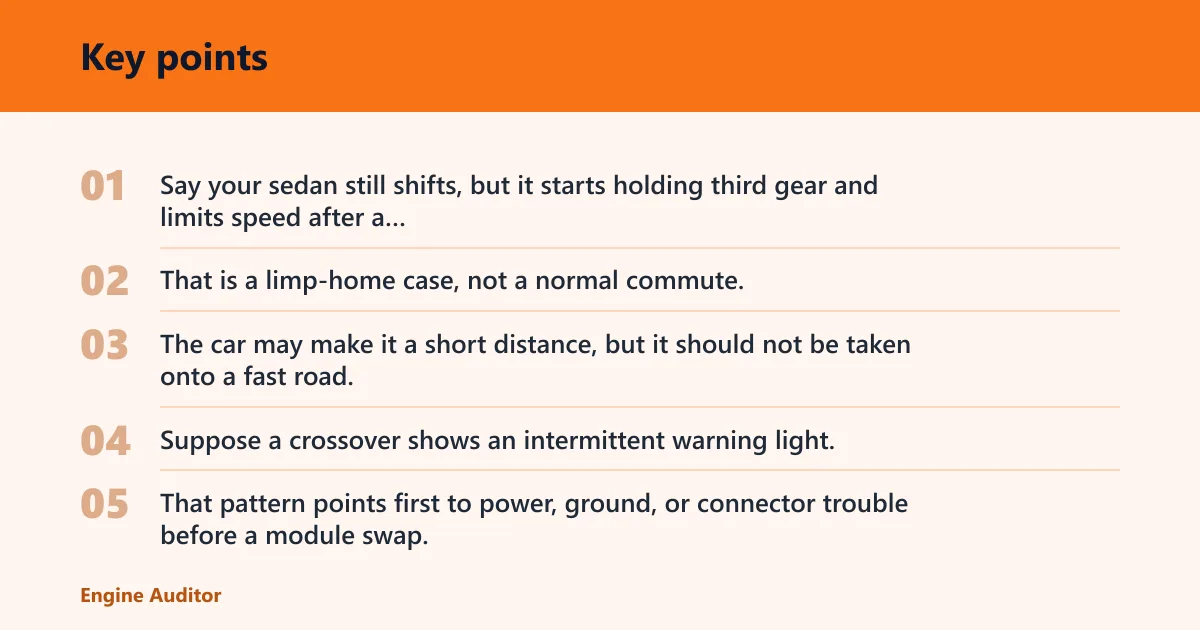
Say your sedan still shifts, but it starts holding third gear and limits speed after a mile of city driving. That is a limp-home case, not a normal commute. The car may make it a short distance, but it should not be taken onto a fast road.
Suppose a crossover shows an intermittent warning light, then loses reverse on a rainy day, but works again after sitting overnight. That pattern points first to power, ground, or connector trouble before a module swap. Intermittent faults often live in the wiring, not the computer itself.
Will a bad TCM throw a code?
Yes, often, but the code set matters. P0613 is listed as a common TCM trouble code. P0614 is an ECM/TCM incompatibility code. P0700 indicates a transmission control system malfunction, and U0101 means lost communication with the TCM.
U0140 is generally treated as a body-control communication code and should not be used as proof of a TCM fault. P0700 is often just a request for the MIL, so it points you to deeper transmission codes rather than naming the exact failure.
Why the warning light is not enough
The transmission warning light or check engine light can illuminate for a TCM fault, but it does not prove the module is bad. The same light can come on for a wiring issue, a solenoid problem, a sensor fault, or a voltage drop that briefly shut the module down.
Scan data matters more than the lamp. If the scanner shows only a generic warning and no companion codes, diagnosis is incomplete.
What to check before replacing the module
Check power first. Low battery voltage can brown out the module and mimic TCM failure. Ground faults can do the same thing. A scan tool is useful, but a voltage problem can make the scan results misleading if the module keeps dropping offline.
Battery voltage and grounds
Start with battery state, charging system behavior, and ground integrity. A weak battery or poor ground can create the same lost-communication pattern that people blame on the TCM. That is why voltage checks come before replacement.
- Inspect battery terminals for looseness or corrosion.
- Check main grounds between battery, body, and engine.
- Verify that the transmission power supply is present under key-on conditions.
- Confirm whether the warning light returns after voltage is stable.
Wiring, connectors, and corrosion
Transmission wiring and connector damage can create intermittent faults and communication codes at low cost. Look for corrosion, loose terminals, pin damage, rubbed-through insulation, and fluid intrusion. A bad connector can behave like a bad module for days at a time.
Scan data and communication faults
Look at which codes return together. P0613 suggests a TCM processor problem. P0614 points to an ECM/TCM mismatch. U0101 means the other module lost communication with the TCM. Those codes make more sense when you also know whether battery voltage and ground are stable.
Can you fix a bad TCM?
Sometimes. Some modules need flash programming to the VIN after installation, and many need an adaptive relearn afterward. If that relearn is skipped, the car can shift harshly or oddly even with a good module. On some vehicles, a repair may mean reprogramming rather than replacement.
A standalone TCM total cost around $300 to $650 and a mechatronic total cost around $900 to $1,800. Those ranges are not the whole story, because programming, relearn time, and labor can add to the total. Integrated units also tend to cost more because the module is harder to separate from the transmission hardware.
Reflash, replace, or relearn
Reflash is the first option when the module is present, powered, and simply has the wrong software or calibration. Replace the module when it fails internally or will not communicate after power and wiring checks. Then complete the relearn so shift quality can settle correctly.
When the problem is not the module
If the fault comes and goes with moisture, a temperature change, or movement of the wiring, the module may be fine. If the transmission behaves badly only after a jump start or a weak battery event, power supply is the first suspect. Do not buy a module before proving that the circuit is healthy.
Frequently asked questions
How long can you drive with a bad transmission control module?
If the car is in limp mode, stuck in gear, or losing engagement, there is no safe mileage target. If the car still shifts normally and shows only mild symptoms, a short drive may be possible. If it is in limp mode, stuck in gear, or losing engagement, the answer is to stop driving and tow it instead of gambling on distance.
What happens if you drive with a bad transmission control module?
The transmission may shift late, slam into gear, or stay in a limited fallback mode. That can make merging and passing risky. Continued driving can also add wear if the module is commanding poor pressure or if the problem is actually a wiring or voltage fault that keeps returning.
How do I know if my transmission control module is bad?
Start with the code set and the basics. P0613, P0614, P0700, and U0101 are meaningful clues, but they are not proof by themselves. Check battery voltage, grounds, and connectors first. If those are sound and the codes keep returning, the module moves higher on the list.
What causes a transmission control module to fail?
Common causes include water intrusion, heat, internal circuit failure, connector corrosion, wiring damage, and low voltage events that brown out the electronics. On some vehicles, poor communication between modules can make the TCM look bad when the real issue is power supply or wiring damage.
Can you fix a transmission control module?
Sometimes, yes. A module may need reprogramming, VIN-specific flashing, or a relearn after replacement. If the unit is dead, replacement is the path. If the problem is a bad ground, corroded connector, or low battery voltage, the fix may be much simpler than a new module.
Can you drive with a bad powertrain control module?
Not safely in many cases, because the PCM can affect engine and transmission behavior together. The same warning applies: if the vehicle loses normal throttle, shifts poorly, or enters a reduced-power mode, do not keep driving. Diagnose the fault and tow it if control is uncertain.
Products related to this article
Sponsored / affiliate links. As an Amazon Associate I earn from qualifying purchases. I may earn additional commission from eligible campaigns.