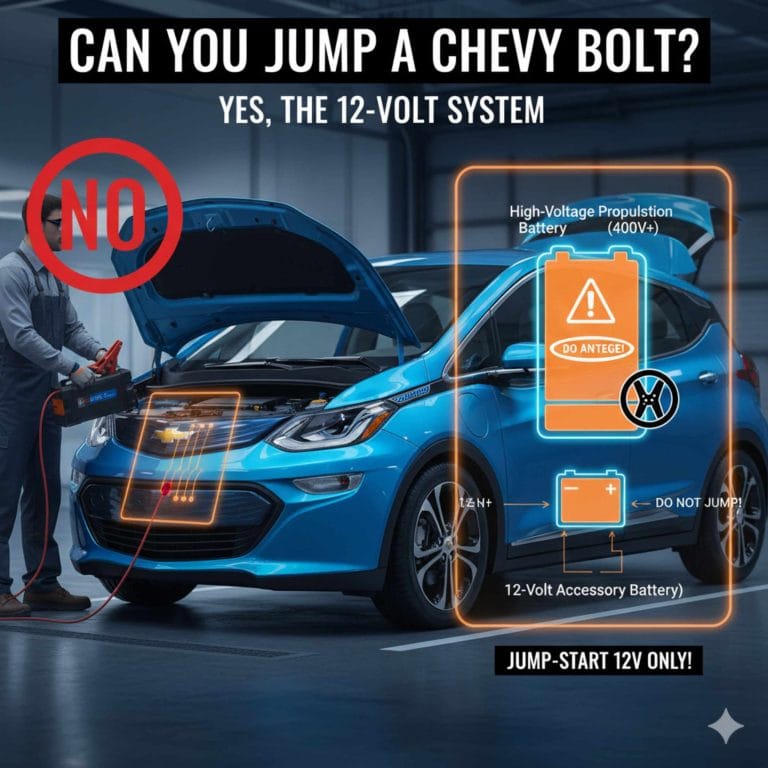
Chevy Bolt vs Bolt EUV: Which Should You Choose Today?
Choose the Chevy Bolt EV unless you regularly use the back seat or want the roomier body, then the Bolt EUV is the better pick. Get it wrong and you either pay extra for empty space or save a little and give up cabin room you actually need. This guide compares cargo, rear-seat space, charging, range, ride, and used-car value.
This guide is part of our Chevy vehicles guide: models, issues, and buying tips series.
Chevy Bolt vs Bolt EUV: the quick answer
The Bolt EV is the value-first commuter. The Bolt EUV is the roomier choice, with a 3-inch longer wheelbase, about 3 inches more trunk space, and a bigger 11kW charging inverter. Both ride on the BEV 2 platform and share the same 66kWh battery reference, so the decision comes down to space, charging convenience, and price.
That is the cleanest way to frame it. If you mainly drive alone or with one passenger, the Bolt EV usually makes more sense. If adults sit in the rear seat often, the EUV earns more of its price.
📊 Chevrolet lists the Bolt from $27,600. Source: Chevrolet Cars, Trucks, SUVs, Crossovers and Vans.
Bolt EV vs Bolt EUV: side-by-side comparison
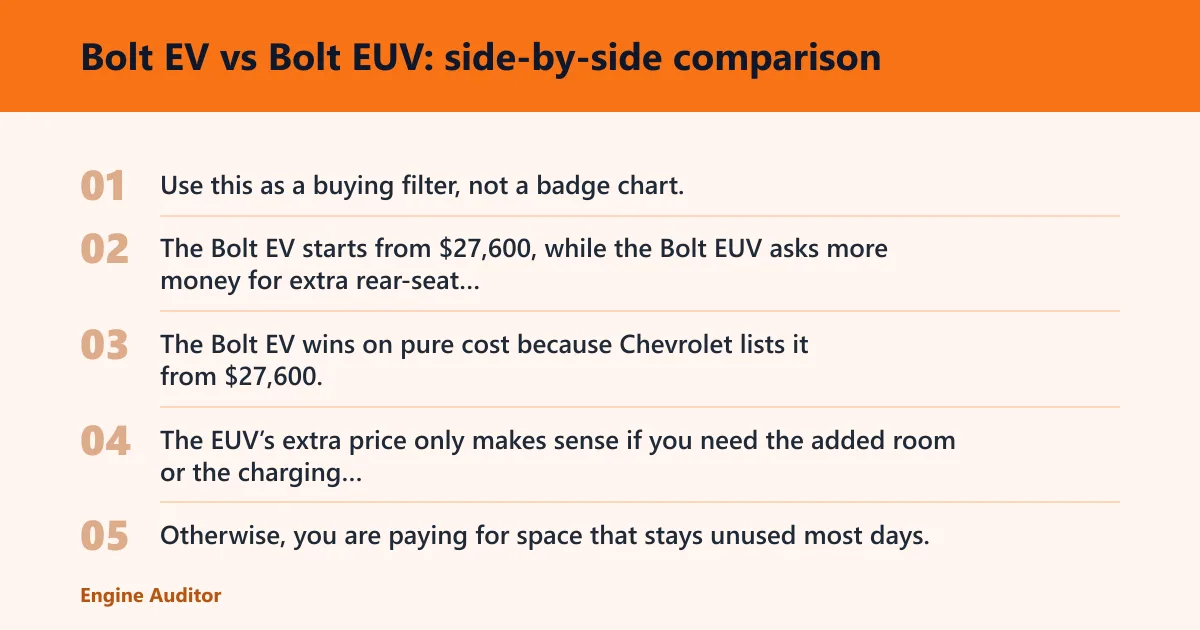
Use this as a buying filter, not a badge chart. The Bolt EV starts from $27,600, while the Bolt EUV asks more money for extra rear-seat room, a longer body, and a faster home-charging setup through its 11kW inverter.
| Decision factor | Chevy Bolt | Bolt EUV: which one should you choose? | Winner |
|---|---|---|---|
| Starting price | Starts from $27,600 | Higher than the Bolt EV | Chevy Bolt |
| Range | Efficiency-oriented choice | Estimated 245-mile range | Chevy Bolt |
| Rear-seat room | Smaller back seat | Back seat is larger for adults | Bolt EUV: which one should you choose? |
| Cargo space | Less trunk room | About 3 inches more trunk space | Bolt EUV: which one should you choose? |
| Home charging | Regular Bolt charging setup | 11kW charging inverter; about 33% reduced charging time on a kWh basis | Bolt EUV: which one should you choose? |
| Best use case | Solo commuting and budget buying | Families, back-seat duty, and easier home charging schedules | Depends on use case |
Starting price and value
The Bolt EV wins on pure cost because Chevrolet lists it from $27,600. The EUV’s extra price only makes sense if you need the added room or the charging hardware advantage. Otherwise, you are paying for space that stays unused most days.
Range and efficiency
The EV keeps the edge for shoppers who care most about efficiency. The EUV’s estimated 245-mile range is solid, but the larger body is still the trade-off. If your routes are short and predictable, the EV’s lower price matters more than the EUV’s range number.
Charging and daily convenience
The EUV’s bigger 11kW charging inverter is the practical difference here. Electrek said it can cut home and destination charging time by about 33% versus the regular Bolt on a kWh basis. That matters if you plug in overnight on a schedule and want more usable charge by morning.
Use case fit
The Bolt EV is the cleaner commuter pick. The EUV is the better fit when rear-seat use, cargo room, or home-charging speed changes your routine. That is why the value answer is not universal, it depends on how many people and bags need to fit on a normal week.
What is the difference between a Chevy Bolt and Bolt EUV?
The Bolt EV is the smaller hatchback, while Chevrolet describes the Bolt EUV as an electric utility vehicle with a roomier body. Both are in the Bolt family and share the BEV 2 platform and the same 66kWh battery reference, but the EUV is basically a stretched Bolt with more cabin and cargo space. (caranddriver.com)
The difference is not mainly about drivetrain hardware. It is about packaging. Chevrolet also groups Bolt in both Electric and SUVs navigation, which shows how the EUV sits closer to the SUV side of the showroom without becoming a true small SUV substitute.
Is the Bolt EUV bigger than the Bolt EV?
Yes. The Bolt EUV is bigger where it matters to people, not just on a spec sheet: it has a 3-inch longer wheelbase and about 3 inches more trunk space. That extra length makes the cabin feel less compressed, especially for rear passengers and cargo behind them.
For tight city parking, the Bolt EV still has the easier footprint. If you park on a narrow street and often squeeze into short spaces, the EV’s smaller body is the simpler daily fit, while the EUV’s extra length only pays off if you use the added room.
What the extra 3-inch wheelbase changes in the cabin
A longer wheelbase usually helps rear-seat knee room and foot space, and that is the real reason the EUV feels better for adults in back. It is not a luxury-class jump. It is enough to reduce the knees-up seating posture that compact EVs often create.
How much more trunk space you actually get
The EUV adds about 3 inches of trunk space. That is enough to make everyday loading easier, especially for grocery runs, backpacks, or a folded stroller. It is not a cargo van change, but it is a useful packaging gain for a family that uses the hatch often.
Which is better for daily commuting, Bolt EV or Bolt EUV?
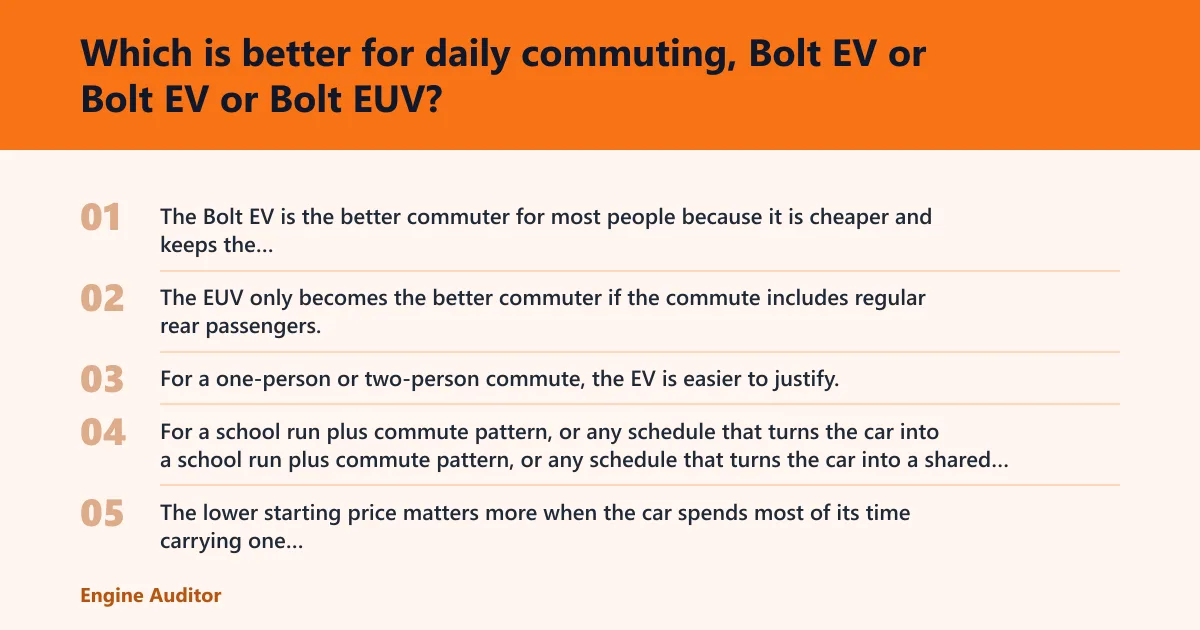
The Bolt EV is the better commuter for most people because it is cheaper and keeps the focus on efficiency. The EUV only becomes the better commuter if the commute includes regular rear passengers, extra gear, or a home charging routine that benefits from the 11kW inverter.
For a one-person or two-person commute, the EV is easier to justify. For a school run plus commute pattern, or any schedule that turns the car into a shared household vehicle, the EUV’s extra cabin room starts earning its price.
Why the Bolt EV is the value-first commuter
The lower starting price matters more when the car spends most of its time carrying one or two people. You still get a compact all-electric hatchback, and that is enough for a long list of commuting needs. The EV is the straightforward answer when budget is the first filter.
Where the EUV’s extra comfort matters on repeat drives
Repeat drives expose small packaging issues fast. If a rear passenger sits behind you every day, or if a child seat lives back there, the EUV’s extra room reduces the feeling that the cabin is working at the limit. That can matter more than a modest price gap.
Range and efficiency trade-offs for stop-and-go driving
Stop-and-go traffic usually favors efficient packaging and lower running stress on the driver, so the EV keeps a slight edge for commuters who care about squeeze-the-most-out-of-it driving. The EUV’s estimated 245-mile range is useful, but it does not erase the fact that you are buying a larger body.
How much range and charging difference should you expect?
The Bolt EUV is estimated at about 245 miles of range, and both vehicles use the same 66kWh battery reference. The main charging difference is the EUV’s 11kW inverter, which makes home and destination charging faster in a way that matters for nightly plug-in routines.
For many shoppers, charging convenience matters more than peak fast-charge headlines. If you charge at home on a predictable schedule, the EUV’s shorter charging time can be easier to live with than a slightly lower price on the EV.
Bolt EUV estimated 245-mile range
Electrek estimated the Bolt EUV range at about 245 miles. That is enough for most commuting and many weekend trips without frequent public charging. The EV’s efficiency-oriented setup may still be the smarter choice if you value range per dollar over cabin size.
What the 11kW charging inverter changes at home
The EUV’s bigger 11kW charging inverter can reduce home and destination charging time by about 33% versus the regular Bolt on a kWh basis. That is a real scheduling advantage. It can mean less time plugged in after work and more flexibility if you top off overnight.
Why charging schedules matter more than peak speed for many buyers
Most daily charging happens at home. If your car sits in the driveway for 10 hours, a faster onboard charger can matter more than a headline DC fast-charge number. The EUV’s inverter advantage is therefore a practical ownership feature, not a spec-sheet trophy.
Which Chevy Bolt is better for adults in the back seat?
The Bolt EUV is better for adults in the back seat. Its 3-inch longer wheelbase gives the cabin more usable room, and the rear bench is larger for adult comfort. The Bolt EV can still work for short rides, but it is the tighter choice for regular adult passengers.
If back-seat use is occasional and mostly for kids, the EV is often enough. If adults ride there on repeat trips, the EUV’s extra space is worth paying for because it improves day-to-day comfort rather than only looking better on paper.
Rear-seat comfort in the Bolt EV
The Bolt EV’s rear seat is acceptable for brief use, but it is still the smaller package. Adults will feel the compact proportions sooner, especially on longer drives. It is the right answer when the back seat is a backup space, not a regular seat.
Rear-seat comfort in the Bolt EUV
The EUV is the better family-use version because the extra wheelbase helps adult seating position. That matters for carpools, grandparents, or taller passengers. The rear seat still belongs to a compact EV, but it is the more usable one.
When the EUV’s longer wheelbase is worth paying for
Pay for the EUV when the back seat is not decorative. If you regularly carry two adults, a booster seat plus an adult, or a driver and passenger who swap seats with passengers, the extra room pays back every week in comfort and fewer complaints.
Is the Bolt EUV worth the extra money over the Bolt EV?
The EUV is worth the premium only when its extra room or faster home charging directly fits your life. With the Bolt starting at $27,600, the EV is the safer value choice for budget-minded commuters. The EUV earns its higher price when cabin space and charging convenience matter more than the lowest entry cost.
A common first-timer mistake is buying the larger version for future needs and then never using the extra room. If the car will mostly haul one person and a laptop bag, the EV is the better financial answer. If you already know the rear seat will be used, the EUV has a real case.
Which features justify the EUV premium
The extra rear-seat room is the clearest reason. After that comes the about 3 inches more trunk space and the 11kW inverter, which can save time on overnight charging. Those are useful, everyday advantages, not cosmetic ones.
Which buyers should save the money and buy the EV
Save the money if you commute alone, live with a short drive to work, or only use the back seat a few times a month. In that case, the Bolt EV gives you the core Bolt experience at the lower entry price, which is the smarter ownership decision.
Can the Bolt EUV tow a trailer?
No. The EUV’s tow-hitch upgrade is for bikes, not trailers. That matters because it changes how you should think about outdoor gear use. If you want to carry a bike rack, the hitch option is useful. If you want trailer duty, this is not the right vehicle for that job.
That distinction saves buyers from a bad assumption. A hitch does not equal towing capacity. For cyclists, the EUV can work as a clean commuter plus weekend rack carrier. For trailer users, you should look elsewhere.
Choose Chevy Bolt if… / Choose Bolt EUV if…
Choose the Chevy Bolt EV if you want the cheapest commuter, care more about the starting price from $27,600, and rarely use the rear seat. Choose the Bolt EUV if you carry adults in back, want more trunk room, or value the 11kW charging inverter for shorter home-charging time.
Choose Chevy Bolt if…
- You drive mostly solo or with one front passenger.
- You want the lower purchase price and stronger value case.
- You do not need the extra rear-seat room for adults.
- You prefer the smaller body for tighter city parking.
Choose Bolt EUV if…
- You regularly carry adults in the back seat.
- You want about 3 inches more trunk space for daily cargo.
- You charge at home and want the faster 11kW inverter setup.
- You want the roomier Bolt without moving to a larger EV class.
Proof asset: buyer decision matrix for Bolt EV vs Bolt EUV
Score each vehicle against the way you actually use it. A higher score means the model fits that need better. This matrix keeps the choice tied to commuting, passengers, cargo, charging, and budget instead of badge preference.
| Buyer factor | Chevy Bolt EV | Bolt EUV | Who this favors |
|---|---|---|---|
| Commute length | Best for short to medium solo commuting | Also suitable, especially if passengers ride along | Chevy Bolt EV |
| Back-seat use | Tight for adult duty | Better for adults and family use | Bolt EUV |
| Cargo needs | Fine for light daily hauling | Better with about 3 inches more trunk space | Bolt EUV |
| Home-charging setup | Standard setup | 11kW inverter; about 33% reduced charging time on a kWh basis | Bolt EUV |
| Budget | Starts from $27,600 | Costs more | Chevy Bolt EV |
Choose the Chevy Bolt EV if: you want the lower-cost commuter, do most of your driving alone, and do not need the back seat to feel roomy. It is the cleaner buy for price-sensitive shoppers.
Choose the Bolt EUV if: you carry adults in back often, want the larger cabin feel, or plug in at home and would use the faster charging schedule. The EUV’s premium is easiest to justify when those three needs overlap.
Frequently asked questions
What is the difference between a Chevy Bolt and Bolt EUV?
The Bolt EV is the smaller hatchback and the Bolt EUV is the roomier electric utility vehicle. Both share the BEV 2 platform and the same 66kWh battery reference, but the EUV is basically a stretched Bolt with a 3-inch longer wheelbase and more rear-seat space.
Which is better for daily commuting, Bolt EV or Bolt EUV?
The Bolt EV is better for most daily commuting because it is cheaper and keeps the ownership case centered on value. The EUV is the better commuter only if you regularly carry passengers, need more cargo room, or want the faster home-charging setup.
Is the Bolt EUV bigger than the Bolt EV?
Yes. The Bolt EUV has a 3-inch longer wheelbase and about 3 inches more trunk space. That extra packaging helps rear passengers and cargo, while the Bolt EV remains the easier choice for tight city parking and lower-cost buying.
How much range does the Chevy Bolt EUV have?
Electrek estimated the Bolt EUV range at about 245 miles. That is enough for most commuting and plenty of errands between charges. The Bolt EV is still the efficiency-oriented choice, so range alone is not the main reason to move up to the EUV.
Does the Bolt EUV charge faster than the Bolt EV?
Yes, at home and at destinations. The Bolt EUV includes a bigger 11kW charging inverter, and Electrek said it can cut charging time by about 33% versus the regular Bolt on a kWh basis. That matters most if you charge on a nightly schedule.
Can the Bolt EUV tow a trailer?
No. The EUV’s tow-hitch upgrade is for bike racks, not trailers. That makes it useful for cyclists, but it should not be treated as a towing solution. If trailer use is part of the plan, this should not be your tow vehicle choice.
Products related to this article
Sponsored / affiliate links. As an Amazon Associate I earn from qualifying purchases. I may earn additional commission from eligible campaigns.