Chevy Coolant Leak Signs and Where to Look Under the Hood
A Chevy coolant leak often points to the surge tank, radiator tanks, hose connections, water pump, thermostat housing, or heater hoses; if the gauge climbs, you see steam, or the cabin heat turns cold, stop driving. Ignoring it can warp the heads, ruin the water pump, or leave you stranded. This guide shows which symptom points to which under-hood area, and what to inspect first.
Coolant leak locator



| Symptom | Likely area under the hood | Likely component | What residue to look for | Stop driving? |
|---|---|---|---|---|
| Low reservoir level, no puddle | Reservoir top, seam, or cap area | Coolant reservoir / overflow tank / expansion tank | Crusty orange, pink, or white residue at the neck, cap, or seam | Yes, if the level keeps dropping or the gauge rises |
| Puddle under the front of the car after parking | Front bumper area, lower front edge, or under the radiator | Radiator, lower hose, drain plug, or water pump | Wet streaks on the radiator end tank, hose ends, or front-center engine area | Yes, if the puddle is growing or the engine overheats |
| Sweet smell after a drive | Reservoir, radiator, hose clamps, thermostat housing, or firewall area | External seep or heat-soak leak | Damp film, crusted residue, or a fresh drip that appears after shutdown | Maybe, but stop if the temperature climbs |
| Fogged windows, wet carpet, sweet cabin smell | Passenger-side firewall and HVAC area | Heater core or heater hose connections | Damp passenger floor, greasy film on glass, or interior coolant odor | Yes, if coolant is dropping fast or defrost fails in traffic |
| White exhaust smoke with no outside drip | Internal engine leak | Head gasket, cracked head, or intake manifold gasket on some Chevy engines | Milky oil, bubbles in the reservoir, misfires on startup | Yes |
| Leak pattern | What it usually means | Best place to inspect first |
|---|---|---|
| Cold leak | Seep that shows up before the system is hot | Reservoir seam, cap seal, hose ends, and loose clamps |
| Hot leak | Leak that opens under pressure and temperature | Radiator end tanks, thermostat housing, water pump weep hole |
| After-shutdown leak | Heat-soak leak that appears after the engine is parked | Reservoir neck, radiator seams, thermostat housing, heater hose junctions |
What you’ll need
- Flashlight
- Small inspection mirror
- Cardboard or clean paper for drip checks
- Cooling system pressure tester matched to the filler neck or reservoir and cap adapter
- UV dye
- UV lamp
- Yellow glasses
- Gloves
- A cool engine
What are the first signs of a Chevy coolant leak?
The first signs are a falling coolant level, a sweet smell, visible puddles, steam, or overheating. On some Chevys, the reservoir may drop before you ever see a drip, and orange coolant residue can leave a crust near a leak point. A low-coolant warning is not a reminder to top up later.
Low level and warning light
Check the reservoir only when the engine is cold. If the level keeps dropping between checks, the system is losing coolant somewhere. A coolant warning light or a rising temperature gauge means the problem has moved past monitoring.
Sweet smell, steam, and wet residue
A sweet smell after parking often comes from a small external leak that drips onto a hot surface. Steam from the hood points to a pressurized leak. Wet residue near a seam, clamp, or cap is often the first visible clue.
Overheating and lost cabin heat
If the engine overheats or the cabin heat fades, treat that as a serious fault. Coolant loss can empty the system enough that the heater core no longer gets hot coolant, and the gauge can climb quickly in traffic.
Where should you look first under the hood?
Begin with the reservoir, then inspect the radiator, hose connections, water pump, thermostat housing, and firewall area. That order follows the most common Chevy leak zones and the places where coolant usually leaves visible residue first. A front-of-car puddle often points to the radiator, hoses, or water pump.
Reservoir and cap area
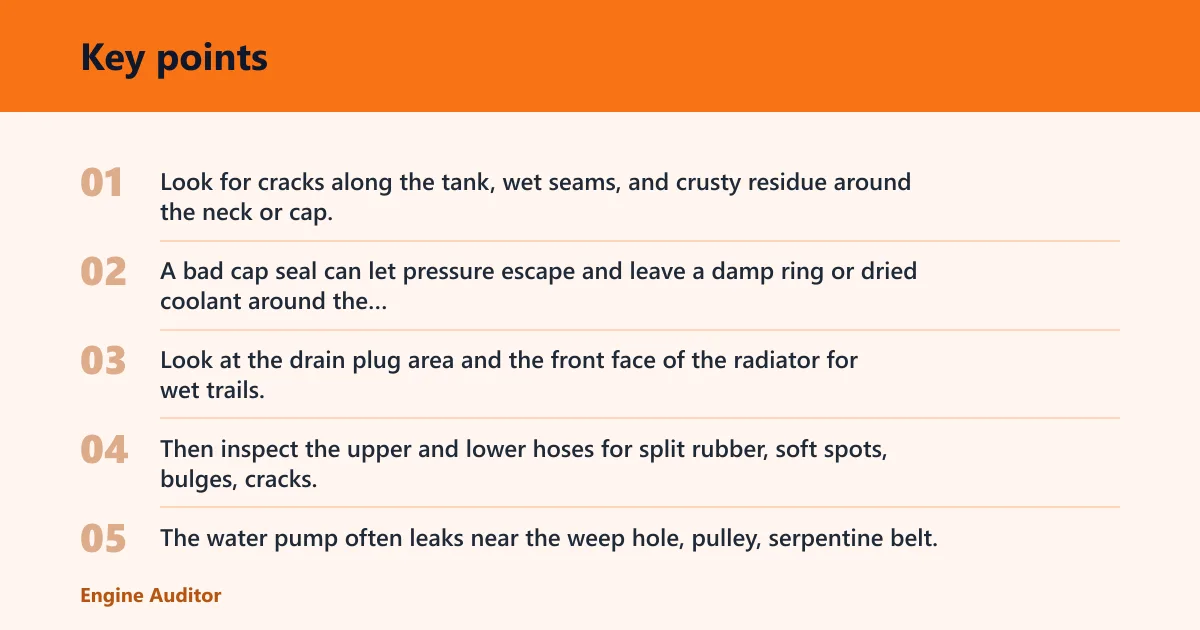
Inspect the cold-engine level first. Look for cracks along the tank, wet seams, and crusty residue around the neck or cap. A bad cap seal can let pressure escape and leave a damp ring or dried coolant around the opening.
Radiator, hoses, and clamps
Check both end tanks and the center seam. Look at the drain plug area and the front face of the radiator for wet trails. Then inspect the upper and lower hoses for split rubber, soft spots, bulges, cracks, and clamp seepage.
Water pump and thermostat housing
The water pump often leaks near the weep hole, pulley, serpentine belt, or timing cover area. The thermostat housing can crack, warp, or seep at the gasket or O-ring, then leave a trail down the engine block. Front-center engine residue deserves close attention.
Firewall and heater hose area
If the cabin smells sweet, check the firewall and heater hose connections. Heater core leaks often hide inside the HVAC case, so the only outside clue may be damp carpet, foggy glass, or a sweet smell inside the cabin.
How do you check the common Chevy leak points?
Use a cold engine and work from the easiest external checks to the more involved ones. A pressure test is a common way to find a leak, and it is done with the engine off. That matters because some leaks only open when the system is pressurized.
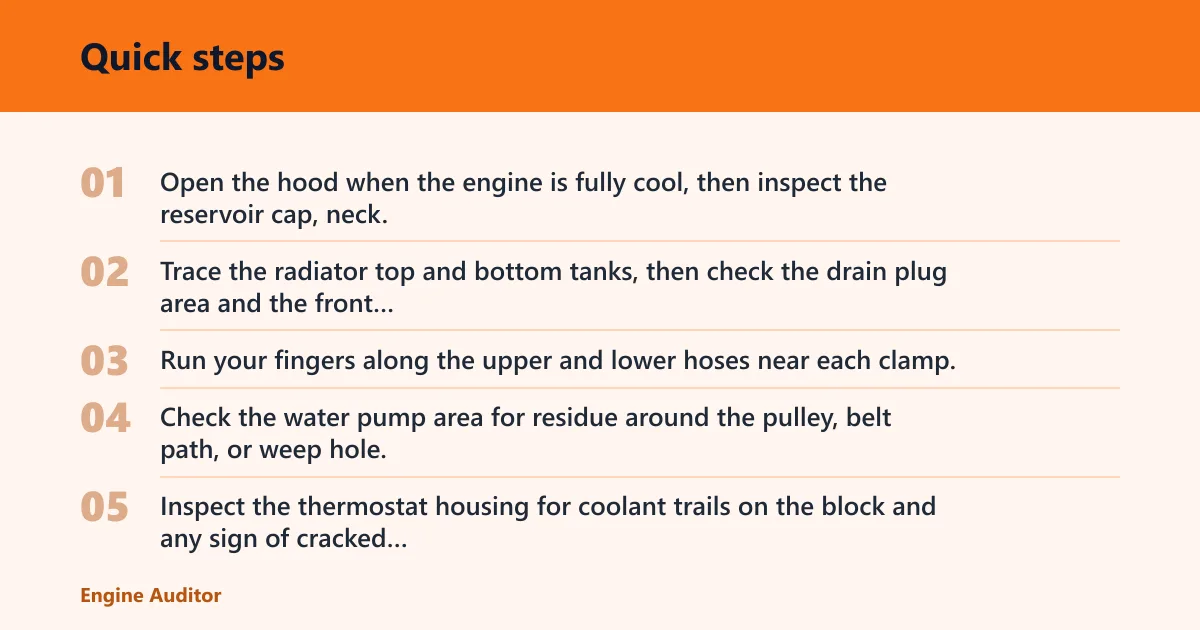
- Open the hood when the engine is fully cool, then inspect the reservoir cap, neck, and seam with a flashlight.
- Trace the radiator top and bottom tanks, then check the drain plug area and the front edge for wet streaks or crust.
- Run your fingers along the upper and lower hoses near each clamp, looking for soft rubber, cracks, or seepage.
- Check the water pump area for residue around the pulley, belt path, or weep hole.
- Inspect the thermostat housing for coolant trails on the block and any sign of cracked plastic or a failed gasket.
- Top up only enough coolant to return the reservoir to the marked cold level, then recheck after a short drive or after the next cold soak.
Say your Chevy leaves a small greenish or orange spot on cardboard only after a 20-minute highway drive. That pattern often points to a hot leak at a hose clamp, thermostat housing, or water pump seal that opens under pressure, not a wide-open split.
Suppose the reservoir is low every morning, but the driveway stays dry. That can still fit a slow seep, a cap leak, or an internal loss path that burns coolant before it reaches the ground.
How do you find a hidden coolant leak?
Use a pressure test first, then UV dye if the leak is slow or intermittent. If no outside leak appears and the coolant still drops, move to an internal-leak check. Each step answers a different question, and each one gets more focused.
Pressure test the system with the engine off
Fit the tester to the reservoir or filler neck with the correct cap adapter. Pump the system to the rated-cap pressure, then inspect the reservoir, radiator seams, hose ends, water pump, thermostat housing, and firewall area. Hairline radiator cracks and loose clamps often show up only under pressure.
Use UV dye for slow or intermittent leaks
Add dye to the cooling system, drive long enough for the leak to show, then scan with a UV lamp and yellow glasses. This helps expose hard-to-see leak points around the reservoir seam, hose joints, and radiator end tanks. The dye traces the path that dried coolant can hide.
Use a block test when no external leak appears
If you see white exhaust smoke, milky oil, bubbles in the reservoir, or startup misfires, suspect an internal leak. A combustion gas test or block test helps confirm exhaust gas in the cooling system. Some Chevy engines can also lose coolant through an intake manifold gasket fault.
How serious is the leak?
Stop driving if the engine overheats, steam comes from under the hood, or the temperature gauge keeps climbing. A fast coolant drop is also a stop-driving problem. Cabin heat loss, a low-coolant warning, or white exhaust smoke with no puddle should move the car out of service until the cause is found.
Watch for heater core clues
A sweet cabin smell, foggy windshield, or damp passenger floor points toward heater core failure. That leak may be small at first, but it can empty the system and leave the windshield hard to clear. A carpet that stays wet after parking is a strong clue.
Do not ignore no-puddle cases
A Chevy can lose coolant without any drip on the ground. The leak may be slow, may only open when hot, or may be internal. If the reservoir keeps falling and the outside of the engine stays dry, move to pressure testing and a block test.
Common mistakes
- Opening the cap on a hot engine. Wait until the system is fully cool.
- Checking only for puddles. Inspect the reservoir seam, radiator tanks, hose ends, water pump, thermostat housing, and firewall area.
- Ignoring after-shutdown drips. Heat soak can open a small leak after the engine is parked.
- Missing the cabin clues. Fogged windows and a sweet smell often point to the heater core.
- Skipping the pressure tester. It is the most reliable way to force hidden leaks to show.
- Adding coolant without checking why it is low. Refill only enough to return to the cold mark, then recheck.
Prevention
Keep the coolant at the cold mark, inspect hose clamps at service intervals, and replace a cracked reservoir or weak cap before it starts losing pressure. If the system has been opened recently, recheck the cold level after the next full heat cycle.
Frequently asked questions
Why is my Chevy losing coolant but there’s no puddle?
The leak may be slow, may only open when the system is hot, or may be internal. Check the reservoir seam, radiator tanks, hose ends, water pump weep hole, and thermostat housing first. If those stay dry, pressure test the system and look for white exhaust smoke or bubbles in the reservoir.
Where should I look first under the hood for a coolant leak on a Chevy?
Start with the reservoir and cap, then move to the radiator, upper and lower hoses, water pump, thermostat housing, and firewall area. These are the zones that most often show crusty residue, wet seams, or drip trails first. A front-center leak often points toward the water pump.
Can a bad radiator cap cause coolant loss on a Chevy?
Yes. A weak cap seal can let pressure escape and allow coolant to vent into the reservoir or out around the neck. Inspect the cap for dried residue, a damaged seal, or cracks in the reservoir opening. If the cap looks suspect, replace it with the correct rated cap.
How do I tell if the water pump is leaking coolant?
Look near the pulley, serpentine belt, timing cover area, and the pump weep hole. Coolant residue in that front-center zone is a common sign. A pressure test with the engine off can make the leak show faster, especially if it only opens when the system is pressurized.
What does a heater core leak smell like in a Chevy?
It often smells sweet inside the cabin, especially near the passenger side. Fogged windows and a damp passenger carpet are common clues. If the smell is strongest with the defroster on, inspect the heater hoses at the firewall and check the floor for wetness.
How do I find a hidden coolant leak on a Chevy?
Pressurize the system with a tester matched to the reservoir or filler neck, then inspect each likely leak point with a flashlight. If the leak is slow, add UV dye and scan with a UV lamp and yellow glasses. If you still find nothing outside, run a block test for internal leak clues.
When is a coolant leak serious enough to stop driving?
Stop driving if the temperature gauge rises, steam appears, the warning light comes on, or the coolant level drops fast. A sweet smell alone is a warning; overheating is the hard stop. If the cabin heat disappears and the gauge climbs in traffic, shut it down.
Can a Chevy coolant leak be internal even if I don’t see drips?
Yes. White exhaust smoke, milky oil, bubbles in the reservoir, and startup misfires can point to an internal leak such as a head gasket issue. Some Chevy engines can also lose coolant through an intake manifold gasket fault. If the outside stays dry, test the combustion gases in the cooling system.
What parts most often leak coolant on Chevy engines?
The most common leak points are the radiator, hoses, water pump, thermostat housing, reservoir, cap, and heater core connections. On some Chevy engines, intake manifold gasket failure can also cause coolant loss. Start with the front of the vehicle, then move to the firewall if the cabin has a sweet smell.
Products related to this article
Sponsored / affiliate links. As an Amazon Associate I earn from qualifying purchases. I may earn additional commission from eligible campaigns.