Chevy Wheel Bearing Failure Signs and Repair Costs
If a Chevy’s wheel hum gets louder with speed, shifts in turns, or comes with ABS or traction-control warnings, a failing hub bearing is the main suspect, and any looseness or roughness means the hub assembly needs inspection. Ignoring it can ruin the hub, ABS sensor, tire wear, and sometimes the knuckle, turning a modest repair into a much larger bill. This guide covers Chevy-specific failure signs, common lookalikes, and the repair costs you should expect.
What are the first signs of a bad wheel bearing?


The first signs are usually a low hum or growl that climbs with road speed, then a harsher grind as wear spreads. On many Chevys, the noise may be strongest at one corner, and the wheel can begin to feel vague, loose, or rough when you steer or brake.
Noise progression you can hear
A wheel bearing usually fails in stages. Early on, the sound can mimic tire roar. Later, it becomes a deeper growl or a dry grinding sound, especially on rough pavement or during light cornering. When the bearing gets loose, the noise often changes from a steady hum to a rumble that is hard to ignore.
Steering feel, vibration, and looseness
You may notice wandering, a subtle vibration through the steering wheel, or a wheel that no longer feels planted. That does not prove the bearing by itself, but it does raise the risk that the hub has worn enough to affect wheel control. A detectable wobble is generally a stronger clue than noise alone.
ABS and traction-control warnings
On many late-model vehicles, the bearing is often part of a hub assembly with an integrated ABS wheel speed sensor. Wear, contamination, or the wrong replacement part can disturb the signal and trigger ABS or traction-control warnings. That warning does not always mean the sensor itself failed, but it should push the bearing higher on the suspect list.
Wheel noise lookalikes and checks
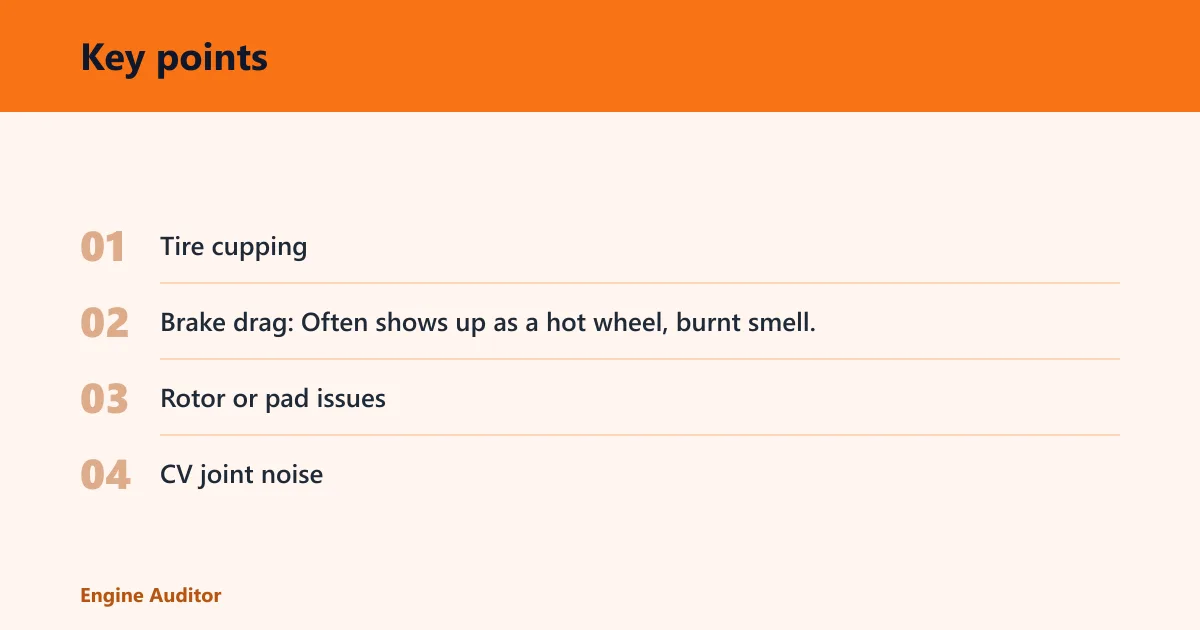
Tire cupping, brake drag, rotor issues, and CV-joint wear can all sound similar. You need a quick separation step before buying parts.
- Tire cupping: Usually makes a steady, rhythmic road roar that barely changes in turns. Check for scalloped tread blocks and uneven wear across the tread.
- Brake drag: Often shows up as a hot wheel, burnt smell, or a car that feels held back after a stop.
- Rotor or pad issues: More likely to make scraping, pulsation, or brake-only noise than a constant road hum.
- CV joint noise: A worn outer CV joint often clicks on tight turns rather than humming straight ahead.
Say your Silverado starts making a low drone at 35 mph, but the noise barely changes when you coast. That leans away from a brake issue and toward either a tire pattern problem or a hub bearing. If the sound gets sharper when you steer left, the right-side bearing becomes a stronger suspect.
Why does the noise change in turns?

The noise changes because cornering shifts vehicle weight onto one side. A failing bearing often gets louder when load moves onto the worn side, and quieter when load moves away from it. That pattern is one of the best clues you can get without taking anything apart.
Using a low-speed weave test
At a safe, low speed on an empty road, make gentle left-right lane-width weaves. If the noise grows when you load one side and fades when you load the other, that side is a likely suspect. Tire roar and road surface can blur or even invert the result, so use the weave test as a clue, not a final verdict.
What the turn result proves
This test narrows the corner, not the final part number. Tire roar, a dragging brake, or a CV joint can still mislead you, so use the weave test with a lift check. If the sound follows load transfer and the wheel also has play, the bearing diagnosis is much stronger.
Diagnosis and cost matrix
This matrix ties the symptom to the likely source, a confirmatory test, and the usual cost band. It is meant to help you compare Chevy platform types, not to replace a hands-on inspection.
| Symptom | Likely source | Confirmatory test | Front/rear likelihood | Expected repair cost band |
|---|---|---|---|---|
| Hum that rises with speed | Wheel bearing or tire cupping | Weave test, then inspect tread for cupping | Either end; front more common when noise changes in steering | Car: $250-$500; crossover: $300-$600; truck: $350-$700; AWD: $350-$700 |
| Growl that gets louder in a turn | Failing hub bearing | Weave test plus wheel play check | Front on most FWD and many AWD Chevys | Car: $250-$550; crossover: $300-$650; truck: $350-$750; AWD: $400-$800 |
| Grinding noise and loose feel | Advanced bearing wear | Rock the raised wheel at 12 and 6 o’clock | Either end; treat as urgent | Car: $300-$600; crossover: $350-$700; truck: $450-$850; AWD: $450-$900 |
| ABS or traction-control warning | Integrated hub sensor issue or bearing wear affecting signal | Scan codes, inspect hub and sensor connection | Often front on late-model Chevys, but rear hubs can also trigger it | Car: $300-$650; crossover: $350-$700; truck: $400-$850; AWD: $450-$900 |
Front wheel bearing replacement cost is usually higher because of steering, ABS, and drive components. Rear wheel bearing replacement cost is often a little lower on front-wheel-drive cars. On trucks, heavier hubs, corrosion, and tighter packaging can push the bill higher, especially in rust-belt climates.
How can you tell if the front or rear wheel bearing is bad?
Start with the road test, then confirm with a lift check. A front bearing is more likely if the noise changes when you steer and if the front end feels loose. A rear bearing is more likely if the sound stays in the back and the steering feel stays mostly normal.
Front hub clues on FWD and AWD Chevys
Front hubs carry steering and drive loads, so they often wear sooner and cost more to replace. On many front-wheel-drive and all-wheel-drive Chevys, a front bearing can also sit close to the ABS sensor and drive hardware, which makes diagnosis and removal more involved. A bad front hub often makes the steering feel slightly unsettled.
Rear hub clues on cars and SUVs
Rear bearings can still howl loudly, but the steering wheel may stay calm. On some Chevys, the rear hub is a straightforward bolt-on unit; on others, especially AWD or drum-brake setups, access takes longer. A rear bearing on a front-wheel-drive car is often the cheaper repair, but not always the simpler one.
When a road test is not enough
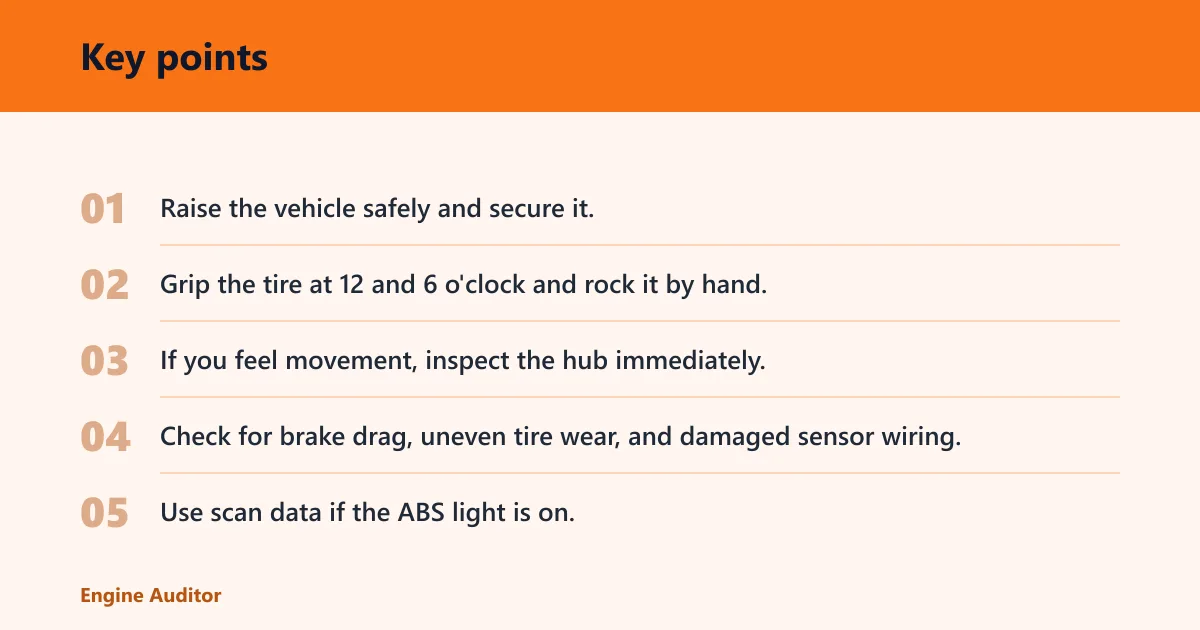
- Raise the vehicle safely and secure it.
- Grip the tire at 12 and 6 o’clock and rock it by hand.
- If you feel movement, inspect the hub immediately.
- Check for brake drag, uneven tire wear, and damaged sensor wiring.
- Use scan data if the ABS light is on.
Rocking the raised wheel by hand can reveal play at the 12 and 6 o’clock positions. Any detectable play at 12 and 6 o’clock is a serious warning, but it can also come from ball joints, suspension joints, or other looseness. That is one of the clearest signs you can get without disassembly.
A common first-timer mistake is to assume a rear hum must be a tire because the steering wheel feels fine. Picture a Traverse with a rear drone at 50 mph and no steering shake; a quick lift check still shows play at one rear wheel, which points back to the hub and not the tires.
Do you need the whole hub assembly?
On many late-model Chevys, yes. The wheel bearing is often sealed into a hub assembly, so the normal repair is to replace the complete unit rather than press in a bearing alone. That usually costs more in parts, but it cuts install time and avoids pressing on a hub that may already be damaged.
Sealed bearing units on many Chevys
Sealed hub units are common because they package the bearing, hub, and mounting points into one assembly. That design carries wheel load, cornering force, and braking force in one compact part. Once the bearing roughens or loosens, the practical repair is usually a full hub replacement.
Integrated ABS wheel speed sensor issues
Many hub assemblies include the ABS wheel speed sensor. If the sensor is integrated, bearing wear can affect the signal, and the wrong replacement part can keep the warning light on. In that case, replacing only the bearing is not a real fix because the sensor and hub function are tied together.
Why complete hub replacement is common
Complete hub replacement often reduces shop time and avoids reusing a worn race, damaged sensor ring, or corroded mounting surface. It also fits the way many Chevys are built from the factory. The tradeoff is simple: the part usually costs more, but the labor is usually cleaner and faster.
Can you keep driving with a bad wheel bearing?
Driving with a bad wheel bearing is unsafe, and the risk rises fast once play or roughness appears. If you can feel wobble, hear grinding, or see a wheel-speed warning tied to bearing noise, stop driving and arrange repair. A bearing can seize, damage the hub, and in severe cases threaten wheel retention.
When to stop driving immediately
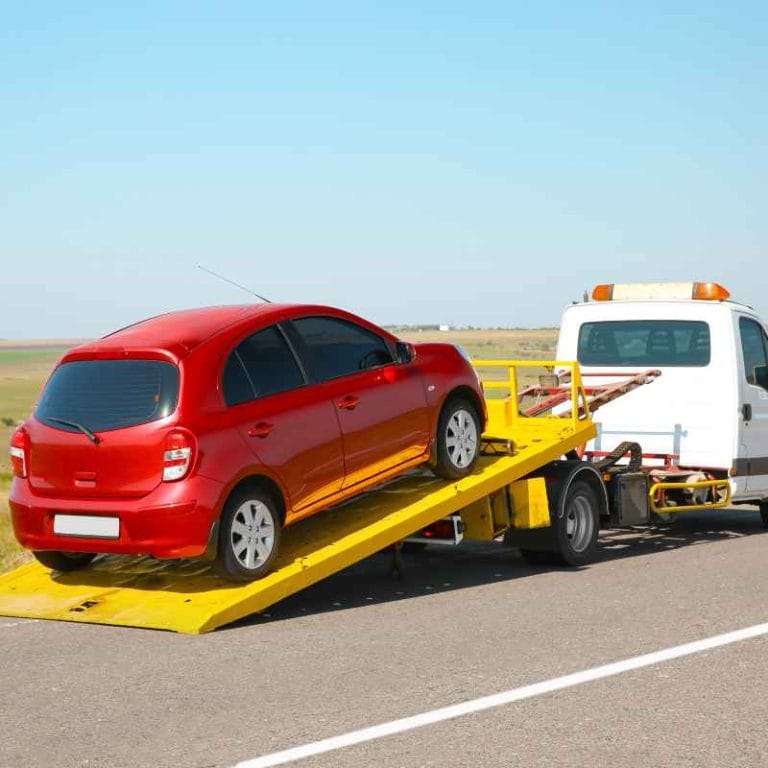
Do not keep driving if the wheel has detectable play, the grinding is loud, or the hub is hot after a short trip. Those signs mean the wear has moved past an early warning. If the bearing is loose enough to wobble, tow the vehicle instead of gambling on one more commute.
What happens as the bearing gets looser
Wear usually progresses from hum to grind to looseness. That progression can ruin the hub, damage the ABS sensor, chew up tires, and sometimes affect the knuckle or surrounding hardware. The longer it goes, the more likely the repair spreads beyond the original hub assembly.
Why repair timing matters for safety and cost
Early repair usually keeps the bill closer to the lower end of the range. Delay tends to add rust, damaged bolts, heat damage, and extra diagnostic time. On a Chevy truck or AWD model, that extra time can matter a lot because the job may already involve tighter packaging and more corrosion.
Frequently asked questions
What are the first signs of a bad wheel bearing on a Chevy?
The first signs are usually a hum or growl that rises with speed, a slight change in noise during turns, and a vague or rough feel at the wheel. If the bearing is failing farther, you may also notice vibration, looseness, or an ABS warning linked to the hub.
Can I drive my Chevy with a bad wheel bearing?
You should not drive far with a clearly bad bearing. If the wheel has play, the noise is grinding, or the hub feels rough, stop driving and arrange repair. A worn bearing can seize or loosen enough to damage the hub, tire, sensor, and nearby hardware.
Why does my Chevy wheel bearing noise get louder when I turn?
Cornering shifts weight onto one side of the vehicle. A worn bearing often gets louder when the load moves onto the failing side and quieter when the load moves away. A low-speed weave test can help identify the side, but it should be followed by a wheel play check.
How much does it cost to replace a Chevy wheel bearing?
Cost depends on the Chevy platform, the hub design, corrosion, and whether the bearing is part of the front or rear assembly. A front or rear job can both be straightforward on one model and stubborn on another, especially with AWD hardware, integrated sensors, or rust.
Is a wheel bearing or tire causing the humming noise on my Chevy?
Tire cupping often makes a steady road roar that changes little in turns, while a bad bearing commonly changes with load transfer. Check tread for uneven wear, then do a weave test. If the sound follows steering load and the wheel has play, the hub is the stronger suspect.
Will a bad wheel bearing trigger the ABS light on a Chevy?
Yes, it can. A failing bearing can affect wheel speed sensor operation, especially when the sensor is built into the hub assembly. The warning may also come from contamination, damaged wiring, or an incorrect replacement part, so scan the codes and inspect the hub before replacing unrelated parts.
Do I need to replace the whole hub assembly on my Chevy?
Often, yes. Many late-model Chevys use a sealed hub assembly rather than a serviceable bearing pressed into the knuckle. If the bearing is rough, loose, or tied to an integrated ABS sensor, replacing the whole hub is usually the normal fix and the cleanest repair path.
Products related to this article
Sponsored / affiliate links. As an Amazon Associate I earn from qualifying purchases. I may earn additional commission from eligible campaigns.