Gas Pedal Stuck While Driving: 5 Steps to Stop Safely
If your gas pedal sticks, shift to neutral immediately — this disconnects engine power without killing the steering or brakes. Then brake firmly and steer to the shoulder. Do not turn off the ignition while moving; you lose both power brakes and power steering, which makes a dangerous situation worse. This guide covers the 5 emergency steps in order, the common causes, and how to prevent recurrence.
Why Gas Pedals Get Stuck
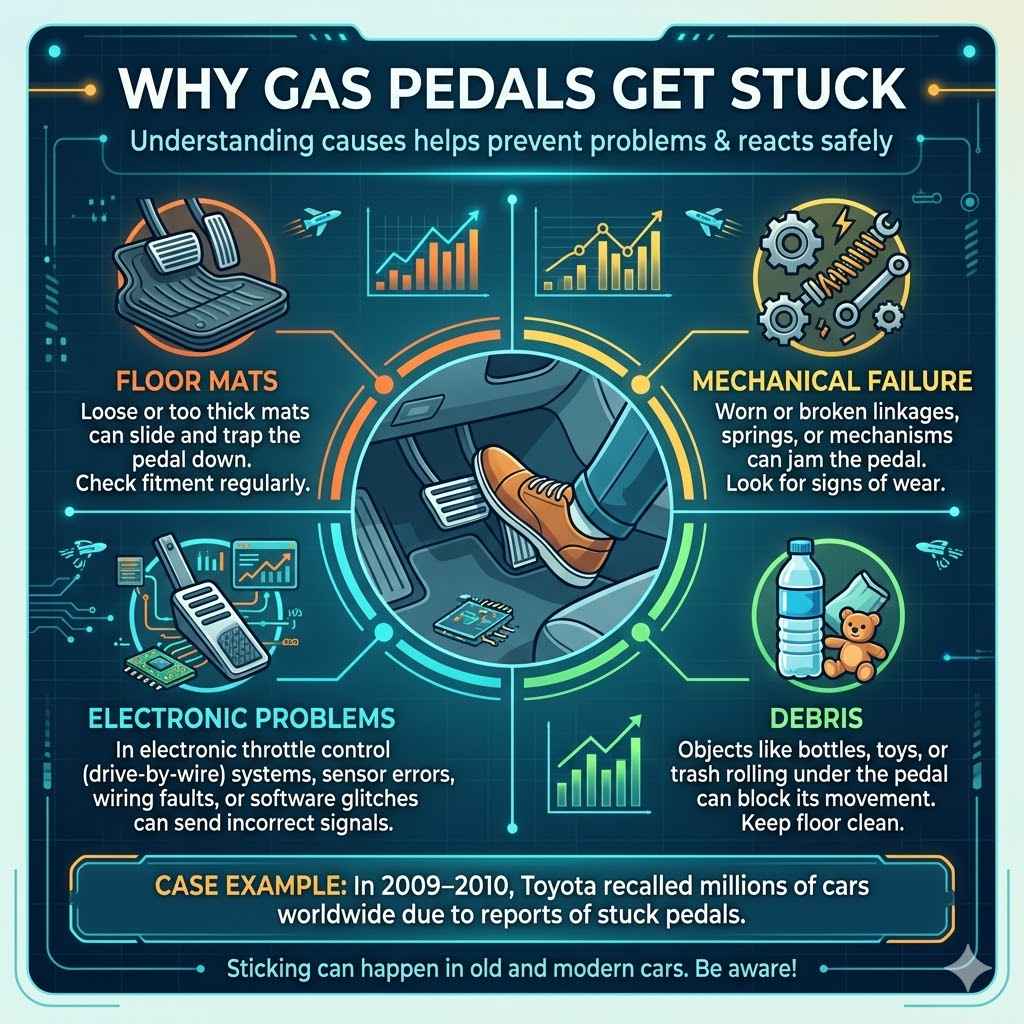
Understanding why a gas pedal sticks helps you prevent problems and react better if it happens. Most people think this only happens in old cars, but even modern vehicles can have pedal issues.
Common causes include:
- Floor mats: Sometimes, loose or thick mats slide under the pedal, trapping it down.
- Mechanical failure: Linkages or springs in the pedal mechanism may break or jam.
- Electronic problems: In cars with electronic throttle control, sensor errors or software glitches can cause uncontrolled acceleration.
- Debris: Small objects, like bottles or toys, rolling under the pedal can block its movement.
For example, in 2009–2010, Toyota had to recall millions of cars worldwide due to reports of stuck pedals caused by floor mats and pedal assemblies. This shows that both old and new cars can face the problem.
Immediate Steps To Take When Gas Pedal Gets Stuck
Your actions in the first moments are critical. Here’s exactly what to do if you realize your gas pedal is stuck and your car won’t slow down.
- Stay Calm and Focused
- Panic can make you freeze or do the wrong thing. Take a deep breath and focus on safe control.
- Keep Both Hands on the Wheel
- The car may move faster or pull suddenly. Hold the wheel firmly to keep control.
- Check for Obstacles
- Quickly look ahead and around. Avoid hitting other cars, people, or barriers if you need to steer.
- Try to Lift the Pedal with Your Foot
- Use the toe of your shoe to pull the pedal back up. Sometimes a stuck floor mat or light blockage can be fixed this way.
- Shift the Gear to Neutral
- Most automatic and manual cars allow you to shift to neutral while driving. This separates the engine from the wheels, so the car stops speeding up. The engine will rev very loudly, but this is normal. Your main goal is to stop the car from moving faster.
- Firmly Apply the Brakes
- Press the brake pedal steadily and hard. Do not pump the brakes—just keep steady pressure. Most modern cars have powerful brakes that can overpower the engine if you press hard enough.
- Do Not Turn Off the Ignition While Moving
- Turning off the engine can lock the steering wheel or disable power brakes, making control harder. Only turn off the ignition once you are fully stopped.
- Use Emergency Brake if Needed
- If the regular brakes are not working or are fading, gently pull the emergency (parking) brake. Do this slowly to avoid locking the rear wheels and losing control.
- Pull Over Safely
- Once the car slows down, steer to the side of the road, shoulder, or a safe area. Turn on your hazard lights to warn others.
- Turn Off the Engine
- After stopping, turn off the engine. Remove the key and exit the car if it’s safe.
Table: Comparing Actions And Their Results
Below is a comparison of actions and what you can expect from each:
| Action | Immediate Result | Potential Risk |
|---|---|---|
| Shift to Neutral | Stops car from accelerating further | Engine over-revs (but safe) |
| Apply Brakes Firmly | Slows vehicle | Brake fade if pressed too long |
| Turn Off Ignition While Moving | Engine shuts off | Lose steering/brake assist |
| Use Emergency Brake | Helps stop vehicle | Risk of rear wheel lockup |
| Pull Over Safely | Prevents collision with traffic | None if done carefully |
What Not To Do When Gas Pedal Gets Stuck
Many drivers make mistakes in a panic that make the situation worse. Here are common errors to avoid:
- Do not pump the brakes. Steady, firm pressure is more effective.
- Do not try to reach down with your hand to free the pedal while driving. You will lose control of the wheel.
- Do not put the car in Park or Reverse while moving. This can damage the transmission or lock the wheels.
- Do not turn off the ignition before stopping. Most cars lose power steering and brakes if the engine is off.
- Do not ignore unusual engine sounds or warning lights after the incident. These can signal lasting damage.
Why Brakes Usually Overpower The Engine
Many people fear that if the gas pedal gets stuck, the brakes will not work. In reality, brakes on modern cars are designed to be much stronger than the engine. Even at full acceleration, steady brake pressure can stop the car. However, this requires calm and firm action.
It’s important to know that brakes may fade (get weaker) if used for a long time at high speed, especially on older cars or if the brakes are not in good shape. If you feel the brakes getting soft or the car not slowing, use the emergency brake carefully.
After Stopping: What To Do Next
Once you have safely stopped, you are not finished. Here’s what you should do after the immediate danger is gone:
- Stay Calm and Check Yourself
- Take a moment to calm down. Check for injuries or signs of shock.
- Warn Other Road Users
- If you stopped in a traffic lane or at an unsafe location, turn on your hazard lights. Set up warning triangles if you have them.
- Inspect the Pedal Area
- Look for loose floor mats, bottles, or anything else that may have blocked the pedal.
- Do Not Drive Until the Problem is Fixed
- Even if you think you have solved the problem, do not drive the car until a mechanic checks it. Sometimes the cause is hidden or may come back.
- Call for Roadside Assistance
- Contact your roadside service or a tow truck to move the car to a safe place or repair shop.
- Report the Incident
- If your car is under warranty or has a recall, report the problem to the dealer or manufacturer. If others are at risk (like a design fault), this can help prevent more accidents.
- Document the Event
- Write down details: Where it happened, what you did, car speed, traffic conditions, and anything unusual. This helps with insurance or repairs.
Table: Post-incident Steps And Their Importance
| Step | Why It Matters |
|---|---|
| Check for injuries | Health and safety come first |
| Warn others | Prevents further accidents |
| Inspect pedal area | Find and fix obvious causes |
| Call for help | Safe movement and repair |
| Document the event | Helps with insurance, repairs, and recalls |
How To Prevent A Stuck Gas Pedal
Prevention is always better than cure. There are simple actions you can take to lower the risk of a stuck gas pedal:
- Use Proper Floor Mats
- Only use mats made for your car’s make and model. Always fix them in place with the clips provided. Do not stack mats on top of each other.
- Keep Pedal Area Clean
- Do not leave bottles, cans, or other objects near the driver’s feet.
- Regular Maintenance
- Have your car’s throttle system, pedals, and electronic controls checked during service.
- Respond to Recalls
- Check for recalls on your vehicle and have them fixed quickly.
- Be Alert to Changes
- If the pedal feels stiff, slow, or moves differently, have it checked immediately.
- Avoid Aftermarket Pedal Covers
- Some non-original pedal covers can catch or slide, increasing the risk of sticking.
- Practice Emergency Procedures
- Know how to shift to neutral and use the emergency brake before you need to do it for real. Practicing in a safe place (like an empty parking lot) helps build confidence.
Table: Prevention Measures And Effectiveness
| Prevention Action | How It Helps |
|---|---|
| Correct floor mats | Stops mats from jamming pedals |
| Clean pedal area | Prevents objects from blocking movement |
| Regular maintenance | Finds problems before they cause danger |
| Follow recalls | Fixes known safety issues |
| Alert to changes | Early warning of developing problems |
| Avoid aftermarket covers | Reduces risk of jamming |
Non-obvious Insights And Tips
Many guides repeat the same basic advice, but here are two important points most drivers miss:
- Practice Neutral Shift Before Crisis: In a panic, it is easy to forget how to shift to neutral, especially on modern cars with electronic shifters. Try it in a safe spot with the engine on and the car stopped. Build muscle memory so you can do it without thinking.
- Know Your Emergency Brake Type: Some new cars have electronic parking brakes (button instead of a lever). Learn how yours works—holding the button may activate the brake even while moving, but this is not always true. Check your manual and try it at low speed in a safe place.
Stories And Real-life Examples
Hearing about real situations can help you remember what to do if it happens to you. Here are two true stories:
- The Toyota Recall Case: In 2009, a driver in California called 911 when his car’s gas pedal got stuck at high speed. He could not stop, and the car crashed, killing everyone inside. Later, it was found that a wrong floor mat trapped the pedal. This tragedy led to millions of recalls and changes in how car makers design pedals and mats.
- Quick Thinking Saves Lives: In 2012, a woman in Florida felt her car speeding up on its own. She stayed calm, shifted to neutral, and steered to the shoulder. Her car’s engine roared, but the car slowed and stopped safely. Mechanics found a broken throttle spring. Her knowledge of emergency steps saved her life.
The Role Of Modern Car Technology
Modern cars have electronic systems that can both help and complicate pedal problems. Features like electronic throttle control and brake override systems are designed to prevent runaway acceleration. In many vehicles, if you press the brake and gas at the same time, the car’s computer cuts engine power.
However, these systems are not perfect. Software glitches, sensor failures, and delayed recalls can still lead to stuck pedal incidents. Always combine technology with driver awareness and quick action.
How To Teach Others—and Why It Matters
It’s not enough for you alone to know what to do. Family, friends, and new drivers should also learn these steps. Even experienced drivers may not know the safest actions if they have never faced a stuck gas pedal.
Ways to teach:
- Discuss emergency steps during driving practice.
- Share articles or videos about pedal safety.
- Practice neutral shifts and emergency braking in a safe setting.
- Review your car’s manual for specific procedures.
Teaching others can help save lives—especially for new drivers or those who drive unfamiliar vehicles.
When To Seek Professional Help
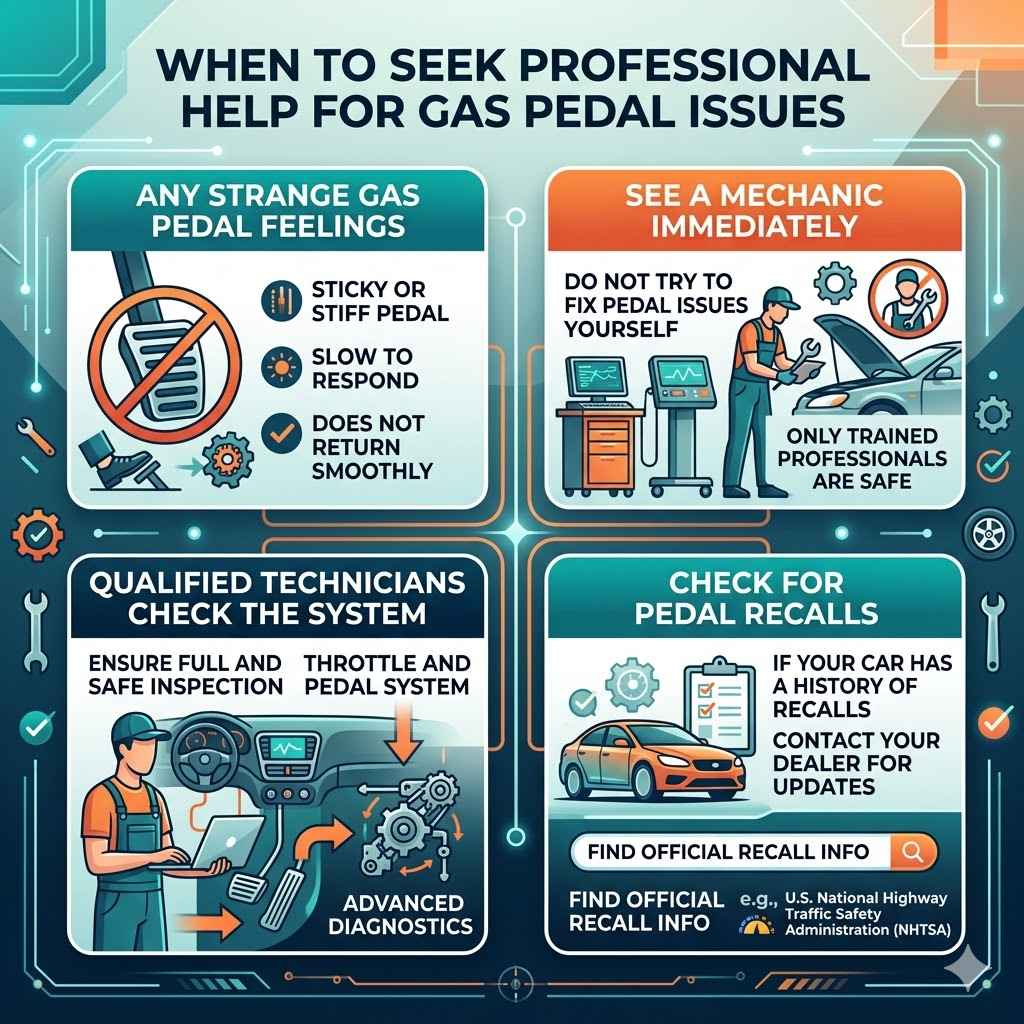
Any time your gas pedal feels strange—sticky, slow, or doesn’t return smoothly—see a mechanic immediately. Do not try to fix pedal issues yourself unless you are a trained professional. Only a qualified technician can check the full throttle and pedal system safely.
If your car model has a history of pedal recalls, check with the dealer or search for updates. You can find recall information on official sites like the U.S. National Highway Traffic Safety Administration (NHTSA).
Frequently Asked Questions
What Causes A Gas Pedal To Get Stuck Most Often?
The most common cause is a floor mat that slides under the pedal and traps it down. Other causes include broken pedal springs, electronic throttle problems, or debris around the pedal area.
Can I Stop A Car With A Stuck Gas Pedal Using The Brakes Alone?
Yes, in most cases, the brakes are stronger than the engine. Press the brake firmly and steadily. Do not pump the brakes—just hold them down until the car slows.
Is It Safe To Shift To Neutral While Driving?
Shifting to neutral is safe and the best way to stop unwanted acceleration. It disconnects the engine from the wheels. The engine will rev loudly, but that is not dangerous.
Should I Turn Off My Car If The Gas Pedal Is Stuck?
Do not turn off the engine while moving, because you may lose steering and brake assist. Only turn off the car after you have stopped safely.
How Do I Prevent The Gas Pedal From Sticking?
Use only the correct floor mats, keep the area around the pedals clear, follow recall notices, and have your car inspected if the pedal feels strange. Regular maintenance is key to prevention.
Staying prepared, knowing the right steps, and acting quickly can keep you safe if your gas pedal ever gets stuck. Take a few minutes to practice and teach others—those few seconds could save lives. See also how do you check pedal pulses correctly step-by-step guide. See also how much do clip-in pedals help your cycling performance .
Products related to this article
Sponsored / affiliate links. As an Amazon Associate I earn from qualifying purchases. I may earn additional commission from eligible campaigns.