Car Headlights Stopped Working? Here’S How to Fix Them
Car Headlights Stopped Working? Here’s How To Fix Them
Few things are more alarming than discovering your car headlights have suddenly stopped working, especially at night or in poor weather. Whether you’re commuting, driving through rural areas, or parked on a city street, functional headlights are essential for safe driving and legal compliance. According to the National Highway Traffic Safety Administration (NHTSA), poor visibility is a contributing factor in approximately 38% of all nighttime traffic fatalities. Headlight failure isn’t just an inconvenience; it’s a serious safety hazard.
Fortunately, most headlight problems can be diagnosed and fixed at home with basic tools and a methodical approach. From burnt-out bulbs to wiring faults and relay issues, understanding the potential causes will help you restore your vehicle’s lighting quickly. This comprehensive guide will walk you through every step, equipping you with the knowledge to troubleshoot and resolve headlight failures confidently.

Credit: news.wttw.com
Key Takeaways
- Diagnosing headlight issues involves checking bulbs, fuses, relays, switches, and wiring.
- Most repairs can be performed at home with basic tools, but complex electrical problems may require professional help.
- Regular maintenance and periodic inspections can prevent most headlight failures.
- Understanding your car’s headlight system ensures quicker, safer repairs and minimizes downtime.
- Always follow local laws regarding vehicle lighting to avoid fines and enhance safety.
Understanding Your Car’s Headlight System
Modern vehicles employ a combination of electrical, mechanical, and electronic components to power and control their headlights. Knowing how these systems function is crucial for accurate troubleshooting.
Major Headlight Types
The type of headlight your car uses affects not only performance but also the diagnostic process and cost of repairs.
| Headlight Type | Light Source | Common Vehicles | Lifespan Estimate |
|---|---|---|---|
| Halogen | Tungsten Filament | Most cars (1990-2015) | 500-1,000 hours |
| HID (Xenon) | Electric Arc | Luxury/Sports Models | 2,000 hours |
| LED | Light Emitting Diodes | Newer Models (2015+) | Up to 30,000 hours |
Basic Headlight Circuit Components
- Bulbs: The most frequent failure point. Halogen and HID bulbs need regular replacement.
- Switches: The dashboard or column switch sends power to the lights.
- Fuses: Protect the circuit from overload; a blown fuse cuts power to the lights.
- Relays: Act as remote switches, controlling high current to the bulbs.
- Wiring and Connectors: Carry electricity and can develop faults due to age or damage.
How Headlight Circuits Work
When you turn on your headlights, the switch sends a signal to a relay. The relay closes, allowing high current to flow directly from the battery to the bulbs. Fuses protect both the control and power sides of this circuit.
If any component fails, your headlights may not work, may flicker, or only one light may function.

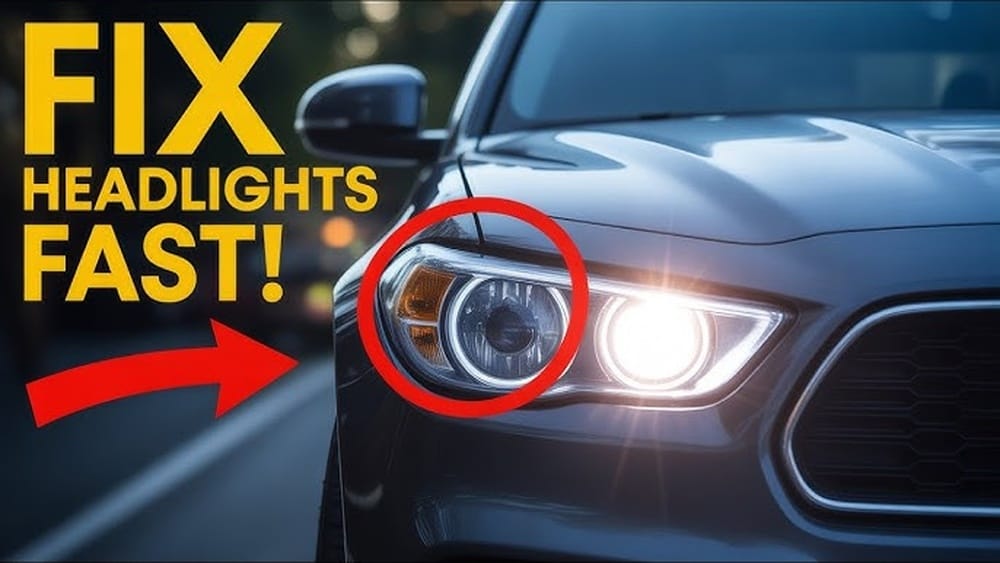
Credit: www.youtube.com
Common Causes Of Headlight Failure
Understanding what causes headlights to stop working helps you pinpoint the problem faster.
Burnt-out Bulbs
Bulbs have a finite lifespan. Halogen and HID bulbs, in particular, are prone to burning out after several years of use. Signs of a burnt-out bulb include one headlight not working, or both failing in quick succession if installed at the same time.
Blown Fuses
A blown fuse interrupts the power supply to the headlights. Fuses can blow due to bulb failure, a short circuit, or even water ingress. Replacing a fuse is simple, but repeated failures point to an underlying electrical problem.
Faulty Relays
The headlight relay acts as a gatekeeper for high current. If it fails, both headlights may stop working, or you may experience intermittent operation. Relays can degrade over time due to heat and vibration.
Bad Headlight Switch
The headlight switch is subject to wear, especially in older vehicles. Signs of switch failure include headlights that only work when “wiggled” or do not respond at all.
Wiring And Connector Issues
Wiring faults, including corroded connectors, broken wires, or loose terminals, can cause complete or partial headlight failure. Rodents, moisture, and age are common culprits.
Grounding Problems
All electrical circuits require a proper ground. A corroded or disconnected ground wire can cause dim lights, flickering, or total failure.
Faulty Control Modules (for Modern Cars)
Some vehicles use Body Control Modules (BCMs) or headlight-specific modules. A failed module may require specialized diagnostics and programming.
Example:
A 2012 Honda Accord owner experienced both headlights failing simultaneously. After checking the bulbs and fuses, the issue was traced to a corroded ground connection near the headlight housing, quickly fixed with a wire brush and some dielectric grease.
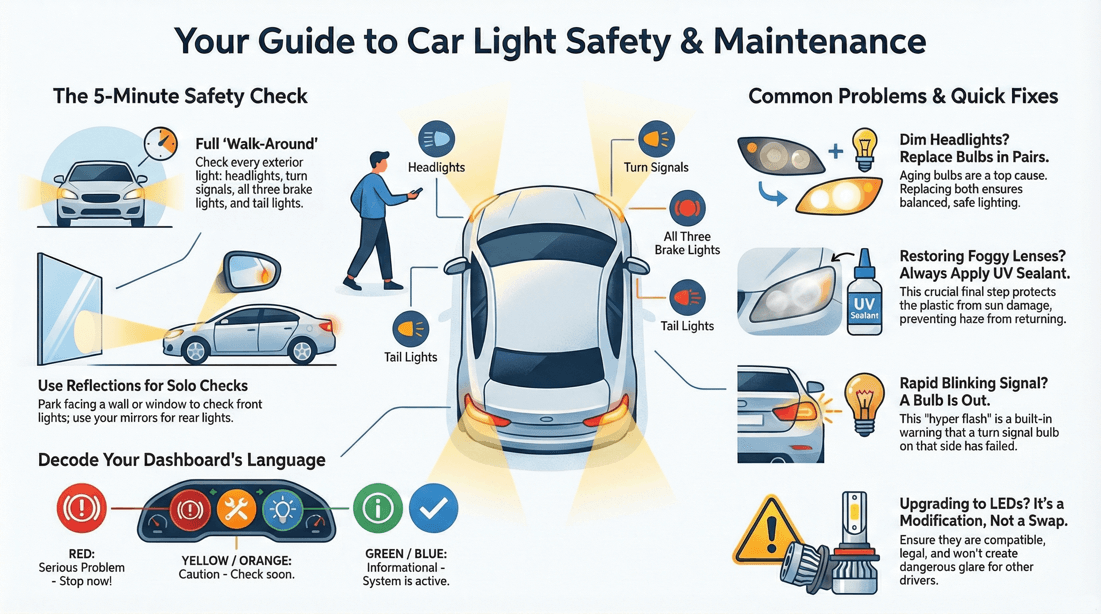
Credit: streetsurvival.info
Step-by-step Guide: Diagnosing And Fixing Headlights
Accurate diagnosis is the key to efficient repair. Follow these steps to identify and resolve the most common headlight problems.
Safety First: Preparation
- Park your car in a well-lit, safe area.
- Turn off the ignition and disconnect the battery before working on electrical components.
- Gather basic tools: Screwdrivers, pliers, multimeter, replacement bulbs, fuses, and gloves.
Step 1: Inspect The Headlight Bulbs
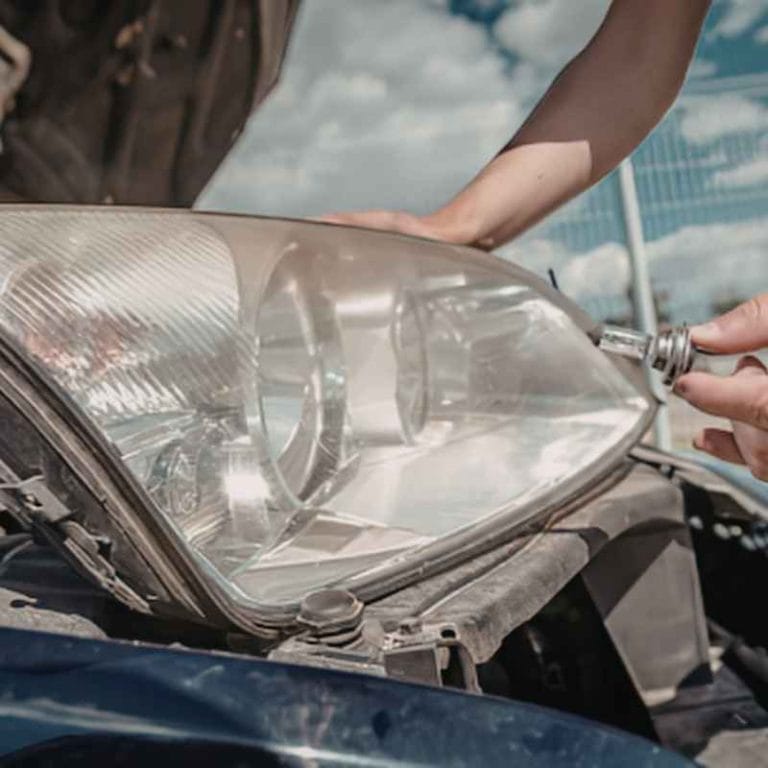
- Access the rear of the headlight housing.
- Remove the bulb connector.
- Visually inspect the bulb filament or arc tube.
- Test the bulb by swapping sides (if both bulbs are the same type).
Pro Tip: In my experience, replacing bulbs in pairs ensures even brightness and prevents repeated labor.
Step 2: Check The Fuses
- Locate the fuse box (see your vehicle manual).
- Identify the headlight fuse(s), there may be separate fuses for left and right.
- Remove and inspect the fuse for a broken wire.
- Replace with a fuse of the same rating if blown.
Step 3: Test The Headlight Relay
- Find the headlight relay in the fuse box.
- Swap it with a similar relay (e.g., horn relay) to test functionality.
- If lights work after swapping, replace the faulty relay.
Step 4: Inspect The Headlight Switch
- With the car off, remove the headlight switch panel.
- Check for burned or loose terminals.
- Use a multimeter to test continuity.
Step 5: Examine Wiring And Grounds
- Inspect wiring harnesses for visible damage, corrosion, or rodent bites.
- Check ground wires attached to the chassis near the headlights.
- Clean and tighten connections.
Step 6: Advanced Diagnostics (if All Else Fails)
- Use a wiring diagram (available from dealer or repair manuals) to trace voltage.
- Test for power at the bulb socket with a multimeter.
- If modules are involved, consult a professional or dealership.
Example:
A 2017 Ford F-150 owner noticed intermittent headlight operation. After checking bulbs and fuses, the problem was traced to a faulty relay. Swapping the relay with the fog light relay restored normal operation.
Real-world Case Studies
Examining actual cases helps illustrate how different headlight issues are diagnosed and resolved.
Case Study 1: One Headlight Out, 2015 Toyota Camry
- Symptoms: Right headlight stopped working, left was fine.
- Diagnosis: Swapped bulbs, problem stayed on right side.
- Solution: Found a corroded bulb socket. Cleaned contacts; headlight restored.
Case Study 2: Both Headlights Out, 2010 Subaru Outback
- Symptoms: Both headlights failed simultaneously.
- Diagnosis: Checked and replaced blown fuse, but it blew again.
- Solution: Traced wiring and found insulation chewed by rodents, causing a short. Repaired wiring and replaced fuse.
Case Study 3: Flickering Led Headlights, 2019 Bmw 3 Series
- Symptoms: Headlights flickered randomly.
- Diagnosis: No issues with bulbs, fuses, or relays.
- Solution: Dealer diagnosed a failing Body Control Module (BCM). Module replaced and reprogrammed.
Case Study 4: Dim Lights, 2008 Jeep Wrangler
- Symptoms: Headlights were dim, but not completely out.
- Diagnosis: Checked alternator output and battery voltage, both normal.
- Solution: Found heavily corroded ground strap. Cleaned the ground connection; brightness restored.
When To Replace Vs. Repair Headlight Components
Not all headlight problems require component replacement. Understanding when to repair or replace can save time and money.
Bulbs: Replace
Bulbs, especially halogen and HID types, should be replaced when burned out. LED modules may require replacing the entire assembly.
Fuses: Replace
Fuses are cheap and easy to replace. If a new fuse blows, investigate for a short circuit before replacing again.
Relays: Replace
Relays generally fail internally and should be replaced rather than repaired.
Switches: Repair Or Replace
Some switches can be cleaned or repaired, but most are replaced to ensure reliability.
Wiring: Repair
Wiring faults (e. g. , corroded connectors, broken wires) can usually be repaired with splicing, soldering, or connector cleaning.
Comparison Table: Repair Vs. Replace
| Component | Repair | Replace | Difficulty | DIY-Friendly |
|---|---|---|---|---|
| Bulb | No | Yes | Easy | Yes |
| Fuse | No | Yes | Easy | Yes |
| Relay | No | Yes | Moderate | Yes |
| Switch | Sometimes | Yes | Moderate | Yes |
| Wiring | Yes | Rarely | Hard | Sometimes |
| Control Module | No | Yes | Hard | No |
Preventative Maintenance For Long-lasting Headlights
Preventative measures can extend the life of your headlight system and minimize unexpected failures.
Regular Inspection
- Check headlights monthly for brightness and alignment.
- Look for condensation inside the lens, which indicates a seal issue.
Clean Lenses And Connectors
- Clean headlight lenses with appropriate cleaners to remove road grime.
- Periodically unplug and inspect connectors for corrosion.
Replace Bulbs In Pairs
- Both bulbs age at the same rate; replacing in pairs maintains even brightness.
Protect Wiring
- Inspect underhood wiring for rodent damage, especially if parking outdoors.
- Use split loom tubing for added protection.
Use Quality Replacement Parts
- OEM or reputable aftermarket parts offer the best reliability and lifespan.
Seal Headlight Assemblies
- Replace or reseal headlight housings if moisture is present to prevent electrical shorts.
Pro Tip: Applying dielectric grease to bulb and connector contacts prevents corrosion and makes future removal easier.
The Role Of Professional Mechanics
While most headlight issues are DIY-friendly, there are times when it’s best to consult a professional.
When To Seek Help
- Electrical issues involving modules or the car’s computer.
- If wiring faults are inaccessible or complex.
- Persistent fuse-blowing after basic checks.
- Headlight alignment and aiming require special tools for optimal performance.
What To Expect At A Shop
- Diagnostic fees typically range from $50, $150 depending on complexity.
- Shops use advanced diagnostic tools to trace electrical problems.
- Professional repairs may come with a warranty, offering peace of mind.
Example:
A 2020 Mercedes-Benz owner faced repeated headlight failures after water intrusion. The dealer traced the problem to a cracked housing, replaced the assembly, and reprogrammed the lighting control module, restoring full function and preventing future failures.
Headlight Upgrades And Legal Considerations
If you’re considering upgrading your headlights, it’s essential to understand the legal and technical implications.
Upgrading Bulbs
- LED and HID conversion kits offer improved brightness and energy efficiency.
- Upgrading halogen to LED or HID often requires new housings for proper beam pattern.
- Poorly aimed or incompatible upgrades can dazzle other drivers and may be illegal in some states.
Local Laws And Regulations
- Check state laws regarding headlight color, brightness, and aftermarket upgrades.
- The Federal Motor Vehicle Safety Standards (FMVSS) regulate headlight performance in the US.
Comparison Table: Bulb Types And Legal Considerations
| Bulb Type | Brightness (Lumens) | Energy Use | Legal in All States? | Retrofit Required? |
|---|---|---|---|---|
| Halogen | 700, 1,200 | High | Yes | No |
| HID | 2,000, 3,000 | Medium | Varies | Often |
| LED | 2,000, 4,000 | Low | Varies | Often |
Avoiding Illegal Modifications
Installing non-compliant headlights can result in fines and vehicle inspection failures. Always consult your state’s Department of Motor Vehicles or reputable sources like the NHTSA for guidance.
Frequently Asked Questions
Why Do My Headlights Keep Blowing Fuses?
Repeated fuse failures typically indicate a short circuit or wiring problem. Inspect wiring for exposed or frayed areas, especially near moving parts or sharp edges. Water ingress into connectors or the fuse box can also cause shorts. Using a fuse with the correct amperage is crucial, never replace with a higher-rated fuse, as this can damage the wiring and increase fire risk.
Can I Upgrade Halogen Headlights To Led Without Changing The Housing?
While LED conversion kits are widely available, simply replacing halogen bulbs with LEDs in a halogen housing can result in poor beam focus, glare, and legal issues. Many vehicles require a properly designed LED housing to meet regulations and ensure safe light distribution. Always check compatibility and local laws before upgrading.
What Should I Do If My Headlights Are Dim But Not Completely Out?
Dim headlights are often caused by voltage drops due to corroded connectors, poor ground connections, or aging wiring. Check the battery and alternator output as well. Clean all connections, especially ground points near the headlight assembly, and replace any damaged wiring. Using higher-wattage bulbs is not a safe fix and can lead to overheating.
Is It Safe To Drive With One Headlight Out?
Driving with one headlight is unsafe and illegal in most states. It reduces your visibility and makes it harder for other drivers to see you, especially at night or in poor weather. Fix the problem as soon as possible and avoid driving after dark until both headlights function correctly.
How Do I Prevent Headlight Wiring Damage From Rodents?
Rodents are attracted to engine compartments, especially in colder months. To prevent rodent damage, park in garages when possible, regularly inspect wiring, and use rodent deterrents like peppermint oil or commercial sprays. Installing rodent-proof mesh or tape around wiring can also help.
Resources For Further Reading
For more detailed information on headlight technology and repair, check out:
- Automotive Lighting (Wikipedia)
- NHTSA Headlights Guide
Functional headlights are critical for safe driving and legal compliance. By following the steps outlined above, you’ll be equipped to troubleshoot and repair most headlight problems, saving time, money, and ensuring you remain visible and safe on the road. Regular inspections and timely maintenance will keep your headlights shining bright for years to come.
Products related to this article
Sponsored / affiliate links. As an Amazon Associate I earn from qualifying purchases. I may earn additional commission from eligible campaigns.