What Happens When the Clutch Pedal is Pressed? (Real Effects Explained)
It’s a sound many drivers know well. The gentle push, the gear shift, the smooth release. But what’s really going on under the hood when you press that clutch pedal?
It’s a vital part of driving a manual car. Understanding it can help you drive better. It can also help you spot problems early.
Let’s dive into the details. We’ll explore how this simple action connects you to your car’s engine and wheels. You’ll learn why it’s more than just a lever.
It’s your link to smooth driving. This guide will break down the complex bits. You’ll feel more confident behind the wheel.
We’ll cover the basic function. We’ll also look at what can go wrong. This will help you keep your car running well.
It’s all about understanding the magic of your manual transmission.
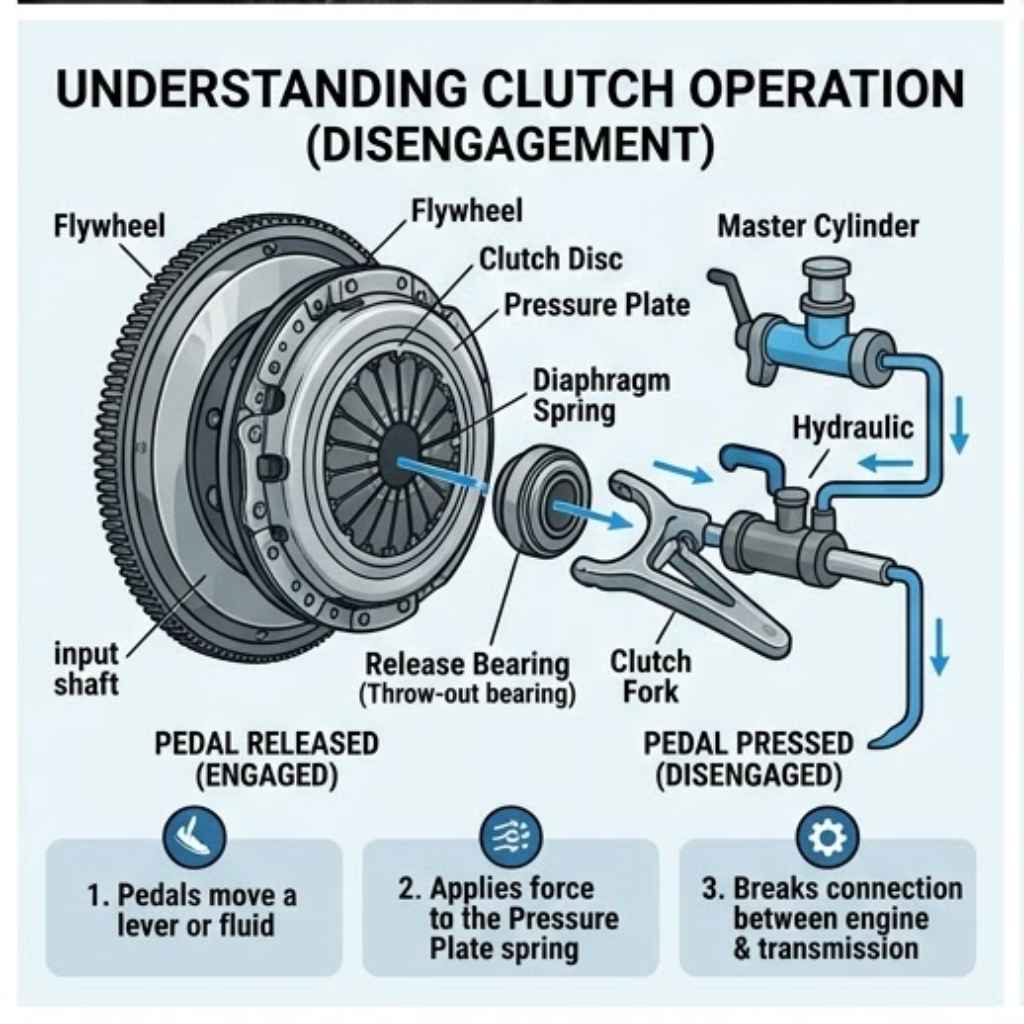
When the clutch pedal is pressed, it disengages the engine from the transmission. This allows you to change gears smoothly without grinding them. The pressure plate pulls away from the clutch disc. This breaks the connection between the spinning engine and the stationary gears. Releasing the pedal re-engages the engine.
The Heart of the Manual Gearbox: Understanding the Clutch System
A manual transmission car feels connected. You feel the road. You feel the engine’s power.

Mazda
Genuine Mazda Parts - Pedal,Clutch (FEY5-41-30XB), Assorted,…
- Mazda RX-8 Clutch Pedal Assembly w/ Interlock & Position Switch
- Mazda RX-8
- FEY54130XB
As an Amazon Associate I earn from qualifying purchases.
A big part of this feeling comes from the clutch. It’s a smart design. It lets you control power flow.
It does this without stopping the engine. Think of it like a smart switch. It connects and disconnects the engine’s power.
This is key for starting, stopping, and shifting gears. Without it, you’d stall every time you stopped. Or you couldn’t change gears while moving.
The clutch system has a few main parts. These parts work together. They do their job every time you press the pedal.
Let’s look at the key players. Each part has a specific role. They are all important for the system to work right.
Getting to know these parts will help you understand the whole process.
Key Components of Your Clutch System
The clutch system is a team effort. Several parts must work in harmony. When one part falters, the whole system can struggle.
Understanding these components is step one. It helps you grasp what’s happening when you press the pedal. You’ll see how much engineering goes into this simple action.
1. The Clutch Pedal
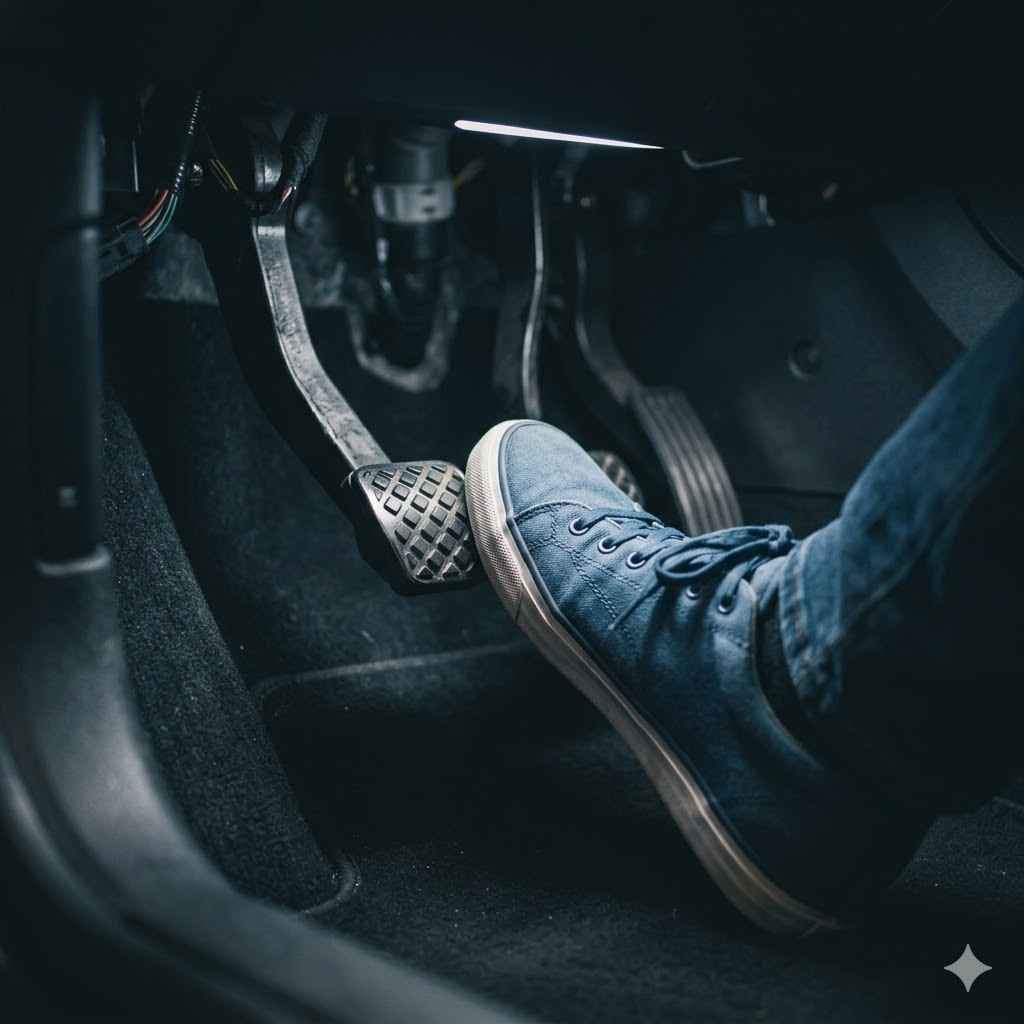
This is what you interact with directly. It’s the driver’s main control. It sits on the floor, to the left of the brake pedal.
When you push it down, it starts a chain reaction. It feels springy. That’s normal.
It’s designed to be easy to press but also to return to its resting position.
2. The Clutch Master Cylinder
This is where the magic starts when you push the pedal. The clutch pedal is linked to a rod. This rod pushes a piston inside the master cylinder.
The cylinder is filled with hydraulic fluid. Pushing the piston forces this fluid under pressure. This pressurized fluid is sent through a small hose or pipe.
It travels to the slave cylinder.
This part uses hydraulic pressure. This is like your car’s brake system. It uses fluid to transfer force.
It’s a smart way to move parts that are far apart. The master cylinder turns your foot’s force into fluid pressure. This pressure then travels to where it’s needed most.
3. The Clutch Slave Cylinder
This cylinder is usually located near the transmission. It receives the pressurized fluid from the master cylinder. Inside the slave cylinder is another piston.
The fluid pressure pushes on this piston. This movement is what actually operates the clutch mechanism. It’s the final step in the hydraulic system.
The slave cylinder’s job is crucial. It translates the fluid pressure into mechanical force. This force then moves the clutch fork.
This action is the direct trigger for disengaging the clutch. Without this part, the pressure from the master cylinder would go nowhere. The clutch wouldn’t budge.
4. The Clutch Fork
This is a lever. It sits inside the clutch housing. It’s attached to the slave cylinder’s piston rod.
When the slave cylinder’s piston moves, it pushes or pulls the clutch fork. This fork pivots. It then applies pressure to the other side of the clutch assembly.
It’s like a seesaw. One end moves, and the other end does the work.
The clutch fork is essential for applying leverage. It amplifies the force from the slave cylinder. It needs to be strong.
It also needs to move smoothly. Any binding or wear here can cause problems. It’s a direct mechanical link to the clutch itself.
5. The Throw-Out Bearing (or Release Bearing)
This bearing sits on a shaft. It’s what the clutch fork presses against. When the clutch fork moves, it pushes the throw-out bearing.
This bearing then presses against the diaphragm spring of the pressure plate. This is the part that actually disengages the clutch. It spins as it contacts the pressure plate.
This bearing has a tough job. It spins at high speeds. It also has to handle significant force.
A worn throw-out bearing can make a lot of noise. It’s often one of the first signs of clutch wear. It needs to be smooth and quiet for the system to work well.
6. The Pressure Plate
This is a heavy metal disc. It’s bolted to the engine’s flywheel. It has a strong spring mechanism, usually a diaphragm spring.
Its job is to clamp the clutch disc tightly against the flywheel. When it’s clamped, power flows. When it’s released, power is cut.
It uses spring force to apply pressure.
The pressure plate is what creates the clamp. It’s powered by that diaphragm spring. When the throw-out bearing presses on the spring, the spring bends inward.
This pulls the pressure plate away from the clutch disc. This action is critical. It separates the engine’s spin from the transmission’s input shaft.
7. The Clutch Disc (or Friction Disc)
This is the “sandwich filling” of the clutch. It has friction material on both sides. It sits between the engine’s flywheel and the pressure plate.
When the pressure plate clamps down, the friction material grips the flywheel and the pressure plate. This grips the transmission’s input shaft. This transfers engine power to the transmission.
It’s made of tough, high-friction material.
The clutch disc is where the actual gripping happens. Its friction surfaces are vital. They need to be in good condition.
Worn-out friction material means slipping. Slipping means lost power. It can also cause overheating and damage.
This disc takes a lot of abuse.
8. The Flywheel
This is a heavy metal disc. It’s attached directly to the engine’s crankshaft. It spins with the engine.
It provides a smooth surface for the clutch disc to grab onto. It also helps smooth out the engine’s power pulses. It’s essentially a rotating mass that connects to the clutch disc.
The flywheel is a constant companion to the engine. It’s always spinning when the engine is running. Its surface needs to be flat and smooth.
Any warping or damage here can affect the clutch’s grip. It’s the engine’s direct link to the clutch mechanism.
The Process: What Happens Step-by-Step
Now, let’s put it all together. Imagine you’re driving. Your car is moving.
You need to shift to a higher gear. Here’s the sequence that follows when you press the clutch pedal:
1. Pedal Engagement
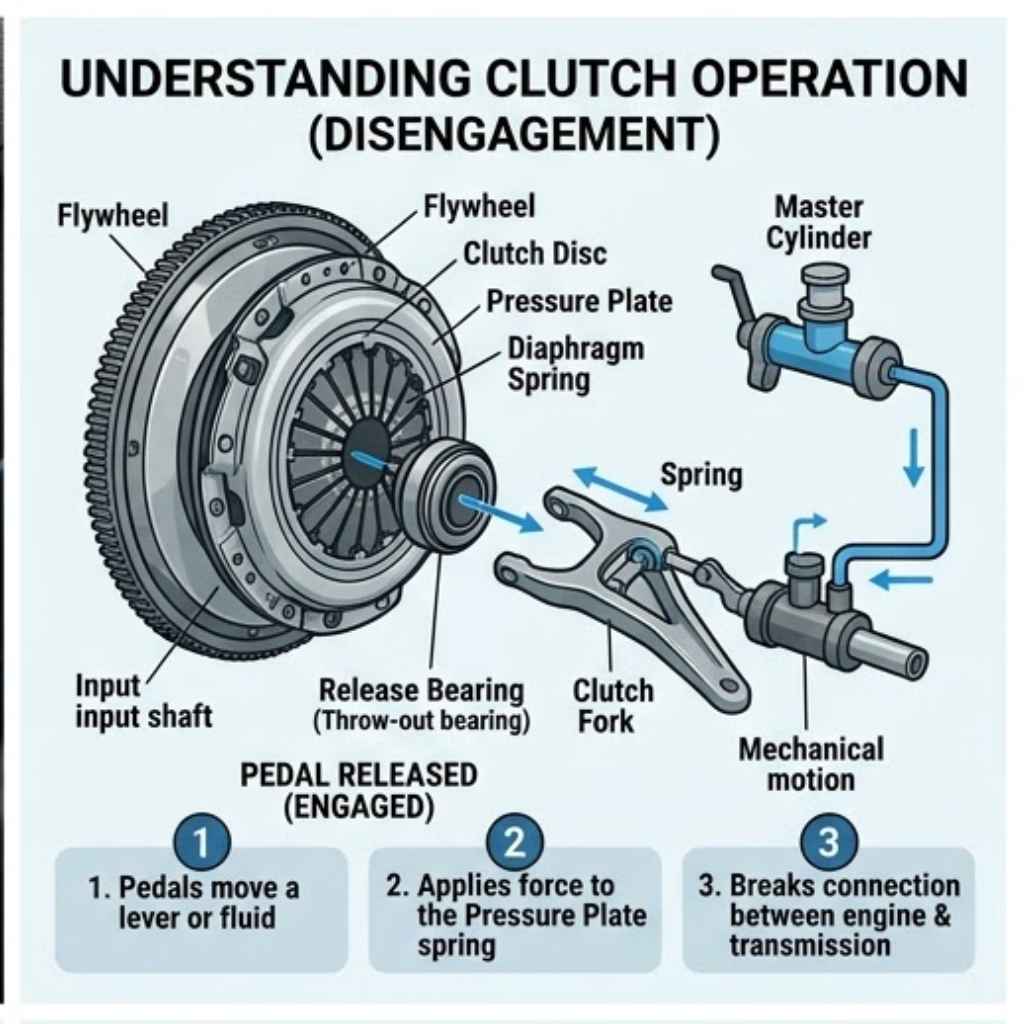
You press the clutch pedal with your foot. This starts the system. The force is applied.
2. Hydraulic Action
The pedal pushes a piston in the clutch master cylinder. This creates hydraulic pressure. This fluid pressure travels through lines to the clutch slave cylinder.
3. Slave Cylinder Activation
The pressure pushes a piston in the slave cylinder. This piston moves a rod.
4. Clutch Fork Movement
The rod from the slave cylinder pushes the clutch fork. The fork pivots. It swings in a specific direction.
5. Throw-Out Bearing Engagement
The clutch fork presses the throw-out bearing against the diaphragm spring of the pressure plate. This bearing spins as it contacts the spring.
6. Pressure Plate Release
The diaphragm spring of the pressure plate is compressed. This causes the pressure plate to pull away from the clutch disc. The clamping force is released.
The connection between the engine and transmission is broken. The engine can now spin freely without turning the transmission input shaft.
7. Gear Change
With the engine disconnected, you can now easily shift the transmission into the desired gear. There’s no resistance from the engine’s power.
8. Re-engagement (Pedal Release)
You slowly release the clutch pedal. The hydraulic pressure in the slave cylinder decreases. The clutch fork moves back.
The throw-out bearing releases the pressure plate’s diaphragm spring. The spring expands. It pushes the pressure plate back onto the clutch disc.
The clutch disc grips the flywheel and pressure plate again. Power flow from the engine to the transmission is restored.
This entire cycle happens very quickly. It feels almost instant. But each part plays its role perfectly to make it smooth.
Even a slight delay or bump can make a difference. That’s why the system needs to be in good shape. Everything has to move freely and at the right time.
The Power Transfer Flow
Engine Runs: Flywheel spins with the engine.
Clutch Engaged (Pedal Up): Pressure plate clamps the clutch disc to the flywheel. Power transfers to the transmission input shaft. Car moves.
Clutch Disengaged (Pedal Down): Pressure plate pulls away from clutch disc. Engine spins freely. Transmission input shaft stops turning.
Power is cut.
Why This Disconnection is So Important
You might wonder why you need to break the engine’s connection. It seems like an extra step. But it’s essential for driving a manual car.
Here’s why that disconnect is a game-changer:
1. Starting from a Stop
When your car is stopped, the engine is still running. The transmission gears are in neutral or a selected gear. If the engine was directly connected to the transmission, the wheels would turn.
The car would move suddenly. Or the engine would stall. Pressing the clutch pedal disconnects the engine.
This lets you put the car in gear without jolting. You then slowly release the pedal to reconnect power. This allows for a smooth takeoff.
2. Shifting Gears
Gears in a transmission mesh together. They have teeth. When the engine is spinning fast, these teeth are moving quickly.
Trying to force them together while they are both spinning at different speeds is difficult. It causes grinding and damage. Disconnecting the clutch for a moment allows the gear speeds to synchronize.
Then they can mesh smoothly. This is why a quick, smooth clutch action is key.
3. Stopping the Vehicle
When you need to stop, you need to stop the wheels. But you don’t want to stop the engine. If you kept the car in gear and didn’t press the clutch, the engine would be forced to stop.
This would cause the engine to stall. Pressing the clutch pedal disconnects the engine from the transmission. This allows the wheels to stop without affecting the engine’s operation.
You can then shift to neutral.
4. Preventing Engine Damage
Sudden stops or forced gear changes can put immense stress on the engine and transmission. The clutch system acts as a buffer. It absorbs some of these shocks.
By allowing controlled disengagement and re-engagement, it helps protect the drivetrain from damage. It acts as a safety valve for power.
This controlled power transfer is the essence of driving a manual. It gives you a direct say in how power gets to the wheels. It’s a more engaged way to drive.
You become part of the car’s operation. This connection is what many drivers love about manual cars.
My Own Clutch Pedal Story: A Lesson Learned the Hard Way
I remember one sweltering summer day. I was driving my first manual car. It was an older sedan.
I was heading to a friend’s house. Traffic was unexpectedly heavy. I was stopped on a slight incline.
I’d been driving for about an hour. My foot was getting tired. I was on the clutch pedal for a long time.
Suddenly, I heard a strange whining noise. It was coming from the front of the car. My clutch pedal felt different too.
It felt… spongy. Not the firm, predictable feel I was used to. I tried to shift into first gear.
It was stiff. It wouldn’t go in easily. I had to really force it.
Panic started to bubble up.
I managed to get moving again. But every time I pressed the pedal, that awful whine got louder. And shifting gears became a wrestling match.
I finally pulled over. I could smell a faint burning odor. It wasn’t the sweet smell of victory.
It was the acrid smell of trouble. I realized I’d been riding the clutch too much. My foot had been resting on the pedal.
This kept the throw-out bearing engaged constantly. It had overheated. The fluid was likely low too.
It was a harsh lesson. Since then, I’m always mindful. I keep my foot completely off the pedal when I’m not shifting.
It saved me a costly repair bill. And it taught me respect for the clutch system.
Normal vs. Concerning Clutch Pedal Feelings
Normal: Pedal has a firm, consistent resistance. Smooth engagement and disengagement. Returns to resting position easily when released.
Concerning: Pedal feels spongy or mushy. Grinding or difficulty shifting gears. Whining or squealing noises when pedal is pressed.
Clutch slips (engine revs, but car doesn’t accelerate). Pedal stays on the floor.
Real-World Scenarios Where Clutch Function Matters
The clutch system is always working when the engine is on and the car is in gear. But its importance really shows in certain situations. These are the moments when its proper function is tested.
1. Hill Starts
This is the classic manual driver’s challenge. You’re stopped on a hill. You need to move forward without rolling backward.
You press the clutch, shift to first gear, and then slowly release the clutch. As the clutch engages, you might need to give it a little gas. This is a delicate balance.
The clutch needs to grip just enough to hold the car. Then it needs to transfer power smoothly. If the clutch slips too much, you roll back.
If it grabs too hard, you might stall or lurch forward.
2. Stop-and-Go Traffic
In heavy traffic, you’re constantly stopping and starting. You’re pressing and releasing the clutch pedal repeatedly. This puts a lot of wear on the clutch components, especially the throw-out bearing.
Short bursts of engagement and disengagement are demanding. Driving smoothly here means being precise with your pedal work. Avoid “riding” the clutch, where your foot rests on the pedal.
This causes unnecessary wear.
3. Downshifting for Overtaking
When you need to accelerate quickly, like to pass another car, you often downshift. This puts the engine in a lower gear. This makes the engine spin faster.
It gives you more power. This is called “engine braking” too. The clutch disengages the engine, you shift down, and then re-engage.
The speed difference between the engine and the wheels needs to be managed. This is a common place where drivers practice their heel-toe technique. It’s about coordinating throttle and clutch for a smooth transition.
4. Parking in Tight Spaces
Maneuvering in tight parking lots or garages can be tricky. You might need to make many small adjustments. This involves inching forward and backward.
You’re using the clutch to control very low speeds. This requires fine pedal control. You’re essentially slipping the clutch slightly.
This allows for slow, controlled movement. But doing this for extended periods can cause the clutch to overheat.
In all these scenarios, the driver’s skill and the clutch system’s health are paramount. The clutch is your direct line to managing the car’s movement with the engine’s power. It’s a relationship of trust.
The better you understand it, the better you can drive.
Quick Clutch Check – Is It Slipping?
Test 1: The Hill Test
Find a gentle incline. Stop the car and engage first gear. Release the parking brake.
If the engine stalls immediately, your clutch is likely good. If the engine revs up without the car moving much, your clutch might be slipping.
Test 2: The High Gear Test
Drive at a moderate speed (e.g., 30 mph) in a higher gear (e.g., 4th or 5th).
Suddenly press the accelerator. If the engine RPMs shoot up quickly but the car doesn’t accelerate proportionally, the clutch is probably slipping.
What Clutch Issues Mean for Your Driving
When your clutch starts to act up, it affects your driving experience. It’s not just about an annoying sound. It can be a safety concern.
It can also lead to bigger problems if ignored.
When Clutch Behavior is Normal
It’s good to know what normal feels like. A healthy clutch system provides:
- A firm and consistent pedal feel.
- Smooth engagement and disengagement of gears.
- No unusual noises (grinding, squealing, whining).
- The car accelerates without hesitation when the clutch is engaged.
- The pedal returns to its normal position when released.
These are the signs of a clutch system working as it should. It feels predictable and reliable. You can count on it.
When to Pay Attention (Signs of Trouble)
There are several tell-tale signs that your clutch system needs attention. These are common issues that drivers experience:
1. Spongy or Soft Pedal
If your clutch pedal feels too soft, like it has no resistance, it’s often a sign of air in the hydraulic lines. Or it could mean a leak in the master or slave cylinder. This means the hydraulic pressure isn’t being transmitted correctly.
This can lead to difficulty disengaging the clutch.
2. Stiff or Hard Pedal
A pedal that is unusually stiff or hard to press can indicate a problem with the clutch linkage. Or it might be a worn pressure plate. It could also be a faulty throw-out bearing.
This makes shifting difficult and tiring.
3. Grinding When Shifting
If you hear a grinding noise when you try to shift gears, especially when the clutch pedal is pressed, it means the clutch isn’t fully disengaging. The gears are trying to mesh while still spinning at different speeds. This is very damaging to the transmission.
This is a clear sign the clutch isn’t doing its job of disconnecting the engine.
4. Clutch Slipping
This is a common and serious issue. Clutch slipping happens when the engine is running at higher RPMs, but the car isn’t accelerating proportionally. You might feel like you’re losing power, especially when going uphill or carrying a load.
This means the friction material on the clutch disc is worn out. It can no longer grip the flywheel and pressure plate effectively.
5. Strange Noises
Various noises can signal clutch problems. A squealing or squeaking sound when you press the pedal often means a worn throw-out bearing. A rattling noise when the pedal is in neutral but the engine is running could be a worn pilot bearing or input shaft bearing.
A constant whining when the pedal is pressed is often related to the hydraulic system or the throw-out bearing.
6. Pedal Stays on the Floor
If your clutch pedal doesn’t return to its resting position after you release it, it’s a critical problem. This usually means a complete failure in the hydraulic system. There’s no pressure to disengage the clutch.
Or, the clutch mechanism itself has broken. This usually means you can’t drive the car safely.
These signs are your car’s way of telling you something needs attention. Don’t ignore them. Addressing clutch issues early can prevent more extensive and expensive damage.
It also keeps you safe on the road.
Quick Fixes & Tips for Clutch Care
Tip 1: Smooth Pedal Control
Practice smooth engagement and release of the clutch pedal. Avoid jerky movements.
Tip 2: Avoid Resting Your Foot
Never rest your foot on the clutch pedal while driving. This keeps the throw-out bearing slightly engaged and causes premature wear.
Tip 3: Gentle Starts and Shifts
Be gentle when starting from a stop, especially on hills. Shift gears smoothly without forcing them.
Tip 4: Regular Inspections
Have your clutch system checked during regular vehicle maintenance. Look for fluid leaks or signs of wear.
Frequently Asked Questions About Clutch Pedals
What is the main purpose of the clutch pedal?
The main purpose of the clutch pedal in a manual transmission vehicle is to temporarily disconnect the engine from the transmission. This allows the driver to change gears smoothly or to stop the vehicle without stalling the engine.
How do I know if my clutch is going bad?
Signs your clutch might be going bad include a spongy or stiff pedal, difficulty shifting gears, grinding noises, clutch slipping (engine revs but car doesn’t accelerate), or strange noises like whining or squealing when you press the pedal.
Can I drive with a slipping clutch?
While you might be able to drive a short distance with a slipping clutch, it is not recommended. A slipping clutch means the engine’s power isn’t being fully transferred to the wheels. It can cause further damage to the clutch and potentially the transmission.
It also reduces your car’s performance and safety.
What is “riding the clutch”?
“Riding the clutch” means keeping your foot resting on the clutch pedal while driving, even when you’re not actively shifting gears. This keeps the throw-out bearing constantly pressed against the pressure plate, causing it to wear out much faster than normal.
How often should a clutch be replaced?
The lifespan of a clutch varies greatly depending on driving habits and conditions. On average, a clutch can last anywhere from 50,000 to 100,000 miles. Aggressive driving, frequent stop-and-go traffic, and “riding the clutch” can significantly shorten its life.
What’s the difference between a clutch and an automatic transmission?
An automatic transmission shifts gears on its own, using a torque converter or a complex set of gears and hydraulics to manage power transfer. A manual transmission requires the driver to use a clutch pedal and gear shifter to select and change gears, giving the driver more direct control over the vehicle’s power delivery.
Final Thoughts on Your Clutch Pedal
Understanding what happens when you press the clutch pedal is empowering. It’s a mechanical marvel. It connects you to your car in a unique way.
By knowing the parts and the process, you can drive with more confidence. You can also spot issues before they become major. Treat your clutch with care.
Smooth pedal work makes it last longer. It also makes driving a joy. Your clutch is more than just a lever.
It’s your connection to the road.
See also easiest way to find pedal pulse works every single time .
Related pick: Check today's price on Amazon See also what is pros in pros and cons simple and clear explanation.