Can You Pedal an eBike Without the Battery
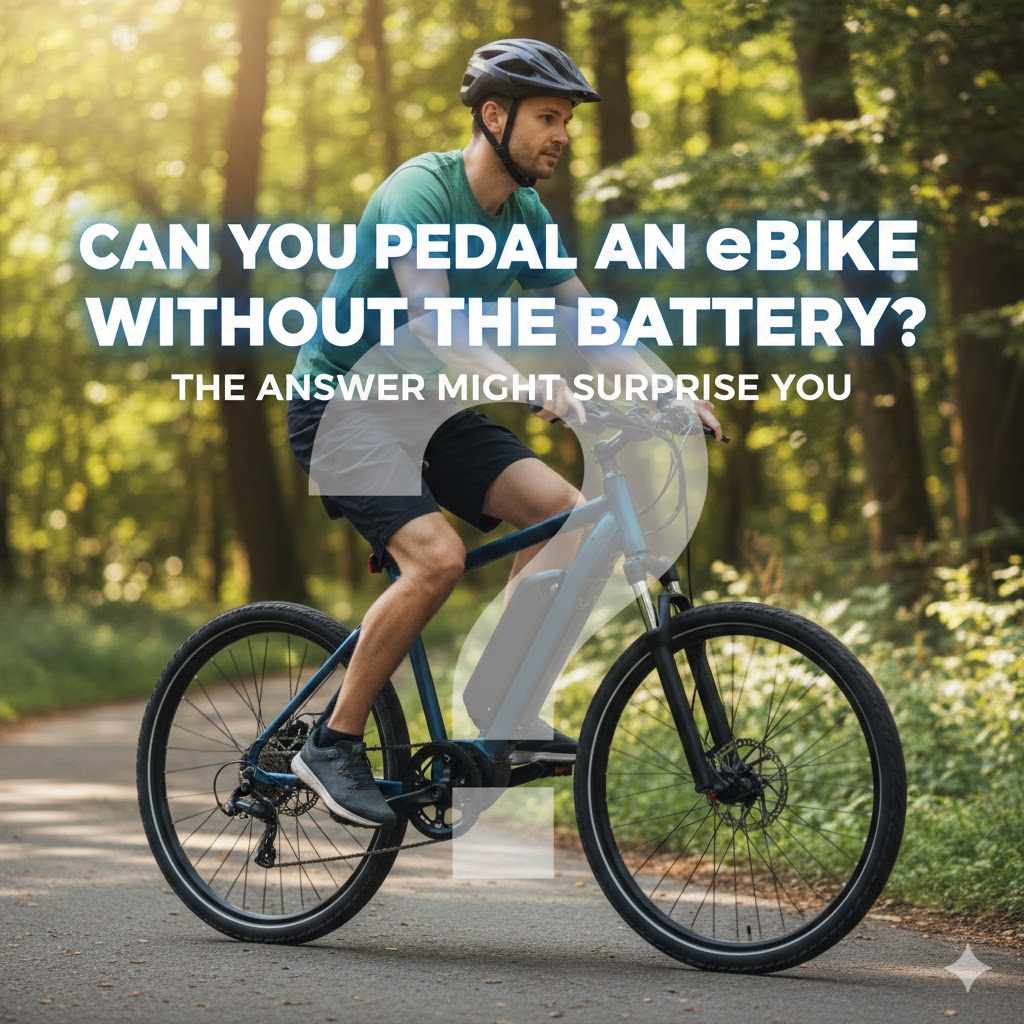
It’s a common question for new electric bike riders: Can You Pedal an eBike Without the Battery? Many folks wonder if their eBike becomes just a regular bike when the battery is out or dead. This can feel a bit tricky when you’re just starting. Don’t worry, it’s simpler than you think! We’ll walk through it step-by-step to make everything clear. Get ready to find out exactly what happens and how to handle it.
Pedaling an eBike Without Battery Power

Misodo
Electric Bike for Adults, 20" Fat Tires,…
- 【2500W Peak Power – No Hill Too Steep, No Load Too Heavy】The 2500W peak brushless motor delivers ample torque to climb 45° grades…
- 【100-Mile Range – 48V 20Ah Removable Battery】 The 48V 23Ah / 960Wh removable battery delivers up to 100 miles per charge in pedal-…
- 【20"×4.0" Fat Tires – Stay Upright on Sand, Snow & Gravel】 Puncture-resistant 4.0-inch fat tires give you reliable grip and balanc…
As an Amazon Associate I earn from qualifying purchases.
Many people wonder if they can still ride their electric bike even if the battery is dead or removed. The short answer is yes, you absolutely can pedal an eBike without the battery providing power. However, it’s important to understand that riding an eBike without its battery will feel very different from riding with it. The electric motor, which assists your pedaling, will not be engaged. This means you will be relying solely on your own leg power to move the bike forward, just like you would on a traditional bicycle.
The added weight of the eBike’s motor and battery system can make this feel more challenging than riding a regular bike. Without the motor’s assistance, the bike will feel heavier and require more effort to get moving and maintain speed, especially on hills. This is a key point for beginners to grasp: the battery is what makes an eBike an electric bike. When it’s not working, it’s essentially a regular bike with some extra components.
The Mechanics of eBike Pedaling Without Power
When you pedal an eBike, the system is designed to work in conjunction with the electric motor and battery. The motor is usually connected to the drivetrain, either directly to the wheel (a hub motor) or to the pedals and chain (a mid-drive motor). When the battery is providing power, sensors detect your pedaling effort and speed, and then tell the motor to supply a corresponding level of assistance. This assistance can feel like a gentle push or a strong surge, depending on the bike’s settings and your input.
Without battery power, this connection is broken. The motor essentially becomes a passive component in the drivetrain. For hub motors, it’s like pedaling through a slight drag because of the internal gears. For mid-drive motors, the motor unit itself can create a bit of resistance. While this resistance is usually not so great that it makes riding impossible, it does mean you’ll feel more friction and weight compared to a standard bicycle. Think of it like pedaling with the parking brake on slightly.
Hub Motors vs. Mid-Drive Motors
The way an eBike feels without battery power can vary depending on the type of motor it uses. There are two main types: hub motors and mid-drive motors.
Hub motors are located in the center of either the front or rear wheel. They are often simpler in design and can be more affordable. When a hub motor isn’t powered, it acts like a small, heavy gear assembly within the wheel. This can create a noticeable amount of drag. For some riders, this drag can feel like pedaling through thick mud. It’s a constant resistance that makes the bike feel sluggish.
Mid-drive motors are mounted near the pedals, where you would typically find the crankset on a regular bicycle. These motors drive the chain directly. When a mid-drive motor is not powered, it often offers less resistance than a hub motor. This is because it’s integrated into the pedaling mechanism. While you still won’t have any assistance, the bike might feel slightly lighter and easier to pedal than with an unpowered hub motor. This is often preferred by riders who anticipate needing to pedal without battery power more frequently.
Weight and Resistance Factors
The most significant factor when pedaling an eBike without battery power is the added weight. eBikes are heavier than traditional bikes due to the battery, motor, and often a sturdier frame to support these components. A typical eBike can weigh anywhere from 40 to 70 pounds (18 to 32 kg), while a standard road bike might weigh around 20 pounds (9 kg). This extra weight directly impacts how much effort you need to exert.
This weight becomes even more apparent on inclines. Without the motor’s boost, climbing a hill on an unpowered eBike is much more strenuous than on a regular bicycle. You’ll find yourself downshifting to lower gears much sooner and working harder to maintain a steady pace. The feeling is similar to riding a heavily loaded touring bike uphill, but without the benefit of a lighter frame.
Furthermore, there’s mechanical resistance. As mentioned, both hub and mid-drive motors can introduce some friction when they are not actively providing power. This is a design characteristic and not necessarily a flaw. It’s a trade-off for having the electric assistance available when you need it. This resistance adds to the overall effort required, making the experience of riding an unpowered eBike less enjoyable for longer distances or challenging terrains.
Real-Life Example A Commuter’s Dilemma
Sarah commutes to work daily on her eBike. One morning, she forgot to charge her battery overnight. She discovered this when she tried to start pedaling. The bike felt much heavier than usual, and the first few pedal strokes were surprisingly difficult. She had to push much harder to get going.
The ride to work, which normally takes her 30 minutes with full battery, took nearly an hour. She had to stop for a break halfway through, something she never had to do before. The hills felt like mountains, and she found herself out of breath and sweating more than she expected. She realized how much she relied on the motor for her daily ride.
Battery Life Management
Understanding battery life management is crucial for any eBike owner. It prevents you from being in a situation where you have to pedal a heavy bike without assistance unexpectedly. Most eBike batteries have a display that shows the remaining charge. It’s good practice to check this regularly, especially before longer rides or commutes.
Modern eBike batteries are designed to provide a certain range, typically between 20 and 100 miles (32 to 160 km), depending on factors like battery capacity, motor efficiency, terrain, rider weight, and the level of assistance used. If you frequently ride long distances or in hilly areas, you might deplete the battery faster.
Learning to interpret your battery indicator is key. Some eBikes have simple bar graphs, while others show the remaining percentage or estimated range in miles. Being aware of this information allows you to plan your rides accordingly, ensuring you have enough power to reach your destination or a charging point.
Tips for Extending Battery Life
There are several ways to extend your eBike’s battery life and reduce the chances of running out of power. One of the simplest is to use the lowest assistance level possible. Many eBikes have multiple levels of pedal assistance, often labeled as Eco, Tour, Sport, and Turbo. Using Eco or Tour mode conserves battery power significantly, while still providing some helpful boost.
Another effective strategy is to combine pedaling with motor assistance. Instead of relying solely on the motor to do all the work, pedal with more effort, especially on flat terrain. This reduces the demand on the battery. Also, maintain a consistent pedaling cadence. Humming along at a steady pace is generally more efficient than stop-and-go pedaling.
Regular maintenance of your eBike also plays a role. Ensure your tires are properly inflated, as under-inflated tires increase rolling resistance and make the motor work harder. Keep your chain clean and lubricated. These small efforts can contribute to a noticeable difference in battery range.
When the Battery Dies Unexpectedly
It happens to the best of us. You’re out for a ride, enjoying the scenery, and suddenly your eBike’s motor assistance cuts out. Your display might show a low battery warning, or it might just stop working abruptly. This is when you’ll experience the full effect of pedaling an eBike without its battery.
The initial sensation can be surprising. The bike will immediately feel heavier, and your pedaling effort will need to increase significantly. If you’re on a flat road, it might be manageable for a while, but if you’re on an incline, you’ll quickly realize the challenge. It’s like suddenly riding a regular bicycle that’s much heavier than you’re used to.
The best approach is to remain calm and adjust your riding style. Shift to a lower gear, similar to what you would use for climbing a steep hill on a regular bike. Take breaks as needed, and focus on smooth, steady pedaling. It’s a good idea to have a plan for such situations, like knowing the distance to the nearest power outlet or a friend’s house where you can charge your battery.
Sample Scenario A Ride Home from the Store
Mark was riding his eBike home from the grocery store, carrying a few bags. He was on a familiar route, about a mile from his house, when his eBike suddenly lost power. The battery indicator had been low for a while, but he thought he could make it.
The bike instantly felt like a lead weight. The bags of groceries made it even heavier. He had to dismount and push the bike for a short distance up a gentle incline. Once on flatter ground, he was able to pedal, but it required much more effort than usual. He made a mental note to always charge his battery fully before any ride, especially with cargo.
The eBike Without Battery as a Regular Bike
While it’s not ideal to ride an eBike without its battery for extended periods, it is entirely possible to use it as a regular bicycle. The mechanics are still there: pedals, gears, brakes, and wheels. The only difference is the absence of electric assistance. This can be a good way to get some extra exercise if you’re feeling energetic.
Think of it as getting a two-for-one deal. You have an electric-assist bicycle for convenience and easier rides, and you also have a conventional bicycle for days when you want a more challenging workout. Many riders find that riding their eBike without assistance helps them build strength and stamina, which can then translate into even better performance when the motor is active.
It’s important to be realistic about the experience. It will feel different, and it will be harder. However, it’s not an impossible task. For short distances or on flat terrain, it’s perfectly manageable. For longer rides or hilly areas, it will be a significant workout.
Benefits of Pedaling an eBike Without Power
There are a few unexpected benefits to pedaling an eBike without its battery. The most obvious is the increased physical exertion. If you’re looking to get more exercise, riding your eBike without assistance can be a great way to do it. You’ll burn more calories and build cardiovascular fitness.
It also gives you a deeper appreciation for the electric assistance. When you’ve experienced the effort required to pedal a heavy bike uphill on your own, you’ll truly value the boost the motor provides. This can lead to more mindful use of the assistance levels, helping you conserve battery and get more out of each charge.
Furthermore, it builds your confidence. Knowing that you can still get home or to your destination even if your battery dies unexpectedly is a great peace of mind. It means you’re not stranded. You can handle the situation because you know how your eBike functions even without power.
Can You Remove the Battery to Ride?
Yes, in most cases, you can remove the battery from an eBike and ride it as a regular bicycle. This is often done for a few reasons: to charge the battery indoors, to prevent theft by taking the battery with you, or simply to make the bike lighter for transport.
When you remove the battery, the bike’s electrical system is disconnected. The motor will no longer receive power, and therefore, it won’t provide any assistance. The bike then functions just like a non-electric bicycle. This process is usually straightforward. Most eBike batteries are designed to be easily removed and reinserted.
It’s worth noting that some eBikes might have a safety feature that prevents them from being ridden at all if the battery is not properly seated or is removed. This is less common, but it’s good to check your specific eBike model’s manual if you’re unsure. However, the vast majority of eBikes are designed to be ridden unpowered if the battery is removed or depleted.
Battery Removal and Reinstallation
The process of removing and reinstalling an eBike battery is typically very simple. Most batteries have a locking mechanism, often operated by a key, which secures the battery to the bike frame. To remove the battery, you’ll usually unlock it with the key, then slide the battery out of its mount.
Reinstallation is the reverse. Align the battery with the mount and slide it in until it clicks into place. Then, re-lock it with the key. Ensure the battery is securely fastened before riding, especially if you plan to ride without it being connected to the system.
Some riders choose to remove the battery for storage or transport to reduce the bike’s overall weight. For example, if you need to lift your eBike onto a car rack, removing the battery can make it significantly easier. It’s a practical step that enhances the versatility of your eBike.
Understanding eBike Motor Resistance
The resistance you feel when pedaling an eBike without battery power is an inherent characteristic of the motor and its integration into the drivetrain. This resistance is not meant to be a significant obstacle but rather a consequence of the motor’s internal components.
For hub motors, there are gears and magnets inside. When no electricity is flowing, these components still create a magnetic field and mechanical drag. This can feel like pedaling through slightly thicker syrup. The exact amount of resistance can vary greatly between manufacturers and motor models. Some are designed to be very low resistance, while others can be quite noticeable.
Mid-drive motors, as mentioned before, are generally designed to offer less resistance when unpowered. They are part of the pedal crank system, so their resistance is more directly linked to the efficiency of that system. If the motor is well-engineered, the resistance when unpowered might be barely perceptible. However, it’s still more than what you’d feel on a lightweight traditional bicycle.
Factors Affecting Motor Resistance
Several factors influence how much resistance you’ll experience when pedaling an unpowered eBike. The quality of the motor is a primary factor. Higher-end motors, especially those from reputable brands, tend to have better engineering and less internal friction. This means less drag when the motor is not active.
The type of motor also plays a role. As discussed, mid-drive motors generally offer less resistance than hub motors. This is due to their placement and how they engage with the bicycle’s gears. The overall design and construction of the eBike system also contribute. The way the motor is mounted and integrated can affect how much additional friction is introduced into the drivetrain.
Finally, the age and condition of the motor can matter. Like any mechanical component, motors can wear down over time. If a motor has been used extensively or hasn’t been properly maintained, its internal friction might increase. This could lead to more resistance when pedaling without power.
Can You Charge the Battery While Riding?
Generally, you cannot charge the battery while riding an eBike. The eBike system is designed for the motor to draw power from the battery, not to simultaneously charge it. This is a fundamental aspect of how rechargeable batteries and electric motors work in these devices.
Some very advanced eBike systems might have regenerative braking, which captures some energy during deceleration and sends it back to the battery. However, this is not the same as actively charging the battery through pedaling. The amount of energy recovered through regenerative braking is usually quite small and is meant to slightly extend the range, not to fully recharge the battery while riding.
If you need to charge your battery, you must remove it from the bike and connect it to a charger plugged into a standard electrical outlet. This is the standard and most effective way to replenish your eBike’s battery power. Always use the charger that came with your eBike, or a manufacturer-approved replacement, to ensure safety and optimal battery performance.
Regenerative Braking Explained
Regenerative braking is a technology that allows electric motors to act as generators. When you apply the brakes or slow down on an eBike equipped with regenerative braking, the motor’s function reverses. Instead of consuming electricity to produce motion, it uses the motion of the bike to generate electricity. This electricity is then fed back into the battery, giving it a small charge.
The effectiveness of regenerative braking varies greatly. Some systems are more aggressive than others. For example, a motor that feels very “grabby” when you let off the throttle might be using a more potent form of regenerative braking. However, even the most efficient regenerative braking systems typically only recoup a small fraction of the energy used during acceleration or climbing.
It’s a nice feature for extending range slightly, especially on long downhill sections where you might otherwise use your brakes heavily. But it’s not a substitute for plugging your eBike into a charger. Think of it as a bonus that adds a few extra miles, rather than a primary charging method.
Frequently Asked Questions
Question: Will pedaling an eBike without a battery damage it?
Answer: No, in most cases, pedaling an eBike without its battery will not damage the bike. The motor and battery are designed to work together, but the bike’s mechanical components will still function as a standard bicycle.
Question: How heavy is an eBike without the battery?
Answer: Removing the battery can significantly reduce the weight of an eBike, typically by 5 to 10 pounds (2 to 4.5 kg), making it easier to handle and transport.
Question: Can I use a regular bike charger for my eBike battery?
Answer: No, you should always use the charger specifically designed for your eBike battery. Using an incompatible charger can damage the battery or pose a safety risk.
Question: Does removing the battery void the eBike warranty?
Answer: Generally, removing the battery for charging or transport does not void the warranty. However, if you tamper with the battery or motor in a way not specified by the manufacturer, it might affect your warranty coverage.
Question: How far can I go on an eBike with a dead battery?
Answer: The distance you can go on an eBike with a dead battery depends entirely on your own pedaling power, the terrain, the bike’s weight, and your fitness level. It will be similar to riding a regular, heavier bicycle.
Summary
You can indeed pedal an eBike without the battery active or installed, using it like a standard bicycle. The experience will involve more physical effort due to the bike’s weight and motor resistance. Understanding your bike’s motor type and managing battery life effectively are key. Enjoy the ride, whether you have power or not!
Related pick: Check today's price on Amazon