Ford Car Lights Won’t Turn Off: Troubleshooting Guide
Ford car lights won’t turn off issues can range from a minor annoyance to a serious battery drain and potential safety hazard. This comprehensive guide will walk you through the common causes and solutions for persistent Ford headlights, interior lights, or other illumination that refuses to switch off. We’ll cover everything from simple switch malfunctions to more complex electrical system problems, helping you diagnose and fix the issue efficiently.
Simply put, if your Ford car lights won’t turn off, the most common culprits are a faulty headlight switch, a sticking relay, a problem with the body control module (BCM), or issues with the door ajar sensors. Thorough inspection of these components and their associated wiring is key to resolving the persistent illumination.
Key Takeaways
- A faulty headlight switch is a frequent cause of lights staying on, often due to internal wear or debris.
- Sticking relays, particularly the headlight relay, can prevent the lights from deactivating automatically.
- Problems with the Ford car lights won’t turn off symptom can stem from the Body Control Module (BCM) not receiving correct signals.
- Door ajar sensors that are stuck in the “closed” position can trick the system into thinking a door is open, keeping interior lights illuminated.
- Checking fuses and bulbs is a good first step, but persistent issues often require deeper electrical system diagnostics.
Why Are My Ford’s Lights Staying On? Common Causes Explained
When your Ford’s lights refuse to shut off, it’s usually an indication of an electrical system malfunction. This can be frustrating, especially if it leads to a dead battery overnight. Understanding the potential reasons behind this persistent illumination is the first step toward a solution.

RUXIFEY
RUXIFEY Side Mirror Puddle Light LED Lamp…
- Compatible with 2007 2008 2009 2010 2011 2010 2013 2014 2015 2016 2017 2018 2019 2020 Ford Edge, Expedition with power mirror; 201…
- Much Brighter Than Stock Lights: Built-in high power 18 SMD LED chips, 6000K super bright light output maximize ground illuminatio…
- No Error Code: With CANBUS LED control unit, no error code, driven by 13.5V 2W, compatible with 10V to 14 volt, low power consumpt…
As an Amazon Associate I earn from qualifying purchases.
Several components within your Ford’s electrical system are responsible for controlling your lights. When one of these fails or malfunctions, it can create a scenario where the lights remain active even when they shouldn’t be. The complexity of these systems means that sometimes a simple fix isn’t immediately apparent.
Identifying the specific light that’s staying on – headlights, taillights, interior dome lights, or even dashboard illumination – can help narrow down the possibilities. Each type of light is controlled by different circuits and switches, though some share common modules.
- Headlight Switch Malfunction: The manual switch you use to control your headlights can become worn, dirty, or damaged internally, leading it to stick in the “on” position or fail to send the correct “off” signal.
- Faulty Headlight Relay: Relays act as electronic switches for high-current circuits like headlights. If a headlight relay gets stuck in the closed position, it will keep the lights powered on.
- Body Control Module (BCM) Issues: The BCM is a central computer that controls many of the vehicle’s electrical functions, including lighting. Software glitches or hardware failures in the BCM can cause erroneous commands, such as keeping lights on.
- Door Ajar Sensor Problems: Interior lights often stay on if the car’s system believes a door is open. If the door ajar sensor is faulty or misaligned, it can send a constant “door open” signal.
- Ignition Switch Problems: In some Ford models, the ignition switch is integrated with other functions. A fault here might prevent the vehicle from recognizing when it’s turned off, keeping accessories like lights powered.
- Wiring Harness Damage: Damaged, corroded, or shorted wires in the lighting circuit can create unintended power connections, keeping lights illuminated.
- Aftermarket Accessory Interference: Improperly installed aftermarket electronics, such as alarms or remote starters, can sometimes interfere with factory lighting circuits.
Troubleshooting these issues requires a systematic approach, starting with the simplest and most common problems and moving towards more complex electrical diagnostics. The goal is to isolate the faulty component or connection that’s preventing your lights from turning off.
Troubleshooting the Headlight Switch: The Prime Suspect
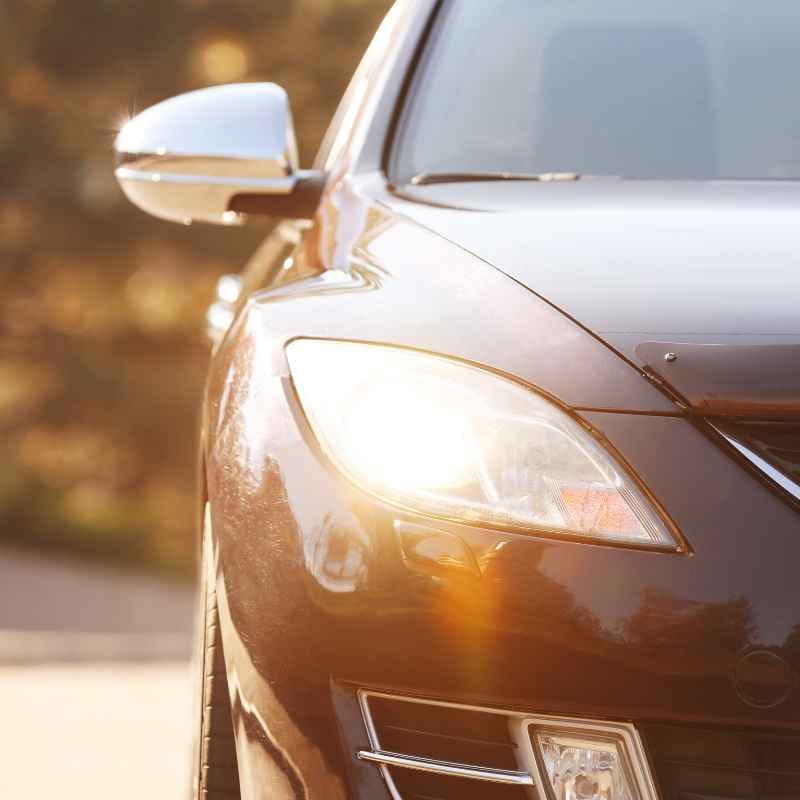
The headlight switch is arguably the most frequent culprit when your Ford’s headlights or daytime running lights refuse to extinguish. This is the physical knob or lever you operate directly. Over time, mechanical wear, dust, and debris can cause the internal contacts to stick, preventing the switch from signaling the lights to turn off.
Sometimes, the issue isn’t a complete failure but a partial one. The switch might still allow you to turn the lights on and off manually, but the automatic “off” function when the ignition is turned off fails. This is particularly common if your Ford has an automatic headlight feature.
You might notice other intermittent electrical issues alongside the lights staying on, such as dashboard lights flickering or other exterior lights behaving erratically. These are often signs of a failing headlight switch or its related circuitry.
How to Inspect and Test Your Ford’s Headlight Switch
Testing the headlight switch often requires a multimeter and a bit of know-how. You’ll need to access the switch assembly, which typically involves removing trim panels around the steering column or dashboard. Once accessed, you can test for continuity and voltage at the switch’s connectors to see if it’s functioning correctly.
A quick visual inspection can sometimes reveal obvious damage. Look for any signs of melting, burnt wires, or loose connections at the back of the switch. However, internal failures are common and won’t be visible externally.
If you suspect the switch is faulty, replacement is usually the most straightforward solution. Aftermarket switches are often available at a lower cost than OEM parts, but ensure you purchase a reputable brand to avoid further electrical problems.
- Symptoms of a Bad Headlight Switch:
- Headlights stay on even when the car is off and keys are removed.
- Automatic headlights don’t turn off when they should.
- Manual control of headlights is intermittent or unresponsive.
- Other dashboard lights flicker or malfunction.
- Smell of burning plastic near the dashboard.
It’s important to disconnect the battery before attempting any electrical work to prevent short circuits or damage to other components. Referencing your Ford’s service manual will provide specific instructions for accessing and testing the headlight switch for your particular model.
Understanding Ford Relays and Their Role in Lighting
Relays are critical components in your Ford’s electrical system, acting as electromagnetic switches that control high-power circuits with a low-power signal. For your lights, there’s typically a dedicated headlight relay. If this relay gets stuck in the “closed” or “on” position, it will continue to supply power to the headlights, causing them to stay illuminated regardless of the switch position.
Relays can fail due to internal wear, heat, or moisture. When a relay sticks, it’s like having a light switch that’s permanently turned on. This is a common cause for the Ford car lights won’t turn off problem, especially for headlights.
Replacing a relay is generally a simpler and less expensive fix than replacing a control module or switch. They are usually located in the vehicle’s fuse box or a dedicated relay panel.
How to Locate and Test a Ford Headlight Relay
Your Ford’s fuse box, often located under the dashboard or in the engine bay, is where you’ll find most relays. Consult your owner’s manual or the diagram on the fuse box cover to identify the specific headlight relay. It will usually be labeled.
To test a relay, you can often swap it with an identical relay from a non-critical system (like the horn or fog lights, if they are the same type) to see if the problem resolves. If the lights turn off after swapping, the original relay was faulty.
Alternatively, you can use a multimeter. With the relay removed and the ignition off, you can test for continuity across the relay’s control terminals. When power is applied to the coil (simulating the switch signal), continuity should be established across the power terminals.
If there’s always continuity, the relay is stuck.
| Relay Test Procedure | Expected Outcome |
|---|---|
| Check for continuity between terminals 30 and 87 (power contacts) with no power applied to coil. | Infinite resistance (no continuity) if relay is functioning correctly. |
| Apply 12V power to relay coil terminals (85 and 86). | You should hear a click as the relay engages. |
| Re-check continuity between terminals 30 and 87 with coil energized. | Low resistance (continuity) should be present if relay is functioning correctly. |
| If continuity is present between 30 and 87 without coil power, or no continuity with coil power, the relay is faulty. | The relay needs replacement. |
A stuck relay is a straightforward fix, but it’s crucial to replace it with the correct part number for your Ford model.
Warning: Always disconnect the negative battery terminal before working with electrical components to prevent short circuits. Ensure you identify the correct relay before attempting a swap; using the wrong one can cause issues with other systems.
The Role of the Body Control Module (BCM)
The Body Control Module (BCM) is a sophisticated computer that manages a wide array of a vehicle’s electrical functions, including interior and exterior lighting, power windows, door locks, and more. When a Ford car lights won’t turn off issue arises, the BCM is often implicated if simpler components like switches and relays have been ruled out.
The BCM receives signals from various sensors (like door switches, headlight switches, and ignition status) and then sends commands to activate or deactivate different modules, including the lighting systems. If the BCM itself has a software glitch, a faulty internal component, or is receiving incorrect data from a sensor, it can command the lights to stay on.
Diagnosing BCM issues can be complex and often requires specialized diagnostic scan tools that can communicate with the module and read its trouble codes. These tools allow technicians to see what inputs the BCM is receiving and what outputs it’s sending.
When the BCM is Suspected: Diagnostics and Solutions
If you’ve checked the headlight switch, relays, and fuses, and the lights still won’t turn off, the BCM is the next logical component to investigate. Look for any trouble codes related to lighting circuits or the BCM itself using an OBD-II scanner capable of reading BCM codes.
Sometimes, a simple BCM reset can resolve temporary software glitches. This typically involves disconnecting the battery for a period (often 30 minutes to an hour) and then reconnecting it. However, this is not a guaranteed fix and may require reprogramming if the issue persists.
More severe BCM problems might necessitate reprogramming or even replacement. BCMs are often programmed to the specific vehicle’s VIN and options, so a replacement unit usually needs to be programmed by a dealership or a specialized automotive locksmith to ensure all functions work correctly.
| BCM Troubleshooting Steps | Action |
|---|---|
| Check for Diagnostic Trouble Codes (DTCs) | Use an OBD-II scanner to check for codes related to lighting, BCM, or specific sensors. |
| Inspect BCM Connections | Ensure connectors are clean, secure, and free from corrosion. |
| Test Input Signals | Verify that sensors sending signals to the BCM (e.g., door switch, headlight switch) are functioning correctly. |
| Perform a BCM Reset | Disconnect the battery for a specified period to clear temporary glitches. |
| Consider BCM Reprogramming/Replacement | If other steps fail, professional diagnosis and potential BCM service may be required. |
BCM diagnosis is best left to experienced technicians or dealerships due to the complexity and proprietary software involved.
Door Ajar Sensors: The Tricksters of Interior Lights
Interior lights, such as dome lights, vanity lights, and step lights, are typically controlled by door ajar sensors. These sensors tell the car’s computer whether the doors are open or closed. If a door ajar sensor malfunctions and remains stuck in the “closed” position, the car’s computer might continuously believe a door is open, thus keeping the interior lights illuminated.
This problem isn’t exclusive to a single door; any of the door sensors could be the culprit. Similarly, the trunk or hood sensors can also sometimes trigger interior lighting issues if they are faulty.
Sometimes, the issue is simply due to the door not closing completely, or the sensor itself becoming misaligned with the door striker. A quick visual check of all doors, the trunk, and the hood can be a useful starting point.
Diagnosing Faulty Door Ajar Sensors
The door ajar sensor is often integrated into the door latch mechanism or mounted near the door hinges. You can test these sensors by observing the dashboard “door ajar” warning light. If the light stays on even when all doors are firmly closed, it’s a strong indicator of a faulty sensor or switch.
To pinpoint the exact faulty sensor, you can often test each door individually. With the interior lights on and the car in a state where they should be off, try opening and closing each door one by one. If closing a specific door causes the interior lights to turn off, that door’s sensor is likely working, and the problem lies elsewhere.
If the lights remain on regardless of door position, or if closing a door doesn’t affect them, that’s your suspect.
Some sensors can be adjusted if they are simply misaligned. If adjustment doesn’t help, or if the sensor is internally damaged, replacement will be necessary. This is usually a relatively simple repair, often involving removing door trim panels to access the sensor and its wiring.
- Common Door Ajar Sensor Issues:
- Sensor becomes stuck internally, sending a false “open” signal.
- Wiring to the sensor is damaged or corroded.
- Sensor becomes misaligned and doesn’t register the door closing properly.
- The “door ajar” warning light on the dashboard remains illuminated.
- Interior lights stay on even when the vehicle is locked.
A stuck door ajar sensor can lead to battery drain, so it’s a good idea to address this issue promptly. Replacing the sensor usually involves unscrewing the old one and plugging in the new one, with some minor trim panel removal.
Checking Fuses and Bulbs: The Basic First Steps
Before diving into complex electrical diagnostics, it’s always wise to start with the most basic checks: fuses and bulbs. A blown fuse can sometimes cause unusual electrical behavior, though typically it results in a component not working at all rather than staying on. However, a partially failed fuse or a fuse that’s not seated correctly could potentially cause odd issues.
Similarly, while a burnt-out bulb won’t cause lights to stay on, a bulb with a faulty filament or improper seating could theoretically create a short circuit. It’s less common, but worth a quick check, especially if you’ve recently replaced a bulb.
Most Ford vehicles have two main fuse boxes: one inside the cabin (usually under the dashboard or in the kick panel) and one in the engine bay. Your owner’s manual will show the location of each and provide a diagram of what fuse controls which circuit.
How to Safely Inspect Fuses and Bulbs
To inspect fuses, you’ll typically need a fuse puller tool, often found in the fuse box itself or sold separately. Carefully remove each fuse and visually inspect it. Look for a broken metal filament inside the plastic casing.
If the filament is intact, the fuse is likely good.
You can also use a multimeter set to continuity mode to test fuses. Touch one probe to each metal tab on the fuse. If the multimeter beeps or shows near-zero resistance, the fuse is good.
If it shows infinite resistance or no reading, the fuse is blown.
For bulbs, ensure the vehicle is off and cool. Access the bulbs in question (headlights, taillights, interior bulbs). If a bulb appears dark or damaged, carefully remove it and try replacing it with a known good bulb of the correct type.
Always handle glass bulbs with gloves or a clean cloth to avoid transferring oils, which can shorten their lifespan.
| Component | Potential Issue | Action |
|---|---|---|
| Fuses | Blown, loose, or incorrect amperage fuse. | Inspect visually or with a multimeter. Replace if blown. Ensure correct amperage. |
| Bulbs | Faulty filament, poor connection, incorrect bulb type. | Inspect for damage. Replace if necessary with the correct type. Ensure proper seating. |
| Wiring Connectors | Corrosion, loose pins, bent pins. | Visually inspect and clean if necessary. Ensure secure connection. |
While fuses and bulbs are simple checks, they can save you a lot of time and money if they are the root cause of the lighting problem.
Wiring Harness and Electrical System Checks
If the simpler components like switches, relays, and sensors appear to be functioning correctly, the next step is to investigate the wiring harness. Damaged wiring, loose connections, or short circuits within the harness can create pathways for power to remain active in your Ford’s lights, causing the Ford car lights won’t turn off issue.
Wiring harnesses are complex bundles of wires that snake throughout the vehicle, connecting various electrical components. Over time, these wires can fray, rub against sharp metal edges, become corroded by moisture, or be damaged by pests like rodents. Such damage can lead to unintended electrical connections.
Diagnosing wiring harness issues is one of the more labor-intensive diagnostic tasks. It requires tracing wires, checking for continuity, and looking for signs of damage or corrosion. This is often where specialized tools and detailed wiring diagrams become essential.
Common Wiring Issues and How to Find Them
Look for obvious signs of damage: burnt wires, melted insulation, or areas where wires might be rubbing against chassis components. Pay close attention to areas where the wiring harness passes through the firewall, door jambs, or near the engine where heat and movement are prevalent.
A multimeter is indispensable for checking continuity. You’ll need to identify which wires should be connected and which should not be. For instance, if a wire that should be dead (when the lights are supposed to be off) is showing voltage, it indicates a short circuit or a “hot” wire somewhere in the harness.
Sometimes, a rodent infestation can cause significant damage. Look for chewed wires or nesting materials near the wiring harnesses. If rodent damage is found, it’s crucial to repair all damaged wires thoroughly to prevent further issues.
Important: When repairing damaged wiring, use high-quality automotive-grade wire and proper crimping techniques or soldering with heat-shrink tubing. A poor repair can lead to more electrical problems down the line.
Given the complexity of vehicle wiring, if you’re not comfortable with electrical diagnostics, it’s best to seek professional help from a qualified mechanic or an automotive electrician. They have the tools and expertise to accurately diagnose and repair wiring harness problems.
Frequently Asked Questions
What should I do if my Ford’s headlights stay on all the time?
If your Ford’s headlights are stuck on, the first steps are to check the headlight switch and the headlight relay. Inspect the switch for any signs of damage or sticking and test the relay by swapping it with an identical one from a non-critical system. If these don’t resolve the issue, consider a fault in the BCM or its related wiring.
Can a bad fuse cause my Ford lights to stay on?
While a blown fuse typically causes a component not to work, a partially failed or improperly seated fuse can sometimes cause intermittent or unusual electrical behavior. It’s worth checking the relevant fuses in your fuse box as a basic troubleshooting step, but it’s less common for a fuse issue to result in lights staying on.
How do I know if my Ford’s Body Control Module (BCM) is faulty?
Signs of a faulty BCM include multiple electrical gremlins, such as persistent lighting issues after checking simpler components, malfunctioning power accessories, or dashboard warning lights that come on without a clear cause. Diagnostic trouble codes related to the BCM or its controlled systems are the most reliable indicators, often requiring specialized scan tools.
How much does it cost to fix Ford car lights won’t turn off problems?
The cost can vary significantly. Replacing a simple fuse or relay might cost only a few dollars for the part. A new headlight switch could range from $50 to $200.
However, if the BCM needs replacement and reprogramming, costs can climb to $500 or more, depending on the vehicle model and labor rates.
Are there any aftermarket solutions for Ford headlight issues?
While aftermarket headlight switches and relays are available, it’s generally recommended to use OEM (Original Equipment Manufacturer) parts for critical electrical components like the BCM to ensure proper compatibility and function. For simpler items, reputable aftermarket brands can be a cost-effective solution, but research the brand’s quality and warranty carefully.
Final Thoughts
Addressing the issue of Ford car lights won’t turn off requires a systematic approach, starting with the most common and straightforward solutions like checking the headlight switch and relays. Persistent problems may lead you to investigate the BCM, door sensors, or the wiring harness itself. By carefully diagnosing each potential cause, you can effectively resolve the issue, prevent battery drain, and ensure your Ford remains a reliable and safe vehicle to operate.
For more on this topic, see car won’t start? here’s the fix for a ford fiesta. See also car won’t start here’s the fix for a ford fiesta. See also ford car door won’t close here’s how to fix it fast.
Related pick: Check today's price on Amazon For more on this, see why car lights turn on even with a dead battery.