How to Top Off Fluids Safely in Your Car
Top off only approved fluids. Stop if a reservoir goes empty twice, the level drops again after a short drive, or any fluid looks milky, dark, or contaminated. A low level can overheat an engine, damage brakes or steering, and hide a leak that gets expensive fast. This guide covers which fluids you can safely add at home, how to check them correctly, and the stop rules that mean you need diagnosis instead of a routine fill.
What you need
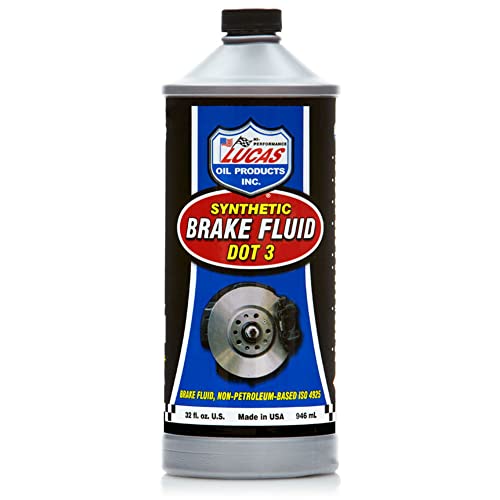
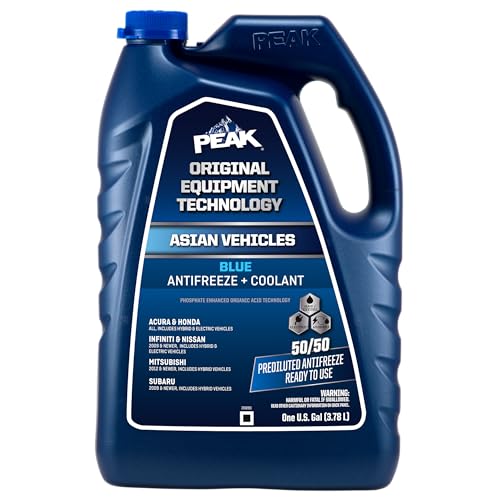

- Owner’s manual for fluid specs, reservoir locations, and any model-specific procedure
- Clean funnel sized to the reservoir opening
- Nitrile gloves, preferably single-use
- Paper towels or shop towels
- The correct fluid container for each system you plan to top off
- Safety glasses if you are checking battery electrolyte or working near brake fluid
How do you check fluids in your car?
Check fluid levels on level ground, with the engine off unless the manual says otherwise. Start with the owner’s manual, then inspect only the reservoirs and dipsticks it lists. Check fluids regularly as basic maintenance, and treat a slight drop as a top-off case only when the fluid is clean and the level stays steady after a short drive.
Start with the owner’s manual
- Open the maintenance section and confirm the exact fluid spec for each reservoir.
- Note the location of the dipstick, reservoir marks, or fill line before opening anything.
- Check the service interval and any warning about sealed systems or special procedures.
Use the right check method
- Check engine oil with the dipstick after the vehicle has sat long enough for the oil to drain back.
- Check coolant only when the engine is cold and the cap can be touched safely.
- Check brake fluid, power steering fluid, and washer fluid at the reservoir marks.
- Check transmission fluid only by the procedure the manual gives; some vehicles require a dipstick, while others use a sealed system and a scan-tool or temperature-based check.
Picture a sedan that is one quart low on oil but otherwise runs normally. A top-off makes sense if the dipstick still shows oil between MIN and MAX after the refill. Suppose the brake reservoir is low and the pads are near replacement thickness; that is a service clue, not a reason to keep adding fluid.
How do you top off oil and coolant safely?
Top off engine oil by dipstick reading and coolant by reservoir mark, not by guesswork. Engine oil should generally sit between MIN and MAX. Coolant is commonly added only when the engine is cold and only to the fill line on the expansion tank or reservoir. If either one keeps dropping, treat it as a leak or internal fault.
Engine oil
- Pull the dipstick, wipe it clean, reinsert it, then read the level again.
- Match the viscosity grade in the owner’s manual, such as 0W-20 or 5W-30.
- Add about 0.25 quart at a time through a clean funnel, then recheck the dipstick.
- Stop at the upper mark; do not push the level past MAX.
Overfilling oil can raise crankcase pressure, whip oil into foam, and send excess into the intake or emissions system. If the level is already above MAX, do not keep adding. Drain to the proper range or have a shop correct it.
Engine coolant
- Wait until the engine is fully cold.
- Open the coolant reservoir cap slowly only if the manual allows it and the system is cold.
- Add the exact coolant type and mix ratio listed in the manual, often a 50/50 premix or concentrate mixed with distilled water.
- Stop at the reservoir line and secure the cap fully.
Hot coolant systems can spray scalding fluid and steam. Never open a hot radiator cap or hot pressurized reservoir. If coolant is low again after a short drive, look for seepage, a bad cap, a hose leak, or another fault before adding more.
How do you top up brake and transmission fluid?
Brake fluid and transmission fluid need more care than washer fluid or oil. Brake fluid should match the DOT rating on the cap or in the manual, and it should be kept clean. Transmission fluid is vehicle-specific, and the wrong type can cause shifting problems or long-term damage.
Brake fluid
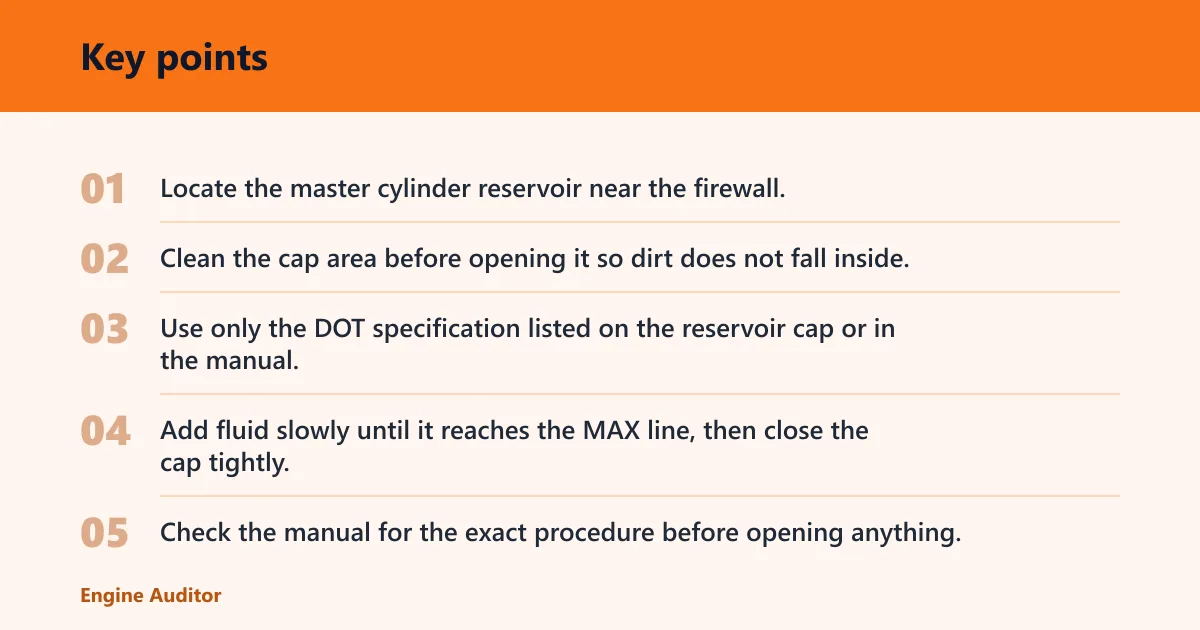
- Locate the master cylinder reservoir near the firewall.
- Clean the cap area before opening it so dirt does not fall inside.
- Use only the DOT specification listed on the reservoir cap or in the manual.
- Add fluid slowly until it reaches the MAX line, then close the cap tightly.
Do not let brake fluid touch paint, and do not mix in dirty fluid from an open container. Low brake fluid can mean worn pads, pad wear sensors that need attention, or a leak. Topping off without finding the cause can hide a brake problem.
Transmission fluid
- Check the manual for the exact procedure before opening anything.
- Verify whether the vehicle uses a dipstick, a sealed fill plug, or a temperature-based level check.
- Add only the transmission fluid spec named by the manufacturer.
- Recheck at the required hot or cold condition, because the correct level can change with temperature.
Do not treat transmission fluid like a universal under-hood check. Some vehicles need the engine running, a specific fluid temperature, or a scan tool. If the fluid is dark, burnt-smelling, or low again after a drive, stop and have the system inspected for leaks or internal wear.
How do you top off washer fluid and battery water?
Washer fluid is a simple DIY top-off. Battery electrolyte is not, unless the battery is a serviceable lead-acid design that the manual specifically allows you to open. Sealed AGM batteries should stay closed. For both systems, the exact container matters more than speed.
Windshield washer fluid
- Open the washer reservoir cap, usually marked with a windshield or spray icon.
- Fill to the neck with the right seasonal washer fluid.
- Choose a winter blend with freeze protection if temperatures can drop below freezing.
- Close the cap and test the sprayer briefly to clear any air.
Washer fluid is the safest routine top-off under the hood, but even here, do not use plain water in freezing weather. A frozen reservoir or line can crack plastic parts and leave the system unusable.
Battery electrolyte
- Confirm that the battery is serviceable lead-acid and has removable caps.
- Wear nitrile gloves and eye protection.
- For serviceable lead-acid batteries, add distilled water only, and only to the marked level.
- Do not open sealed AGM batteries or add acid.
Battery acid is not a top-off fluid. If the battery is sealed, swollen, cracked, or leaking, do not open it. A serviceable battery that keeps needing water may be overcharging or nearing failure.
Fluid top-off decision table
| Fluid | Can you top off at home? | Engine hot/cold requirement | Correct fluid spec to verify | Overfill risk | Stop-and-call-a-mechanic warning signs |
|---|---|---|---|---|---|
| Engine oil | Yes, if the level is slightly low | Check on level ground with engine off | Viscosity grade from the owner’s manual | Foaming, crankcase pressure, catalyst or breather issues | Oil is milky, burnt, or keeps dropping |
| Engine coolant | Yes, only when cold | Cold engine only | Exact coolant type and mix ratio | Burn risk, overflow, trapped pressure | Repeated loss, sweet smell, visible leaks, overheating |
| Brake fluid | Sometimes, but only as a short-term top-off | Usually engine off and cool area | DOT specification on cap or manual | Contamination, spills on paint, hiding pad wear or leaks | Level drops again, pedal feels soft, ABS or brake warning light |
| Transmission fluid | Yes, only with the correct procedure | Hot or cold depends on vehicle | Vehicle-specific transmission fluid spec | Shift problems, seal damage, overfill aeration | Dark fluid, burnt odor, hard shifting, sealed-system warning |
| Power steering fluid | Yes, if equipped | Follow manual guidance | Vehicle-specific fluid type | Foaming, noisy pump, fluid expansion | No reservoir present, fluid keeps dropping, steering noise |
| Windshield washer fluid | Yes | No special temperature requirement | Seasonal washer fluid with freeze protection if needed | Spills, overflow from filler neck | Sprayer does not work, reservoir cracks, fluid leaks out |
| Battery electrolyte | Only for serviceable lead-acid batteries | Cool engine bay preferred | Distilled water only, if the design allows topping off | Overfilling, acid splash, corrosion | Sealed AGM battery, cracked case, repeated water loss |
Common mistakes
Using the wrong fluid is the fastest way to create a new problem. Brake fluid, coolant, transmission fluid, and power steering fluid are not interchangeable. Read the cap and the manual before you pour anything.
Overfilling is another common error. A reservoir that looks “a little low” does not need to be filled to the top. Use the marked range or fill line, then stop.
A repeating low level is the biggest clue that the problem is not routine maintenance. Say a coolant reservoir is low again two days after a top-off, or a brake reservoir drops after new pads should have stabilized it. That pattern calls for inspection, not another bottle.
When should you stop and call a mechanic instead?
Stop when a reservoir is empty, the same fluid drops again after a short drive, or the fluid appears contaminated. A low level can be a leak, worn pads, a failed seal, a bad cap, or internal wear. Top-offs are for stable, slightly low levels only.
- Check the fluid again after a short drive and a full cool-down if the system requires it.
- Inspect for drips, wet hoses, crusty residue, or fluid around caps and fittings.
- Review the owner’s manual for any special inspection or bleed procedure.
- Schedule service if the level keeps falling or the warning light stays on.
How to remove excess fluid: use a clean turkey baster, suction pump, or fluid extractor only when the reservoir design and fluid type make that safe. Brake fluid and transmission fluid often need a careful shop correction if the overfill is significant, the fluid is contaminated, or access is poor. Do not guess.
Prevention starts with a routine check interval from the owner’s manual and a clean funnel kept for automotive fluids only. That reduces spills, contamination, and the temptation to top off by feel.
Frequently asked questions
What does fluid top off mean?
It means adding a small amount of the correct fluid to bring a reservoir or dipstick reading back into the approved range. It does not mean filling every reservoir to the top. The key is matching the fluid spec and stopping at the marked level.
How do I top off oil in my car?
Use the dipstick, confirm the viscosity grade in the owner’s manual, and add about 0.25 quart at a time through a funnel. Recheck after each addition. Stop at the MAX mark. If the level keeps falling, look for a leak or internal consumption.
How do I top off transmission fluid?
Follow the vehicle-specific procedure in the manual first. Some cars use a dipstick, while others require a sealed-system check at a set fluid temperature. Add only the exact transmission fluid specified, then recheck at the required hot or cold condition.
How do I top up brake fluid?
Open the master cylinder reservoir carefully, clean around the cap, and add only the DOT specification listed on the cap or in the manual. Bring the level to the marked line. If it drops again, inspect for pad wear or a leak rather than adding more.
How do I remove excess fluid from my car?
For simple reservoirs, a clean suction tool can remove a small overfill. For brake fluid, coolant, or sealed transmission systems, a shop is often the safer choice if the overfill is large or the fluid is contaminated. Do not drain blindly.
What happens if I add the wrong fluid?
Wrong fluid can damage seals, reduce braking performance, cause overheating, or create shift problems. If the mistake involves brake fluid, coolant, or transmission fluid, do not start the vehicle until the system is checked and the fluid is corrected.
Products related to this article
Sponsored / affiliate links. As an Amazon Associate I earn from qualifying purchases. I may earn additional commission from eligible campaigns.