How to Rotate Directional Tires the Right Way
Directional tires rotate front to rear on the same side unless you dismount and remount the tire on the rim so the arrow still points forward. If wear is severe or the setup will not allow that, replace the tire or remount it instead. Rotate them the wrong way and you can create noise, vibration, uneven wear, and faster tread loss. This guide covers the exact rule for FWD, RWD, AWD, and staggered setups, plus when rotation should stop and remounting or replacement is the right move.
What directional tires



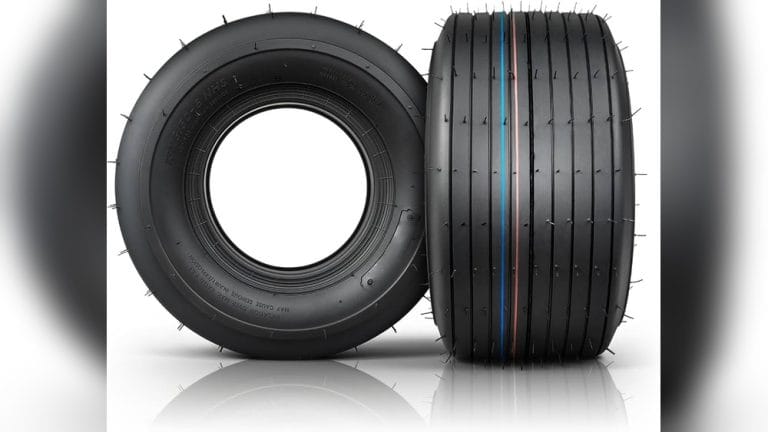
Directional tires use a one-way tread pattern, often V-shaped or arrow-shaped, and the sidewall commonly carries an arrow or “rotation” marking that shows the direction of travel. That pattern must point forward when the tire rolls. The design can help water evacuation and may change noise and wear behavior compared with other tread styles.
How to identify the rotation direction
Check the outer sidewall before any wheel comes off. The arrow should point toward the front of the vehicle when the tire is installed on the correct side, and the tread should match that arrow. If the marking is missing, faded, or hidden by dirt, clean the sidewall and confirm before moving a tire.
Why the tread direction matters
The tread voids and grooves are shaped to move water one way. If a directional tire runs backward, wet-road evacuation changes and the tire can get louder. That is why a directional tire is not treated like a standard non-directional tire with a simple cross-rotation pattern.
What you’ll need
- Jack rated for the vehicle’s weight
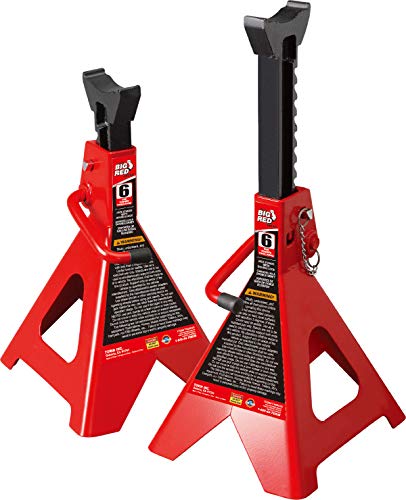
- Jack stands sized for the vehicle
- Lug wrench or impact tool for removal
- Torque wrench for final tightening
- Tire pressure gauge
- Wheel chocks
- Owner’s manual
- Door-jamb tire placard reference
- Locking lug key, if equipped
- Tread depth gauge
Can you rotate directional tires?
Yes, but only within the limits of the tread direction and the vehicle layout. As a general default, front-to-rear on the same side is often the safest pattern. If the tire must change sides, it has to be dismounted and remounted on the rim so the arrow still points forward. If tread depth, damage, or size mismatch is a problem, replacement is the better call.
When you can rotate
Rotate directional tires when they are in good condition, worn evenly, and still meet the vehicle’s size and load requirements. On many vehicles, that means moving the front tires straight back and the rear tires straight forward on the same side. That keeps the rotation direction intact and follows the no-cross rule.
When you should remount instead
Choose remounting only when a side-to-side move is needed and the tire remains serviceable. A tire shop can unseat the bead, flip the tire on the rim, and reinstall it so the arrow points the correct way on the opposite side. This is not a casual driveway task.
When you should replace instead
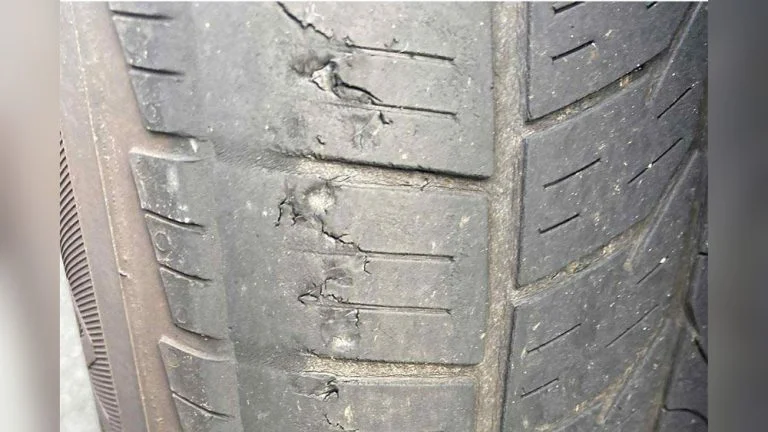
Stop and replace if tread depth is low, wear is uneven enough to suggest a problem, the sidewall is damaged, or the tire has a circumference mismatch that makes rotation unsafe. A tread depth gauge is the right tool here; legal minimum tread depth varies by jurisdiction, so check local rules as well as the owner’s manual.

Drivetrain changes the front-to-rear wear pattern, but it does not override the directional tire rule. The main point is that directional tires generally do not cross sides unless they are remounted. Square fitment gives more rotation options than staggered fitment, and a full-size spare can join only if it matches the vehicle’s size and construction requirements.
FWD layout
Front-wheel-drive vehicles usually wear the front tires faster. With directional tires on a square setup, move the front tires straight to the rear on the same side, and bring the rear tires straight forward. Do not cross them left to right.
RWD layout
Rear-wheel-drive vehicles often load the rear tires more heavily under acceleration. Use the same no-cross pattern: rear straight to front on the same side, front straight to rear on the same side. If the manual specifies a different interval or order, follow the manual first.
AWD or 4WD layout
All-wheel drive and four-wheel drive can be more sensitive to tread circumference differences. Rotate on schedule and keep tread depth close across all four tires. If the vehicle has staggered sizes, many no-cross patterns no longer apply, and some setups cannot be rotated at all without remounting or replacing tires.
Square fitment versus staggered fitment
Square fitment uses the same tire size on all four corners, so rotation is usually straightforward. Staggered fitment uses different front and rear sizes, which often limits rotation to front-to-rear only within each axle pair, or eliminates rotation as an option. Directional tread makes cross-rotation even less likely.
Full-size spare included
A full-size spare can usually join rotation only if it matches the installed tires in size, construction, load rating, and speed rating where applicable. It should also match tread direction rules. If the spare is a different type or the tire circumference is off, do not mix it into the rotation pattern.
Say your AWD crossover uses 235/55R19 directional tires on all four corners, plus a matching full-size spare. If the spare is the same construction and rating, it can substitute into the same axle position as the tire it replaces, but the arrows still have to face forward when installed.
Tire rotation decision table
This table gives the decision path: rotate, remount, or replace. The no-cross warning applies to every directional setup unless the tire is dismounted and remounted to preserve direction.
| Tire layout | Drivetrain | Do not cross sides | Safe rotation pattern | Stop / replace trigger |
|---|---|---|---|---|
| Directional, square | FWD | Yes | Front to rear on same side | Uneven wear, sidewall damage, tread depth near legal limit |
| Directional, square | RWD | Yes | Rear to front on same side; front to rear on same side | Mismatched circumference or cupping that signals a suspension issue |
| Directional, square | AWD / 4WD | Yes | Same-side front-to-rear swap only, if tread depths stay close | Marked tread-depth spread, damage, or owner’s manual says replace instead |
| Directional, staggered | FWD / RWD / AWD / 4WD | Yes | Usually no practical rotation; remount only if a side change is required and allowed | Any uneven wear across axle pair, or if the manual prohibits rotation |
| Non-directional, square | FWD / RWD | No, if tire design allows crossing | Follow the owner’s manual pattern for the drivetrain | Tread depth low, cords visible, sidewall cuts, or abnormal wear |
| Full-size spare, matching | Any matching drivetrain setup | Depends on tire direction | Use only if size, construction, load, and speed ratings match | Spare is different size, different construction, or tread direction does not match |
How do you rotate them safely?
Use the same safe lift procedure you would use for any wheel service, then move each tire only to the position allowed by its tread direction and the vehicle layout. Check pressure before removal and again after installation. Finish with a torque wrench set to the vehicle-specific spec.
-
Park and chock.
Set the vehicle on level ground, apply the parking brake, and chock the wheels that stay on the ground. Check the door-jamb placard for the target tire pressure before anything comes off. -
Loosen the lugs.
Break the lug nuts free before lifting the vehicle, and use the locking lug key if the wheels have one. Do not fully remove any nut until the wheel is off the ground. -
Lift at approved points.
Place the jack only at manufacturer-approved lift points, then support the vehicle with jack stands before removing a wheel. The stands must carry the load before the tire leaves the hub. -
Move each wheel.
For directional tires, move front to rear on the same side. If a side change is required, stop and remount the tire on the rim instead of crossing it on the vehicle. -
Set pressure and torque.
Inflate each tire to the placard spec after installation, then torque the lug nuts in the pattern listed in the owner’s manual. A common torque wrench mistake is skipping the final pass or guessing at the value.
Picture a rear-wheel-drive sedan with staggered directional tires: the rear tires are wider than the front tires. In that case, a normal cross-rotation is off the table, and the correct answer may be no rotation at all unless the tire shop remounts the tires to preserve direction and the sizes still match the vehicle requirements.
Common mistakes
Most mistakes come from treating directional tires like standard tires. The no-cross rule matters. So does tread depth, because a tire that is already near the legal minimum is usually not a rotation candidate anymore.
- Crossing a directional tire left to right without remounting it
- Putting a full-size spare into rotation when size or rating does not match
- Ignoring uneven wear that points to alignment or suspension trouble
- Using the wrong lift points or leaving the vehicle on the jack alone
- Skipping the torque wrench and tightening by feel
- Setting pressure without checking the door-jamb placard first
- Mixing tires with noticeably different tread depths on AWD or 4WD systems
Frequently asked questions
Which way do directional tires go?
The sidewall arrow or rotation mark shows the forward direction. When installed correctly, that arrow points toward the front of the vehicle on the ground. If the tread pattern looks backward relative to the arrow, the tire is on the wrong side or mounted incorrectly.
How to rotate rear wheel drive tires
For RWD with directional tires and a square setup, move the rear tires straight forward and the front tires straight back on the same side. Do not cross sides. If the vehicle uses staggered sizes, the manual may limit rotation or rule it out entirely.
How to rotate tires properly
Confirm tread type, check pressure, lift at approved points, and follow the correct pattern for the tire layout and drivetrain. Then torque the lugs to the vehicle’s spec and recheck pressure to the placard value. If tread depth, damage, or size mismatch is present, replace instead.
Products related to this article
Sponsored / affiliate links. As an Amazon Associate I earn from qualifying purchases. I may earn additional commission from eligible campaigns.