How to Keep Tires From Flat Spotting During Storage
For storage, start with the vehicle placard pressure unless the vehicle or tire maker specifies otherwise. If a temporary increase is mentioned for short storage, keep it modest and within the tire sidewall maximum. For longer storage, reduce static load with tire cradles or jack stands. Skipping flat-spot prevention can lead to vibration, uneven wear, or tire damage that shortens service life.
How do you prevent tire flat spots?


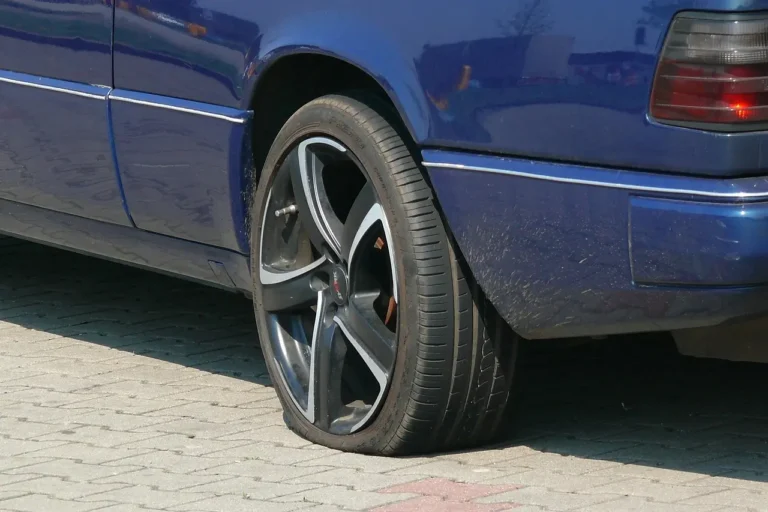
Flat-spot prevention starts with correct inflation, lower static load, and a storage method matched to how long the vehicle will sit. A car parked for a few weeks needs a lighter approach than one stored for months, especially if it uses low-profile, performance, or EV tires.
What should you set first?
Set each tire to the vehicle placard pressure unless the vehicle or tire maker says otherwise. Tires can lose pressure while parked, and cold temperatures can lower the reading further, so verify inflation before storage rather than guessing after the car has already sat.
- Accurate tire gauge
- Vehicle placard pressure reference
- Air source or compressor
- Tire cradles sized for tire width and diameter
- Jack stands rated for the vehicle weight
- Wheel chocks
- Flat, clean parking surface
- Notebook or phone note for pressure logs
- Check the placard pressure. Set each tire to the vehicle placard pressure unless the maker lists a different storage or load spec. Use an accurate gauge before parking, because parked tires can lose pressure over time and pressure loss is more noticeable in cold conditions.
- Remove extra load. Take out cargo, roof loads, and other weight you do not need. Fuel load matters too: a full tank adds weight, and front-engine cars usually load the front tires more than rear-engine cars load the rear.
- Choose the support method. Use tire cradles for parked storage when you want to reduce contact stress without lifting the car; use jack stands when storage is long enough that you want the tires unloaded entirely. Keep the setup on a flat, stable surface.
- Secure the car. Set wheel chocks on sloped surfaces and follow parking brake guidance for the vehicle. Chocks keep the car from rolling; stands and cradles do not replace that safety step.
- Mark the pressure log. Record the starting pressure for all four tires and recheck on the cadence that matches storage length. If pressure drops, add air in 2 psi increments and recheck instead of guessing.
What should you do before storing a car?

Start with pressure, load, and parking-surface prep. Then decide how long the car will sit, because that determines whether periodic movement is enough or whether tire cradles or jack stands make more sense for reducing flat-spot risk.
How long will the car sit?
Short storage can often rely on proper inflation and occasional movement. As the storage period gets longer, the same tires sit under the same load for more time, which raises the chance of temporary deformation and makes support equipment more useful.
| Storage length | Pressure check cadence | Use cradles or stands? | Move the car? | Inspect before driving |
|---|---|---|---|---|
| 2 to 4 weeks | Check before storage, then every 2 weeks | Optional; cradles help, stands usually not needed | Roll or drive it 10 to 15 feet every 2 to 4 weeks if safe | Check pressure and tire shape before the first drive |
| 1 to 3 months | Check before storage, then monthly | Recommended: cradles for parked storage or stands if you can lift safely | Move only if you can do it without adding risk | Inspect tread, sidewalls, and pressure before driving |
| 3+ months | Check before storage, then every 4 to 6 weeks | Strongly recommended: jack stands or tire cradles | Do not rely on periodic rolling alone | Inspect tires before any road use; warm the tires gradually on the first drive |
- Set cold inflation first. Inflate to placard pressure with the tires at ambient temperature. Cold garage conditions lower pressure readings and can make flat spots more noticeable because the rubber stays stiffer.
- Remove avoidable weight. Empty the trunk, cargo area, and roof rack. If the car has a full tank, know that the extra weight stays on the tires during storage.
- Prep the parking surface. Park on clean, level pavement or concrete. Dirt, gravel, and soft ground can let a tire settle unevenly and can make cradles or stands less stable.
- Plan for the duration. Use the decision table above. Short-term parking can usually rely on proper pressure and occasional movement; long-term storage should reduce or remove static load.
How do tire cradles and jack stands help?
Tire cradles spread the contact patch over a curved surface, which lowers stress on the same part of the tread. Jack stands do more: they remove load from the tires entirely. They are not interchangeable, and each has setup limits tied to vehicle weight, lift points, and storage length.
When are tire cradles the better choice?
Choose cradles when the vehicle will remain on the ground and you want to reduce contact stress without lifting it off the tires. They are especially useful when storage is long enough to matter but not so long that the tires need to be fully unloaded.
When are jack stands the better choice?
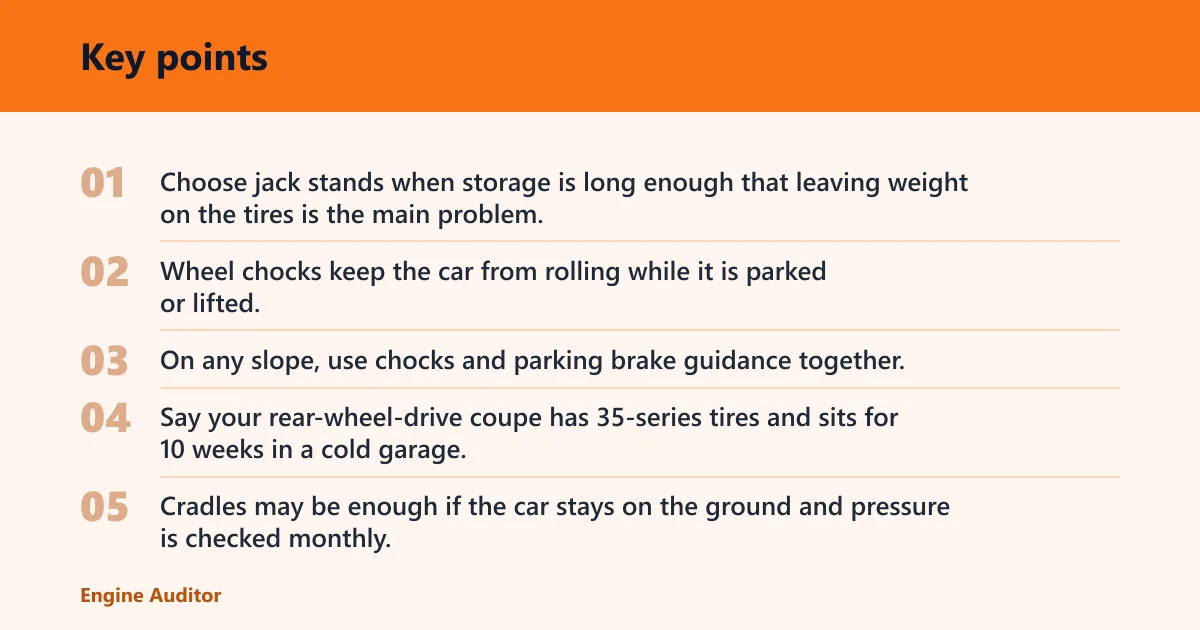
Choose jack stands when storage is long enough that leaving weight on the tires is the main problem. Support the vehicle only at manufacturer-approved lift points, and follow a safe lifting procedure so the stands carry the load instead of the suspension in an improvised position.
How should you secure the vehicle?
Wheel chocks keep the car from rolling while it is parked or lifted. On any slope, use chocks and parking brake guidance together. A level, clean surface matters because a tire or stand on an uneven spot can shift load to one side and create a different problem.
Say your rear-wheel-drive coupe has 35-series tires and sits for 10 weeks in a cold garage. Cradles may be enough if the car stays on the ground and pressure is checked monthly. A full set of jack stands becomes the better choice once storage stretches past that and the owner wants load off the tires.
How do you tell a flat spot from damage?
A temporary flat spot usually shows up as a thump, vibration, or rough ride for the first miles after storage, then fades as the tires warm and flex. If the shake stays after a warm-up drive, or if you see sidewall cracking, cord exposure, or a radial bulge, the tire may have permanent damage.
What should the first drive look like?
Start with a short, gentle warm-up drive on smooth roads. Temporary flat spotting often softens as the tire flexes and the tread warms, so the first drive should confirm whether the symptom fades or stays present at speed.
- Drive gently first. Start with a short, slow warm-up drive on smooth roads. A temporary flat spot often softens as the tire flexes and the tread warms.
- Watch the symptoms. If the thump fades within a few miles, the issue was likely temporary deformation. If the vibration stays steady, suspect balance, alignment, brake drag, or tire damage instead of assuming it is only a flat spot.
- Inspect the tire closely. Look for tread separation, cuts, bulges, cracked sidewalls, or a visible ridge that does not round out. Those signs point to damage that will not recover with more driving.
- Replace when the shake remains. If the car still vibrates after the warm-up drive and the tire shows structural damage, stop waiting for it to smooth out. Replacement is safer than trying to drive through a bad tire.
A common storage mistake is to assume a brief flat-spot wobble after sitting all winter means the tire is permanently damaged. A winter sedan parked for six weeks in a 45°F garage may need only a short warm-up drive. A performance coupe with 30-series tires that still shakes after 15 minutes on smooth pavement needs inspection, not more miles.
Common mistakes
The biggest errors are underinflating before storage, ignoring pressure loss, and leaving extra load in the vehicle. Storing in cold conditions without a check also raises the chance of a rough first drive because the tire starts stiffer and may not recover as quickly.
- Running the tires low before storage. Placard pressure is the default unless the maker says otherwise.
- Skipping pressure checks. Tires can lose several psi while parked.
- Leaving heavy cargo in the car. Extra load makes static deformation worse.
- Using jack stands without safe lift points. That can damage the car and create an unsafe setup.
- Ignoring low-profile tires. Their stiffer sidewalls make flat spotting more noticeable.
- Assuming every vibration is a flat spot. Balance, alignment, brake drag, and tire damage can feel similar.
- Storing outside in direct sun or deep cold without checking pressure. Temperature swings change both rubber stiffness and inflation.
Frequently asked questions
How do you prevent flat spots on tires during storage?
Set all four tires to placard pressure, remove extra weight, and pick the right support for the storage length. For 2 to 4 weeks, periodic movement may be enough. For 1 month or more, tire cradles or jack stands give better protection.
How do you avoid flat spots on tires if a car sits for months?
Use jack stands or tire cradles, then check pressure every 4 to 6 weeks. If the car stays on its tires, move it only if the surface is flat and safe. A long sit with no support is the setup most likely to leave a thump behind.
Can tires get flat spots from sitting in one place?
Yes. Static load presses the tread into one shape, and cold temperatures make the rubber less flexible. That is why a parked car can leave with a thump or vibration even before it has accumulated much mileage.
How long can a car sit before tires flat spot?
Some tires show it in weeks, especially low-profile or performance types. A car parked 2 to 4 weeks often needs only correct pressure and occasional movement, while 1 to 3 months raises the risk enough that cradles or stands are worth using.
What tire pressure should I use before storing a car?
Use the vehicle placard pressure unless the manufacturer says otherwise. Check with an accurate gauge before parking, then recheck during storage. If pressure drops, add air in 2 psi steps and verify again.
Is it better to overinflate tires for storage?
Only by a small amount, and only for short storage when the maker does not say otherwise. A temporary 5–10 psi increase above placard may be used in some cases, but it should stay within the sidewall maximum and should not be treated as a universal fix for months-long storage.
Will flat spots on tires go away after driving?
Mild ones often do. Give the tires a gentle warm-up drive on smooth roads, then recheck. If the vibration stays after the tires warm, or the car pulls and shakes at speed, inspect for balance problems or tire damage.
Do tire cradles or jack stands prevent flat spots?
Yes, but in different ways. Cradles reduce tread stress while the car stays on the ground. Jack stands remove the load from the tires. For long storage, stands are the stronger choice; for parked storage, cradles are often easier.
What is the best way to protect tires during storage?
Match the method to the time span: placard pressure and periodic movement for short storage, cradles for medium storage, and jack stands for long storage. Use a flat surface, wheel chocks when needed, and a pressure log so you know what changed before the first drive.
Products related to this article
Sponsored / affiliate links. As an Amazon Associate I earn from qualifying purchases. I may earn additional commission from eligible campaigns.