How to Know If Your Fuel Injector Is Bad
A bad fuel injector is often flagged by a single-cylinder misfire, fuel smell, hard starting, or a noid-light failure. If a balance test shows one cylinder about 10% low, that injector becomes a reasonable suspect, but it still needs proof. Ignore a confirmed injector fault and you can wash a cylinder wall, foul the catalyst, and burn extra fuel. This guide walks through symptoms, leak checks, electrical tests, and simple decision points so you can sort dirty, clogged, leaking, and failed injectors before you buy parts.
What you’ll need
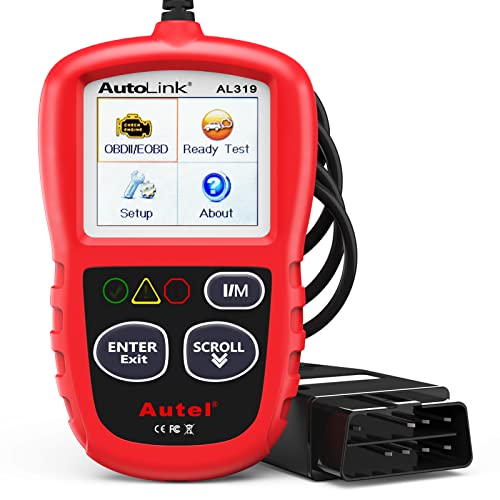
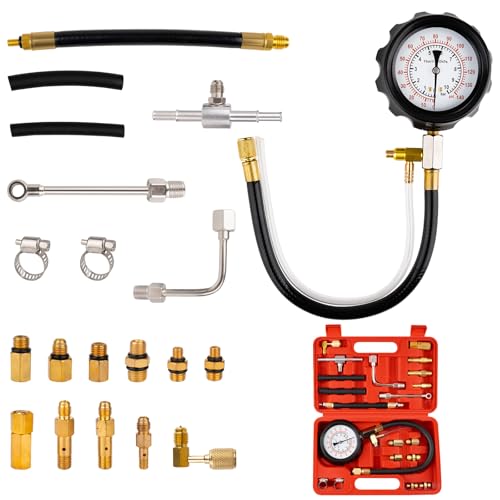

- OBD-II scan tool with live data and freeze-frame access
- Fuel pressure gauge rated for your vehicle’s system
- Noid light that matches the injector connector style
- Digital multimeter
- Basic hand tools for connector access
- Shop light and safety glasses
- Rags and a container for fuel drips
- Service information with fuel pressure and injector resistance specs
How do I check if a fuel injector is bad?
Start with codes and data, then prove pulse, power, and fuel delivery before you call the injector bad. The fastest path is simple: scan for misfire codes, check the injector connector for pulse with a noid light, verify coil resistance and supply voltage with a multimeter, and compare rail pressure to spec with a fuel pressure gauge. The exact injector resistance, pressure specifications, and acceptable pressure drop vary by vehicle, so compare every reading with service information before making a call.
-
Scan the engine first.
Pull codes and freeze-frame data with an OBD-II scan tool. Look for P0300 through P0308, fuel trims, and the engine load and rpm at the moment the code set. A misfire code points to the affected cylinder, but it does not automatically prove the injector is the cause. -
Check injector pulse.
Disconnect the injector and plug in a noid light. Crank the engine; a flashing light shows the control side is commanding the injector. -
Measure the injector electrically.
Use a multimeter to check coil resistance and connector power. Compare the reading with the service spec; an open circuit or a dead-short reading usually points to an electrical failure. Injector resistance can vary by design, so use the factory value for that exact engine instead of a generic number. -
Verify fuel pressure.
Attach a fuel pressure gauge to the rail or test port, then compare the reading with the factory spec. Depressurize the system first; on many gasoline systems that means disabling the pump and bleeding pressure before opening the line. Follow the vehicle procedure, especially on direct-injection systems where rail pressure can be hazardous. -
Inspect the injector body.
Look for wetness around the rail, cracked housings, damaged O-rings or seals, and loose connectors. On port systems, the rail is usually easier to access; on direct injection, access can be tighter and the rail can hold very high pressure.
How can you tell if it is dirty, clogged, or leaking?
Dirty or clogged injectors usually act like fuel starvation in one cylinder: rough idle, hesitation under load, and a plug that looks cleaner than the others. A leaking injector often causes fuel smell, hard starting after a short shutdown, rich fuel trims, or a cylinder that loads up with fuel. Electrical failure usually shows up as no pulse, abnormal resistance, or a dead connector.
Use symptoms to separate the fault
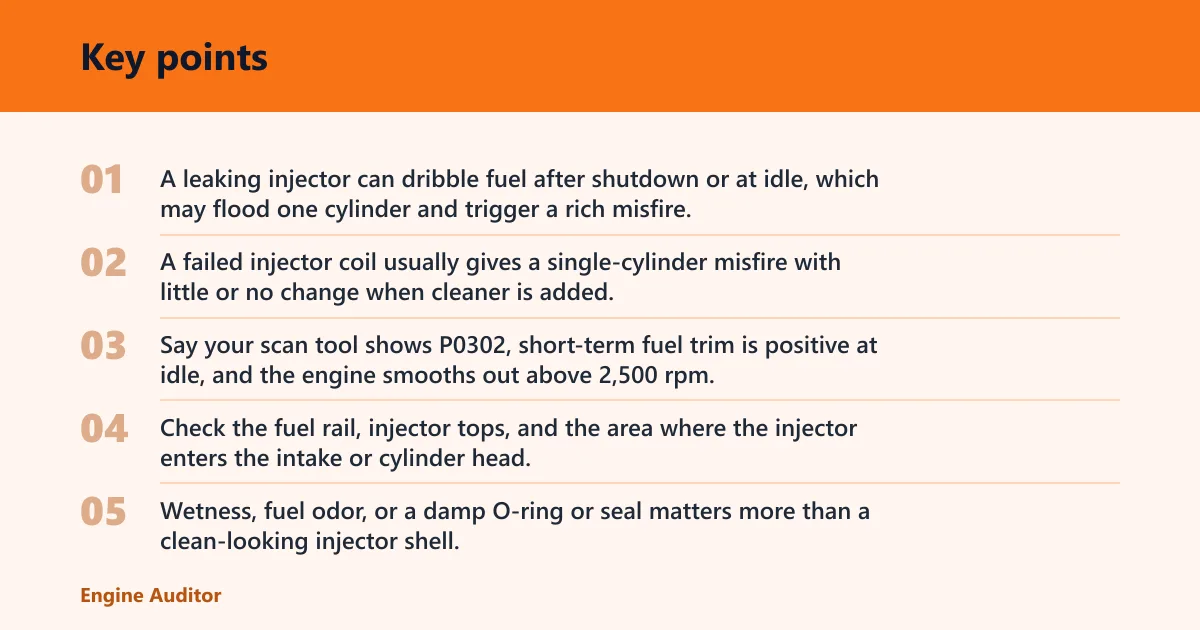
A clogged injector tends to reduce spray pattern quality and fuel atomization, so the cylinder gets less fuel even though the injector clicks and pulses. A leaking injector can dribble fuel after shutdown or at idle, which may flood one cylinder and trigger a rich misfire. A failed injector coil usually gives a single-cylinder misfire with little or no change when cleaner is added.
Say your scan tool shows P0302, short-term fuel trim is positive at idle, and the engine smooths out above 2,500 rpm. That pattern fits a restricted injector more than a bad ignition coil, because the cylinder is lean at low load and catches up when demand changes.
Look for leak clues at the rail and seals
Check the fuel rail, injector tops, and the area where the injector enters the intake or cylinder head. Wetness, fuel odor, or a damp O-ring or seal matters more than a clean-looking injector shell. On direct injection, leak points can be harder to see because the rail and injector sit tighter in the engine bay.
Decide when cleaner may help
Fuel system cleaner can help when the injector is dirty or lightly clogged and still electrically sound. It will not repair an open circuit, a bad connector, a torn seal, or a leaking injector. If the noid light is dead or the multimeter shows bad resistance, skip cleaner and keep testing.
Injector fault decision table
This table separates common symptoms from the most likely injector fault and the quickest check to confirm it.
| Symptom | Likely injector fault | Quickest check | Replace vs clean vs keep diagnosing |
|---|---|---|---|
| Single-cylinder misfire, P0301-P0308 | Clogged or electrically failed gasoline port injector | Noid light at the connector, then multimeter resistance check | Replace if no pulse or bad resistance; clean if pulse and resistance are normal but flow looks weak; keep diagnosing if plug or coil follows the misfire |
| Rough idle that improves at higher rpm | Dirty or partially clogged gasoline direct injector | Scan fuel trims and check rail pressure against spec | Clean if the injector pulses and pressure is normal; replace if the injector is electrically dead or leakage is confirmed |
| Fuel smell, hard hot start, rich trim | Leaking injector or failed O-ring/seal | Look for wet rail, soaked plug, or pressure drop after shutdown | Replace the injector or its seal set; cleaning will not stop a leak |
| Hard start, smoke, clatter on a diesel | Worn, stuck, or leaking diesel injector | Check return leak flow and scan for cylinder contribution data | Replace or test professionally if return flow is out of range; cleaner rarely fixes wear-related diesel issues |
| Hesitation under load, no misfire code | Clogged injector or low fuel pressure | Compare rail pressure to spec under load | Clean only if pressure is correct and pulse is present; keep diagnosing pump, filter, regulator, or vacuum leaks if pressure is low |
Can you tell if a fuel injector is bad by looking at it?
You can confirm leaks, broken connectors, cracked bodies, and damaged seals by looking at the injector and rail. You cannot confirm spray pattern, coil health, or internal clogging by eye alone. On direct-injection engines, visual checks are also limited by access and by the high-pressure rail layout.
What visual inspection can confirm
Look for wet fuel at the injector base, a damaged O-ring, a loose electrical connector, corrosion at the terminals, and cracked plastic or metal around the injector body. A burned connector or a bent terminal can explain an intermittent miss even when the injector itself is fine.
What visual inspection cannot confirm
A clean-looking injector can still have poor atomization, a weak coil, or a sticky pintle. A clogged injector may pass a visual check and still cause one cylinder to run lean. That is why a noid light, multimeter, and rail pressure check belong before replacement.
Why access can be limited
Gasoline port injection usually gives direct access to the rail and injector tops. Gasoline direct injection and diesel systems often place the injector in tighter spaces, and the rail may retain hazardous pressure. If the service procedure calls for special depressurization steps or removal tools, stop there and follow the manual.
What to do next after the test results
If pulse, resistance, and pressure all check out, keep diagnosing ignition, vacuum, compression, or fuel supply faults. If the injector fails electrical checks or leaks, replacement is the right move. If the injector pulses normally and the fault fits a restricted flow pattern, a cleaner may help before you replace parts.
Replace the injector when failure is confirmed
- Confirm the fault. Match the symptom to a bad noid-light result, failed resistance reading, or visible leak at the injector or seal.
- Remove pressure safely. Use the vehicle’s disable-and-bleed procedure before opening the rail or line.
- Replace seals with the injector. Install new O-rings or seal components so the repair does not repeat.
Clean the injector only when clogging is likely
- Verify pulse first. A flashing noid light tells you the injector is being commanded.
- Use cleaner as directed. Add the measured amount specified on the product label, then recheck trims and drivability after the next drive cycle.
- Escalate if symptoms stay. If the misfire remains on the same cylinder, stop assuming dirt is the cause.
Keep diagnosing when evidence points elsewhere
Do not blame the injector first if the spark plug is fouled, the ignition coil swaps the misfire to another cylinder, or fuel pressure is below spec. Vacuum leaks and low compression can mimic a lean injector. On diesel engines, injector noise and smoke also overlap with return-leak and compression problems.
Common mistakes
- Replacing an injector because of one code alone. P0300 to P0308 points to a cylinder, not always the injector.
- Skipping the noid light test. A dead connector or wiring fault can look like an injector failure.
- Ignoring fuel pressure. A weak pump can make every injector look bad.
- Using cleaner on an electrically failed injector. Cleaner cannot fix a broken coil or connector.
- Overreading a visual check. A dry injector can still be clogged or have a weak spray pattern.
- Opening a direct-injection rail without the correct depressurization procedure.
Frequently asked questions
How can I tell if a fuel injector is bad or just dirty?
A dirty injector usually still pulses and measures correctly, but the cylinder stays lean or rough under load. A bad injector more often shows no pulse, bad resistance, or a leak. If cleaner changes nothing and the misfire stays on one cylinder, move to a hard electrical or flow test.
How do I know if my fuel injector is going bad?
Watch for a single-cylinder misfire, rough idle, hesitation, fuel smell, or hard starting that returns after repair work on the spark side. Fuel trims may drift rich or lean, depending on whether the injector is leaking or restricted. A scan tool and connector test will usually narrow it down quickly.
How do I tell if a fuel injector is clogged or bad?
A clogged injector usually has normal pulse and resistance but poor fueling, so the cylinder runs lean or misses under load. A bad injector often fails electrical tests or leaks fuel. Start with the noid light and multimeter; if those pass, a cleaner trial is reasonable before replacement.
How do I determine if a fuel injector is bad?
Use this order: scan, pulse test, resistance test, rail pressure check, then visual inspection. If one cylinder stays weak and the injector fails any electrical check or leaks at the seal, replacement is justified. If every test passes except flow quality, cleaning is the next reasonable step.
How do you know when you have bad fuel injectors?
Bad injectors usually show up as repeat misfires, rough running, hard starts, smoke on diesel engines, or fuel odor from a leak. One cylinder acting up is more telling than a general loss of power. Compare the symptom to scan data and the rail test before buying parts.
Products related to this article
Sponsored / affiliate links. As an Amazon Associate I earn from qualifying purchases. I may earn additional commission from eligible campaigns.