How to Compare Midsize SUVs for Families
Compare midsize SUVs for families by ranking child-seat fit first, then cargo space with the third row or second row in use, then rear-seat access, safety tech, towing, traction, and fuel costs. A family-friendly midsize SUV should generally let you install two car seats without blocking buckles and still leave room for a stroller or weekly groceries with the seats up. This guide gives a family-first comparison framework, key measurements to check, and the models that usually work best for school runs and road trips.
Midsize SUV family comparison table


The quickest way to compare these SUVs is to ask what your family does most often: carry kids, load luggage, or tow. Midsize SUVs are larger than compact SUVs but usually smaller than full-size SUVs, and that middle ground creates a real trade-off between passenger space, parking ease, and efficiency.
| Model | Seating count | Third-row usefulness | Cargo with seats up | Child-seat accessibility | Towing need | AWD need | Fuel economy priority | Best fit by family size |
|---|---|---|---|---|---|---|---|---|
| Kia Telluride | 7 or 8 | Good for kids, tighter for adults | Practical for errands, tighter with the third row raised | Strong for families that use two child seats and need easy second-row access | Useful if you tow occasionally | Worth considering for snow or rough roads | Moderate priority | Family of 4, family of 5+, carpooling |
| Hyundai Palisade | 7 or 8 | Good for children, less ideal for adults on long trips | Good for family errands; plan carefully for luggage with all seats in use | Good when you need easy access for child seats and frequent rear loading | Occasional towing fit | Useful if your routes include winter weather | Moderate priority | Family of 4, family of 5+, carpooling |
| Toyota Grand Highlander | 7 or 8 | Useful when the third row is for children | Strong family-trip option with useful space when seats stay up | Good choice when you need family loading and trip flexibility | Can fit towing as part of the plan | Helpful for mixed weather or rough pavement | Higher priority, especially with hybrid interest | Family of 4, family of 5+, carpooling |
| Honda Pilot | 7 or 8 | Better when the third row is for kids or short rides | Good day-to-day utility with seats in use | Good for active households that need frequent loading and unloading | Useful if towing matters on weekends | Worth it if you face snow or gravel roads | Moderate priority | Family of 4, family of 5+, carpooling |
| Mazda CX-90 | 6, 7, or 8 | Best when you value access and fewer riders over maximum seat count | Varies by configuration; check the exact layout | Good if you want easier movement to the third row than bulk seating | Fit if towing is part of ownership | Useful for traction-focused buyers | Higher priority if you want an efficiency-focused setup | Couple, family of 4, smaller family that values flexibility |
| Jeep Grand Cherokee L | 6 or 7 | Useful, but better for children than adults on long drives | Can work for family trips, though space tightens with all seats in use | Helpful if you want three rows with a more rugged setup | Strong if towing is a real requirement | Worth considering for rough roads and weather traction | Lower priority than comfort or capability for many buyers | Family of 4, family of 5+, carpooling |
What makes a midsize SUV family-friendly?
A family-friendly midsize SUV is one that stays useful when the seats are occupied. That means easy child-seat installation, a second row that lets you reach the third row without a struggle, and cargo space that still works when you leave the seats up. Safety features matter too, but they should back up daily loading and driving, not replace it.
Seating count and access to the rear rows
Some midsize SUVs offer three rows for six, seven, or eight passengers. That sounds ideal on paper, but third-row usefulness changes a lot by model, trim, and seating layout. A third row that fits children on short trips can still be a poor choice if adults need to ride there often.
Child-seat placement and loading ease
Child-seat fit is the first filter because it can decide whether a vehicle works at all. Check whether you can install two car seats without blocking buckles, whether the second row slides far enough for easy loading, and whether the door opening gives you enough room to buckle a child without twisting.
-
Check the second row first. Place the car seats or boosters where they will live most of the time. If the latch points, buckle access, or seat-belt path are awkward, the SUV will be frustrating every day, not only on road trips.
-
Test the third-row route. Fold or slide the second row the way your family would use it. If an adult has to climb around a child seat every time, the third row will be underused.
-
Confirm buckle access. Make sure each buckle can be reached without pressing a child seat against the console or door trim. That small issue often decides whether a three-row SUV is practical or annoying.
Cabin storage, vents, ports, and visibility
Rear air vents, USB ports, cupholders, and clear sightlines matter because they cut complaints on busy days. A quiet cabin and easy entry and exit make school runs less tiring. These are not luxury extras when you have multiple riders in the back.
How many seats do you actually need?
Most two-row midsize SUVs seat up to five passengers, while some three-row midsize SUVs seat six, seven, or eight. The right answer depends less on total seat count than on how often those seats will be occupied and whether the third row needs to hold adults or only children.
Two-row midsize SUVs for couples and small families
A two-row midsize SUV makes sense when you usually carry one or two children, want easier parking, and prefer simpler cargo loading. It is often the better choice for city use because you give up a row you may never use. That trade can buy you a cleaner cargo area and less bulk in traffic.
Three-row midsize SUVs for larger families and carpools
Choose a three-row model when you need a true extra seat most days, not only once a month. It helps if you regularly carry three children, pick up friends, or need an occasional adult seat in the third row. If the third row stays folded most of the time, you may be carrying extra size for no gain.
Say your family has two car seats and one booster. A three-row SUV can work well if the booster rider moves to the back only on weekends, but the setup may become awkward if every row needs to stay occupied during the week.
When a third row helps and when it becomes dead weight
A third row helps when it gives you real seating flexibility without ruining cargo access. It becomes dead weight when adults cannot use it comfortably, the entry path is awkward, or the cargo area shrinks so much that you end up folding it down every trip. In that case, a two-row midsize SUV may be the better fit.
Cargo space that matters on family trips
Family cargo planning should focus on how the vehicle works with seats up, not the maximum number on a brochure. Midsize SUVs generally offer more cargo space than compact SUVs, but the useful question is whether that space still works when you leave the second row or third row in place.
Behind-second-row cargo room
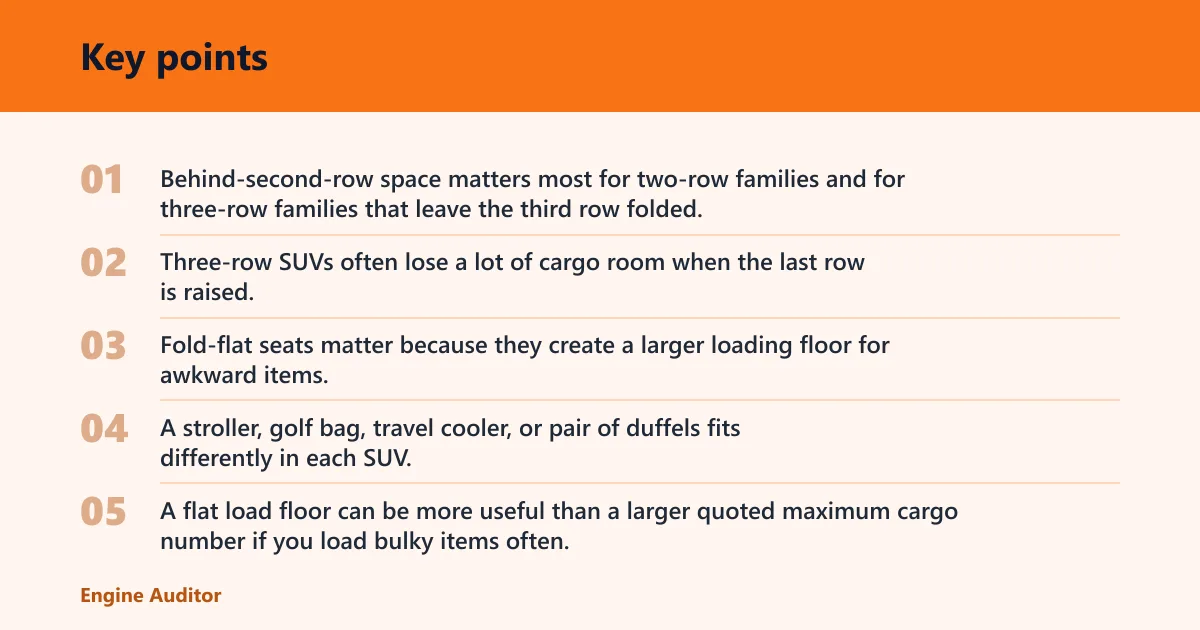
Behind-second-row space matters most for two-row families and for three-row families that leave the third row folded. This is where a stroller, groceries, backpacks, or a week’s worth of luggage needs to fit without blocking the rearview mirror or spilling into the cabin.
Third-row-up cargo limits
Three-row SUVs often lose a lot of cargo room when the last row is raised. That is the failure case many buyers miss. If your normal trip includes all seats occupied, check how much room remains for a diaper bag, cooler, or sports gear with the third row in use.
Fold-flat seat usefulness for strollers, sports gear, and luggage
Fold-flat seats matter because they create a larger loading floor for awkward items. A stroller, golf bag, travel cooler, or pair of duffels fits differently in each SUV. A flat load floor can be more useful than a larger quoted maximum cargo number if you load bulky items often.
Picture a school-day run with a stroller, two backpacks, and grocery bags. A vehicle that can keep the third row folded and still leave easy access to the cargo area will feel far more useful than one with a bigger headline cargo figure that only works after a full seat fold.
Towing, AWD, and road-trip use
Towing capability belongs in the decision only if you will use it. Midsize SUVs can offer more towing capability than many compact SUVs, but manufacturer limits, engine choice, drivetrain, payload, and tow package requirements all affect the real result. The same is true for traction: AWD helps in snow or rough roads, but it is not a substitute for the right tires.
When towing capacity belongs in the decision
Start with your trailer, boat, or camper weight, then check the manufacturer’s towing limit for the exact trim and engine. Payload matters too, because passengers and cargo reduce what remains for tongue weight. A tow package can change the answer, so you need the exact listing for the model you want.
Why AWD matters for snow or rough roads
Some midsize SUVs feature all-wheel drive, terrain modes, and extra ground clearance. That combination can help on snow, gravel, or rough driveways, especially when paired with the right tires. If your area stays dry and paved, AWD may be optional rather than essential.
How towing and traction trade off against efficiency and ride comfort
Heavier drivetrains, towing hardware, and AWD can affect fuel use and sometimes ride feel. Hybrid versions can help reduce fuel consumption, which matters for long commutes and frequent school runs. If you rarely tow or leave pavement, you may prefer the quieter, more efficient setup over extra capability you will not use.
Which family midsize SUVs fit this matrix
These six models are worth comparing because they cover the main family-use patterns in the segment: strong three-row utility, better-than-average road-trip flexibility, and options for buyers who value towing or traction. This class is crowded, so the examples below focus on the family-use cases that matter most.
Kia Telluride and Hyundai Palisade
The Kia Telluride and Hyundai Palisade are natural family benchmarks because they offer three-row layouts and strong everyday usefulness. For families that want flexible seating without moving to a full-size SUV, these two are worth a close look.
Toyota Grand Highlander and Honda Pilot
The Toyota Grand Highlander is a strong pick when fuel economy and three-row usefulness both matter, but mileage varies by trim and powertrain, so compare the exact version you want before you buy. The Honda Pilot remains a familiar family choice when you want three-row space, cargo flexibility, and a practical cabin for daily use.
Mazda CX-90 and Jeep Grand Cherokee L
The Mazda CX-90 fits buyers who want a three-row midsize SUV with a different layout and driving feel, while the Jeep Grand Cherokee L makes sense for families that want available towing and rough-road capability.
Choose a two-row midsize SUV if… / Choose a three-row midsize SUV if…
Pick a two-row midsize SUV if your family usually fits in five seats, you want easier parking, and cargo space matters more than rare extra seating. Pick a three-row midsize SUV if you regularly carry more than five people, need child-seat flexibility in more than one row, or want a model that handles carpool duty without leaving a child behind.
Choose a two-row midsize SUV if…
Choose two rows if you live with one or two children, load the cargo area often, and do not want a third row taking space you rarely use. This is also the better path if you want simpler access, fewer seat-folding steps, and a cleaner cabin for daily errands.
Choose a three-row midsize SUV if…
Choose three rows if you have three children, expect frequent passengers, or want one vehicle that can handle school runs and weekend visitors. The third row should be treated as real seating, though, not a backup plan that only works when the cargo area is empty.
When to move up to a full-size SUV
Move up to a full-size SUV if you need adults in the third row often, need large cargo space with all seats occupied, or tow enough that a midsize SUV forces too many compromises. If the midsize choice only works after you fold seats or limit passengers, it may be too small for your life.
How do I compare safety, comfort, and running costs in midsize SUVs?
Start with crash-test ratings and standard safety tech, then compare how each SUV supports daily family use. Automatic emergency braking, blind-spot monitoring, and lane-keeping assist are commonly highlighted because they can help reduce stress in traffic. After that, check fuel costs, maintenance expectations, warranty coverage, and resale value for the exact trim you want.
-
Verify the safety list. Look for automatic emergency braking, blind-spot monitoring, and lane-keeping assist on the trim you would buy. Do not assume a lower trim includes the same equipment as the headline version.
-
Match comfort to family use. Check rear air vents, USB ports, cupholders, and seat access. These details matter more on long trips than flashy tech that only the driver sees.
-
Estimate running costs. Compare fuel economy, maintenance schedules, warranty coverage, and likely resale value. A higher purchase price can still make sense if the SUV is more efficient and cheaper to own over time.
Frequently asked questions
What makes a midsize SUV better for families?
A midsize SUV gives you more passenger room and cargo room than a compact SUV without moving all the way to a full-size vehicle. That middle position helps families that need child-seat space, road-trip cargo flexibility, and easier parking than a larger SUV usually requires.
How many seats does a midsize SUV usually have?
Many midsize SUVs seat five in two-row form. Some three-row midsize SUVs seat six, seven, or eight passengers. The real question is whether the third row works for your family’s ages, loading patterns, and daily use, not just whether the total number sounds high.
Should I get a two-row or three-row midsize SUV for my family?
Choose two rows if you usually carry up to five people and want more cargo space and simpler loading. Choose three rows if you need extra seats often, especially for children. If the third row stays folded most of the time, the two-row version may be the better fit.
How much cargo space do family midsize SUVs usually have?
Midsize SUVs generally offer more cargo space than compact SUVs, but the useful amount depends on whether the second row or third row is in use. Always compare the space behind the seats you will actually keep raised, because that is what determines stroller, luggage, and grocery fit.
Which midsize SUVs are best for families with kids and luggage?
The Kia Telluride, Hyundai Palisade, Toyota Grand Highlander, and Honda Pilot are strong starting points for families that need three-row flexibility. The Mazda CX-90 and Jeep Grand Cherokee L fit buyers who want different trade-offs in layout, towing, or traction. The best one depends on your seating and cargo pattern.
Do I need a full-size SUV instead of a midsize SUV?
You probably need a full-size SUV only if you carry adults in the third row often, need large cargo capacity with every seat in use, or require more towing and payload than a midsize SUV can comfortably handle. For many families, a midsize model still covers daily use and road trips well.
Products related to this article
Sponsored / affiliate links. As an Amazon Associate I earn from qualifying purchases. I may earn additional commission from eligible campaigns.