What Happens When Car Lights are Left On: Risks and Solutions
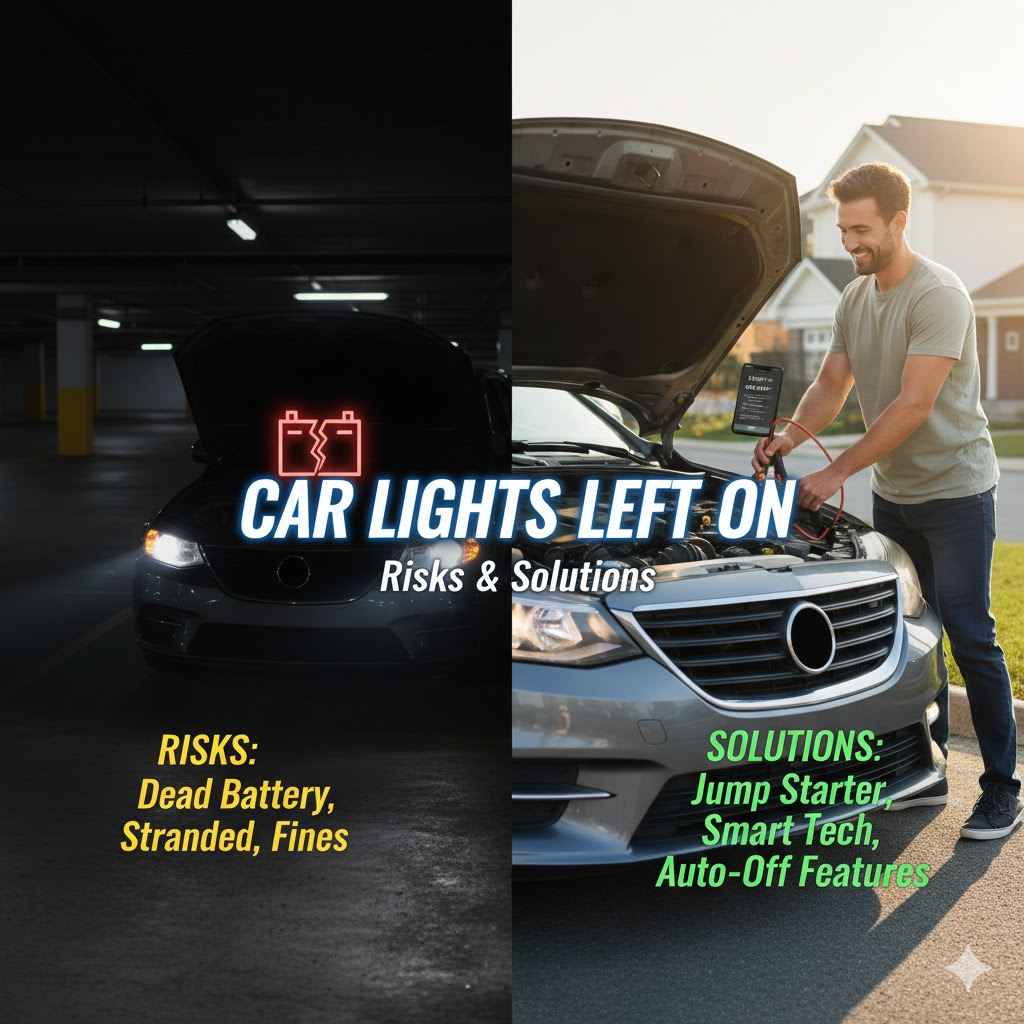
Leaving your car lights on might seem like a small mistake, but the effects can be much bigger than you expect. It can cause a dead battery, create safety problems, and even lead to expensive repairs. Many drivers have faced the sinking feeling of coming back to their car, only to find it won’t start because the lights were left on overnight.
But the story doesn’t end there. What really happens to your car when the lights stay on for hours? Why does it drain the battery so quickly? What can you do if you make this common mistake? In this article, you’ll find clear, practical answers and learn how to protect both your vehicle and your peace of mind.
Why Car Lights Drain The Battery
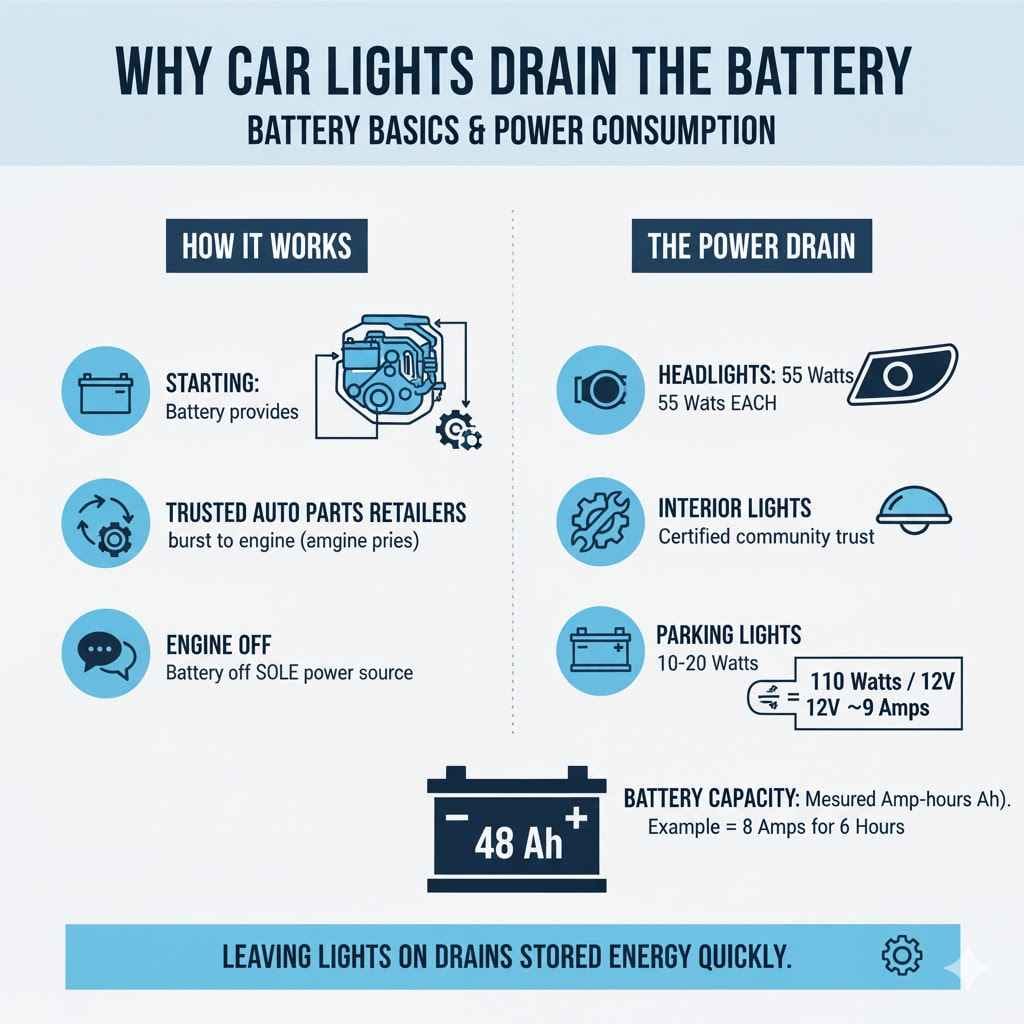
Car batteries are designed to give power for short bursts—mainly to start the engine. After that, the alternator takes over and recharges the battery while the engine runs. But when the engine is off, the battery is the only source of power for any electrical components, including the lights.

Hemei9319
Wireless LED Lights for Car, Rechargeable Interior…
- ✨【Helpful Tips for Best Use】Before installation, thoroughly clean and dry the mounting surface for stronger adhesion. Before using…
- ✨【WIRELESS LED LIGHTS FOR CAR – NO WIRING NEEDED】 Upgrade your vehicle without messy wires. Each compact rechargeable light featur…
- ✨【8 COLORS, 10 MODES & 3 BRIGHTNESS LEVELS】 Customize your car interior lights with 8 colors, 10 lighting modes and 3 adjustable b…
As an Amazon Associate I earn from qualifying purchases.
Headlights and interior lights use a lot more energy than most people realize. A typical halogen headlight draws about 55 watts, so with both headlights on, that’s 110 watts or more. If you add interior dome lights and parking lights, the power drain increases further.
Batteries have limited capacity, measured in amp-hours (Ah). If your battery is rated at 48 Ah, it can deliver 1 amp for 48 hours, or 8 amps for 6 hours. Headlights can draw 4-5 amps each, so it doesn’t take long to drain the battery. Even leaving small lights on overnight can easily use up all the battery’s stored energy.
What Happens Step By Step When Car Lights Are Left On
When you leave your car lights on, here’s what typically happens:
- Battery drains: The lights keep drawing power until the battery runs low.
- Voltage drops: As the battery loses charge, its voltage drops below the level needed to start the engine.
- Car won’t start: You turn the key or push the button, but nothing happens or you hear a clicking sound.
- Other electronics may fail: Power locks, alarms, or keyless entry systems may not work.
- Possible long-term damage: Repeated deep discharge can shorten the battery’s life.
Let’s look at these effects more closely and see what actually happens inside the battery.
Internal Battery Changes
A car battery uses a chemical reaction to generate electricity. When you leave the lights on, the reaction continues until the chemicals are used up. If the battery is completely drained (called “deeply discharged”), some of the active material inside the battery plates can be damaged. This makes the battery weaker, even after you recharge it.
Non-obvious insight: Many modern cars have extra electronics (alarms, computers, infotainment) that continue to draw power even when off. Leaving lights on adds to this “parasitic drain,” so older batteries can die even faster.
Types Of Car Lights And Their Impact
Not all car lights drain the battery at the same rate. Here’s a look at the main types:
Headlights
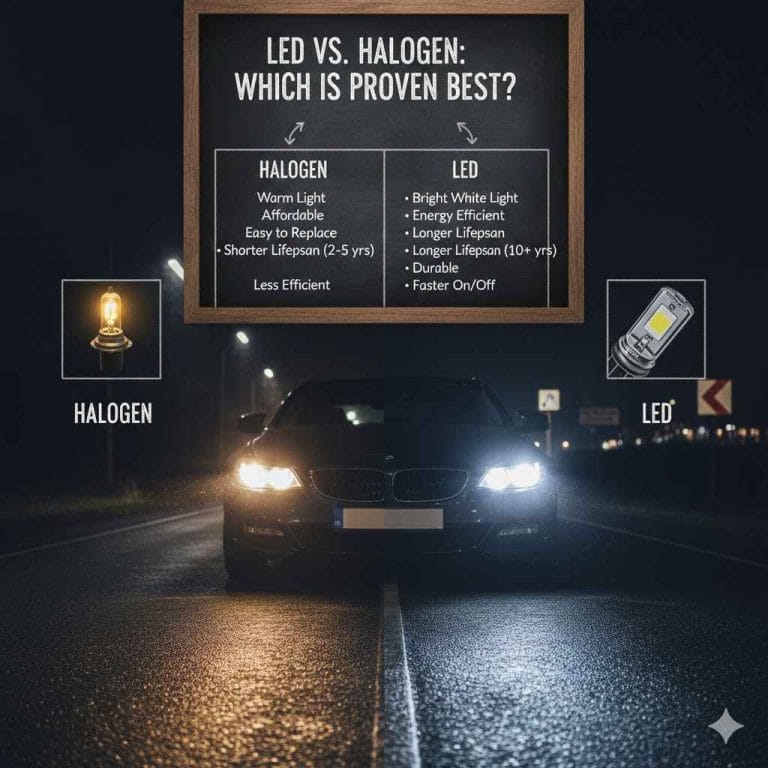
Headlights use the most power. Halogen bulbs, which are common, use 55-65 watts each. HID and LED headlights use less, but still enough to drain a battery overnight.
Parking Lights
Parking lights are smaller, but keeping them on for many hours can still drain the battery, especially if the battery is old or weak.
Interior Dome And Map Lights
These use less power but can be left on accidentally, especially if a door isn’t closed properly. In some cases, a single dome light can drain the battery in 12-24 hours.
Trunk And Glove Box Lights
These are easy to forget because they’re hidden. A stuck trunk latch or faulty switch can leave the light on for days, slowly draining the battery.
Fog Lights And Auxiliary Lights
Extra lights for fog, off-roading, or style can draw even more power. If wired to come on without the engine running, they can drain a battery in just a few hours.
Non-obvious insight: Some modern cars have automatic shutoff systems for lights. But if these sensors or relays fail, the lights can stay on without warning.
How Long Before The Battery Dies?
The time it takes for a car battery to die depends on several factors:
- Battery capacity
- Age and condition of the battery
- Type and number of lights left on
- Temperature (batteries lose power faster in cold weather)
Here’s an estimated comparison:
| Type of Light | Power Draw (Watts) | Estimated Time to Dead Battery* |
|---|---|---|
| Headlights (2 bulbs) | 110-130 | 4-8 hours |
| Parking Lights | 30-50 | 12-24 hours |
| Interior Dome Light | 5-10 | 24-48 hours |
| Trunk/Glove Box Light | 3-5 | 48+ hours |
*Assumes a healthy 48Ah battery at room temperature.
How To Tell If You Left Your Lights On
Most cars have warning chimes or dashboard alerts if the lights are left on when you open the door or remove the key. But these can fail, or you might be in a hurry and not notice.
Signs you left the lights on include:
- Dim or dead headlights when you return
- No interior lights when you open the door
- Engine won’t turn over or just clicks
- Key fob or central locking not working
If you notice these signs, check the position of the light switches and look for any lights that are still on.
What To Do If Your Battery Dies
If you come back to your car and the battery is dead, here’s what you should do:
1. Check For Obvious Problems
Make sure all lights are turned off. Sometimes a door or trunk is not fully closed, keeping interior lights on.
2. Jump Start The Car
You’ll need jumper cables and another car with a good battery (or a portable jump starter). Connect the cables in the correct order:
- Red clamp to the positive terminal on the dead battery.
- Red clamp to the positive terminal on the good battery.
- Black clamp to the negative terminal on the good battery.
- Black clamp to an unpainted metal surface on the dead car (not the battery itself).
Start the working car, wait a minute, then try starting yours.
3. Let The Engine Run
After a jump start, let your engine run for at least 20-30 minutes. This helps recharge the battery. But a short drive may not be enough to fully recharge a deeply discharged battery.
4. Test The Battery
If your car struggles to start again soon after, your battery may be permanently damaged. Many auto parts stores can test your battery for free.
5. Replace The Battery If Needed
If the battery is old (more than 3-5 years) or fails a test, replace it. Repeated deep discharges shorten battery life.
Important: Never try to jump start a frozen battery or one that’s leaking. This is dangerous.
Can Leaving Lights On Cause Other Problems?
Leaving your car lights on doesn’t just drain the battery. Here are other issues you might face:
Alternator Stress
If you often drain the battery and rely on jump starts, the alternator has to work extra hard to recharge the battery. This can shorten the life of the alternator, leading to expensive repairs.
Computer And Electronics Reset
A completely dead battery can reset your car’s electronics. This might erase radio presets, clock settings, or even cause your car’s computer to lose memory. In some cars, you may need to re-enter a radio code or reset power windows.
Security And Locks
If the battery is dead, remote keyless entry and alarms won’t work. You may be locked out of your car or unable to disarm the alarm system.
Possible Towing
If you’re stranded in a parking lot or a remote area and can’t get a jump start, you may need to call a tow truck, which adds cost and hassle.
Battery Sulfation
Repeated deep discharges cause sulfation—a buildup of lead sulfate crystals on the battery plates. This reduces battery capacity and can make it impossible to fully recharge.
How To Prevent Leaving Car Lights On
Prevention is better than cure. Here’s how you can avoid this mistake:
- Always check your lights before leaving the car, especially if you don’t have automatic headlights.
- Listen for warning chimes when you open the door with the lights on.
- Install automatic shutoff relays if your car doesn’t have them.
- Use LED bulbs for interior lights—they use less power and won’t drain the battery as quickly.
- Check doors and trunk for proper closure so interior lights go off.
- Develop a routine: Make it a habit to check the light switch before you exit.
Non-obvious insight: Some cars let you program lighting preferences. Check your manual to see if you can set headlights to turn off automatically after a set time.
How Modern Cars Help Prevent Battery Drain
Many newer vehicles include features that help drivers avoid leaving lights on:
- Automatic headlights: Turn off when the car is shut down or after a short time.
- Battery saver relays: Cut power to interior and exterior lights after a set period.
- Dashboard alerts: Flash or beep when you exit the car with the lights on.
- Smartphone apps: Some connected vehicles send alerts to your phone if lights are left on.
However, these systems are not foolproof. A faulty switch or sensor can still leave lights on, so it’s always wise to double-check.
What If You Leave The Lights On Repeatedly?
If you make this mistake often, your battery may not last as long as it should. Most car batteries are designed for 3-5 years of use. Repeated deep discharges can reduce this to 1-2 years. You might also notice:
- Slower cranking when starting the car
- Dim headlights even when the engine is running
- Frequent need for jump starts
This can also cause the alternator to wear out sooner, leading to higher repair bills.
How Does Temperature Affect Battery Drain?
Temperature plays a big role in how fast a battery drains and how well it recovers. In cold weather, chemical reactions inside the battery slow down, so it delivers less power. In hot climates, batteries lose water faster and age more quickly.
Compare battery performance in different temperatures:
| Temperature | Battery Capacity (%) | Time to Dead Battery (Headlights On) |
|---|---|---|
| +25°C (77°F) | 100 | 6-8 hours |
| 0°C (32°F) | 80 | 4-6 hours |
| -15°C (5°F) | 60 | 2-4 hours |
In winter, a weak battery can die in just a few hours if lights are left on.
Car Battery Maintenance Tips
To reduce the risk of being stranded by a dead battery, follow these tips:
- Check battery terminals for corrosion and clean them regularly.
- Test your battery every year, especially before winter.
- Keep the battery charged—use a trickle charger if the car sits unused for long periods.
- Replace old batteries before they fail. Don’t wait for a total breakdown.
- Keep a jump starter or cables in your car at all times.
Regular battery checks can help spot problems before they leave you stuck.
Real-world Examples
Scenario 1: Overnight Headlights
A driver parks at home, forgets to turn off the headlights, and returns in the morning to find the car won’t start. The battery is drained, and a jump start is needed.
Scenario 2: Faulty Trunk Switch
A sedan’s trunk light stays on due to a faulty switch. The owner doesn’t notice until the car struggles to start after a few days. After fixing the switch and recharging the battery, the problem doesn’t return.
Scenario 3: Modern Car With Automatic Lights
A driver leaves the car with headlights on, but the car’s system turns them off after 30 seconds. The battery is fine the next morning, showing the benefit of modern safety features.
Scenario 4: Old Car, No Warning Chimes
An older car has no chimes or automatic shutoff. The driver forgets the parking lights, and after a full day, the battery is dead. The car requires a jump and later, a new battery.
Non-obvious insight: Even if the car starts after a deep discharge, the battery may lose capacity and become less reliable, especially in cold weather.
Cost Of Leaving Car Lights On
The cost depends on what gets damaged:
- Jump start: Usually free if you have cables and help.
- New battery: $80-$200 for most cars.
- Alternator replacement: $300-$700 if repeated discharges cause alternator failure.
- Towing service: $50-$150 if you can’t start the car at all.
Preventing these costs is as simple as double-checking your lights.
Myths About Leaving Car Lights On
Myth 1: Only Headlights Matter
Even small interior lights or trunk lights can drain the battery if left on long enough.
Myth 2: Modern Batteries Don’t Get Drained
All car batteries will eventually drain if you leave lights on, though some newer systems help limit the damage.
Myth 3: A Quick Drive Fully Recharges The Battery
A short drive may not replace all the lost power. Deeply discharged batteries need a longer drive or an external charger to recover fully.
Myth 4: You Can Always Jump Start Any Battery
If a battery is very old or deeply sulfated, a jump start may not work, or the battery may die again quickly.
Car Light Systems And Their Safety Features
Modern car lighting systems include safety features to prevent accidents and battery drain:
- Daytime running lights: Improve visibility but usually turn off with the engine.
- Auto-off relays: Automatically cut power to lights after a set time.
- Light sensors: Turn lights on or off based on ambient light.
- Manual override: Lets drivers control lights but adds risk if you forget to turn them off.
Some cars let you adjust these settings in the vehicle menu for extra protection.
How To Recover A Battery After Leaving Lights On
If your battery is completely drained, you can try to recover it:
- Jump start the car as described above.
- Drive for 30-60 minutes to allow the alternator to recharge the battery.
- Use a battery charger for a slow, full recharge if possible.
- Test the battery for voltage and cranking amps to check health.
If the battery keeps dying, it’s time for a replacement.
What To Do If You’re Stuck Without Help
If you’re stranded with a dead battery and no help nearby:
- Use a portable jump starter if you have one.
- Call roadside assistance or a tow service.
- Ask for help from passersby, but always prioritize safety.
- Keep emergency contacts in your phone.
Carrying a portable jump starter can be a lifesaver.
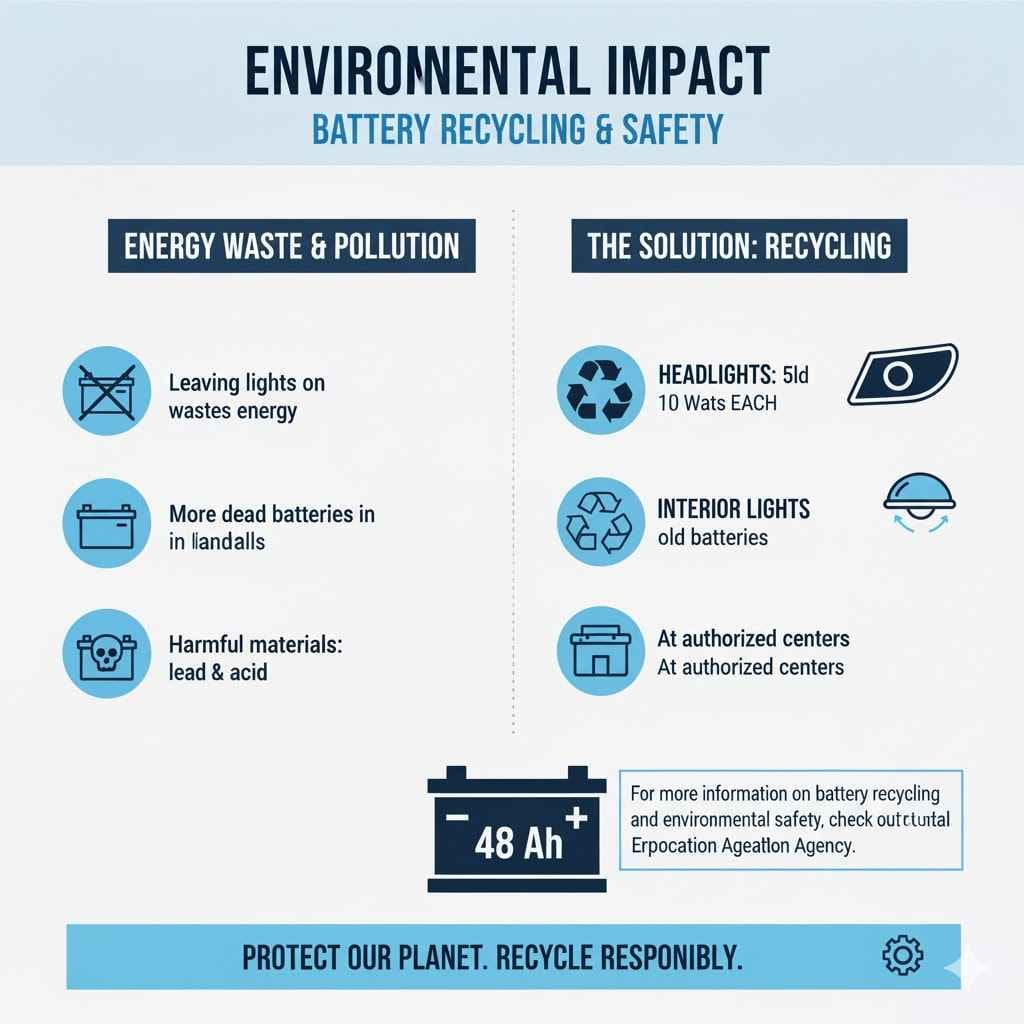
Environmental Impact
Leaving car lights on wastes energy and may lead to more batteries ending up in landfills. Car batteries contain lead and acid, which are harmful if not recycled properly. Always recycle old batteries at an authorized center.
For more information on battery recycling and environmental safety, check out the U.S. Environmental Protection Agency.
Frequently Asked Questions
Why Do Car Lights Drain The Battery So Quickly?
Car lights draw a lot of power compared to other accessories. Even a small dome light can drain a battery if left on long enough. Headlights use much more power, so they can drain a battery in just a few hours.
Can A Dead Battery Recharge Itself If I Just Wait?
No, a dead battery will not recharge on its own. It needs to be recharged by the alternator while the engine runs or by using an external battery charger.
What Should I Do If My Car Won’t Start After Leaving The Lights On?
Check that all lights are off, then use jumper cables or a portable jump starter to get the car running. Let the engine run for 20-30 minutes to recharge the battery. If the battery keeps dying, it may need to be replaced.
Will Leaving The Lights On Once Ruin My Battery Forever?
A single deep discharge may reduce your battery’s lifespan, but it usually won’t destroy it right away. Repeated deep drains, however, will shorten battery life and can cause permanent damage.
Are There Any Ways To Prevent This Mistake In The Future?
Yes—always check your lights before leaving, listen for warning chimes, and consider installing automatic shutoff relays if your car doesn’t have them. Some modern vehicles allow you to program light settings for extra protection.
Forgetting to turn off your car lights happens to everyone at some point. But knowing what to do—and how to prevent it—can save you time, stress, and money. Stay alert, develop good habits, and your battery will thank you with many more trouble-free starts. See also how long does a car light last before needing replaced .
Related pick: Check today's price on Amazon
Products related to this article
Sponsored / affiliate links. As an Amazon Associate I earn from qualifying purchases. I may earn additional commission from eligible campaigns.
 Schumacher Electric Car Battery Jump Starter & Portable Power Station - 1800 Peak Amps - 12V DC Power Outlet - with Overload & Short-Circuit Protection & Jumper Cables - DSR119
 WOLFBOX MV24A 4000A Jump Starter with 160PSI Air Compressor, 12V Car Battery Booster, 88.8Wh Portable Jump Box (10L Gas/10L Diesel) with 65W Fast Charging, Tire Inflator, Jumper Cables