Ford Coolant Warning Light: Safe Driving or Stop Now?
A yellow coolant warning usually means move carefully to the nearest safe stop and check levels, while a red temperature warning, steam, or loss of power generally means stop now and shut the engine off. Ignore the wrong signal and low coolant can turn into warped heads, a cracked radiator, or a seized engine. This guide explains Ford coolant-light meanings, which dash messages matter, and the exact next step for each warning.
What a Ford coolant warning light means
Color and message text are commonly used to help distinguish a low-fluid warning from an overheating event. A red thermometer icon often points to overheating, while a yellow or orange light can mean low coolant level or a system malfunction. If the warning stays on, the system has a fault that needs attention, even if the engine still feels normal.
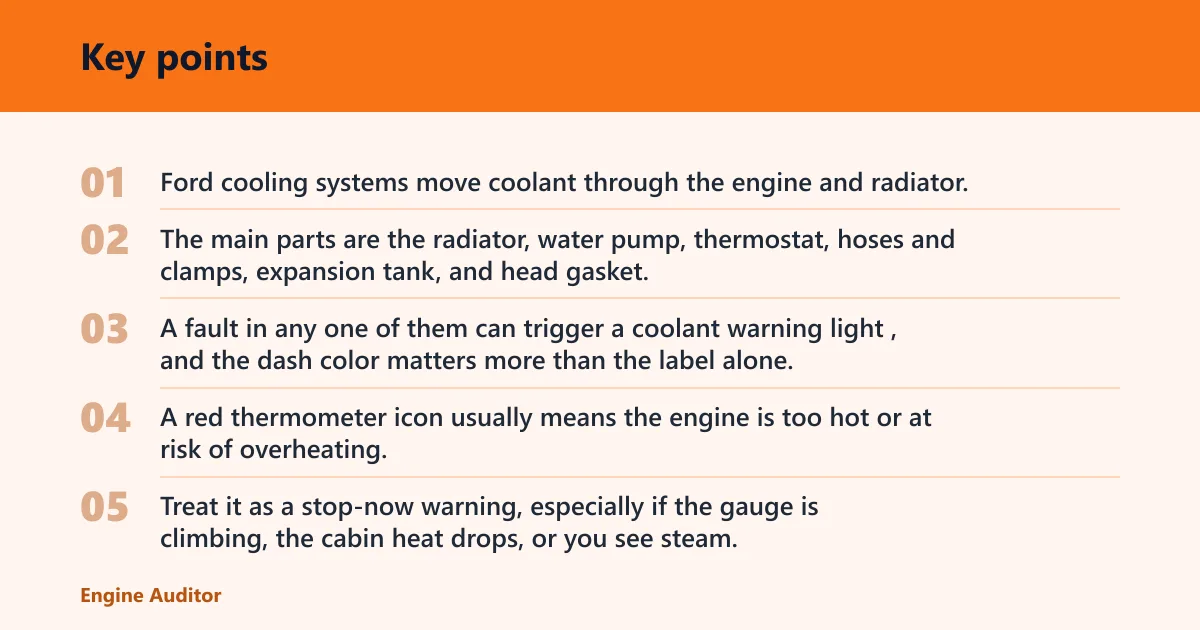
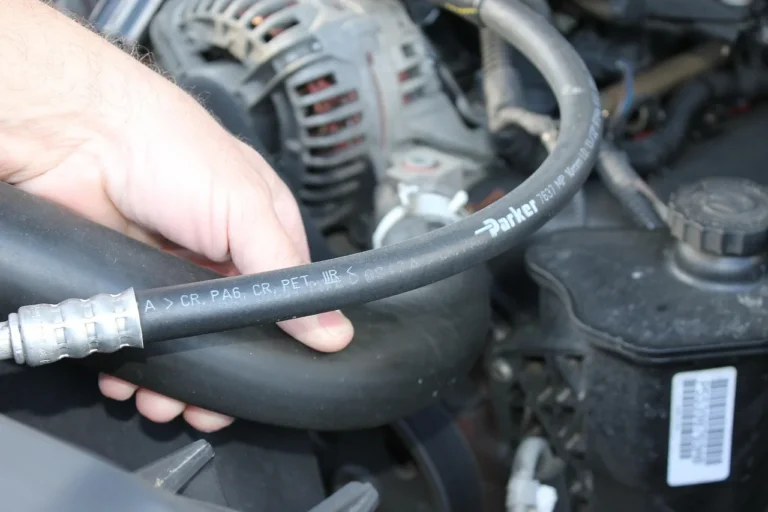
Ford cooling systems move coolant through the engine and radiator. The main parts are the radiator, water pump, thermostat, hoses and clamps, expansion tank, and head gasket. A fault in any one of them can trigger a coolant warning light, and the dash color matters more than the label alone.
Red temperature icon
A red thermometer icon usually means the engine is too hot or at risk of overheating. Treat it as a stop-now warning, especially if the gauge is climbing, the cabin heat drops, or you see steam. If the car is already losing power, shut it down as soon as you can reach a safe shoulder.
Amber or orange coolant message
A yellow or orange coolant warning on a Ford often means low coolant level or a system malfunction. That can be a small external leak, a failing sensor, or an early coolant-loss problem that has not yet pushed the engine into the danger zone. It is not a free pass to keep driving for long.
System fault versus low level
Some Ford models use text messages, while others rely on a symbol or chime. A low-level message points first to the reservoir and possible leaks; a fault message can point to the sensor, wiring, or control logic. If the warning does not clear after the level is corrected, the system needs diagnosis.
Can I keep driving with a Ford coolant warning light on?
Only a short, careful move may be reasonable when the warning is yellow or orange, the engine temperature stays steady, and there is no steam, odor, or power loss. A red temperature warning, a fluctuating gauge, or limp mode usually means stop now. Keep driving and you can turn a simple coolant loss into head damage fast.
A common first-timer mistake is to assume every coolant warning means the same thing. That is how a low reservoir can turn into a much larger repair. A better rule is simple: move only far enough to reach a safe shoulder, nearby parking area, or service bay if the warning is low-level only and the engine is not hot.
- Ease off the throttle. Reduce load immediately and turn off the air conditioning. If the warning is yellow or orange and the gauge is stable, this can lower heat output while you look for a safe place to stop.
- Watch for heat symptoms. Check for steam, a sweet burning odor, a rising gauge, or loss of cabin heat. If any of those appear, do not keep moving except to reach the nearest safe shoulder.
- Stop or shut down. If the light is red, the message says overheating, or the car enters limp mode, pull over and switch the engine off. Do not idle and hope it clears.
Ford coolant warning decision table
| Dashboard sign | Likely severity | Exact action |
|---|---|---|
| Red temperature icon | High risk of overheating | Pull over as soon as it is safe, shut the engine off, and call for a tow if the warning does not clear after cooldown. |
| Amber or orange low-coolant message | Moderate risk, possible low level or sensor fault | Move carefully to a safe stop, let the engine cool, then check the reservoir and for visible leaks before driving again. |
| Message plus steam | Severe overheating or coolant loss | Stop now, shut the engine off, and do not reopen the cap while hot. |
| Message plus limp mode | Serious engine-protection event | Pull over immediately and arrange a tow, especially if the gauge is high or the car will not maintain speed. |
| Message plus overheating odor or fluctuating gauge | Active overheating or failing flow control | Stop driving, shut the engine off, and inspect only after the engine has cooled. |
What causes it in a Ford?
Ford coolant warnings usually come from one of five places: a leak, a thermostat problem, a radiator issue, a sensor fault, or head gasket trouble. The fastest way to narrow it down is to separate external coolant loss from true overheating. That keeps you from guessing at an internal failure before checking the obvious external parts first.
Leaks, radiator, hoses, and expansion tank
Inspect the radiator, hoses and clamps, and expansion tank for wet spots, crusty residue, or dripping coolant. A loose clamp or split hose can drop the level enough to trigger a low-coolant message. A cracked expansion tank or radiator end tank can do the same, often with visible seepage after parking.
Thermostat failure and restricted flow
A thermostat stuck closed can block coolant flow and raise engine temperature quickly. That often brings a red warning, a climbing gauge, or hot spots with little cabin heat. Restricted flow can also come from internal blockage in the radiator or a weak water pump, both of which can cause overheating without an obvious leak.
Coolant sensor faults and false warnings
A coolant level sensor or temperature sensor can fail and send a false warning. On Ford vehicles, that is where OBD-II diagnostics help. A scan tool can read diagnostic trouble codes and show whether the issue sits with the sensor circuit, temperature reading, or a separate cooling-system fault.
Head gasket failure signs
A blown head gasket can let coolant escape or mix with combustion gases. Watch for signs such as white exhaust smoke, bubbles in the reservoir, milky oil, frequent coolant loss, and rough idle. Those signs do not prove a head gasket on their own, but they do raise the risk enough that the car should not be driven far.
Say your Ford shows an amber coolant message after a highway run, but you find a wet lower hose clamp and the reservoir is clearly below the MIN line. That points first to an external leak, not an automatic head-gasket diagnosis. The next move is to stop, let it cool, and confirm the leak before deciding whether a short move is safe.
How to check coolant safely
Check coolant only after the engine has cooled enough that pressure and heat have dropped. Never open a hot cap. A Ford cooling system can stay pressurized long after shutdown, and opening it too soon can send hot coolant out under pressure.
- Park on level ground. Shut the engine off and let it cool completely before opening anything. If the gauge was high or steam was present, wait longer rather than guessing.
- Inspect the reservoir. Look at the expansion tank level against the MIN and MAX marks. Also check around the cap, hoses, radiator, and under the vehicle for wet spots or dried coolant residue.
- Check the cap area. Make sure the cap is seated properly and the neck is not cracked or crusted. A bad seal can let pressure escape and set off warnings without a major leak.
- Read OBD-II codes. If the warning stays on after the level is corrected, use a scan tool to read diagnostic trouble codes. That helps separate a sensor issue from a true overheating condition.
Signs of serious engine damage
Some warning-light events point beyond a low reservoir and into engine damage risk. White exhaust smoke, bubbles in the reservoir, milky oil, rough idle, and a fluctuating gauge are the main signs to treat as serious. If any of them show up with a red temperature warning, do not keep driving.
Picture a Ford that starts to smell hot and sweet at a stoplight, then the gauge drops and climbs again while the coolant message stays on. That pattern can fit low coolant plus trapped air, a failing thermostat, or a pump problem. It is not a situation for a long drive home.
Color still matters on the dash. Green and white warning indicators are not the same as a red overheat warning, while amber or yellow typically asks for prompt attention rather than immediate shutdown. Use the color with the symptoms, not the color alone.
Frequently asked questions
What does a Ford coolant warning light mean?
It usually means the cooling system needs attention, either because coolant is low, the engine is overheating, or a sensor has detected a fault. On many Ford models, a red thermometer icon points to overheating, while a yellow or orange warning often points to low coolant level or a system malfunction.
Is the light low coolant or engine overheating?
A yellow or orange warning leans toward low coolant or a system fault. A red thermometer icon leans toward overheating. If the gauge is rising, the cabin heat drops, or you see steam, treat it as overheating and stop. A scan tool can help confirm the cause after cooldown.
What should I do first if the Ford coolant light comes on?
Ease off the throttle, switch off the air conditioning, and look for a safe place to stop. If the warning is red or the car smells hot, shut the engine off. If it is yellow or orange and the gauge is stable, move only to the nearest safe shoulder or parking area.
When should I pull over and call a tow truck?
Call for a tow if the red temperature icon stays on, the gauge keeps climbing, steam appears, the engine enters limp mode, or the warning returns immediately after cooldown. Car and Driver notes that a blinking check-engine light can mean the car should be towed, and the same caution applies when the cooling system is clearly in distress.
How do I check coolant level safely when the light is on?
Wait until the engine is fully cool, then inspect the expansion tank level, cap, hoses, and the ground under the car. Do not open a hot cap. If the level is low but you find no external leak, or the warning stays on after topping up, use OBD-II codes to narrow the fault.
Products related to this article
Sponsored / affiliate links. As an Amazon Associate I earn from qualifying purchases. I may earn additional commission from eligible campaigns.