Which Ford Car Raced at Le Mans
People often wonder about Ford’s racing history, especially at a famous race like Le Mans. It’s a question many beginners ask: Which Ford car raced at Le Mans? The answer might seem tricky, but it’s really quite simple.
We’ll walk through it step-by-step. Get ready to learn about a legendary racing car.
Ford’s Iconic Le Mans Racer
This section talks about the famous Ford car that made its mark at the 24 Hours of Le Mans. You’ll learn about its history and why it’s so well-known. We will explore the car’s journey and its impact on racing.

Mattel
Matchbox Ford Mustang Convertible Diecast Car, 2018,…
- SCALE: Authentic 1:64 scale die-cast model of the 2018 Ford Mustang Convertible, perfect for collectors and enthusiasts
- DESIGN: Beautifully crafted in striking blue color with detailed exterior features and authentic Ford styling elements
- COLLECTIBLE SERIES: Part of the Matchbox collection, specifically number 5 out of 6 in this series
As an Amazon Associate I earn from qualifying purchases.
This is where we answer the main question directly.
The Car That Changed Racing
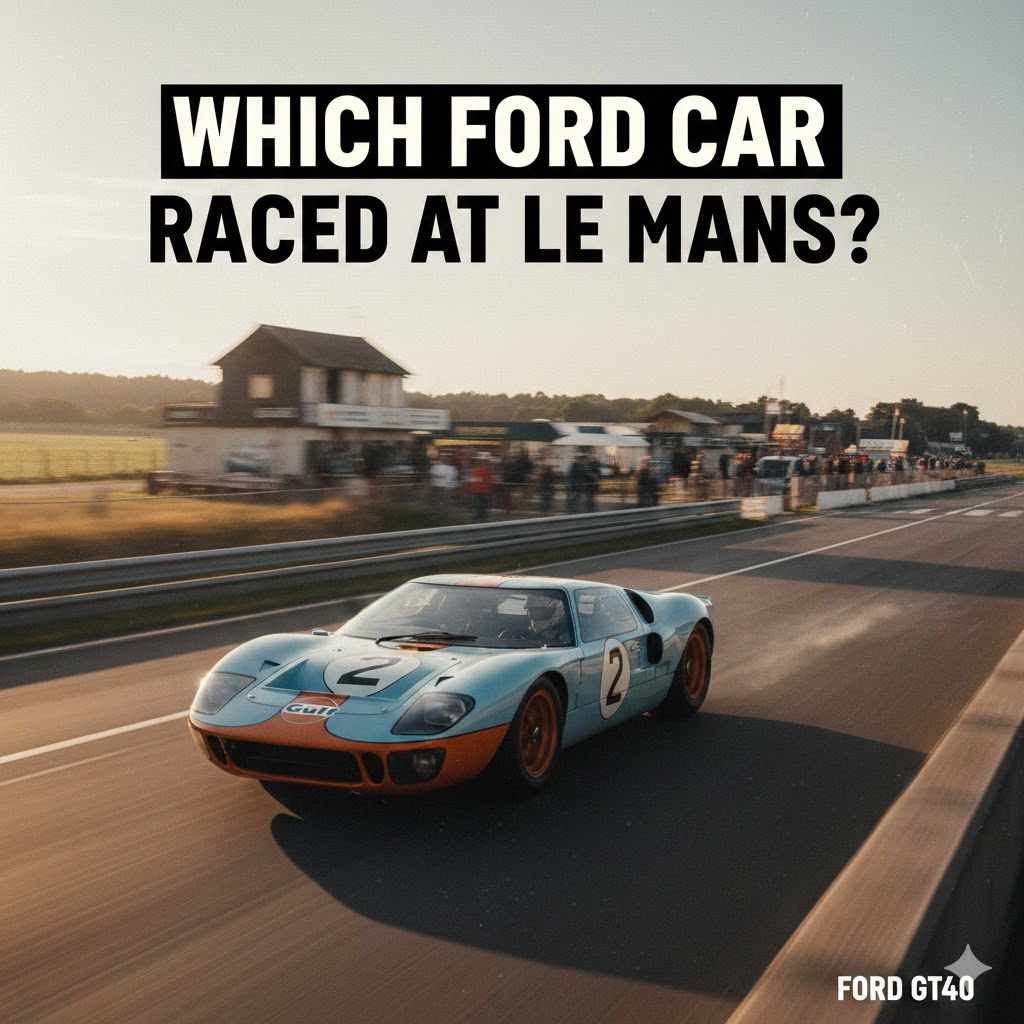
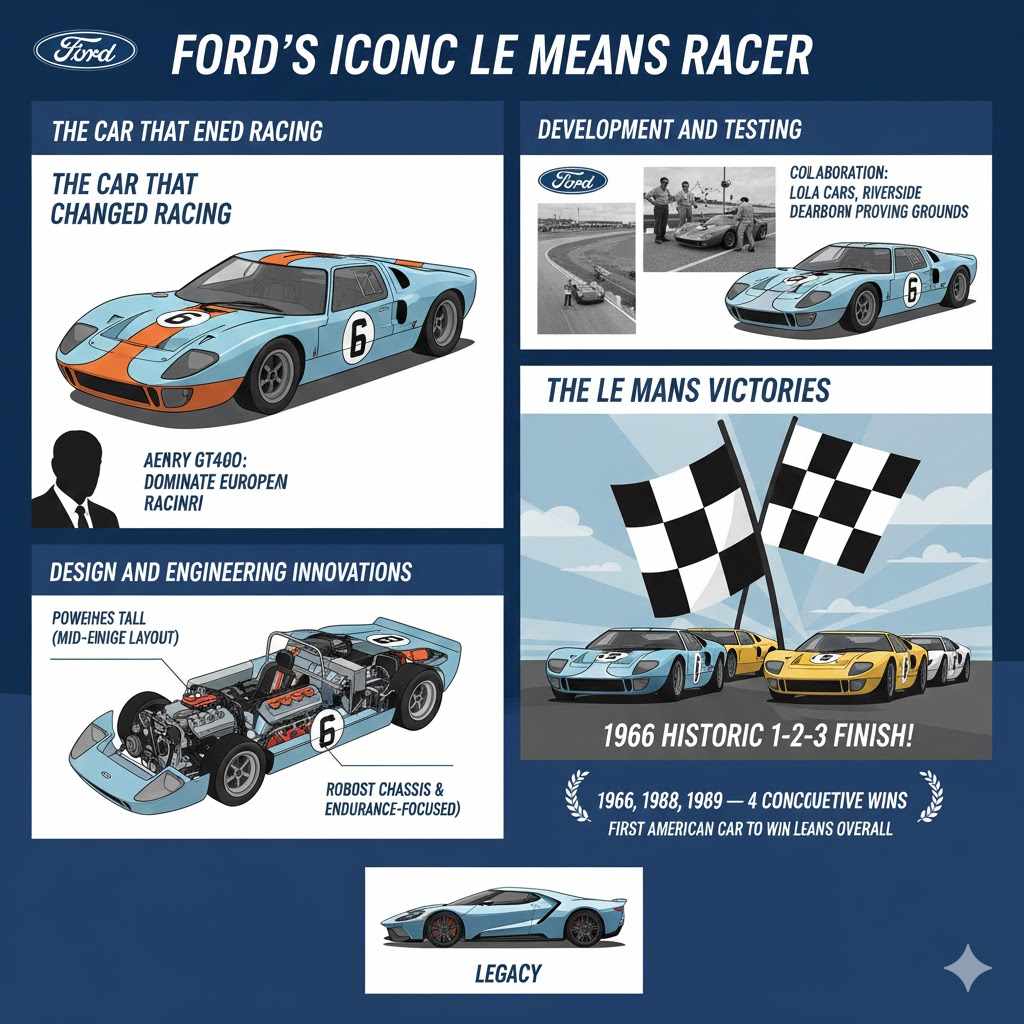
The car that instantly comes to mind when you ask Which Ford Car Raced at Le Mans? is the Ford GT40. It wasn’t just any car; it was built for one purpose: to beat Ferrari at Le Mans. Ford wanted to win this tough endurance race to prove its engineering and racing power.
This car became a symbol of American racing success.
The GT40 was developed in the early 1960s. Henry Ford II was determined to win Le Mans after a deal to buy Ferrari fell through. He wanted a car that could dominate the European racing scene.
The GT40 was the result of this ambition. It was a low-slung, powerful machine built for speed and endurance.
Design and Engineering Innovations
The Ford GT40 had many special features. Its aerodynamic shape helped it cut through the air. The engine was powerful, giving it great speed on the long straights of the Le Mans circuit.
Engineers worked hard to make it reliable for the 24-hour race. They focused on a strong chassis and an engine that could keep running without failing.
Its name, GT40, came from “Grand Touring” class and its height of 40 inches. This was a very low car, making it stable and fast. The mid-engine layout, where the engine is placed behind the driver, was advanced for its time.
This helped with weight distribution and balance.
Development and Testing
Building the GT40 was a huge project. Ford worked with British racing experts like Lola Cars and later with Shelby American. These teams brought their knowledge of racing car design and building.
They tested the cars extensively, making many improvements. Early versions had issues, but they learned from each race and test.
Testing at tracks like Riverside in California and the proving grounds in Dearborn, Michigan, was vital. They pushed the cars to their limits. The goal was to find any weaknesses before the main event at Le Mans.
This dedication to testing was key to their later success.
The Le Mans Victories
The most famous moment for the Ford GT40 at Le Mans came in 1966. Ford achieved a historic 1-2-3 finish. This was a massive victory, especially for an American manufacturer.
It proved that their car and their team could compete with, and beat, the best in the world. This win was a major turning point.
This 1966 win was particularly sweet because it was the first time an American car won the overall race at Le Mans. It was a huge boost for Ford’s reputation. The GT40 continued its winning streak, taking the victory again in 1967, 1968, and 1969.
This made it the first American-built car to win Le Mans multiple times in a row. The car’s legacy was cemented.
The Story Behind the Le Mans Project
This part talks about why Ford decided to race at Le Mans in the first place. It’s a fascinating story of business and racing ambition. We will look at the challenges Ford faced and how they overcame them to build a winning car.
Business and Racing Ambitions
In the early 1960s, Ford was a giant in the car industry. However, it didn’t have the same racing prestige as European companies like Ferrari. Henry Ford II saw racing as a way to boost Ford’s image and show off its engineering skills.
Winning Le Mans was the ultimate prize in motorsport. It attracted global attention.
The opportunity to buy Ferrari presented itself. Ford was close to a deal, but it fell apart at the last minute. This made Henry Ford II even more determined to beat Ferrari on the track, especially at their home turf in Le Mans.
The project was named “Ford Advanced Vehicles” or FAV.
Challenges and Setbacks
Building a car capable of winning Le Mans was not easy. The initial prototypes, known as the Ford GT Mk I, faced many problems. They were fast but unreliable.
Engines blew, and the cars were difficult to handle. The racing teams, including Carroll Shelby’s crew, had to work around the clock to fix issues.
One famous setback was in the 1965 Le Mans race, where all Ford entries retired due to mechanical failures. This was a tough lesson, but it fueled their drive to improve. The team learned valuable lessons about endurance and reliability.
They knew they needed a car that could not only be fast but also survive the grueling 24-hour race.
Collaboration with Shelby American
Carroll Shelby, a former racing driver, played a huge role. His company, Shelby American, took over much of the development and racing of the GT40. Shelby’s team was known for its success with the Cobra sports car.
They brought a winning attitude and practical racing experience to the GT40 project.
Under Shelby’s guidance, the GT40 was refined. The Mk II version, with its powerful 7-liter Ford V8 engine, was a significant improvement. The team worked on the suspension, brakes, and overall durability.
They made the car faster, more reliable, and easier for drivers to control during long stints.
The 1966 Triumph
The 1966 Le Mans race was a defining moment. The GT40 Mk II cars were dominant. After years of effort and facing many challenges, Ford finally achieved its goal.
The sight of three Ford GT40s crossing the finish line in formation was iconic. It was a clear message to the racing world that Ford had arrived.
This victory was not just for the car; it was a victory for the entire Ford organization and its vision. It showcased American engineering and determination on a global stage. The win had a massive impact on Ford’s brand image, making it a symbol of performance and innovation.
Evolution of the Ford GT at Le Mans
Ford didn’t stop after its first win. The GT40 continued to evolve, and Ford continued to race it at Le Mans. This section will look at the later models and how they kept up the winning tradition.
It shows how a car can be improved over time.
The GT40 Mk IV and Beyond
Following the success of the Mk II, Ford developed the GT40 Mk IV. This was an evolution of the car, built specifically for the 1967 Le Mans race. It featured a new chassis and body design.
The goal was to make it even lighter and more aerodynamic.
The Mk IV was a powerful machine. It used a 7-liter engine and had a more rigid structure. This car proved its worth by winning the 1967 24 Hours of Le Mans.
This solidified the GT40’s dominance in the late 1960s. The car was a testament to continuous improvement.
Later GT Models
After the original GT40 program concluded, Ford continued to be involved in sports car racing. In the 2000s, Ford revived the spirit of the GT40 with the creation of the Ford GT. This modern supercar was also designed to compete and win at Le Mans.
The modern Ford GT first raced at Le Mans in 2016, marking the 50th anniversary of the 1966 win. It was a fitting tribute. This new GT was a technological marvel, featuring advanced materials and powerful twin-turbo engines.
It was designed to compete in the highly competitive GTE Pro class.
Racing in Different Classes
The Ford GT40 and the later Ford GT have competed in various classes at Le Mans. The original GT40 was built to win the overall race, which it did multiple times. The modern Ford GT competes in the GTE Pro class, which is for production-based sports cars.
Competing in different classes shows the adaptability of Ford’s sports car programs. Each era of racing has its own rules and challenges. Ford has shown it can build cars that meet these requirements and still be competitive.
The focus remains on performance and endurance.
The Impact on Automotive Design
The Ford GT40’s success at Le Mans had a lasting impact on car design. Its aerodynamic features and mid-engine layout influenced many future sports cars. The focus on durability and high-performance engines also pushed the boundaries of automotive engineering.
The GT40 proved that American manufacturers could build world-beating race cars. It inspired a generation of engineers and drivers. The car remains a legend in motorsport history, known for its speed, beauty, and incredible racing achievements.
Its influence can still be seen today.
Key Ford Cars That Have Raced at Le Mans
While the Ford GT40 is the most famous, other Ford-powered cars and Ford models have also competed at Le Mans. This section will touch on those. It shows Ford’s broader involvement in endurance racing over many years.
Beyond the GT40
Ford has a long history of providing engines and support for various racing teams. Many different cars have used Ford engines and competed at Le Mans. These include prototypes built by independent constructors.
These cars might not be called “Fords” but have Ford power under the hood.
For example, in the early days, Ford provided engines for many sports car teams. These engines were known for their power and reliability, making them popular choices for endurance racing. This indirect involvement also contributed to Ford’s presence at the historic race.
Ford Prototypes and Other Models
Besides the GT40 and the modern GT, other Ford prototypes and production-based cars have participated. Ford has competed with various vehicles over the decades in different categories of the race. This shows a continuous commitment to testing and racing technology.
The goal is always to learn and improve. Each race at Le Mans offers valuable data. This data can then be used to develop better road cars and future race cars.
Ford’s presence at Le Mans has been about more than just winning; it’s about pushing the limits of what’s possible.
Ford-Powered Competitors
It’s important to remember that other manufacturers have also used Ford engines in their Le Mans cars. This highlights the strength and versatility of Ford’s engine technology. When a powerful and reliable engine is needed, Ford has often been a go-to choice for racing teams.
These Ford-powered cars, while not officially “Ford” cars, are part of Ford’s racing legacy at Le Mans. They showcase how Ford’s engineering has supported the wider world of motorsport. This broad impact is a significant part of their history.
Statistics on Ford’s Le Mans Performance
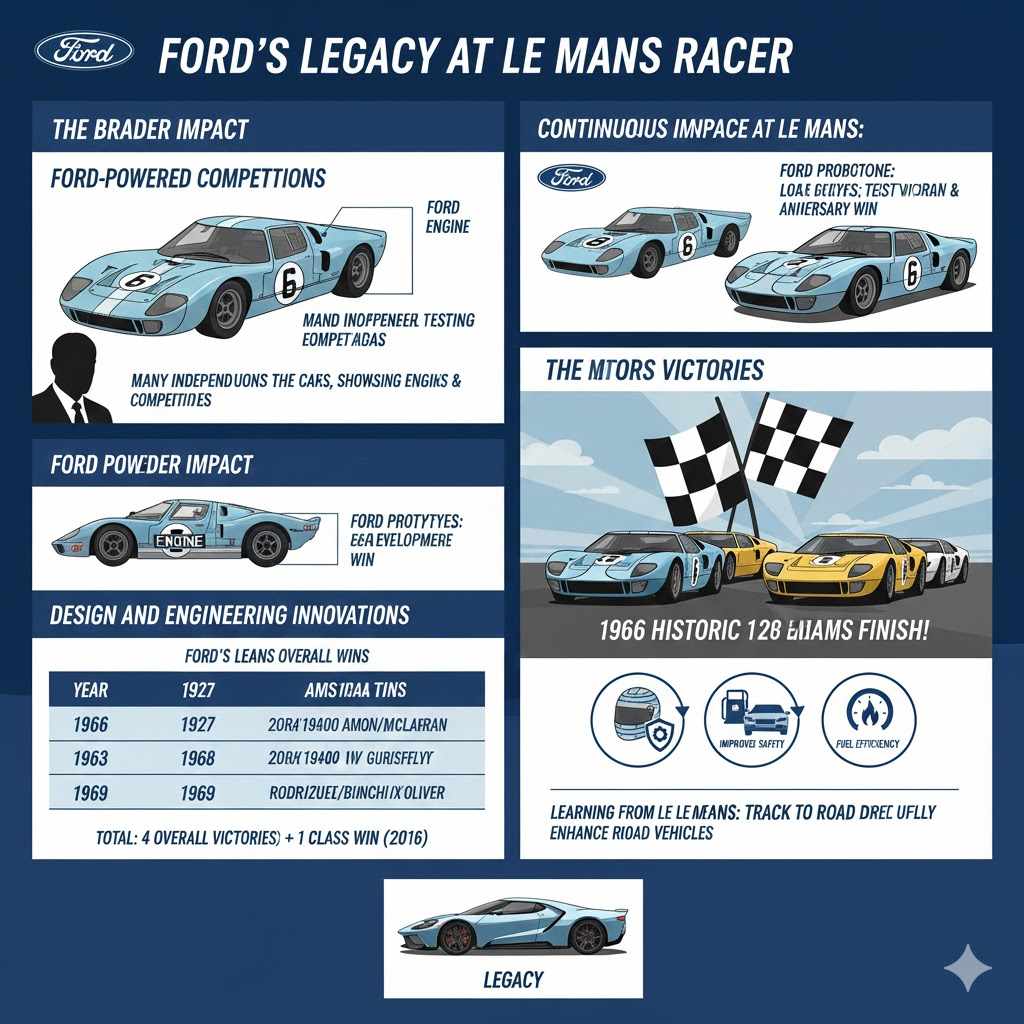
Ford has had a significant presence at Le Mans. They have achieved multiple outright victories, a rare feat. In total, Ford cars have won the 24 Hours of Le Mans four times.
This is a strong record, especially against tough competition. The GT40 alone secured four consecutive wins from 1966 to 1969.
The modern Ford GT also tasted success, winning its class in 2016. This was a special victory, celebrating a major anniversary. Ford’s participation reflects a long-term strategy of using endurance racing to test and showcase their automotive capabilities.
Here is a look at Ford’s Le Mans wins:
| Year | Winning Car | Drivers |
|---|---|---|
| 1966 | Ford GT40 Mk II | Chris Amon, Bruce McLaren |
| 1967 | Ford GT40 Mk IV | Dan Gurney, A.J. Foyt |
| 1968 | Ford GT40 | Pedro Rodríguez, Lucien Bianchi |
| 1969 | Ford GT40 | Jacky Ickx, Jackie Oliver |
Learning from Le Mans
The lessons learned at Le Mans have been invaluable for Ford. The intense competition and extreme conditions provide real-world testing grounds. Ford uses this information to make its production cars better.
Safety, fuel efficiency, and performance all benefit.
The racing program helps Ford push technological boundaries. Innovations developed for the track often find their way into the cars people drive every day. This commitment to racing is a key part of Ford’s identity.
It shows their dedication to engineering excellence.
Frequently Asked Questions
Question: What is the most famous Ford car that raced at Le Mans?
Answer: The most famous Ford car that raced at Le Mans is the Ford GT40. It is renowned for its iconic design and its historic victories against Ferrari.
Question: When did Ford first win Le Mans?
Answer: Ford first won the 24 Hours of Le Mans in 1966 with the Ford GT40 Mk II.
Question: How many times has Ford won Le Mans overall?
Answer: Ford has won the 24 Hours of Le Mans overall four times.
Question: Did the modern Ford GT race at Le Mans?
Answer: Yes, the modern Ford GT raced at Le Mans and won its class in 2016, celebrating the 50th anniversary of Ford’s first overall win.
Question: Why was the Ford GT40 built?
Answer: The Ford GT40 was built out of a desire by Henry Ford II to beat Ferrari at the 24 Hours of Le Mans and to prove Ford’s engineering capabilities.
Summary
The Ford GT40 is the legendary car that dominated Le Mans, securing four straight wins. Ford’s ambition to beat Ferrari fueled the GT40’s development and its eventual triumph. This racing legacy shows Ford’s commitment to engineering and performance on the world stage.
Related pick: Check today's price on Amazon
Products related to this article
Sponsored / affiliate links. As an Amazon Associate I earn from qualifying purchases. I may earn additional commission from eligible campaigns.