Where Are Car Headlights Located? Front Layout Explained
Car headlights are among the most instantly recognizable features of any vehicle, yet their precise location and layout often go unnoticed, until they matter most. Whether you’re a car enthusiast, a new driver, or a professional in the automotive industry, understanding the exact placement, orientation, and evolution of car headlights can provide valuable insights into both safety and vehicle design.
The front of a car is engineered with remarkable precision, and the headlight configuration plays a critical role in visibility, aerodynamics, and even the car’s identity.
From classic circular lamps to modern LED arrays, the layout of car headlights has evolved dramatically in response to regulatory standards, technological advancements, and design trends. Today’s vehicles showcase an impressive variety of headlight positions and styles, each engineered to enhance driver vision and ensure the vehicle is visible to others.
This comprehensive guide explores exactly where car headlights are located, the science and regulation behind their placement, and what their layout means for drivers, designers, and safety on the road.
Key Takeaways
- Car headlights are always mounted on the vehicle’s front end, but their exact position varies by design, type, and regulation.
- Headlight layout affects visibility, safety, and aerodynamics, influencing both driver experience and vehicle aesthetics.
- Technological advancements such as LED, HID, and adaptive headlights have expanded layout possibilities.
- Regulatory standards strictly define headlight height, spacing, and orientation for safety compliance worldwide.
- Understanding headlight placement helps in maintenance, upgrades, and making informed vehicle purchases.
The Fundamentals: Where Are Car Headlights Located?
The Standard Mounting Zone
Headlights are universally installed at the front of the vehicle, but the precise location is dictated by a blend of engineering, safety standards, and design aesthetics. The typical mounting zone is between the outer edges of the front grille and slightly above the front bumper, ensuring an unobstructed path for light projection. This area is chosen to maximize the illumination of the road ahead while minimizing glare for oncoming traffic.
Regulations, such as those set by the National Highway Traffic Safety Administration (NHTSA) in the United States, require that headlights be mounted at a specific height, usually between 22 and 54 inches from the ground. This range ensures that headlights are neither too low (which would limit their range and could dazzle other drivers) nor too high (which might impair the vision of oncoming motorists).
Headlight Orientation And Angle
Proper orientation is critical for effective illumination and road safety. Headlights are aimed slightly downward and towards the center of the lane to prevent glare. The angle can be adjusted manually in some vehicles or automatically in high-end models. Misaligned headlights, even by a few degrees, can significantly reduce visibility and increase accident risk.
Influence Of Vehicle Type
Different vehicle categories, sedans, SUVs, trucks, sports cars, feature distinct front-end designs, impacting headlight placement:
- Sedans and hatchbacks: Headlights are generally positioned at the front corners, integrated into the fenders.
- SUVs and trucks: Due to higher ground clearance, headlights are mounted higher, often close to the grille’s top edge.
- Sports cars: Sleeker profiles mean headlights are lower and more streamlined, sometimes extending into the hood or bumper.
These variations reflect both functional requirements and stylistic choices.
Example: Headlight Placement In A Toyota Camry
The Toyota Camry showcases a classic modern sedan layout: headlights are situated at the front corners, level with the hood’s leading edge, and slightly wrap around the fender. This position optimizes both visibility and aerodynamics while meeting regulatory standards.
Key Regulatory Standards Shaping Headlight Location
United States Standards (fmvss 108)
In the US, the Federal Motor Vehicle Safety Standard No. 108 (FMVSS 108) sets stringent guidelines for headlight placement:
- Height: 22, 54 inches above ground.
- Spacing: At least 24 inches apart (center to center).
- Orientation: Must project light forward, with a specified downward and sideward angle.
Manufacturers must certify compliance before selling vehicles. These standards are enforced to ensure road safety and driver visibility under various conditions.
European Regulations (ece R48)
Europe follows the ECE R48 standard, which differs slightly:
- Height: 500, 1200 mm (approximately 19.7, 47.2 inches) from the ground.
- Symmetry: Headlights must be mounted symmetrically to the vehicle’s longitudinal axis.
- Distance from side: No more than 400 mm (about 15.7 inches) from the outermost edge.
European guidelines also specify automatic leveling for certain headlight types to prevent glare.
Impact Of Global Differences
Although similar in intent, these regulations lead to subtle variations in headlight layout between markets. For instance, a vehicle model sold in both the US and Europe may have slightly different front-end designs to ensure compliance.
Case Study: Volkswagen Golf Us Vs. Eu Versions
The Volkswagen Golf sold in the US features headlights set slightly higher and wider apart compared to its European counterpart. This adjustment ensures compliance with FMVSS 108 while maintaining a similar design aesthetic.
Headlight Layouts: Types And Their Front-end Integration
Conventional Headlight Arrangements
Traditionally, vehicles employed one of two main configurations:
- Dual (4-lamp) system: Two headlights per side, one for low beam, one for high beam.
- Single (2-lamp) system: Each headlight contains both low and high beam filaments.
The choice affects not only the headlight’s internal structure but also the front-end styling and available space for other components.
Modern Headlight Technologies
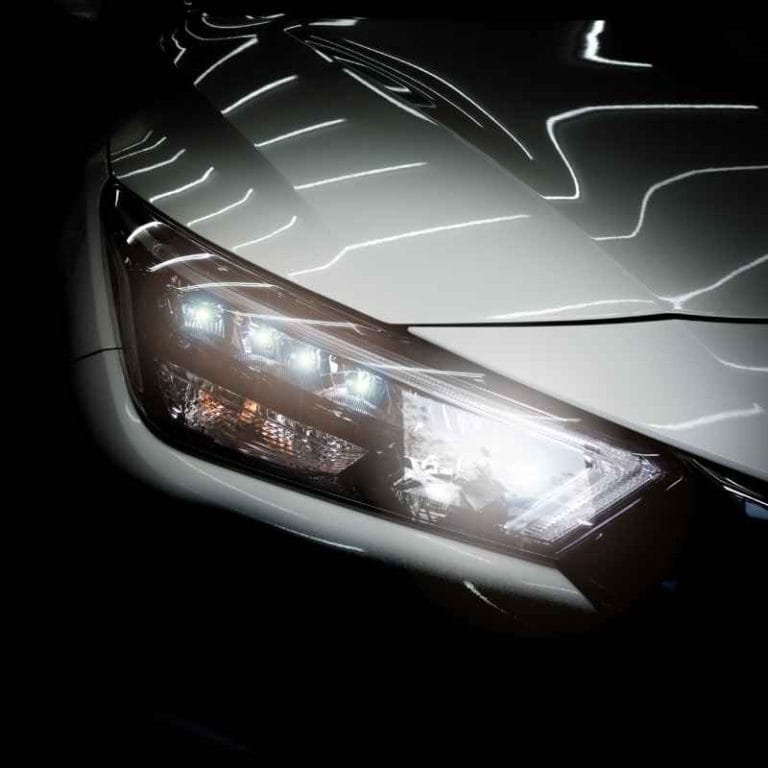
LED and HID (High-Intensity Discharge) systems have revolutionized headlight layout. These compact units allow for:
- Slimmer headlamp assemblies
- Complex shapes and integration into the bodywork
- Matrix or adaptive lighting that changes beam patterns dynamically
As a result, headlight units can now be designed as narrow strips, multi-segment clusters, or even fully integrated light bars.
Pop-up And Hidden Headlights
Classic sports cars like the Mazda RX-7 and Chevrolet Corvette featured pop-up headlights. These units were concealed within the hood or fender and rotated into position when activated. While once popular for aerodynamic and stylistic reasons, pop-up headlights have largely disappeared due to pedestrian safety concerns and tighter regulations.
Daytime Running Lights (drls) And Auxiliary Lamps
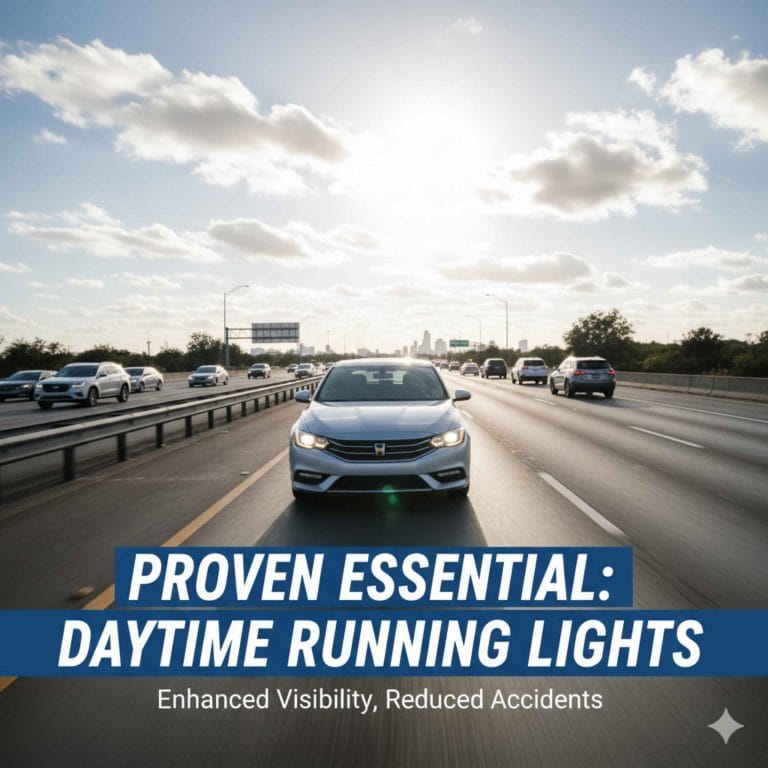
Many modern cars feature DRLs and auxiliary lamps (fog, cornering, or spotlights) near the primary headlights. Their placement is typically just below or adjacent to the main lamps, ensuring a cohesive appearance and optimal functionality.
Example: Audi A7 Headlight Integration
The Audi A7 utilizes a sleek, full-LED headlamp assembly integrated into the front fascia, with DRLs forming a continuous light signature above the main projector units. This arrangement combines style and safety, enhancing both vehicle identity and on-road visibility.
Design Considerations Influencing Headlight Location
Safety And Visibility
Maximizing visibility is the foremost goal. Headlights must illuminate the road far enough ahead to allow reaction time, particularly at highway speeds. The optimal location is determined through:
- Computer-aided design (CAD) simulations
- Real-world road testing
- Nighttime visibility studies
Manufacturers balance these functional needs with compliance to global standards.
Aerodynamics And Fuel Efficiency
Headlight placement directly impacts aerodynamics. Flush-mounted or integrated headlights reduce drag, improving both fuel efficiency and vehicle stability at speed. For example, the Tesla Model 3’s headlights are seamlessly incorporated into the bodywork, contributing to its low drag coefficient of 0.23 (according to Tesla’s official data).
Brand Identity And Styling
Automakers use headlight shape and position to establish a distinctive brand signature. For instance:
- BMW’s “angel eyes”: Dual round headlights with illuminated rings.
- Jeep’s seven-slot grille: Flanked by round headlights, reinforcing a rugged image.
- Volvo’s “Thor’s Hammer”: T-shaped LED daytime lights set within the headlamp cluster.
These unique arrangements are instantly recognizable and play a significant role in brand differentiation.
Pro Tip:
When selecting aftermarket headlights, always check the compatibility with your vehicle’s mounting points and regulatory requirements to ensure both safety and legal compliance.
Headlight Location In Popular Vehicle Categories
Sedans And Hatchbacks
Most sedans and hatchbacks feature headlights at the front corners, slightly above the bumper line. This placement ensures a broad beam spread and supports the car’s wider stance.
Suvs And Trucks
SUVs and trucks often have higher-mounted headlights to account for increased ride height and ground clearance. This location enhances forward visibility, especially in off-road conditions. Some trucks also integrate auxiliary lamps into the grille or bumper.
Sports Cars
Sports cars, prioritizing aerodynamics, frequently position headlights lower and further forward, sometimes blending them into the hood or fender. Classic models like the Porsche 911 feature round headlights at the tip of the front fenders, a hallmark of the brand’s design language.
Electric And Hybrid Vehicles
Electric vehicles (EVs) such as the Hyundai IONIQ 5 and Lucid Air employ ultra-slim LED assemblies that span the front end, often doubling as both headlights and DRLs. This approach leverages the compactness of LED technology and allows for more innovative styling.
Comparison Table: Headlight Location By Vehicle Type
| Vehicle Type | Headlight Height (approx.) | Typical Position | Design Rationale |
|---|---|---|---|
| Sedan/Hatchback | 24, 36 inches | Front corners, above bumper | Wide beam, classic styling |
| SUV/Truck | 30, 50 inches | Higher, near grille top | Improved off-road visibility |
| Sports Car | 20, 28 inches | Low, forward, integrated | Aerodynamics, aggressive look |
| EV/Hybrid | 20, 32 inches | Full-width, slim clusters | Innovative design, efficiency |
The Impact Of Technology On Headlight Placement
Led And Matrix Headlights
LED technology has transformed how and where headlights are placed. Because LEDs produce less heat and occupy less space than halogen or HID units, designers can position them in previously impossible locations, such as ultra-thin strips or complex, multi-segment arrays.
Matrix LED systems (used by brands like Audi and Mercedes-Benz) allow for adaptive lighting patterns, enabling headlights to remain on high beam while selectively dimming segments to avoid dazzling other drivers. The compactness of these systems means they can be integrated into the thinnest parts of the front fascia.
Laser Headlights
Laser headlights, available on select luxury vehicles, offer even greater range and brightness. Their tiny size enables further reduction in headlight assembly footprint, opening up new possibilities for front-end design. However, regulatory approval varies by country, affecting market availability.
Adaptive And Swiveling Headlights
Adaptive headlights automatically adjust their aim based on vehicle speed, steering angle, and road conditions. The mounting location must allow for lateral movement or internal pivoting, leading to more robust (and sometimes larger) assemblies.
Example: Bmw Adaptive Led Headlights
The latest BMW 7 Series features adaptive LED headlights with matrix function. These units are placed at the traditional front corner but include internal components that swivel in response to steering input, improving illumination around corners.
Integration With Other Front-end Components
Advancements in technology allow headlight units to share space with sensors, cameras, and radars for advanced driver-assistance systems (ADAS). Manufacturers must carefully plan the layout to avoid interference while ensuring optimal light projection.
Real-world Examples Of Headlight Layouts
Case Study: Honda Civic (2026)
The 2026 Honda Civic employs a slim, horizontally oriented LED headlight assembly mounted at the upper edge of the front bumper. The design prioritizes a low hood line for better aerodynamics while maintaining compliance with US and EU regulations. DRLs are integrated within the same unit, creating a cohesive appearance.
Example: Ford F-150
The Ford F-150, one of the best-selling trucks in America, features large, upright headlights positioned high on the front fascia. This placement maximizes the driver’s view of the road, especially in rugged or off-road environments. The latest models integrate C-shaped DRLs surrounding the main beams.
Example: Porsche 911
A design icon, the Porsche 911 retains its signature round headlights atop the front fenders. This higher-than-average placement is both a nod to tradition and a functional choice, offering a wide and deep illumination pattern suited for high-speed driving.
Comparison Table: Real-world Headlight Layouts
| Model | Headlight Type | Mounting Location | Special Features |
|---|---|---|---|
| Honda Civic (2026) | LED | Upper bumper, front corners | Integrated DRLs, sleek profile |
| Ford F-150 | Halogen/LED | High, upright fascia | C-shaped DRLs, off-road visibility |
| Porsche 911 | Bi-xenon/LED | Fender tops, above grille | Classic round design, wide beam |
Maintenance, Upgrades, And Legal Considerations
Headlight Alignment And Adjustment
Proper alignment is essential for safe driving and regulatory compliance. Most vehicles allow manual adjustment via screws or dials accessible from the engine bay. Some luxury models feature automatic leveling systems. Incorrectly aimed headlights can lead to:
- Reduced visibility
- Increased glare for other drivers
- Failed safety inspections
When replacing or upgrading headlights, always refer to the vehicle manual and local regulations.
Aftermarket Headlight Upgrades
Upgrading to LED or HID units can enhance visibility and aesthetics, but the new assemblies must fit within the original mounting points and meet legal requirements. Some jurisdictions prohibit certain retrofits due to beam pattern or brightness concerns.
Legal Ramifications
Driving with misaligned or non-compliant headlights can result in citations or failed inspections. Regulatory agencies may conduct random roadside checks, especially after new lighting technologies are introduced.
Pro Tip:
If you install aftermarket headlights, have them professionally aligned and certified to avoid legal or safety issues.
The Future Of Headlight Layout And Integration
Autonomous And Smart Vehicles
The rise of autonomous vehicles and smart lighting systems is set to further influence headlight layout. Future headlights may incorporate:
- Dynamic projections: Displaying warnings or navigation cues on the road surface.
- Camera and sensor fusion: Integrating with ADAS for real-time hazard detection.
- Full-width light bars: Serving as both headlights and communication devices.
These innovations will require new mounting strategies and likely lead to updates in regulatory standards.
Sustainability And Material Choices
Eco-friendly materials and manufacturing techniques are shaping headlight design. Lightweight, recyclable plastics and energy-efficient LEDs are becoming the norm, reducing environmental impact without compromising performance.
Example: Hyundai Ioniq 5’s Pixel Led Headlights
The Hyundai IONIQ 5 features “Parametric Pixel” LED headlights, which not only provide advanced illumination but also serve as a brand-defining visual element. Their compact size allows for creative front-end layouts and supports the car’s futuristic aesthetic.
Collaboration Between Designers And Engineers
As lighting technology becomes more advanced, collaboration between designers and engineers is increasingly important. Achieving the right balance between form, function, and compliance ensures that future headlight layouts continue to improve both safety and style.
Reference
For more technical details on headlight technology and regulations, see the Automotive Lighting Wikipedia page.
Frequently Asked Questions
What Is The Legal Minimum And Maximum Height For Car Headlights?
Headlight mounting height is regulated by each country. In the US, FMVSS 108 sets the minimum at 22 inches and the maximum at 54 inches from the ground to the center of the headlamp. In Europe, ECE R48 specifies a range of 500 to 1200 mm (about 19.7 to 47.2 inches). Always check local laws, as some states or provinces may have stricter rules.
Why Do Some Cars Have Headlights That Seem More “hidden” Or Integrated?
Modern LED and laser technology allows for much smaller and more flexible headlight assemblies. Designers can integrate them seamlessly into the bodywork, resulting in “hidden” or flush-mounted headlights that improve both aesthetics and aerodynamics. This trend is especially prominent in electric and luxury vehicles.
Can I Legally Install Aftermarket Headlights In Any Position I Want?
No. Headlight location is regulated to ensure safety and visibility. Aftermarket headlights must be installed in the original manufacturer’s mounting location and comply with local regulations regarding beam pattern, height, and brightness. Non-compliance can result in fines, failed inspections, or insurance issues.
How Do Headlight Washers And Wipers Affect Headlight Location?
Headlight washers and wipers are common in regions with frequent snow or mud. They are installed adjacent to or integrated with the headlight assembly, but do not typically affect the primary mounting position. However, headlights with washers must be accessible for maintenance, slightly influencing the design and placement of the assembly.
Are There Vehicles With Headlights In Non-traditional Locations?
While rare, some concept cars and specialty vehicles have experimented with non-traditional headlight placements, such as within the grille, on the roof, or as detachable units. However, these designs rarely reach mass production due to safety regulations and practical limitations. Production vehicles must follow strict guidelines for headlight location.
For further reading, visit the NHTSA Headlights Information Page.
The layout and position of car headlights are the result of careful engineering, regulation, and creativity. Understanding where headlights are located, and why, is essential not only for appreciating automotive design but also for ensuring road safety and legal compliance.
Whether you’re maintaining your vehicle, considering an upgrade, or simply curious about the evolution of car lighting, a closer look at headlight placement reveals the interplay of technology, regulation, and style that defines the modern automobile.
Products related to this article
Sponsored / affiliate links. As an Amazon Associate I earn from qualifying purchases. I may earn additional commission from eligible campaigns.