What Does the Check Engine Light Mean
When that little engine icon lights up on your dashboard, it can feel like a mystery. You might wonder, “What does the check engine light really mean?” For many drivers, especially those new to owning a car, it’s a confusing and sometimes scary moment. It’s natural to feel a bit lost when a warning light appears, but don’t worry.
We’re here to break it all down in a way that’s easy to understand. This guide will help you figure out what that light is telling you, step-by-step, so you can get your car back in good shape without feeling overwhelmed.
Understanding the Check Engine Light

Taiss
Taiss 12mm 12V LED Metal Check Engine…
- Perfect Check Engine Indicator: This yellow LED pilot light is specially designed to serve as a clear Check Engine warning light,…
- Durable Black Oxide Metal Construction: Made of sturdy black oxide metal housing for anti-corrosion, anti-shock, and long-lasting…
- Standard 12mm (1/2") Mounting Size: Features a 12mm (1/2 inch) installation cutting hole for universal fitment, easy to mount into…
As an Amazon Associate I earn from qualifying purchases.
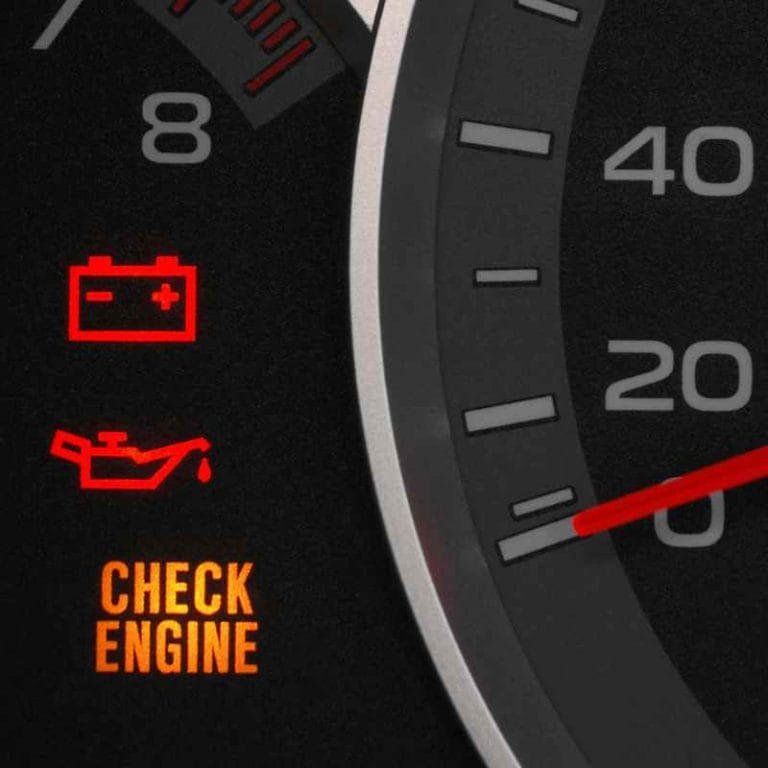
The check engine light, also known as the Malfunction Indicator Lamp (MIL), is a vital part of your vehicle’s onboard diagnostics system. Its primary role is to alert you when the car’s computer detects an issue that could affect its performance or emissions. This light can illuminate for a wide range of reasons, from very minor problems to more serious ones requiring immediate attention.
For many drivers, the biggest challenge with the check engine light is not knowing where to start when it comes on, leading to anxiety about potential costs or damage. This section will help clarify what this light signifies and why it’s important to pay attention to it.
What the Light Indicates
When the check engine light comes on, it signifies that your car’s onboard computer system, known as the Engine Control Unit (ECU) or Powertrain Control Module (PCM), has detected a fault. This system constantly monitors various sensors throughout the engine and its related systems. If any of these sensors report data that is outside the expected range or indicates a malfunction, the computer flags it.
The check engine light is the visual cue for the driver that something is not quite right and needs attention. It’s designed to be a proactive alert, preventing minor issues from escalating into major, more expensive repairs.
-
The light is part of your car’s self-testing mechanism.
This system checks everything from the fuel injection to the exhaust system. It’s like your car’s way of saying “Hey, something needs a look.” It doesn’t always mean your engine is about to quit, but it’s a signal to investigate. -
It covers a broad spectrum of potential problems.
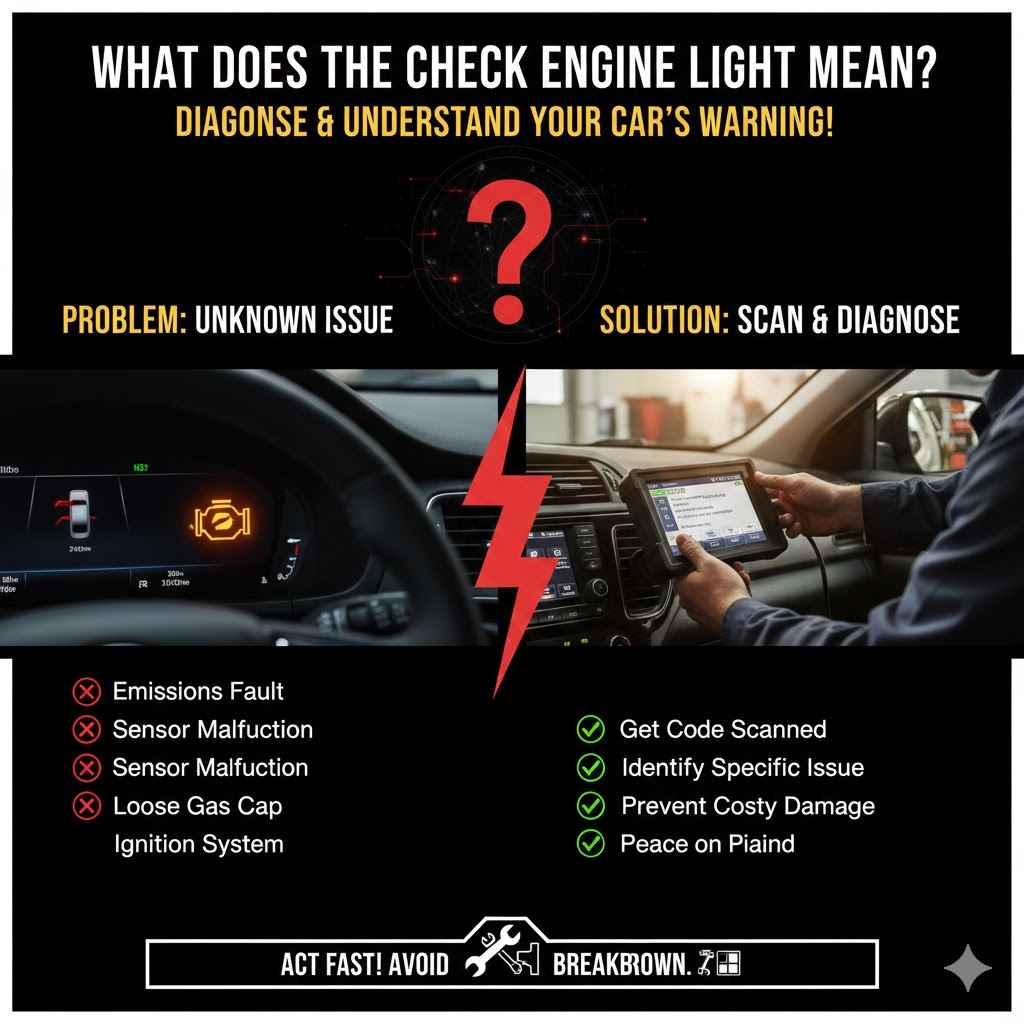
The range of issues can be vast. Sometimes it’s as simple as a loose gas cap. Other times, it could point to a failing catalytic converter or a spark plug issue. This broadness is why it can be confusing; the light itself doesn’t tell you the exact problem. -
Ignoring the light can lead to bigger issues.
While not every illuminated light means an immediate breakdown, continued driving with a check engine light on can sometimes cause further damage. This can turn a small, affordable fix into a much larger, more costly repair. It’s always best to get it checked sooner rather than later.
Types of Check Engine Lights
The behavior of the check engine light can give you clues about the urgency of the problem. Most cars have two main ways the light can display: solid and flashing. Understanding the difference is key to knowing how quickly you need to react.
A solid light is generally less urgent than a flashing one, but both require attention.
Solid Check Engine Light
A solid, steady check engine light usually means that the car’s computer has detected an issue, but it’s not an emergency situation requiring immediate stoppage. This could be a minor problem, such as an evaporative emission system leak, or a more significant one like a faulty oxygen sensor. The car is likely still drivable, but it’s important not to ignore it.
Continuing to drive with a solid light on for an extended period can still lead to decreased fuel efficiency, increased emissions, and potential damage to other components over time.
-
This is the most common type of warning.
When the light stays on without blinking, it’s the standard alert. It means a system has detected a fault and stored a diagnostic trouble code (DTC) in the car’s computer. -
It suggests a non-critical issue.
The engine is likely still running smoothly. You might not notice any immediate changes in how the car drives. However, the system is alerting you that something is not optimal. -
Schedule a check-up soon.
While you can usually continue driving, you should get your car inspected by a mechanic as soon as possible. Delaying the inspection could allow a minor problem to worsen.
Flashing Check Engine Light
A flashing or blinking check engine light is a more serious indicator. This usually means a severe issue is occurring that could cause significant damage to your engine or catalytic converter. The most common cause for a flashing light is a misfire.
A misfire occurs when one or more cylinders in the engine are not firing correctly, leading to unburned fuel entering the exhaust system. This unburned fuel can quickly overheat and damage the catalytic converter, a very expensive part to replace.
-
This is an urgent warning.
A flashing light indicates a serious problem, often a severe engine misfire. This means unburned fuel is being dumped into the exhaust system. -
Stop driving as soon as safely possible.
If your check engine light starts flashing, you should pull over to a safe location and turn off the engine immediately. Continuing to drive could cause costly damage to your catalytic converter. -
Do not restart the engine unless necessary.
If you must move the vehicle, do so for the shortest distance possible. Have the vehicle towed to a repair shop to diagnose and fix the underlying issue.
Common Causes of the Check Engine Light
The check engine light can be triggered by a wide array of issues, ranging from simple fixes to more complex problems. Understanding these common causes can help you troubleshoot or at least have a better idea of what your mechanic might find. Many of these issues relate to sensors, the fuel system, or the emissions control system, all of which are interconnected.
Loose Gas Cap
This is by far the simplest and most common reason for the check engine light to illuminate, especially on newer vehicles. Modern cars have sophisticated evaporative emission control (EVAP) systems designed to prevent fuel vapors from escaping into the atmosphere. A loose, damaged, or missing gas cap can disrupt the seal of the fuel system, causing a loss of pressure or allowing vapors to escape.
The car’s computer detects this anomaly, triggering the check engine light.
-
An easy fix for a common problem.
Always check your gas cap first if the light comes on. Make sure it is tightened until it clicks. -
It seals the fuel system.
The gas cap is a critical part of the EVAP system. A faulty seal lets fuel vapors escape, which the car’s sensors will detect. -
May take time to reset.
Even after tightening the cap, the light might not turn off immediately. It can take several driving cycles for the car’s computer to re-evaluate the system and clear the code.
Faulty Oxygen Sensor (O2 Sensor)
Oxygen sensors, or O2 sensors, measure the amount of unburned oxygen in your exhaust system. This information is crucial for the engine control unit (ECU) to determine how much fuel to inject for optimal combustion. If an O2 sensor is faulty, it can send incorrect data to the ECU, leading to an improper fuel mixture.
This can result in reduced fuel efficiency, increased emissions, and potential catalytic converter damage over time.
-
Monitors your exhaust gases.
O2 sensors tell the car’s computer how much oxygen is in the exhaust. This helps regulate the air-fuel mixture for efficiency. -
Impacts performance and emissions.
A bad O2 sensor can cause your car to run rich (too much fuel) or lean (too little fuel). This affects gas mileage and pollution levels. -
Can damage other parts.
If an O2 sensor isn’t working correctly, it can lead to other components, like the catalytic converter, being damaged by the incorrect fuel mixture.
Catalytic Converter Issues
The catalytic converter is a vital part of your car’s exhaust system that converts harmful pollutants like carbon monoxide and hydrocarbons into less harmful gases like water vapor and carbon dioxide. It uses precious metals like platinum, palladium, and rhodium as catalysts. A failing catalytic converter can be caused by several factors, including a faulty O2 sensor, worn spark plugs, or simply age and wear.
Symptoms of a failing converter include reduced engine power, a sulfurous smell (like rotten eggs) from the exhaust, and, of course, the check engine light.
-
Cleans your car’s exhaust.
This part of your exhaust system changes toxic gases into less harmful ones before they leave your tailpipe. -
Expensive to replace.
Catalytic converters contain precious metals and are costly to replace. Proper maintenance can help prevent their failure. -
Often triggered by other issues.
A failing catalytic converter is frequently a result of another problem, like engine misfires or bad O2 sensors, which should be addressed first.
Spark Plug or Ignition Coil Problems
Spark plugs ignite the air-fuel mixture in your engine’s cylinders, creating the power that moves your car. Ignition coils, on the other hand, supply the electrical current needed to produce the spark. If either the spark plugs are worn out, fouled, or if an ignition coil is malfunctioning, it can lead to engine misfires.
As mentioned earlier, misfires are a common cause of a flashing check engine light and can quickly damage your catalytic converter.
-
Essential for igniting fuel.
Spark plugs create the spark needed to burn the fuel in each cylinder. Ignition coils provide the high voltage for this spark. -
Misfires are a key symptom.
When spark plugs or coils fail, cylinders misfire, meaning they don’t combust fuel properly. This is a major cause of a flashing check engine light. -
Affects performance.
You might notice rough idling, hesitation during acceleration, or a general loss of power if these components are failing.
Mass Airflow Sensor (MAF Sensor) Malfunction
The Mass Airflow (MAF) sensor measures the amount of air entering the engine. This data is crucial for the ECU to correctly calculate the amount of fuel needed for combustion. A dirty or failing MAF sensor can send inaccurate readings, leading to an incorrect air-fuel mixture.
This can cause various drivability issues, including rough idling, stalling, poor acceleration, and, of course, the illumination of the check engine light. Cleaning a MAF sensor is sometimes possible, but often replacement is necessary if it fails.
-
Measures incoming air.
The MAF sensor tells the engine computer how much air is entering. This is key for the right fuel amount. -
Can become dirty.
Over time, dirt and debris can clog the sensor’s wires. This leads to incorrect readings. -
Leads to fuel mixture issues.
When the MAF sensor is faulty, the engine might get too much or too little fuel, causing performance problems and triggering the light.
Evaporative Emission Control (EVAP) System Leaks
Beyond a loose gas cap, other parts of the EVAP system can also develop leaks. This system includes hoses, valves, and canisters designed to capture fuel vapors from the gas tank and prevent them from escaping. Leaks can occur in the hoses or at various connections within the system.
When the EVAP system is not sealed properly, it can trigger the check engine light, often with codes related to EVAP system leaks. Repairing these leaks typically involves inspecting and replacing faulty components.
-
Controls fuel vapor release.
The EVAP system prevents fuel fumes from escaping into the atmosphere. It stores them and burns them later. -
More than just the gas cap.
Leaks can happen in hoses, valves, or charcoal canisters within the system. These all need to be sealed. -
Requires careful inspection.
Diagnosing EVAP leaks can sometimes be tricky, often requiring specialized equipment to find the exact source of the breach.
What to Do When the Light Comes On
Seeing the check engine light can be a bit startling, but knowing what to do can make the situation much less stressful. The steps you take depend largely on whether the light is solid or flashing, and how your car is behaving. It’s important to remain calm and assess the situation before deciding on the next course of action.
Diagnosing the Problem
The most effective way to understand what the check engine light means is to retrieve the diagnostic trouble codes (DTCs) that the car’s computer has stored. These codes are specific alphanumeric identifiers that point to the nature of the fault detected. Many auto parts stores offer free code reading services, or you can purchase an OBD-II (On-Board Diagnostics II) scanner yourself.
This scanner plugs into a port usually located under the dashboard, allowing you to read the codes directly from the car’s computer.
-
Use an OBD-II scanner.
These devices connect to a port in your car and read specific codes stored by the computer when the light comes on. -
Understand the codes.
Each code points to a specific issue, like a “P0420” code for catalytic converter efficiency below threshold. Online resources can help explain what these codes mean. -
Note any symptoms.
While codes are helpful, also pay attention to how your car is driving. Is it sputtering? Losing power? This information helps a mechanic diagnose the problem.
Example Scenario 1: Loose Gas Cap
Imagine you just filled up your gas tank and shortly after, the check engine light comes on. You haven’t noticed any change in how the car is driving – no strange noises, no loss of power, nothing unusual. The first thing you should do is pull over safely and check your gas cap.
Ensure it is screwed on tightly until you hear it click several times. Sometimes, even after tightening it, the light may stay on for a few driving cycles before it resets itself. If the light does turn off after a day or two, the gas cap was likely the culprit.
Example Scenario 2: Misfire Detected
Now, consider a different scenario. You’re driving, and the check engine light begins flashing rapidly. At the same time, you notice the engine is running very rough, almost like it’s stumbling, and you might even smell a strange odor.
In this case, the flashing light is a strong signal of a significant engine misfire. The immediate action here is to find a safe place to pull over, turn off the engine, and call for a tow truck. Driving further could severely damage your engine and catalytic converter, leading to much more expensive repairs.
When to See a Mechanic
While some issues are simple fixes, many require professional diagnosis and repair. If the check engine light is flashing, or if you notice significant changes in your car’s performance, it’s crucial to have it inspected by a qualified mechanic immediately. Even with a solid light and no noticeable symptoms, it’s wise to get it checked within a reasonable timeframe.
Mechanics have specialized tools and expertise to accurately diagnose the problem and perform the necessary repairs to ensure your car’s safety and longevity.
-
Flashing light demands immediate attention.
If the light is blinking, do not delay. Your car is signaling a critical issue that needs prompt professional assessment. -
Performance issues warrant a visit.
Any noticeable change in how your car drives, such as rough idling, loss of power, or strange noises, should be investigated by a mechanic. -
Regular maintenance helps.
Even when the light is off, regular car maintenance can prevent many issues that might otherwise trigger the check engine light.
Common Check Engine Light Codes and What They Mean
Diagnostic Trouble Codes (DTCs) provide a specific numerical or alphanumeric code that tells you precisely what the car’s computer has identified as a problem. These codes are standardized across most vehicles manufactured after 1996, thanks to the OBD-II system. Understanding some of the most common codes can help you better communicate with your mechanic or even attempt simple fixes yourself.
P0420 Code Catalyst System Efficiency Below Threshold
This is one of the most frequently encountered check engine light codes. The P0420 code indicates that the catalytic converter is not working as efficiently as it should. The vehicle’s computer monitors the performance of the catalytic converter by comparing the readings from the oxygen sensors located before and after the converter.
If the difference in readings falls below a certain threshold, it suggests the converter isn’t effectively cleaning the exhaust gases. This code can be triggered by a failing catalytic converter, but it can also be caused by issues with the oxygen sensors themselves, exhaust leaks, or engine misfires that have been going on for a while.
-
Your catalytic converter is underperforming.
This code means the system isn’t converting exhaust gases effectively. It’s a common issue. -
Can be caused by multiple things.
While the catalytic converter itself might be failing, issues with O2 sensors or exhaust leaks can also trigger this code. -
Requires careful diagnosis.
A mechanic will need to properly diagnose if it’s the converter, sensors, or another part causing the problem to ensure the correct repair is made.
P0300-P0308 Random/Multiple Cylinder Misfire Detected
These codes (P0300 through P0308) indicate that the engine is experiencing misfires. The last digit of the code specifies which cylinder is misfiring (e.g., P0301 for cylinder 1, P0302 for cylinder 2, and so on). A P0300 code specifically means a random or multiple cylinder misfire has been detected.
Misfires happen when the air-fuel mixture in a cylinder doesn’t ignite properly. As previously mentioned, this is a serious issue, often indicated by a flashing check engine light, because unburned fuel can damage the catalytic converter. Causes can include faulty spark plugs, bad ignition coils, fuel injector problems, or vacuum leaks.
| Code | Meaning | Likely Cause |
|---|---|---|
| P0300 | Random/Multiple Cylinder Misfire Detected | Various, often spark plugs, ignition coils, fuel system issues |
| P0301 | Cylinder 1 Misfire Detected | Issue specific to cylinder 1 (plug, coil, injector) |
| P0302 | Cylinder 2 Misfire Detected | Issue specific to cylinder 2 (plug, coil, injector) |
| P0303 | Cylinder 3 Misfire Detected | Issue specific to cylinder 3 (plug, coil, injector) |
| P0304 | Cylinder 4 Misfire Detected | Issue specific to cylinder 4 (plug, coil, injector) |
P0171 System Too Lean (Bank 1) and P0174 System Too Lean (Bank 2)
Codes P0171 and P0174 indicate that the air-fuel mixture in one or both banks of the engine is too lean. A lean mixture means there is too much air or not enough fuel. The oxygen sensors detect this imbalance.
Common causes include vacuum leaks (unmetered air entering the engine), a faulty Mass Airflow (MAF) sensor, weak fuel pump, or clogged fuel injectors. A lean condition can lead to poor engine performance, hesitation, and, if left unaddressed, can cause engine damage due to overheating.
-
Too much air, not enough fuel.
These codes mean your engine isn’t getting enough gasoline for the amount of air it’s taking in. This is known as a lean condition. -
Can result from leaks or sensor faults.
Common culprits include air leaks in the intake system, a dirty or faulty MAF sensor, or a weak fuel pump not delivering enough fuel. -
Risk of engine damage.
Running too lean can cause the engine to overheat, potentially leading to significant internal damage if not corrected.
P0455 Evaporative Emission System Leak Detected (Gross Leak)
This code is similar to a loose gas cap but indicates a larger leak in the EVAP system. A “gross leak” suggests that a significant amount of fuel vapor is escaping. As discussed before, the EVAP system is designed to capture fuel vapors.
When it cannot maintain the required pressure, the check engine light will illuminate. Besides a loose gas cap, this code could point to a cracked or disconnected EVAP hose, a faulty vent valve, or a problem with the charcoal canister.
-
A major leak in the fuel vapor system.
This code means there’s a significant problem with the EVAP system that’s allowing a lot of fuel vapor to escape. -
Check the gas cap first.
Even with a gross leak code, always double-check that the gas cap is properly secured and in good condition. -
Hoses and valves are common failure points.
Besides the cap, look for any visible damage or disconnections in the EVAP system’s hoses and check valves.
Preventative Measures and Maintenance
Preventing issues that trigger the check engine light is always better than dealing with them after they occur. Regular maintenance and a few simple checks can go a long way in keeping your car running smoothly and avoiding unexpected dashboard warnings. Paying attention to your car’s needs can save you time, money, and stress in the long run.
-
Adhere to your car’s maintenance schedule.
Follow the recommended service intervals in your owner’s manual for oil changes, filter replacements, and tune-ups. -
Inspect tires regularly.
Proper tire inflation is crucial for fuel efficiency and overall vehicle performance. Low tire pressure can sometimes indirectly affect sensors. -
Use quality fuel.
Always use the octane rating recommended by your car’s manufacturer. Using lower octane fuel than required can sometimes lead to engine knocking or performance issues.
Frequently Asked Questions
Question: Can I drive with the check engine light on?
Answer: If the light is solid and your car is driving normally, you can usually continue to drive, but you should get it checked soon. If the light is flashing, pull over safely and turn off the engine immediately; do not drive further.
Question: How much does it cost to fix a check engine light?
Answer: The cost varies greatly depending on the cause. A loose gas cap is free to fix. A faulty oxygen sensor might cost a few hundred dollars, while a catalytic converter replacement can cost over a thousand dollars.
Question: How long does it take for the check engine light to turn off after a fix?
Answer: After a repair, the light should turn off on its own after a few driving cycles, as the car’s computer re-tests the system. If it doesn’t, you may need to have the codes cleared manually.
Question: Can a bad battery cause the check engine light to come on?
Answer: While a dying or faulty battery can cause various electrical issues and sometimes trigger warning lights, it’s not a direct or common cause for the check engine light to illuminate for engine-related faults.
Question: Should I clear the check engine light myself?
Answer: It’s generally not recommended to simply clear the code without addressing the underlying issue. This can hide the problem and lead to more severe damage or costly repairs down the line.
Summary
The check engine light is your car’s way of telling you something needs attention. From a simple loose gas cap to more serious issues like a failing catalytic converter, it’s important to understand what the light means. Pay attention to whether it’s solid or flashing, note any changes in your car’s performance, and use a diagnostic scanner to get the specific trouble codes.
Addressing these alerts promptly can save you from bigger problems and keep your vehicle running safely and efficiently. See also why is the interior light not going off in my car .
Related pick: Check today's price on Amazon
Products related to this article
Sponsored / affiliate links. As an Amazon Associate I earn from qualifying purchases. I may earn additional commission from eligible campaigns.
 OBD2 Scanner Diagnostic Tool - Check Engine Light Code Scanner Tool with Reset, DTC, Data Stream, I/M Readiness, Car & Truck Scan Tool for All Vehicles Since 1996, escaner automotriz
 OBD2 Scanner Diagnostic Tool - Check Engine Light Code Reader, Reset Function, Data Stream, I/M Readiness, Full Features, Modes 6 & 8, for All 1996+ Vehicles, Automotriz Scanner