ABS Activating Too Easily on Snowy Roads
ABS pulsing on snowy roads is usually normal if it happens only on low-traction surfaces and the warning light stays off. If it activates on dry pavement, stays on, or comes with a fault light, suspect a sensor or brake-system problem. Ignoring a real fault can lengthen stopping distances and leave one wheel braking badly. This guide shows how to tell normal winter ABS action from a problem and what to check next.
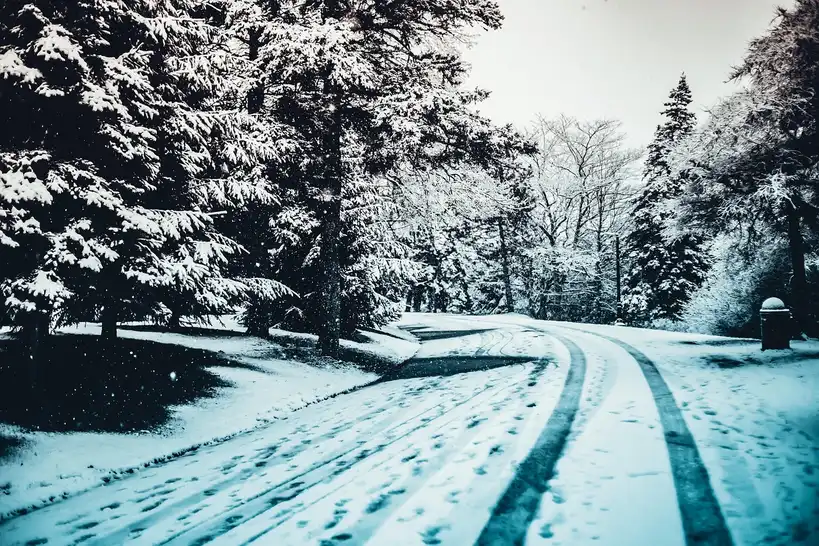
Why ABS pulses on snow
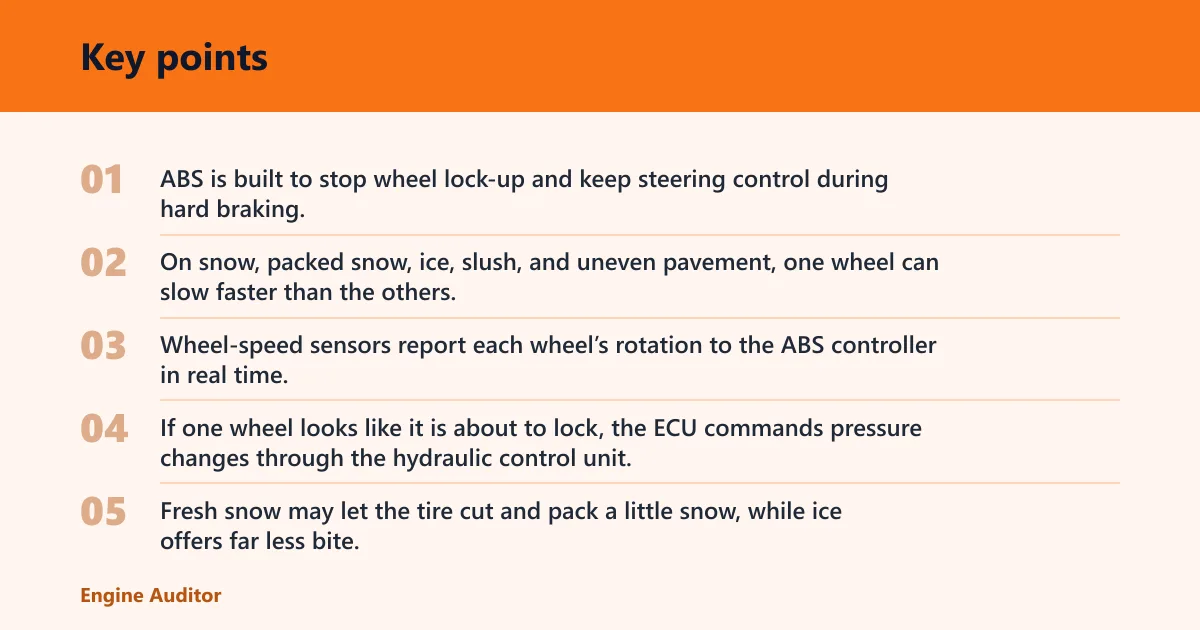

ABS is built to stop wheel lock-up and keep steering control during hard braking. On snow, packed snow, ice, slush, and uneven pavement, one wheel can slow faster than the others. The ABS control unit compares wheel speeds, then the hydraulic control unit reduces and restores brake pressure fast enough to keep the wheel turning.
What the system is doing
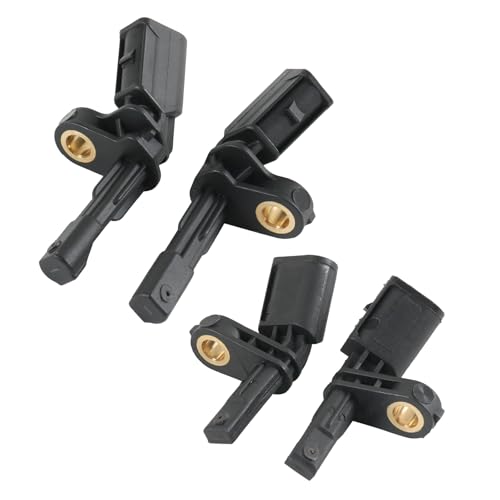
Wheel-speed sensors report each wheel’s rotation to the ABS controller in real time. If one wheel looks like it is about to lock, the ECU commands pressure changes through the hydraulic control unit. Bosch notes that ABS can cycle up to 40 times per second, so the pedal can feel busy even though the system is only reacting to the surface.
That rapid cycling matters on winter roads because grip can change within a car length. Fresh snow may let the tire cut and pack a little snow, while ice offers far less bite. Wet slush can be unstable in a different way, and uneven pavement can make one wheel unload just enough to trigger ABS sooner than expected.
Why low grip changes brake behavior
Low grip does not mean no braking. It means the tires reach their limit sooner, so ABS steps in earlier and more often. The goal is not shorter stopping distance in every case. The goal is to keep the wheels from locking so you can still steer around what is ahead.
That is why some drivers hear ABS on a snowy intersection before the car has fully stopped. The system may be doing its job, especially if the road is glossy, rutted, or only partly covered. A light touch on the pedal can still bring ABS in if one wheel finds less grip than the others.
What normal ABS activation feels like
Normal ABS activation often feels like rapid brake pedal pulsation, a vibration through the pedal, and sometimes buzzing or clicking. Different vehicles can feel more aggressive than others. Some systems intervene early and feel obvious. Others are quieter, but the basic pattern is the same: pulsing only while braking hard on a slippery surface, then fading when grip returns.
Pedal feel and sound
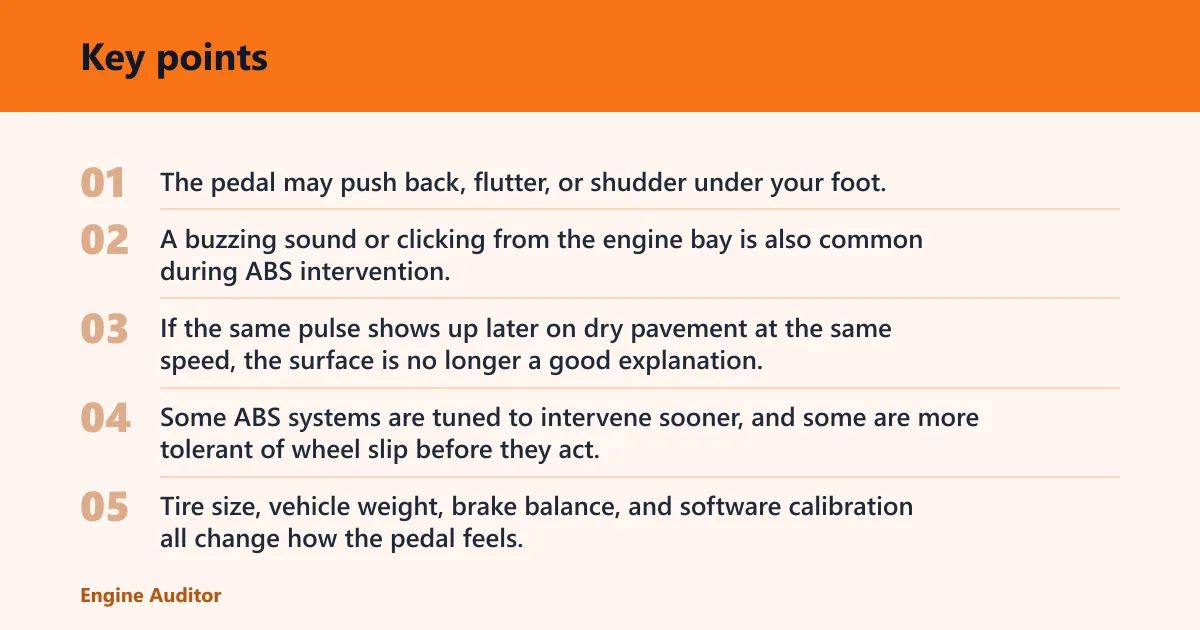
The pedal may push back, flutter, or shudder under your foot. A buzzing sound or clicking from the engine bay is also common during ABS intervention. That sound comes from the hydraulic control unit cycling brake pressure, not from the tires “skipping” or the brakes failing.
Suppose a crossover stops on packed snow at 12 mph and the pedal pulses hard for two seconds, then smooths out as the vehicle slows. That pattern fits normal ABS behavior. If the same pulse shows up later on dry pavement at the same speed, the surface is no longer a good explanation.
Vehicle-to-vehicle differences
Some ABS systems are tuned to intervene sooner, and some are more tolerant of wheel slip before they act. Tire size, vehicle weight, brake balance, and software calibration all change how the pedal feels. A system that feels “busy” on one model may feel calm on another, even when both are working correctly.
| Road surface | Speed range | Pedal feel | Dashboard light | Likely interpretation | Next step |
|---|---|---|---|---|---|
| Fresh snow | 10–35 mph | Rapid pulsation, slight vibration | Off | Normal ABS intervention on low grip | Keep steady pressure and brake earlier next time |
| Packed snow | 5–25 mph | Short, repeated pulses | Off | Normal if all wheels are affected | Ease speed sooner and leave more following distance |
| Ice | Any braking speed | Strong pulse, buzzing, longer stop | Off | Normal system response to very low traction | Expect longer stopping distance and avoid sudden inputs |
| Wet slush | 15–40 mph | Pulse during the first hard brake | Off | Normal if traction changes under braking | Brake earlier and more smoothly |
| Uneven pavement with patchy snow | 5–30 mph | Intermittent pulsation | Off | Normal if one wheel briefly unloads | Check whether the pulse disappears on smoother pavement |
| Dry pavement | Any | Pulsation should be rare | Off | Possible fault if it repeats | Inspect sensors, tone rings, tires, and wiring |
| Intersection stop in light snow | 0–10 mph | Repeated low-speed pulsing before a full stop | Off | Could be normal on patchy traction, or a sensor issue if it repeats in the same way | Note whether it happens on the same wheel or only in one spot |
| Any surface | Any | Pulse plus warning light | On | Likely ABS fault, not normal activation | Read the fault codes and diagnose the system |
| Any surface | Low speed only | One-wheel-only pulsing or grabbing | Off or on | Likely sensor, tone ring, or wiring issue | Inspect the affected corner first |
When ABS activation points to a fault
ABS activation points to a fault when it happens where traction should be good, repeats at low speed on dry pavement, or seems to come from only one wheel. A persistent ABS warning light is different from normal winter pulsing. If the light stays on, the system has found a fault and may disable ABS until it is repaired.
One-wheel-only activation
If only one wheel seems to trigger ABS, look first at the wheel-speed sensor, tone ring, and wiring at that corner. Dirty or worn sensors can send bad data and cause unnecessary activation. A cracked or rusted tone ring can do the same. Damage in the harness can create an intermittent signal that shows up most often at low speed.
Repeated low-speed pulsing on dry pavement
Low-speed pulsing at a dry intersection is a red flag when the road surface is not slippery. That pattern can point to a sensor reading that drops out as the wheel slows, a damaged tone ring, or a hydraulic issue that affects pressure modulation. If the same pulse happens again and again under similar conditions, it is not something to dismiss as winter behavior.
A common mistake is to think every ABS buzz while rolling through a slushy stop sign means the brakes are failing. Suppose a sedan pulses hard each time it rolls to a stop on a dry driveway entrance, even though the ABS light is off. That pattern is more consistent with a sensor or tone ring issue than with snow.
ABS warning light behavior
The ABS warning light is not the same thing as normal ABS activation. Normal activation can happen with the light off. A light that comes on while driving, stays on after startup, or returns after being cleared may indicate a fault in the ABS system. The car may still brake, but wheel lock-up protection may be gone.
- Note the exact condition. Record the road surface, speed range, and whether the pulse came from one stop or several. This helps separate snow-triggered intervention from a repeatable fault.
- Check the warning light. If the ABS light stays on, treat the system as faulted. If the light is off and the pulse happens only on slippery roads, normal operation is more likely.
- Inspect the affected corner. Look for packed snow, ice buildup, damaged wiring, rust on the tone ring, or a sensor that is caked with debris. A bad signal from one wheel can fool the controller.
- Scan for codes. Use a capable scan tool that reads ABS codes, not just engine codes. The fault code often points to the corner or circuit that needs attention.
Winter tires and ABS
Winter tires can improve grip in snow, slush, and cold-weather braking, and that can reduce how often ABS steps in. They do not replace ABS, and they do not stop the system from intervening on ice or patchy traction. Better grip can make winter stops smoother, but it cannot change the fact that some surfaces offer very little friction.
How tire grip changes ABS frequency
When a tire bites better, wheel speed stays more even under braking, so ABS may intervene less often. That is one reason winter tires often feel calmer on snowy roads than all-season or summer tires. The change is about frequency and feel, not a promise of no pulsation at all.
Winter tires also do not fix a bad sensor, cracked tone ring, or wiring fault. If ABS behavior changes after a tire swap, that may reflect grip. If it changes in a way that follows one wheel, the cause is more likely mechanical or electrical.
What tire choice does not do
Winter tires do not create traction where there is almost none, and they do not prevent every ABS event. They also do not make a warning light acceptable. If the ABS light is on, the tire choice is not the issue to solve first. The system needs diagnosis.
What to check next
Start with the easy, visible items, then move to sensor and brake hardware checks if the symptom repeats. Wheel-speed sensors, tone rings, brake hardware, and wiring are the usual places to look when ABS acts too early or only at one corner. If the problem appears only on snow, the system may be normal. If it repeats off snow, it deserves inspection.
Wheel-speed sensors and tone rings
Check each sensor for dirt, rust, or damage. Inspect the tone ring for cracks, missing teeth, or heavy corrosion. A sensor that is dirty or out of alignment can misread wheel speed and trigger ABS when the wheel is still turning normally.
Tires and pressure
Make sure all four tires are properly inflated and have even tread. Mismatched tread depth or one very weak tire can change how quickly that corner slips. Winter tires on one axle and worn all-seasons on the other can make ABS behavior less predictable.
Brake hardware and wiring
Look for loose wiring, damaged connectors, and signs of brake drag. A sticking caliper or seized slide pin can confuse the way the wheel slows. If the brake pedal feels normal but ABS still engages early, the issue may be electrical rather than hydraulic, but both paths deserve attention.
- Confirm the symptom pattern. Decide whether the pulse happens only on snow, or also on dry pavement and at low speed. That split usually tells you whether to treat it as normal winter behavior or a fault.
- Check the tires. Compare tread depth, inflation, and tire type across all four corners. Uneven grip can make ABS intervene sooner on one axle or one wheel.
- Inspect the sensors. Clean visible debris and look for cracked wiring near each wheel hub. Small damage here can create a large ABS complaint.
- Schedule diagnosis if needed. If the ABS light is on, one wheel keeps triggering, or the pulse happens on dry pavement, have the ABS codes read and the related hardware checked.
Frequently asked questions
Why is my ABS kicking in on snowy roads?
Because snow lowers tire grip enough that one wheel may slow faster than the others under braking. The ABS control unit compares wheel speeds and modulates pressure to stop wheel lock-up and keep steering control available. If the warning light stays off and the pulse happens only on slippery surfaces, that is usually normal winter operation.
Is it normal for ABS to activate on snow at low speed?
Yes, it can be normal even at low speed, especially on packed snow, ice, or patchy traction near an intersection. The system reacts to wheel slip, not road speed alone. If the same low-speed pulse happens on dry pavement, it is more likely a fault than expected ABS behavior.
How can I tell ABS activation from a brake problem?
Normal ABS activation appears as pedal pulsation, vibration, and sometimes buzzing or clicking during a slippery stop. A brake problem is more likely if the ABS light is on, if the pedal behavior happens on dry pavement, or if only one wheel seems to trigger the event.
Why does my brake pedal pulse on slippery roads?
The pedal pulses because the hydraulic control unit is reducing and restoring brake pressure many times per second. That cycling helps keep the wheels from locking so steering control stays available. The pulse is a normal part of ABS intervention on snow, slush, ice, and wet roads.
Can winter tires reduce ABS activation?
Yes. Winter tires can improve grip in cold conditions, so ABS may intervene less often and feel less intrusive. They do not replace ABS, though, and they will not stop the system from activating on ice or other very low-traction surfaces.
When is ABS activation a sign of a fault?
ABS is suspect when it activates on dry pavement, repeats at low speed in ordinary conditions, comes from one wheel only, or arrives with an ABS warning light. Dirty sensors, bad tone rings, damaged wiring, and brake hardware problems are common places to look next.
Products related to this article
Sponsored / affiliate links. As an Amazon Associate I earn from qualifying purchases. I may earn additional commission from eligible campaigns.