Best Test Light Uses for Car Triage (2026): We Compared
Best test light uses for car electrical troubleshooting are quick checks of 12-volt power, grounds, fuse sockets, relay outputs, bulb circuits, and simple connector feeds. Use a test light for fast go/no-go diagnosis on straightforward circuits, then switch to a multimeter for voltage-drop, resistance, low-current, or module-controlled checks. Stop and switch tools when a circuit is computer-controlled, the reading is dim or unstable, or you need a numeric result instead of a simple glow.
Quick comparison
| Product | Badge | Best for | Price | ||
|---|---|---|---|---|---|
 |
Test Light AutomotiveFEAOXYO | Our pick | Test Pen · 6-24V DC · Alligator Clip · Steel Probe | $4.95
Price as of 17 Nov 2026
|
View |
 |
MECCANIXITY 2Pcs Voltage Tester Pen 4mm Flat Head ElectricalMECCANIXITY | Also great | Neon Tester · 12-240V AC · 2-Pack | $8.69
Price as of 17 Nov 2026
|
View |
 |
WINAMOO Automotive Test Light with 3-48V LED Digital VoltageWINAMOO | Also great | LED Tester · 3-48V DC · Digital Voltmeter Display | $8.95
Price as of 17 Nov 2026
|
View |
Use this overview to match the tool to the job before you probe a circuit. Start with the question in front of you: do you need a simple yes/no voltage check, a polarity check, or a numeric reading?
How we chose
The tools below are grouped by the automotive troubleshooting jobs they fit best, especially simple 12-volt power-and-ground diagnosis at fuse panels, relay outputs, lamp sockets, and basic feed checks.
For modern vehicles, the least invasive tool that still answers the question is usually the better choice. That means a standard test light for simple circuits, an LED or fused probe for more delicate checks, and a multimeter when the job needs a number rather than a glow.
FEAOXYO circuit tester: best for simple fuse and power checks
- Lowest price in the lineup
- Bright bulb gives reliable visual indication
- Bidirectional polarity testing included
The FEAOXYO test pen suits quick go/no-go checks on 6V to 24V DC circuits, especially fuse boxes, lamp sockets, relay outputs, and battery-fed feeds. Its alligator clip ground lead and long steel probe make it practical for fast checks where you only need to know whether power or ground is present.
It is a good fit when you want a clear light response on a simple circuit. The bidirectional polarity testing helps identify which side is hot and which side is ground on straightforward automotive wiring.
The drawback is that it still behaves like a probe-style lamp tool, so it is not the best choice for every module-controlled line. On sensitive circuits, an LED probe, fused test light, noid light, or multimeter is often safer and more informative.
WINAMOO digital test light: best for modern circuit checks
- Digital display shows exact voltage down to 0.1V
- Dual-color polarity indicator prevents wrong connections
- 96-inch spring wire reaches tight or distant circuits easily
The WINAMOO tester fits readers who want a clearer voltage readout and a longer reach. Its 3V to 48V DC range, digital display, dual-color polarity indication, and 96-inch spring wire help on underhood checks, cabin fuse panels, and awkward connectors.
It is the stronger option when a simple bulb glow is not enough detail. The numeric display can confirm whether voltage is present, while the polarity indicator helps avoid reversed connections during basic checks.
The drawback is that a numeric display does not replace a true multimeter for voltage-drop or resistance testing. It is still a probe-style tool, so it should be used as a quick screening step rather than the final diagnostic answer.
MECCANIXITY voltage tester: best for AC-only bench work
- Two units replace single losses quickly
- Neon glow scales with voltage intensity
- Screwdriver tip doubles as a prying tool
The MECCANIXITY two-pack is not the main choice for car troubleshooting. It is a 12V to 240V AC neon tester, so it fits bench or household AC checks better than 12-volt automotive DC work.
It may still appeal if you want a spare for non-vehicle use, and the two-pack helps if one tool is misplaced.
The drawback is the mismatch with most car electrical faults. For automotive work, use a DC-rated test light rather than an AC neon tester.
Test light use cases by circuit type
| circuit example | best test light type | what a good reading looks like | when to stop and switch to a multimeter | risk level for modern modules |
|---|---|---|---|---|
| Fuse top test points | Fused test light or LED probe | Power on both sides of the fuse with the circuit active | If one side lights and the other does not, verify the circuit path with a multimeter only if needed | Low on simple fuse boxes; higher near module-fed circuits |
| Battery positive or relay output | Incandescent or LED probe | Bright lamp or clear illumination at the expected hot terminal | If the light is dim, intermittent, or changes with load, use a multimeter for voltage drop | Low to moderate |
| Chassis ground point | LED probe or fused test light | Strong illumination when clipped to battery positive and touching the ground point | If the lamp is weak, confirm with a multimeter voltage drop test across the ground path | Moderate |
| Fuel injector connector | Noid light | Flashing pulse during cranking or commanded operation | Switch immediately if pulse shape, dwell, or injector resistance needs confirmation | Higher on ECU-controlled circuits |
| Brake lights, horn, power window motor feed | Fused test light | Power present at the feed side and at the output side when commanded on | If the circuit shows voltage but the load still fails, use a multimeter for voltage drop under load | Moderate |
| Connector power check at an actuator | LED probe | Clear polarity and voltage presence without heavy loading | Use a multimeter if the circuit only fails under load or the reading is borderline | Moderate to higher on module-controlled lines |
What can you use a test light for on a car?
A 12-volt automotive test light is best for quick yes/no checks of power and ground on simple circuits. Use it on fuse panels, relay terminals, lamp sockets, brake light feeds, horn circuits, and connector checks where you only need to know whether voltage is present or a ground path is intact.
That makes it a strong first-pass tool. It is faster than setting up a meter for every check and easier to interpret when you are tracing a blown fuse, a dead relay output, or a missing ground on a bulb circuit.
Safe use cases
The safest and highest-value jobs are the ones that only need a quick confirmation of power or ground. That includes fuse top checks, relay output checks, bulb circuit checks, and simple feed verification on 12-volt accessories.
For those jobs, the goal is not precision. The goal is to learn fast whether the circuit is alive, dead, or missing ground so you can move to the next likely fault.
Fuse checks
Check the top test points on the fuse with the circuit active. If both sides light, the fuse is usually good and power is reaching through the fuse element. If one side lights and the other does not, that points to a blown fuse or open fuse element, not a mystery feed problem.
Use the ignition key or the circuit switch in the position that powers that fuse. A key-on fuse can look dead if you test it with the key off.
Power feed checks
Use the test light on battery positive, relay outputs, and switched ignition feeds to confirm whether the circuit is hot all the time or only with the key on. That helps separate a dead feed from a downstream load problem.
If a power window stops working and the motor connector has no light on the feed pin with the switch pressed, the upstream feed, fuse, or relay is the more likely starting point than the motor itself.
Ground checks
A test light can find a bad ground. Clip the lead to battery positive, then probe the ground point or the ground side of the connector. A bright light means the ground path is good; weak or no light suggests resistance, corrosion, or an open ground.
This is useful for fast diagnosis, but it is not the final word. If the lamp is dim or unstable, a multimeter voltage-drop test gives a clearer number for how much loss exists in the ground path.
Relay and lamp checks
Relays, brake lights, horns, and simple lamps are good test-light jobs because they are easy to interpret. You can check for feed power at the relay, output power when the relay is commanded, and ground at the load side if the circuit uses a switched ground.
A common mistake is to see power at a relay input and assume the whole circuit is fine. If the output never lights, the relay may not be switching, the coil may not be getting command, or the contact side may be failing under load.
When should you use a noid light instead?
Use a noid light at fuel-injector connectors and other ECU-controlled pulse circuits where you want to see injector command without risking a false call. A noid light is made for that job, while a regular test light can load the circuit or blur what the computer is actually doing.
This matters on pulse-width-controlled circuits. A test light may glow, flicker, or stay dim in a way that looks useful but does not confirm correct injector pulse. The noid light gives a cleaner yes/no pulse check at the connector.
Injector pulse circuits
On injector plugs, the question is often whether the engine computer is commanding pulse, not simply whether the connector has battery power. A noid light is the better tool because it is built for that signal path.
If the noid light flashes but the engine still has a no-start or misfire, move to the multimeter and the scan tool before guessing at injector failure. That is the point where voltage, pulse width, and circuit integrity need more detail.
Module-controlled signals
Many module-controlled loads do not behave like older, purely switched circuits. On those paths, a standard incandescent probe can pull current that the module is not meant to supply, which can mislead the diagnosis or stress the circuit.
For those checks, a fused test light, an LED test light, a noid light, or a multimeter is usually the safer next step. Choose the least invasive tool that still answers the question.
Can a test light damage a car computer?
Yes, it can if you use the wrong style of probe on a sensitive module-controlled circuit. The risk depends on the circuit and the tool. A standard incandescent test light generally draws more current than an LED probe, while a fused test light can add some protection on many modern vehicle checks.
The practical rule is simple: use a test light on simple power and ground circuits, but move to a fused test light, LED probe, noid light, or multimeter when the circuit is computer-controlled or the job calls for low-current probing.
What amperage test light is safe for modern cars?
There is no single safe amperage for every modern car circuit because the right answer depends on the module and the circuit design. For sensitive electronics, the safer choice is usually a low-current LED probe or a fused test light rather than a heavy incandescent probe. Check the manufacturer’s listing for your exact model.
Do not use lamp brightness as a battery-health test. Brightness only tells you that current is flowing, not that the battery, cable, or ground is healthy under load.
How do you test for power and ground with a test light?
To test for power, clip the alligator lead to a known good ground and probe the terminal you want to check. A bright lamp or clear LED indication means the circuit is hot. To test for ground, clip the lead to battery positive and probe the ground point; strong illumination means the ground path is present.
That makes the tool useful for fast circuit triage. You are not measuring exact voltage, resistance, or voltage drop with a lamp probe, but you can quickly sort a dead feed from a missing ground.
- Confirm the circuit is supposed to be active.
- Clip the test light to a known good ground for power checks.
- Probe the fuse top, connector pin, or relay terminal.
- For ground checks, clip to battery positive and probe the ground side.
- Stop and switch to a multimeter if the lamp is dim, intermittent, or unclear.
If a horn does not work and the fuse lights on both sides, the fuse is usually good. That points you to the relay, horn feed, or horn ground instead of replacing the fuse again.
What is the difference between a test light and a multimeter?
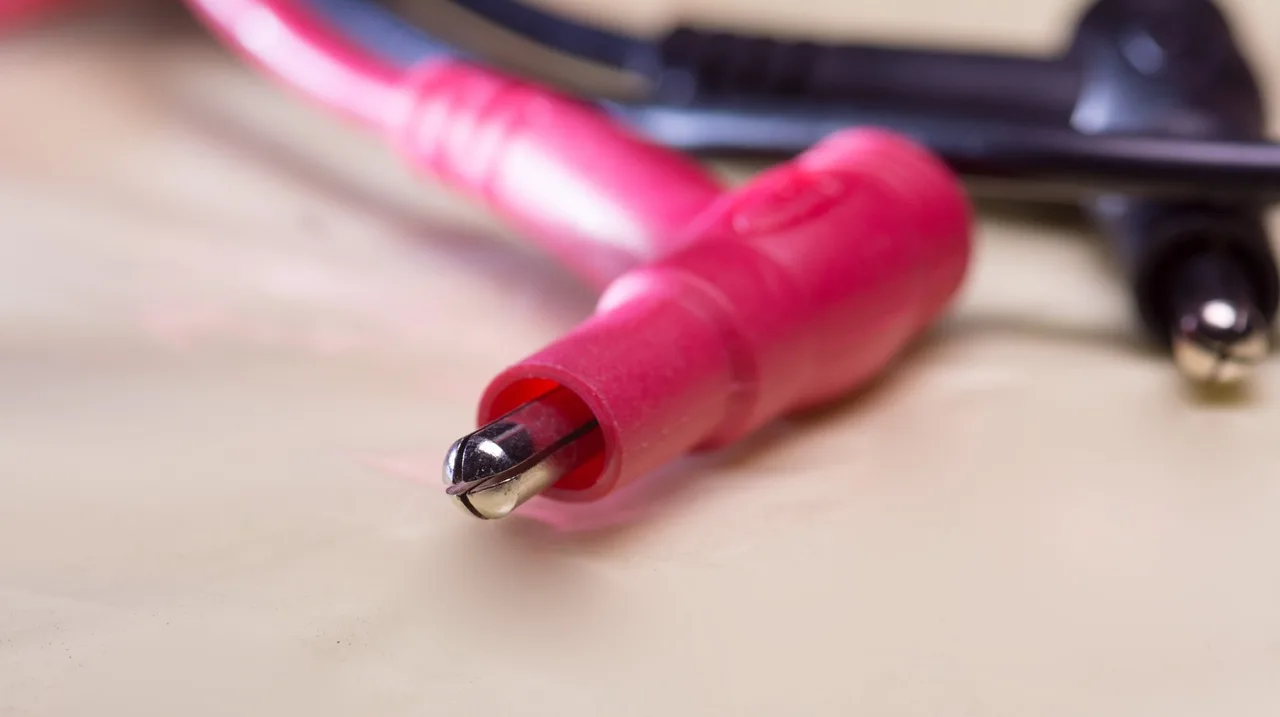
A test light is a go/no-go tool for voltage presence. A multimeter reads voltage numerically and is better for voltage drop and resistance checks. That difference matters because some failures only show up when you can measure how much voltage is lost across a wire, connector, or ground path.
Use the test light for fast screening, then switch to the multimeter when the circuit is partly alive, unstable, or loaded. If a circuit lights but still fails in service, the meter usually gives the next useful answer.
Where the multimeter wins
Use the multimeter when you need a number, not just confirmation that something glows. It is the better choice for voltage-drop testing, resistance checks, and cases where a connector shows power but the component still will not run.
That is especially true on weak grounds and high-resistance power feeds. A lamp can say something is there, while a meter can show that the circuit is too weak to carry the load.
Does a test light work on 6-volt and 12-volt systems?
Some test lights are made for 6-volt systems, some for 12-volt systems, and some for both. Check the manufacturer’s listing for your model before use, because the lamp or LED behavior depends on the voltage range it is designed to detect.
For older vehicles and specialty equipment, the key point is compatibility. A probe rated for 12-volt automotive work is not automatically the right choice for every 6-volt circuit, and the reverse is true as well.
Which one should you buy?
If you want the simplest answer for everyday car troubleshooting, start with the FEAOXYO circuit tester. It is the best fit for fuse checks, lamp circuits, relay outputs, and quick power checks on straightforward 12-volt wiring.
If you work on newer vehicles or want a clearer numeric readout, the WINAMOO digital test light is the better fit. Its display and longer wire help when access is awkward and you want more detail than a glowing bulb gives.
Choose the MECCANIXITY two-pack only if you also need an AC neon tester for non-vehicle work. It is not the right first choice for car electrical troubleshooting.
For modern modules, prefer the least invasive tool that answers the question. That usually means LED probe, fused test light, noid light, or multimeter before a standard incandescent probe on sensitive circuits.
Frequently asked questions
How do you use a test light to check fuses?
Probe the two top test points on the fuse with the circuit active. If both sides light, the fuse is usually good. If one side lights and the other does not, the fuse element is blown or open.
When should you use a noid light instead of a test light?
Use a noid light on fuel-injector connectors and other pulse circuits where you want to verify ECU command. A regular test light can load the circuit or hide the shape of the signal.
Can a test light find a bad ground?
Yes. Clip the light to battery positive and probe the ground point. A bright or strong reading means the ground is better; a weak or absent reading suggests a bad ground, corrosion, or a high-resistance path.
Products related to this article
Sponsored / affiliate links. As an Amazon Associate I earn from qualifying purchases. I may earn additional commission from eligible campaigns.