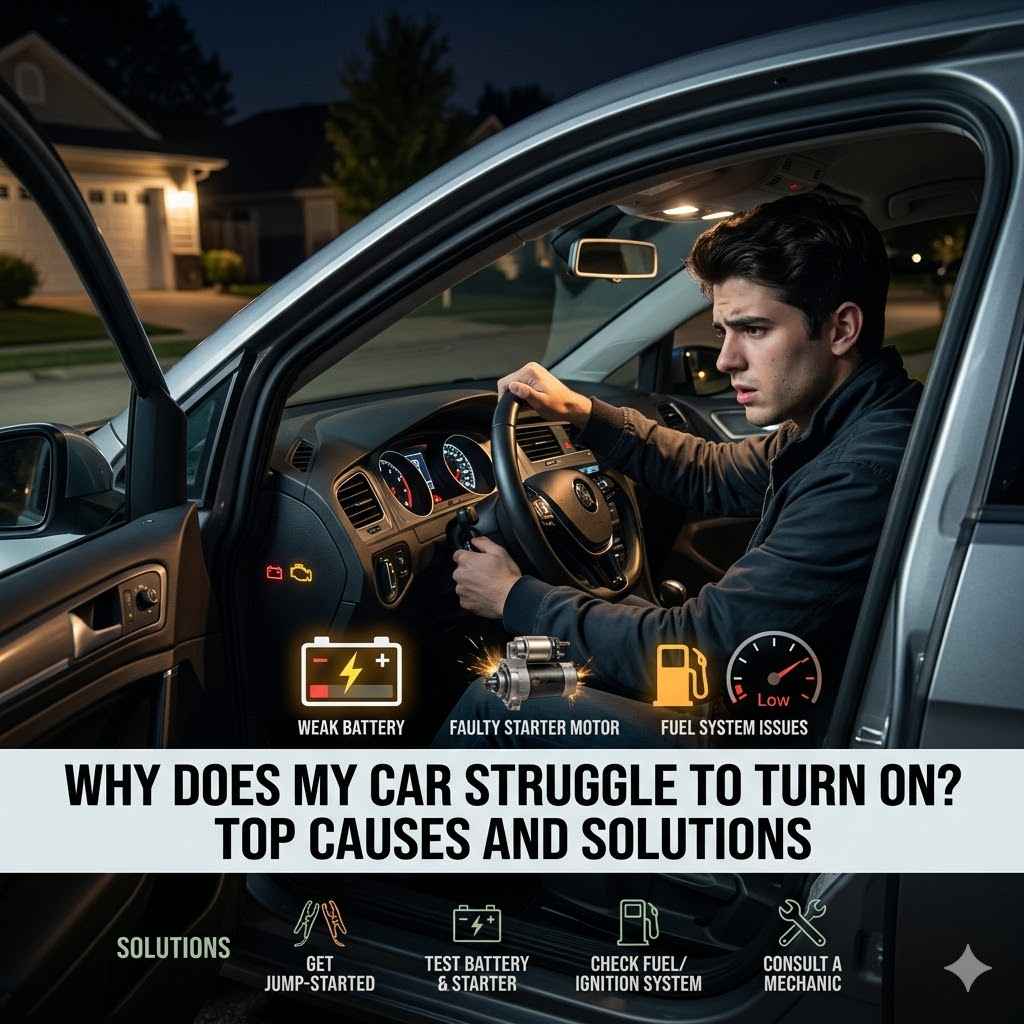
Why Does My Car Struggle to Turn On? Top Causes and Solutions
Why Does My Car Struggle To Turn On
Every car owner knows the feeling: you get into your car, turn the key or push the button, and instead of a smooth start, the engine hesitates or doesn’t turn on at all. This moment can be stressful, especially if you’re in a hurry or far from home. If you’re wondering, “Why does my car struggle to turn on?”—you’re not alone. Many drivers face this problem at some point, but the reasons can be different for each car and situation.
Getting to the root of this issue is important not just for convenience but also for safety and saving money. A car that struggles to start could leave you stranded or even point to deeper mechanical problems. In this article, you’ll learn all the common (and some less obvious) reasons why your car might be hard to start.
You’ll also find practical tips, real-world examples, and advice on what to do next. Whether you drive an older vehicle or a new model, understanding these causes can help you avoid expensive repairs and keep your car reliable.
The Basics Of How A Car Starts
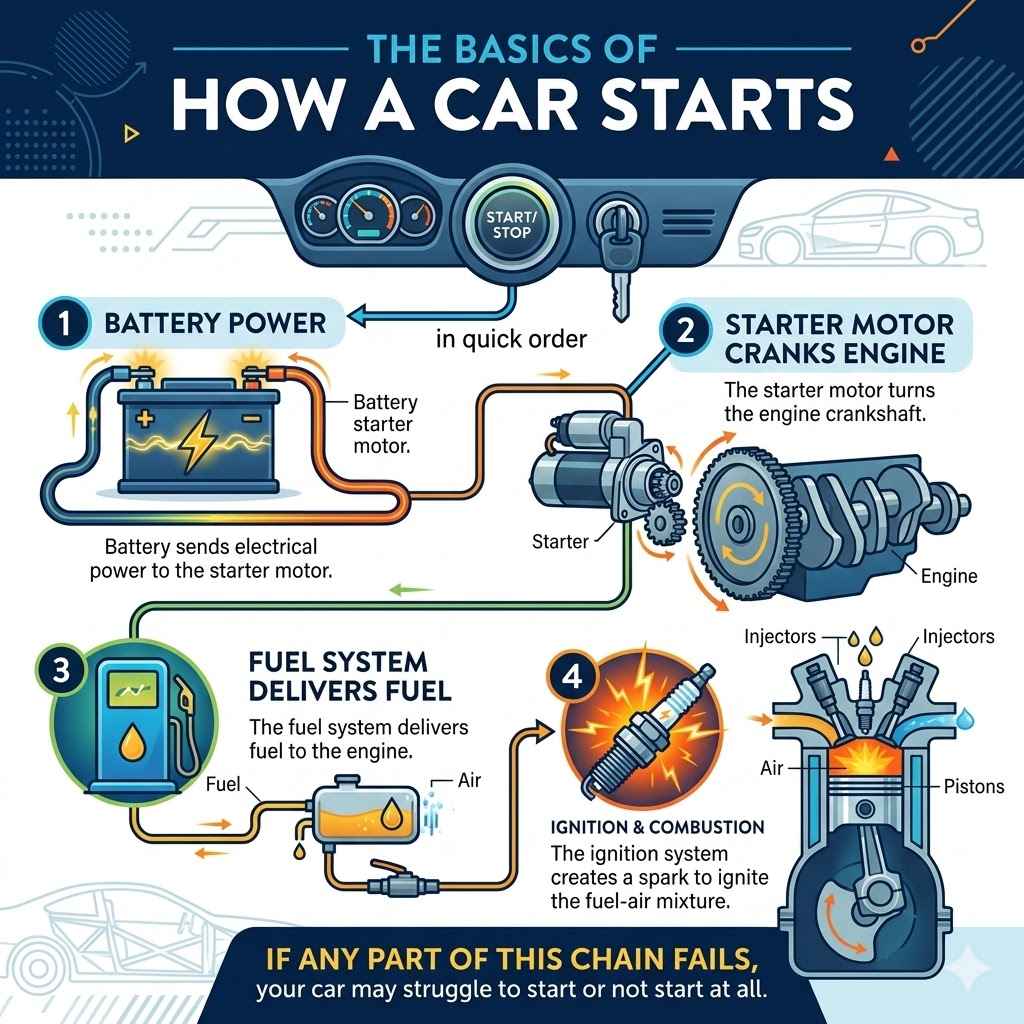
Before diving into the causes, it helps to know what happens when you try to start your car. When you turn the key or press the start button, several things happen in quick order:

As an Amazon Associate I earn from qualifying purchases.
- Battery sends electrical power to the starter motor.
- The starter motor turns the engine crankshaft.
- The fuel system delivers fuel to the engine.
- The ignition system creates a spark to ignite the fuel-air mixture.
If any part of this chain fails, your car may struggle to start or not start at all. Understanding this sequence will make it easier to see where problems can appear.
Common Reasons Your Car Struggles To Turn On
Several issues can cause hard starting. Some are simple and easy to fix, while others require professional help.
1. Weak Or Dead Battery
A weak battery is the most common reason cars struggle to turn on. Car batteries typically last 3-5 years depending on use and weather. Signs of a weak battery include:
- Dim headlights
- Slow engine cranking
- Clicking noise when turning the key
Cold weather can make batteries weaker because chemical reactions slow down in low temperatures. If your car starts slowly on cold mornings but works fine later, your battery may be close to failing.
How To Check
Use a multimeter to test the battery voltage. A healthy car battery should show around 12.6 volts when the car is off. If it reads below 12.2 volts, consider replacing the battery.
Non-obvious Insight
Sometimes, battery terminals get corroded, which blocks the flow of electricity. Even a new battery won’t work well if the terminals are dirty. Regularly check and clean the terminals with a wire brush.
2. Faulty Starter Motor
The starter motor turns the engine to begin the combustion process. If it’s faulty, you might hear a single click or nothing at all when you turn the key.
Symptoms
- Repeated clicking noises
- Engine does not turn over
- Occasional success after several attempts
A failing starter can sometimes work if you tap it lightly with a tool (not recommended as a solution but can be a sign of the problem).
Practical Example
If your car starts after several tries but gets worse over time, the starter motor could be nearing the end of its life. Starter motors usually last 80,000–150,000 miles.
3. Bad Ignition Switch
The ignition switch sends power from the battery to the starter and other systems. If it fails, nothing happens when you turn the key.
Signs
- No dashboard lights when the key is in the “on” position
- Key feels loose or hard to turn
- Car starts after jiggling the key
A worn ignition switch can sometimes cause intermittent starting problems, which can be confusing to diagnose.
4. Fuel System Problems
Your engine needs the right amount of fuel to start. Problems with the fuel pump, fuel filter, or fuel injectors can stop the engine from getting enough fuel.
Common Fuel System Issues
- Weak fuel pump: Engine cranks but does not start
- Clogged fuel filter: Hard starting, especially after sitting
- Dirty or faulty injectors: Uneven starting, rough idle
Data Table: Fuel System Component Lifespan
| Component | Expected Lifespan | Common Failure Sign |
|---|---|---|
| Fuel Pump | 100,000–150,000 miles | No start, whirring sound from tank |
| Fuel Filter | 20,000–40,000 miles | Hard start, reduced power |
| Fuel Injectors | 50,000–100,000 miles | Rough idle, poor fuel economy |
Non-obvious Insight
A failing fuel pump often makes a whining noise from the gas tank area. If you hear this sound before starting, have your pump checked.
5. Faulty Alternator
The alternator charges your battery while the car runs. If it fails, your battery can drain, leaving you unable to start the car.
Warning Signs
- Battery warning light on the dashboard
- Dim or flickering headlights
- Electrical accessories not working
Even if your battery is new, a bad alternator will keep draining it.
6. Bad Spark Plugs
Spark plugs ignite the fuel-air mixture. Worn or dirty spark plugs can cause hard starting, especially in cold or damp weather.
Symptoms
- Engine cranks but does not start
- Rough idle after starting
- Poor acceleration
Modern spark plugs can last up to 100,000 miles, but older types may need changing every 30,000 miles.
7. Engine Sensors Malfunctioning
Modern cars rely on many sensors to start and run smoothly. Important ones for starting include:
- Crankshaft position sensor
- Camshaft position sensor
- Mass airflow sensor
If one of these fails, the engine might not start or may run poorly.
Example
A bad crankshaft position sensor can cause the car to stall unexpectedly or not start at all. This is often missed because it may not trigger a warning light right away.
8. Immobilizer Or Anti-theft System Issues
Many cars have electronic immobilizers that prevent the engine from starting without the correct key or code. If this system malfunctions, it can stop the car from starting, even if everything else is fine.
Signs
- Security light flashing or staying on
- Engine cranks but won’t start
- “Key not detected” message
Sometimes, using a spare key or resetting the system can help. Check your owner’s manual for instructions.
9. Problems With The Key Or Fob
Modern cars use keys with chips or keyless fobs. If the key’s battery is dead or the chip is damaged, the car may not recognize it.
What To Do
If the problem continues, the key or fob may need reprogramming.
10. Starter Relay Or Fuse Failure
A starter relay acts as a switch between the battery and the starter motor. If it fails, the circuit is broken and the car won’t start. Similarly, a blown starter fuse will stop power from reaching the starter.
How To Check
- Listen for a clicking sound from the relay when you turn the key
- Inspect fuses in the fuse box (refer to the car’s manual)
Replacing a bad relay or fuse is usually quick and inexpensive.
11. Low Fuel Or Wrong Fuel
It sounds simple, but sometimes the reason is just an empty tank or using the wrong type of fuel. Diesel in a gasoline car (or vice versa) can cause major starting problems.
Example
If you recently filled up at an unfamiliar station and the car won’t start, double-check the fuel type.
12. Flooded Engine
This happens when too much fuel enters the engine, usually after repeated unsuccessful starting attempts. It’s more common in older cars or in cold weather.
Signs
- Strong smell of gasoline
- Engine cranks quickly but won’t start
To fix, press the accelerator to the floor while starting (in gasoline cars only) to clear out excess fuel.
13. Engine Oil Problems
Low or old engine oil can make starting harder because it increases friction inside the engine. In very cold weather, thick oil can slow cranking.
Practical Tip
Use the oil grade recommended by your car’s manufacturer, especially in winter. Synthetic oils often flow better in cold conditions.
14. Faulty Ecu (engine Control Unit)
The ECU is the brain of your car. If it fails or has software issues, the car may not start or can behave unpredictably.
Warning Signs
- Multiple warning lights on the dashboard
- Engine cranks but doesn’t start
ECU failures are rare, but can happen after electrical surges or improper jump-starting.
15. Wiring Issues
Broken, loose, or corroded wires can interrupt the flow of electricity needed for starting. This is more common in older cars or those exposed to moisture.
Example
A wire chewed by rodents (common in rural areas) can cause sudden starting problems. Always check under the hood if you suspect wiring damage.
16. Blocked Air Intake
Engines need air to start. If the air filter is dirty or the intake is blocked, your car may struggle to turn on.
How To Check
Remove the air filter and check if it’s dirty. Replace it if needed. Most filters should be changed every 15,000–30,000 miles.
17. Cold Weather Effects
In very cold climates, engines are harder to start because oil thickens, batteries weaken, and fuel may not vaporize well.
Data Table: Cold Weather Effects
| Temperature (°F) | Battery Efficiency (%) | Oil Viscosity |
|---|---|---|
| 70 | 100 | Normal |
| 32 | 65 | Thicker |
| 0 | 40 | Much thicker |
| -20 | 20 | Very thick |
Non-obvious Insight
Parking your car indoors, or using a battery warmer, can improve starting in cold climates.
18. Timing Belt Or Chain Issues
The timing belt or chain synchronizes engine components. If it breaks or slips, the engine may not start and could suffer serious damage.
Signs
- No start and strange noises
- Engine cranks faster than normal
Timing belts must be changed at intervals set by the manufacturer, often every 60,000–100,000 miles.
19. Compression Problems
Engines need compression to start. Worn piston rings, valves, or head gaskets can cause low compression, making starting difficult.
Signs
- Engine cranks quickly but does not start
- Misfiring or rough running when started
Compression problems usually require a mechanic to diagnose.
20. Flooded Catalytic Converter
A rare but possible cause, especially if the car has been running rich (too much fuel). If the catalytic converter gets blocked, exhaust gases can’t escape, making it hard or impossible to start.
Symptoms
- Rotten egg smell
- Engine struggles and stalls
Regular maintenance and fixing misfires quickly can prevent this problem.
Comparing Common Starting Problems
Here’s a quick comparison of the most common hard-starting issues and how often they occur:
| Cause | Typical Frequency | DIY Fix Possible? |
|---|---|---|
| Weak Battery | Very common | Yes |
| Faulty Starter | Common | Sometimes |
| Bad Ignition Switch | Less common | No |
| Fuel System Issues | Common | Sometimes |
| Spark Plug Problems | Common | Yes |
| Alternator Failure | Less common | No |
What To Do When Your Car Struggles To Start
If your car is hard to start, here’s what you can do:
- Listen carefully: Notice any unusual sounds (clicks, whirs, silence).
- Check battery terminals: Clean if corroded.
- Try starting with lights on/off: If lights dim, battery is likely weak.
- Check fuel level: Make sure you have enough fuel.
- Look for dashboard warning lights: These can give clues.
- Try a spare key: If you have a keyless system.
- Call roadside assistance: If you’re stranded or unsure.
If the problem repeats, visit a trusted mechanic. Don’t ignore starting trouble—it rarely fixes itself and can get worse over time.
Preventive Maintenance Tips
To avoid future starting problems, follow these steps:
- Replace your battery every 3-5 years, or sooner if weak.
- Change spark plugs as recommended.
- Keep fuel and air filters clean.
- Use the right engine oil for your climate.
- Inspect wiring for damage.
- Avoid running your tank empty.
- Service your car regularly.
Non-obvious tip: Many drivers forget to check their battery after a single hard start, but a battery can be weak even if it works sometimes. Testing it each season can save you from a surprise breakdown.
When To Seek Professional Help
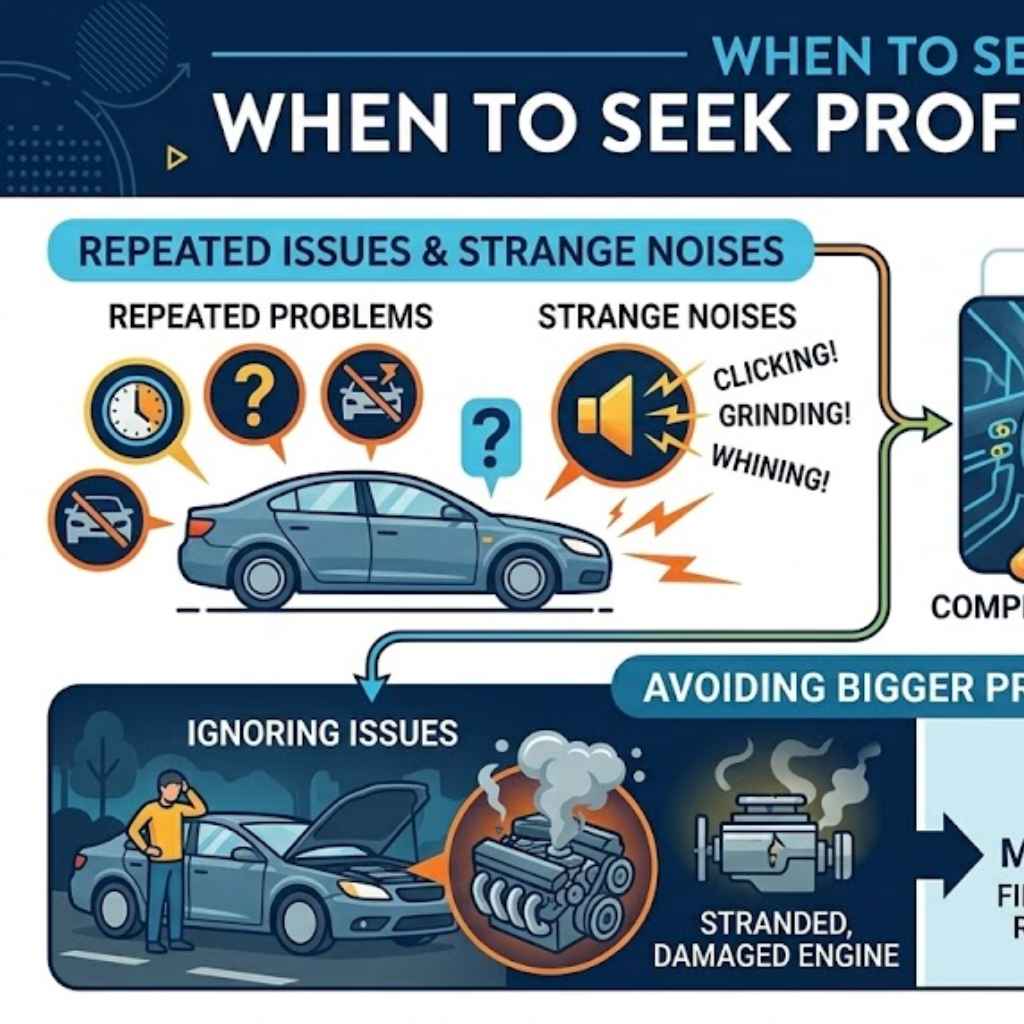
Some issues, like a dead battery or dirty terminals, are easy to fix yourself. But if you notice repeated problems, strange noises, or warning lights, it’s best to visit a mechanic. Modern cars have complex electronics that may require special diagnostic tools.
Ignoring hard starting can lead to bigger problems, like being stranded or damaging the engine. A skilled mechanic can quickly find and fix the real cause.
Frequently Asked Questions
Why Does My Car Only Start After Several Tries?
This often points to a weak battery, bad starter, or fuel delivery issue. It can also be a sign of a failing ignition switch or sensor. Have your battery and starter tested first, as they are the most common causes.
What Should I Do If My Car Clicks But Doesn’t Start?
A clicking noise usually means the battery is weak or the starter motor is faulty. Check the battery voltage and clean the terminals. If the battery is good, the starter may need replacement.
Can Cold Weather Make My Car Hard To Start?
Yes, cold weather reduces battery power and makes engine oil thicker. This puts more strain on the battery and starter. Using a battery warmer or parking indoors can help.
How Can I Tell If It’s The Battery Or Alternator?
If your car starts after a jump but dies soon after, the alternator may not be charging the battery. If the car works fine after a jump, the battery was likely the problem. A mechanic can run tests to confirm.
Is It Safe To Keep Trying To Start My Car?
Repeated attempts can flood the engine or drain the battery. If the car doesn’t start after a few tries, wait a few minutes or check for obvious issues. If you’re unsure, call for help to avoid further damage.
For more details on car starting systems, visit the Wikipedia Starter Motor page.
A car that struggles to turn on can be frustrating, but understanding the possible causes helps you act quickly and avoid bigger problems. Regular checks and preventive care go a long way in keeping your car reliable, especially when you need it most.
If you ever feel unsure, don’t hesitate to ask a professional for help—your safety and peace of mind are always worth it.
Related pick: Check today's price on Amazon
Products related to this article
Sponsored / affiliate links. As an Amazon Associate I earn from qualifying purchases. I may earn additional commission from eligible campaigns.