How to Start a Ford With a Key Fob
Starting your Ford with a key fob can seem tricky if you’ve never done it before. Many new car owners wonder about the exact steps. It’s a common question, and thankfully, it’s a simple process once you know what to do.
This guide will show you exactly How to Start a Car with a Ford Key Fob easily. We’ll break it down step-by-step so you can get going in no time.
Understanding Your Ford Key Fob Technology
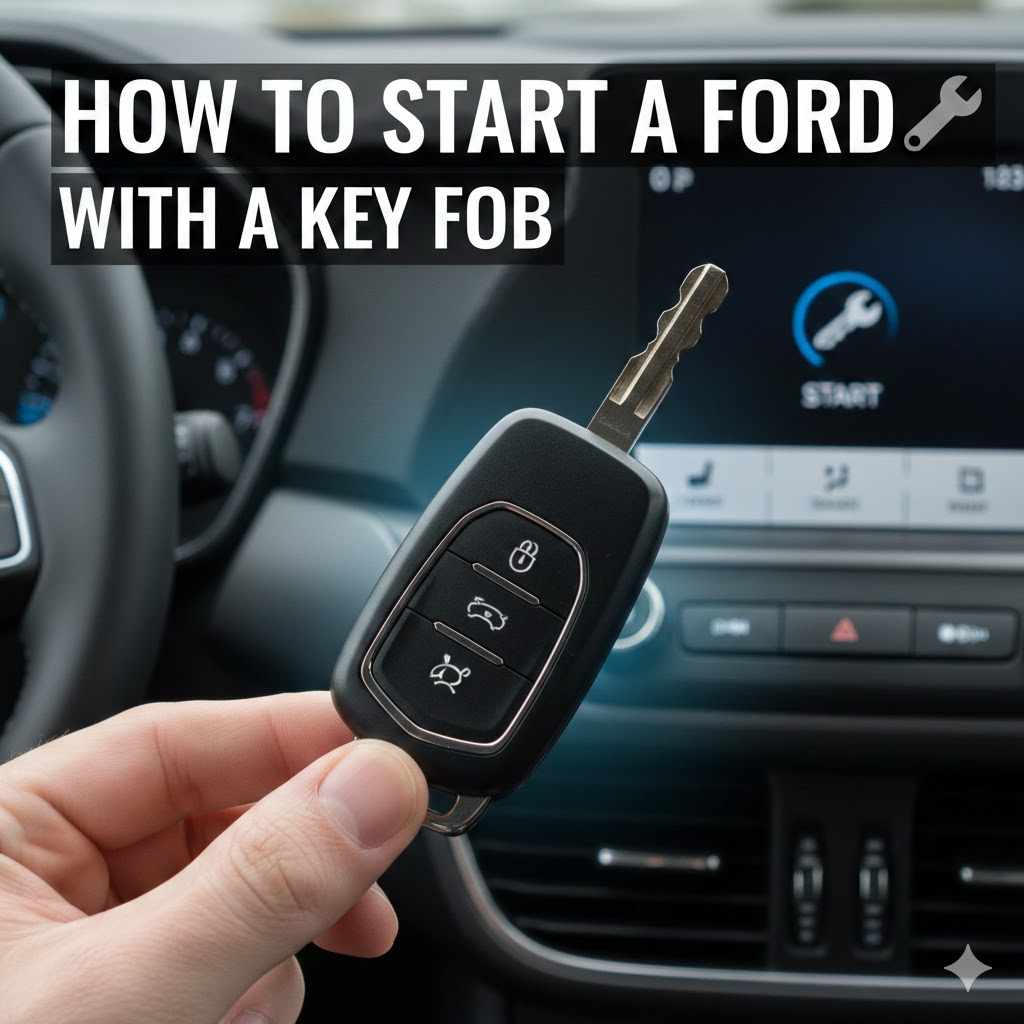
Your Ford key fob is a small, modern device that allows you to interact with your vehicle without physically inserting a key into a lock. It uses radio frequencies to communicate with your car’s computer system. This technology makes starting your car convenient and secure.

SUPALAND
SUPALAND Remote Start Control Flip Key Fob…
- HIGH-QUALITY: Every Single Keyless Entry Remote Control Car Flip Key Fob is Fully Pre-tested by Professional Locksmith Tools befor…
- COMPATIBILITY: Compatible with FCC ID N5F-AO8TDA. Please Check Our Product Description and Vehicle Fitment Tool for Full Compatibl…
- REPLACEMENT: This Keyless Entry Remote Control Car Key Fob Replacement Is Compatible with Part Numbers: 164-R8130, 5923667
As an Amazon Associate I earn from qualifying purchases.
Understanding the basics of how it works helps demystify the process. The fob contains a small battery that powers its transmitter. When you press a button, it sends a signal that your car’s receiver picks up.
Modern Ford key fobs often integrate multiple functions beyond just starting the engine. You might find buttons for locking doors, unlocking doors, opening the trunk or liftgate, and even a panic alarm. The specific buttons and their layout can vary slightly between different Ford models and years.
Some fobs also include a physical key blade hidden within them, which can be used as a backup in case the key fob battery dies or the electronic system encounters an issue. This dual functionality ensures you’re never completely stranded.
How Ford Key Fob Signals Work
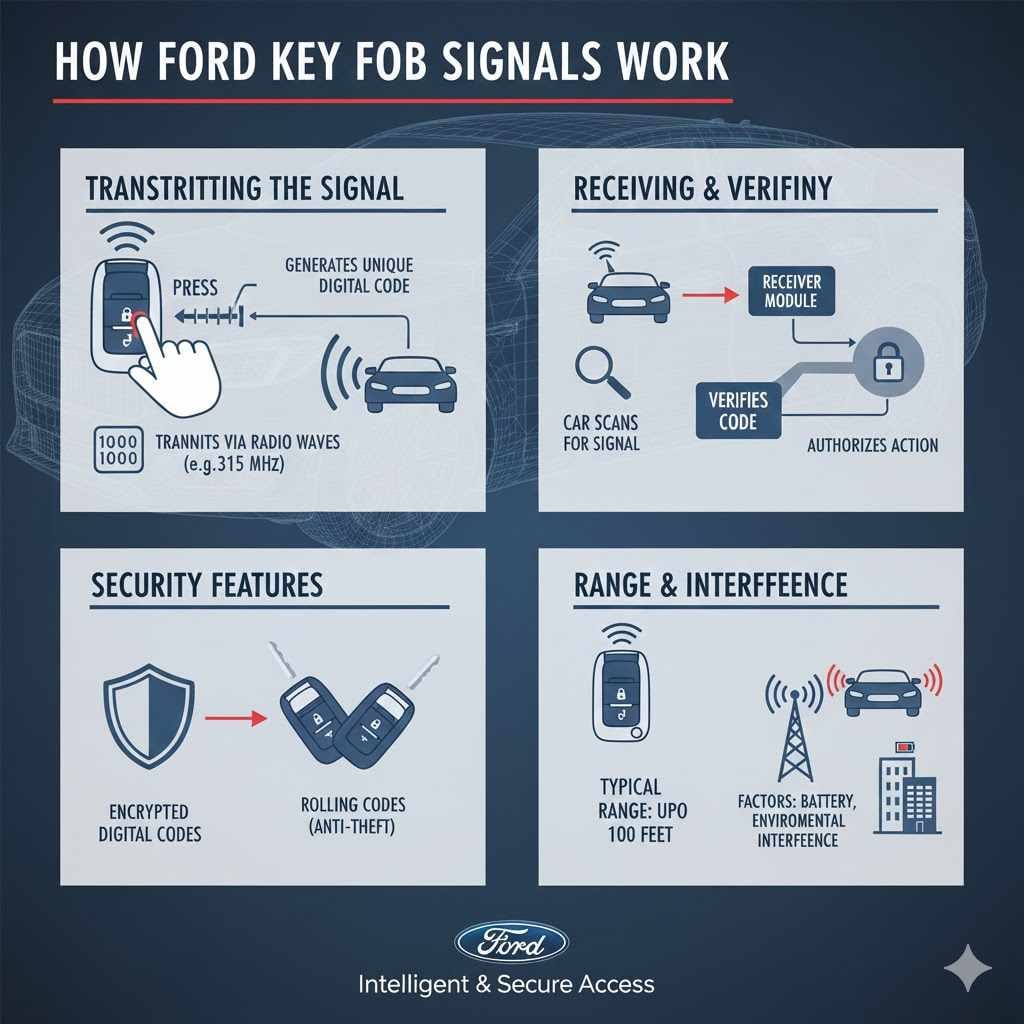
The communication between your Ford key fob and your car relies on radio wave technology, similar to how a remote control for your TV works. When you press a button on the fob, it generates a unique digital code. This code is transmitted through radio waves at a specific frequency.
Your Ford vehicle has a receiver module that constantly scans for these radio signals. Once the correct signal is detected and verified, the car’s system will authorize the requested action, such as unlocking the doors or starting the engine.
This system is designed with security in mind. The digital codes are often encrypted and can change each time the fob is used, a feature known as rolling codes. This prevents thieves from capturing and replaying a signal to gain access to your vehicle.
The range of the key fob can vary depending on battery strength, environmental interference, and the specific model of your Ford. Typically, it works effectively from a few feet up to about 100 feet away.
Key Fob Components and Features
A typical Ford key fob is a compact unit, usually made of durable plastic. Inside, it contains a small printed circuit board (PCB) that houses the electronics. The central component is a transmitter chip, responsible for sending the signals.
A battery, commonly a coin cell type like a CR2032, provides the power. The buttons you press are usually rubber or silicone, connected to the PCB through conductive pads.
Some advanced Ford key fobs also feature a small immobilizer chip. This chip contains a unique transponder code that your car’s ignition system must recognize for the engine to start. When the fob is near the ignition or start button, the car reads this code.
If it matches, the immobilizer system allows the engine to crank and run. Without this correct code, the engine will not start, even if you manage to turn the ignition. This is a critical anti-theft feature.
The Process of Starting Your Ford with a Key Fob
Starting a Ford with a key fob is designed to be straightforward. The core idea is that the car needs to verify you have the correct, authorized key fob present. For most modern Fords with push-button start, this means the fob needs to be inside the vehicle.
The car detects the fob’s signal, and once confirmed, allows you to press the start button. It’s a seamless experience that minimizes interaction with traditional ignition systems.
There are a couple of main scenarios to consider. The first is starting a Ford equipped with a push-button start system. This is the most common type of key fob operation today.
The second scenario involves older Ford models or situations where the push-button start might be malfunctioning, requiring a different approach to use the key fob. We’ll cover both to ensure you’re prepared for any situation.
Starting a Ford with Push-Button Start
This is the most common method for starting modern Ford vehicles. You’ll need to have your key fob with you, preferably inside the car. Ensure the car is in Park (P) or Neutral (N).
Apply the brake pedal firmly. Then, simply press the brake pedal and push the START/STOP button located on the dashboard. The car’s system will detect the key fob’s presence, and if authorized, the engine will start.
The START/STOP button is usually a prominent button on the center console or dashboard. When you press the brake pedal with the authorized key fob inside the vehicle, the button will typically illuminate, indicating it’s ready to start the engine. Holding the brake pedal down while pressing the START/STOP button is crucial.
If you release the brake before pressing the button, or if the fob isn’t detected, the engine will not start.
What If the Key Fob Battery is Low or Dead?
If your Ford key fob battery is low or dead, the car may not detect it properly. Most Ford vehicles have a backup method to start the engine even with a weak or dead fob battery. Look for a specific slot or area on the center console, steering column, or dashboard designed to hold the key fob.
Sometimes, this is marked with a key symbol.
You’ll typically need to place the key fob directly into this designated slot or against a specific area on the dashboard. Then, with your foot on the brake pedal, press the START/STOP button as usual. The car’s system will use an alternative method, often involving near-field communication (NFC) or a direct antenna, to read the fob’s immobilizer code.
This bypasses the need for the fob’s radio transmitter to be strong enough for standard detection.
For example, in some Ford models like the Escape or F-150, there’s a small pocket or tray near the gear shifter. You place the fob there, press the brake, and then push the start button. Other models might instruct you to hold the fob directly against the start button itself.
Always consult your vehicle’s owner’s manual for the precise location and procedure for your specific model, as these backup systems can vary.
Troubleshooting Common Key Fob Starting Issues
Several issues can prevent your Ford from starting with the key fob. One common problem is interference. Other electronic devices, strong radio signals, or even being too far from the vehicle can disrupt the fob’s signal.
Try moving the fob closer to the start button or the car’s interior. Ensure no other key fobs are too close, as this can sometimes cause confusion for the car’s system.
Another frequent culprit is a dead key fob battery. If you notice the range of your fob decreasing or buttons becoming unresponsive, it’s a good time to replace the battery. Cars often have a warning light or message on the dashboard indicating a low key fob battery.
If the car still doesn’t start after trying the backup methods, a completely dead fob battery is likely the cause.
Sometimes, the key fob itself might be damaged or have a faulty component. If you’ve tried replacing the battery and checked for interference, and the fob still doesn’t work, you might need to have the fob reprogrammed or
Advanced Key Fob Features and Their Use
Ford key fobs offer more than just starting your car. Many come with remote start capabilities, allowing you to start your engine from a distance. This is incredibly useful on hot summer days or cold winter mornings to pre-condition the cabin temperature.
You’ll typically press the lock button twice and then hold it down to activate remote start. The engine will run for a set period, usually 10-15 minutes, before shutting off automatically. To drive the car, you’ll still need to enter the vehicle and follow the standard start procedure.
Another useful feature is the panic alarm. If you feel unsafe or need to attract attention, pressing the panic button will sound your car’s horn and flash the lights. This can deter potential threats or help locate your car in a crowded parking lot.
To disarm the panic alarm, you usually need to press any button on the fob again or insert the key into the ignition and start the engine.
Using the Remote Start Feature
Remote start is a fantastic feature for comfort and convenience. To use it, ensure your Ford is locked and that you are within range of the vehicle. On your key fob, locate the lock button.
Press the lock button once to confirm the car is locked. Then, press and hold the lock button for about 3 seconds. The parking lights will flash to confirm the remote start command has been received.
The engine will start and run for a predetermined amount of time, typically 10 minutes. You can extend this runtime for another 10 minutes by repeating the same sequence of button presses before the initial timer expires. When you enter the vehicle, you must press the brake pedal and then press the START/STOP button to take full control of the vehicle and begin driving.
The remote start system will not allow you to drive the car until this sequence is completed.
A key requirement for the remote start feature to function is that the vehicle’s hood must be closed, the transmission must be in Park, and the battery must have sufficient charge. If any of these conditions are not met, the remote start will not engage. Some systems also require that the vehicle’s check engine light is not illuminated.
It’s a great way to warm up your car in winter or cool it down in summer before you even step inside.
Understanding Keyless Entry and Security
Keyless entry, enabled by your Ford key fob, is designed for convenience and security. When you approach your vehicle and press the unlock button on the fob, it sends a secure signal. This signal is decoded by your car, unlocking the doors.
Similarly, pressing the lock button secures your vehicle. The rolling code technology ensures that each signal sent is unique, making it extremely difficult for anyone to intercept and reuse your fob’s code.
Ford’s security system relies on the key fob’s immobilizer chip. This chip has a unique serial number that is programmed to your car. When you try to start the engine, the car’s computer reads the code from the fob.
If the code matches what’s stored in the car’s immobilizer system, the car will allow the engine to start. If it doesn’t match, or if the fob is not detected, the engine will not start, even if someone manages to break into the car.
The range of keyless entry can be affected by environmental factors. For instance, being in a parking garage with many cars around can sometimes cause interference. High-powered radio transmitters nearby, such as police or emergency service radios, can also potentially affect the signal strength or reliability of your key fob.
Generally, however, these systems are very robust.
What To Do If Your Key Fob is Lost or Damaged
Losing a Ford key fob can be a stressful experience, but there are clear steps to resolve it. The primary concern is replacing the lost fob and ensuring your vehicle remains secure. Your Ford dealership is the most reliable place to get a replacement key fob.
They have the specific programming equipment and access to the vehicle’s VIN to create a new, authorized key fob for your car.
It’s important to have all your remaining key fobs with you when getting a new one programmed. This is because the programming process often erases all previously programmed fobs and then reprograms them along with the new one. This ensures that any lost or stolen fobs are no longer capable of starting your car.
The cost of a replacement and programming can vary depending on the Ford model and dealership.
If your key fob is physically damaged, such as if it’s been dropped and cracked, you might be able to get it repaired or replaced. Depending on the extent of the damage, a dealership or a specialized automotive locksmith might be able to fix it. If the internal electronics are severely damaged, replacement will be necessary.
Always keep your key fob in a safe place when not in use to prevent accidental damage or loss.
Replacing a Lost Ford Key Fob
When you lose your Ford key fob, the first thing to do is try to locate it. If you’ve searched thoroughly and it’s truly gone, you’ll need a replacement. Contact your local Ford dealership.
You will need to provide proof of ownership, such as your driver’s license and vehicle registration. The VIN (Vehicle Identification Number) of your car will also be required.
The dealership will then order a new key fob that is compatible with your specific Ford model. Once the new fob arrives, you will need to bring your vehicle to the dealership for programming. This process involves using specialized diagnostic tools to synchronize the new key fob with your car’s immobilizer system and other relevant modules.
The technician will ensure that the new fob can start the car and operate all its functions, like locking and unlocking doors.
If you have more than one key fob, it is highly recommended to bring all of them to the dealership. This allows the technician to reprogram all existing fobs along with the new one. This is a crucial security step.
It effectively deactivates the lost fob, preventing anyone who might find it from using it to start your car. Without reprogramming the remaining fobs, the lost one would still be active.
Programming a New Key Fob
Programming a new Ford key fob is a process that typically requires specialized equipment and software that only authorized dealerships or professional automotive locksmiths possess. It involves connecting a diagnostic tool to your vehicle’s OBD-II port, which is usually located under the dashboard. This tool communicates with the car’s computer.
The technician will then access the vehicle’s security module and follow a specific procedure to add the new key fob’s unique transponder code to the car’s memory. This process also usually includes re-synchronizing any other existing key fobs for your vehicle. This ensures that only the programmed keys can start the car and operate its features.
The entire programming session can take anywhere from 15 minutes to an hour, depending on the vehicle model and the complexity of its system.
Some Ford models might offer a limited self-programming feature for additional key fobs, but this is becoming less common and usually requires a specific sequence of actions with existing, programmed fobs. For a lost or completely new fob, professional programming is almost always necessary. This prevents unauthorized access and ensures your vehicle’s security.
It’s vital to choose a reputable provider for this service.
Key Statistics on Ford Key Fob Usage
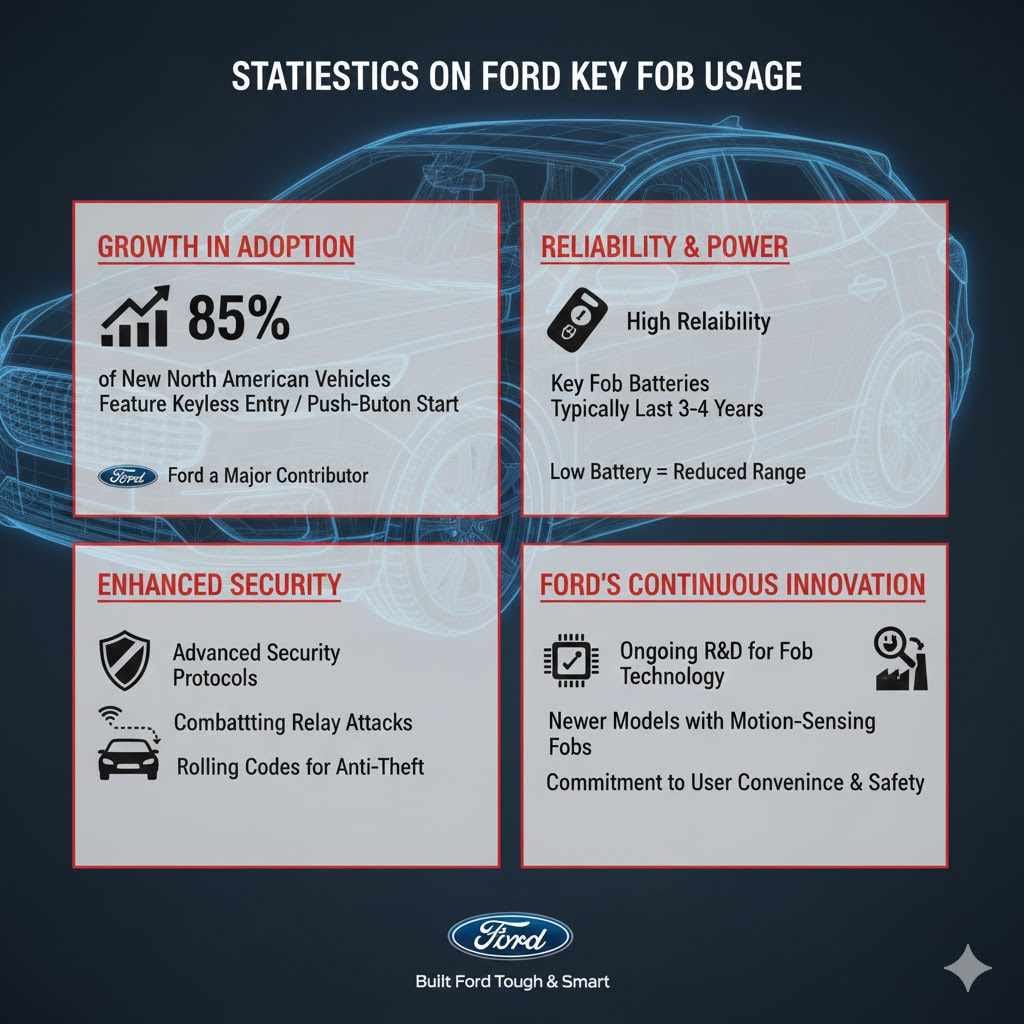
According to industry reports, the adoption of keyless entry and push-button start systems has grown significantly. Over 85% of new vehicles sold in North America in recent years have featured keyless ignition systems. Ford has been a major contributor to this trend, equipping many of its popular models with these advanced key fob technologies.
The reliability of key fobs is generally high, but battery
The security provided by modern keyless entry systems is a significant benefit. However, concerns about relay attacks, where thieves use devices to extend the range of a key fob signal, have led manufacturers to develop more advanced security protocols. Ford, like other automakers, continuously works on improving these systems to combat emerging threats.
FAQ
Question: How do I know if my Ford key fob battery needs replacing?
Answer: You’ll often notice a reduced range for your key fob’s signals, or the buttons might become unresponsive. Some Ford vehicles will also display a warning message on the dashboard indicating a low key fob battery.
Question: Can I start my Ford if I lose my key fob entirely?
Answer: No, you cannot start your Ford if you have lost all programmed key fobs. You will need to obtain and program a new key fob from a Ford dealership or a qualified automotive locksmith to operate your vehicle.
Question: How far away can my Ford key fob work?
Answer: The effective range of a Ford key fob typically varies from about 50 to 100 feet (15 to 30 meters). This can be influenced by battery strength, environmental interference, and the specific Ford model.
Question: What does the little light on my Ford key fob mean?
Answer: Some Ford key fobs have a small LED light that may illuminate when a button is pressed, indicating the fob is sending a signal or that the battery is working. Other lights might indicate a specific status or alert.
Question: Is it safe to use a non-Ford brand replacement key fob?
Answer: While some aftermarket key fobs may work, it is generally recommended to use genuine Ford key fobs. These are guaranteed to be compatible and programmed correctly for your vehicle’s security system. Non-OEM fobs may have compatibility issues or lack the same security features.
Summary
Starting your Ford with a key fob is an easy process that involves having the fob present and using the brake and start button. If the battery is low, a backup method exists by placing the fob in a specific spot. Losing a fob requires professional replacement and programming for security.
Related pick: Check today's price on Amazon