Vehicle Types And Class: Key Differences You Should Know
Exploring the world of vehicles can be overwhelming, especially when terms like “vehicle type” and “vehicle class” are used interchangeably. Yet, these distinctions play a crucial role whether you’re buying, insuring, or simply understanding regulations around cars, trucks, motorcycles, and more.
Both terms are essential for manufacturers, government agencies, insurance companies, and drivers alike, but their definitions and applications differ significantly. If you’ve ever wondered why your compact SUV is classified differently from your neighbor’s pickup truck, or why a commercial van carries specific restrictions, understanding vehicle types and classes will provide clarity and could even save you money or legal headaches.
This comprehensive guide breaks down the core differences between vehicle types and vehicle classes, offering concrete examples and practical insights. From legal definitions to insurance impacts, and from emissions standards to real-world case studies, you’ll gain a clear, actionable grasp on a topic that affects millions of drivers and fleet operators. Whether you’re a car enthusiast, a new driver, or a fleet manager, this article provides the expertise and detail you need to make informed decisions.
Key Takeaways
- Vehicle types describe the physical form and intended use (e.g., sedan, SUV, truck), while vehicle classes are formal categories for regulation, taxation, and insurance.
- Regulatory agencies, such as the EPA and NHTSA, use vehicle classes to set standards for safety, emissions, and fuel economy.
- Insurance rates, taxes, and driving restrictions often depend more on vehicle class than on type.
- Understanding both can help buyers choose the right car, avoid costly mistakes, and comply with local laws.
- Real-world examples show how vehicle classification impacts ownership costs and legal obligations.

Credit: blog.algomaster.io
Understanding Vehicle Types
Vehicle types are the most familiar categories for everyday drivers and car buyers. They describe the basic physical configuration, intended use, and design of a vehicle.
What Defines A Vehicle Type?
A vehicle type is a broad descriptor based on a vehicle’s shape, function, and seating arrangement. Common examples include:
- Sedan: Four doors, separate trunk, seats four or more.
- Hatchback: Rear door swings up, cargo area open to cabin.
- SUV (Sport Utility Vehicle): Higher ground clearance, often all-wheel drive, versatile cargo space.
- Pickup Truck: Open cargo bed, often used for hauling.
- Coupe: Two doors, sporty design, limited rear seating.
- Convertible: Roof can be folded or removed.
- Van/Minivan: Sliding doors, multiple rows of seats, family or cargo focus.
- Motorcycle: Two wheels, open design, one or two riders.
These categories are primarily driven by manufacturer intent and consumer needs. Automakers use vehicle types for marketing, design, and product differentiation.
Evolution Of Vehicle Types
The boundaries between vehicle types have blurred in recent years. Crossovers combine sedan comfort with SUV utility, while compact pickups now rival midsize sedans in size and features. New types like electric vehicles (EVs) and hybrids also introduce fresh distinctions.
Example: The Tesla Model Y is marketed as an SUV, but its size and structure are closer to a hatchback, illustrating how consumer trends shape type definitions.
Why Vehicle Types Matter
- Consumer choice: Helps shoppers filter vehicles by lifestyle and needs.
- Resale value: Certain types, like SUVs, may hold value better than sedans.
- Maintenance and repair: Parts and service costs can vary significantly by type.
Common Vehicle Types: Comparison Table
| Vehicle Type | Typical Seats | Main Use | Example Model |
|---|---|---|---|
| SUV | 5-8 | Family, off-road, cargo | Ford Explorer |
| Pickup Truck | 2-6 | Hauling, towing | Chevrolet Silverado |
| Sedan | 4-5 | Commuting, family | Toyota Camry |
| Minivan | 7-8 | Large families | Honda Odyssey |
| Motorcycle | 1-2 | Personal, recreation | Harley-Davidson Street 750 |
Vehicle Classes: Regulatory Framework
While vehicle types are defined by manufacturers and consumers, vehicle classes are established by government and industry regulators for purposes like safety, emissions, taxation, and insurance.
What Is A Vehicle Class?
A vehicle class is a formal regulatory category that groups vehicles based on specific criteria. These criteria can include:
- Gross vehicle weight rating (GVWR)
- Passenger vs. commercial use
- Axle configuration
- Emissions output
- Size and footprint
Regulatory bodies such as the National Highway Traffic Safety Administration (NHTSA), Environmental Protection Agency (EPA), and state Departments of Motor Vehicles (DMVs) each maintain their own vehicle class systems, which sometimes overlap.
Key Vehicle Classifications In The Us
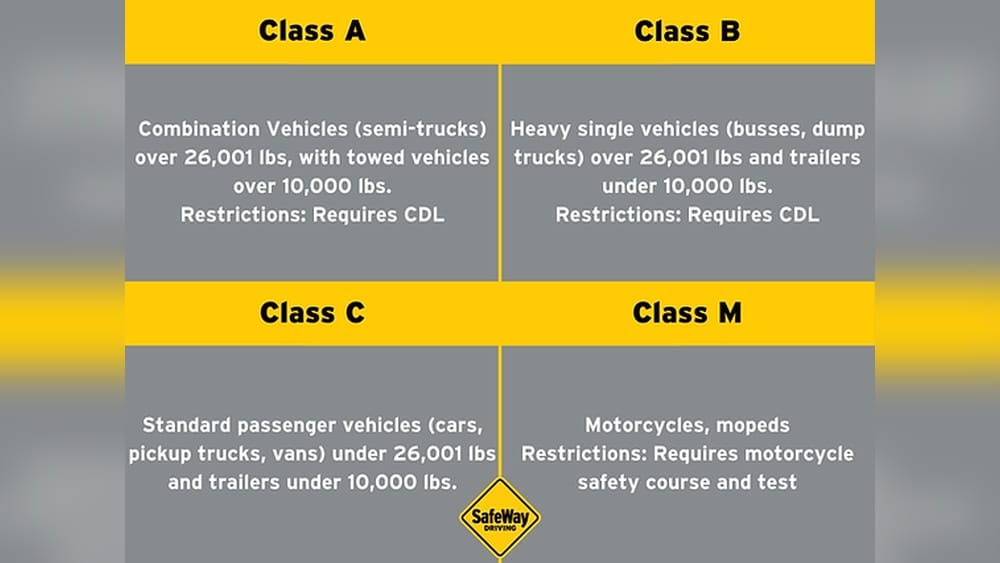
- Light-Duty Vehicles: Passenger cars, small SUVs, pickups under 8,500 lbs GVWR.
- Medium-Duty Vehicles: Larger pickups, vans, and trucks (8,501, 26,000 lbs GVWR).
- Heavy-Duty Vehicles: Commercial trucks, buses, and tractor-trailers (over 26,001 lbs GVWR).
- Motorcycle Class: Two- or three-wheeled motor vehicles.
- Commercial Vehicle Class: Vehicles primarily used for business or transport of goods.
Example: The Ford F-150 is classified as a light-duty vehicle by the EPA but may be considered a medium-duty vehicle if configured for heavier payloads.
Why Vehicle Classes Matter
- Safety regulations: Crash tests and equipment requirements vary by class.
- Emissions standards: The EPA sets stricter limits for passenger vehicles compared to heavy-duty trucks.
- Insurance rates: Classes impact premiums, especially for commercial and high-risk vehicles.
- Taxation and registration: Fees and taxes are often class-dependent.
Regulatory Comparison Table
| Vehicle Class | GVWR Range | Regulatory Focus | Example Vehicle |
|---|---|---|---|
| Light-Duty | Up to 8,500 lbs | Emissions, fuel economy | Toyota RAV4 |
| Medium-Duty | 8,501, 26,000 lbs | Commercial licensing, safety | Ford F-450 |
| Heavy-Duty | Over 26,001 lbs | Commercial driver’s license, road restrictions | Freightliner Cascadia |
| Motorcycle | N/A | Helmet laws, insurance | Kawasaki Ninja 400 |
Example: Epa Vehicle Classifications
The EPA’s classification system is critical for setting fuel economy standards. According to the EPA Vehicle Class Size Guide, a “midsize car” is defined by a combined passenger and cargo volume of 110, 119.9 cubic feet, regardless of whether the vehicle is a sedan or hatchback.

Credit: blog.algomaster.io
Vehicle Types Vs Vehicle Classes: Core Differences
Understanding the distinction between vehicle type and vehicle class is essential for compliance, safety, and cost management.
Definition And Purpose
- Vehicle Type: Focuses on design, style, and intended consumer use (e.g., coupe, SUV, pickup).
- Vehicle Class: Sets regulatory, safety, and tax boundaries based on weight, size, or purpose.
Example: A compact crossover can be both a “SUV” by type and a “light-duty vehicle” by class.
How They’re Assigned
- Types: Labeled by manufacturers and commonly used in marketing.
- Classes: Determined by government agencies using technical and legal criteria.
Real-world Impact
- Insurance: Rate calculations depend more on class (commercial vs. private) than type.
- Regulations: Emissions tests and highway restrictions are enforced by class, not type.
Data-driven Comparison Table
| Aspect | Vehicle Type | Vehicle Class |
|---|---|---|
| Basis | Design and use | Regulatory criteria |
| Examples | SUV, sedan, pickup | Light-duty, heavy-duty, commercial |
| Assigned by | Manufacturers | Government/regulators |
| Impacts | Consumer choice, resale value | Legal compliance, insurance, taxes |
Case Study: Crossover Vehicles
A crossover like the Honda CR-V is marketed as an SUV (type), but according to EPA footprint measurements, it may fall under “small sport utility” (class) for fuel economy testing. This influences its regulatory requirements and the incentives available for buyers.

Credit: americancollectors.com
How Vehicle Types And Classes Affect Ownership
The implications of vehicle type and class extend far beyond the showroom. They affect everything from insurance premiums to registration fees, access to certain roads, and even your environmental footprint.
Insurance Considerations
Insurers use vehicle class to assess risk. A heavy-duty pickup (class) used for business may cost more to insure than a light-duty sedan, even if both are technically “cars” by type. Factors considered include:
- Intended use (personal, commercial, rideshare)
- Vehicle weight and size
- Safety ratings and crash data
Pro Tip: When comparing insurance quotes, always disclose the exact use and configuration of your vehicle to avoid coverage gaps.
Taxes, Fees, And Registration
Many states base registration fees and taxes on vehicle class, not type. Heavy vehicles or those with commercial class may pay higher road use taxes. For example, in California, registration fees scale with vehicle weight.
Road And Parking Restrictions
Certain classes, such as commercial vehicles or heavy-duty trucks, are prohibited from residential streets or specific urban zones. Even some SUVs can be excluded from parking garages due to height or weight class.
Emissions And Environmental Regulations
The EPA sets stricter emissions standards for light-duty vehicles compared to heavy-duty trucks. Owning a vehicle in a stricter class can mean more frequent emissions testing and higher compliance costs.
Example: Family Moving From Sedan To Full-size Suv
A family upgrading from a Toyota Camry (midsize sedan type, light-duty class) to a Chevrolet Suburban (full-size SUV type, still light-duty class) may see:
- Higher insurance due to increased value and size
- Slightly higher registration fees if the vehicle exceeds specific weight thresholds
- Different emissions testing schedules
Industry And Government Use Of Vehicle Classes
Vehicle classes aren’t just for bureaucratic purposes; they have real-world implications for automakers, fleets, and public policy.
Manufacturer Compliance
Automakers must meet Corporate Average Fuel Economy (CAFE) standards, which differ by class and footprint. Failing to comply can lead to hefty fines.
Fleet Management
Commercial fleets track vehicle class for:
- DOT regulations: Ensuring proper licensing and compliance
- Maintenance schedules: Heavier classes often require more frequent checks
Example: A logistics company with a mix of cargo vans (light-duty) and box trucks (medium-duty) must manage maintenance and driver licensing differently for each class.
Public Policy And Urban Planning
Cities use vehicle class data to:
- Regulate access to low-emission zones
- Set congestion pricing for heavy vehicles
- Plan for parking infrastructure
International Differences
Vehicle class systems vary globally. The European Union, for example, uses CO2 emissions and engine size for taxation, while Japan uses vehicle length and engine displacement.
Pro Tip: When importing or exporting a vehicle, research classification systems in both origin and destination countries.
Real-world Examples And Case Studies
Examining specific cases helps illustrate the tangible effects of vehicle type and class on daily life and business operations.
Example 1: Ride-sharing Vehicles
Ride-sharing platforms like Uber and Lyft classify vehicles by type for customer experience (e. g. , “UberXL” for SUVs, “UberBlack” for luxury sedans). However, local regulations may require drivers to register their cars as “for-hire vehicles” (a commercial class), leading to stricter insurance and inspection requirements.
Example 2: Pickup Truck Owners And Towing
A small business owner using a Ford F-250 (classified as medium-duty in some configurations) must obtain a commercial driver’s license if towing trailers over certain weight limits. This isn’t required for lighter, personal-use pickups.
Example 3: Electric Vehicle Incentives
Some states offer tax credits only to vehicles in the “passenger car” class, not to commercial vans or trucks, even if they’re electric. This affects purchasing decisions for businesses looking to electrify their fleets.
Case Study: Delivery Fleet Upgrade
A regional delivery company upgraded from gasoline-powered vans (light-duty) to electric cargo vans (also light-duty by class). While the vehicle type remained “van,” the switch qualified them for new state incentives and lower emissions-related fees. However, the company had to ensure the new vans didn’t cross into medium-duty class, which would have triggered new licensing and compliance costs.
The Role Of Technology In Vehicle Classification
Advancements in vehicle design and digital technology are changing how types and classes are defined and managed.
Automated And Connected Vehicles
Self-driving cars may introduce new types (autonomous shuttles, delivery robots) that challenge traditional class definitions. Regulators are already working on frameworks to address these innovations.
Telematics And Fleet Management
Modern vehicles are equipped with sensors and telematics that track usage, payload, and driving patterns. This data helps insurers and regulators classify vehicles more accurately, especially for mixed-use (personal and commercial) cases.
Example: In my experience working with fleet telematics, accurate vehicle class reporting saved clients thousands in avoided fines due to overweight or misclassified vehicles.
Impact Of Electrification
Electric vehicles (EVs) often defy traditional class boundaries. For instance, the Rivian R1T is a pickup truck by type, but its high weight and battery pack could nudge it into a different regulatory class in some states.
Future Trends
Industry experts predict that vehicle classification systems will continue to evolve, incorporating factors like autonomous capability, powertrain type, and even software-defined features. Expect more nuanced classes as vehicles become smarter and more connected.
Frequently Asked Questions
What Are The Main Differences Between A Vehicle Type And A Vehicle Class?
While a vehicle type refers to the physical design and intended use (like sedan, SUV, or pickup), a vehicle class is a regulatory category set by government agencies for legal, safety, and taxation purposes. The same vehicle could be one type but fall into different classes depending on its configuration and usage.
How Do Vehicle Classes Affect My Insurance Premiums?
Insurers use vehicle class to assess risk. For example, commercial and heavy-duty classes typically have higher premiums due to increased risk and usage. Special classes, like motorcycles, may require unique policies. Always confirm your vehicle’s class with your insurer to ensure proper coverage.
Can A Vehicle Change Class If It’s Modified Or Repurposed?
Yes. If you modify a vehicle (e. g. , adding weight, changing its use from personal to commercial), it may move to a different regulatory class. This can affect registration, insurance, and compliance requirements. Check with your local DMV before making significant changes.
Are Vehicle Classes The Same In Every Country?
No. Vehicle class systems vary by country. The US uses weight and use-based classes, while the EU often uses engine displacement and emissions. If you import or export vehicles, research the classification standards in both countries to avoid legal or tax issues.
Where Can I Find The Official Vehicle Class For My Car Or Truck?
You can typically find your vehicle’s class on the registration document, in the owner’s manual, or by checking with your local DMV. For emissions and safety class information, resources like the NHTSA VIN Decoder can provide official regulatory details.
Understanding the distinctions between vehicle types and vehicle classes empowers you as a consumer, driver, or fleet manager. From insurance and taxes to legal compliance and environmental impact, these categories affect more than just how we talk about vehicles, they shape the rules that govern their use. As technology evolves and regulatory frameworks adapt, staying informed ensures you make the best decisions for your needs and avoid costly mistakes.
Related Reading
- What Are The Different Types Of Vehicle: A Genius Essential List
- What are the Main Types of Vehicle Devices: Ultimate Guide
- What Does Vehicle Type AU Mean?
Products related to this article
Sponsored / affiliate links. As an Amazon Associate I earn from qualifying purchases. I may earn additional commission from eligible campaigns.