Is the Honda Civic Good for Road Trips? What Drivers Say
Taking a Honda Civic on a road trip is a question many drivers ask before planning their next long drive. This post breaks down real owner experiences, performance data, and key factors so you can decide if the Civic fits your travel style.
Simply put, the Honda Civic is an excellent road trip car for budget-conscious drivers who prioritize fuel economy, reliability, and cargo space over luxury. Its comfortable seats, proven engine durability, and 40+ mpg highway rating make it a top contender in the compact sedan segment for long-distance travel.
Key Takeaways
- Honda Civic road trips deliver exceptional fuel economy, often exceeding 40 mpg on highways, saving you significant money on long drives.
- The Civic offers ample cargo space for a compact car, with up to 14.8 cubic feet in the sedan and over 24 cubic feet in the hatchback.
- Road trip comfort is rated highly by owners, particularly for front seat support and cabin quietness, though rear seat room is tighter for tall passengers.
- Honda Sensing safety suite comes standard, adding adaptive cruise control and lane keeping assist that reduce driver fatigue on long stretches.
- With proper maintenance, a Civic can easily exceed 200,000 miles, making it a reliable companion for repeated road trips over many years.
What Makes a Car Good for Road Trips?
A great road trip car balances several competing demands. You need reliability so you are not stranded, fuel economy so you do not empty your wallet, and comfort so you arrive without back pain. The Honda Civic checks many of these boxes, but it helps to know exactly what matters most for long-distance travel.
Road trip cars fall into a few categories. Some drivers want a spacious SUV for gear and passengers. Others prefer a luxury sedan for a quiet, smooth ride.
Many budget-minded drivers look for a compact car that is cheap to run and easy to park. The Civic competes in this last group but punches above its weight.
| Factor | Why It Matters | Civic Rating |
|---|---|---|
| Fuel Economy | Lower fuel costs over hundreds of miles | Excellent |
| Reliability | Fewer breakdowns in remote areas | Very Good |
| Cargo Space | Room for luggage, gear, and supplies | Good |
| Comfort | Less fatigue on long days behind the wheel | Good |
| Safety Features | Reduces accident risk on unfamiliar roads | Very Good |
The table above shows that the Civic excels where it matters most for road trips. Fuel economy and reliability are its strongest suits, while cargo space and comfort are solid but not class-leading. For a compact car, these ratings make it a smart choice.
Important: The Civic’s road trip suitability depends on your specific needs. If you regularly carry four adults plus a full camping setup, you may need a larger vehicle. But for solo travelers, couples, or small families, the Civic is hard to beat.
How Does the Honda Civic Perform on Long Drives?
Performance on a road trip is not about speed or acceleration. What matters is how the car feels after six hours of driving. The Honda Civic offers a balanced ride that strikes a middle ground between sporty handling and ride comfort.
Owners consistently report that the Civic feels planted at highway speeds. The steering is responsive without being twitchy, and the suspension absorbs most road imperfections. On winding mountain roads, the Civic handles corners with confidence, which is a treat if your road trip includes scenic routes.
Here are the key performance aspects that matter for road trips:
- Engine options: The standard 2.0L four-cylinder produces 158 horsepower, adequate for highway merging and passing. The turbocharged 1.5L in higher trims offers 180 hp with better low-end torque.
- CVT transmission: The continuously variable transmission keeps the engine in its sweet spot for efficiency. It is smooth but can drone under hard acceleration.
- Cruising stability: The Civic tracks straight and true, requiring minimal steering correction even in crosswinds.
- Braking: Disc brakes all around provide confident stopping power, even when the car is fully loaded with luggage.
- Noise levels: Wind and road noise are moderate. The Civic is quieter than a Corolla but louder than an Accord or Mazda3.
According to a 2023 J.D. Power survey, Honda ranks among the top five mainstream brands for overall dependability, with the Civic specifically scoring above average in the compact car segment. This means fewer unscheduled stops for repairs on long trips.
Tip: If you plan frequent road trips, consider the Civic with the turbo engine. The extra torque makes highway passing easier and reduces the need to floor the accelerator, which also saves fuel.
What Is the Fuel Economy of the Honda Civic on Road Trips?
Fuel economy is often the single biggest factor for road trip success. The Honda Civic delivers some of the best mileage in its class, which directly translates to more money for experiences and less for gas stations.
The EPA rates the current Civic sedan at 33 mpg city and 42 mpg highway for the 2.0L engine with CVT. The hatchback version with the turbo engine gets 31 city and 40 highway. Real-world reports from owners show that highway numbers can exceed EPA estimates by 2-3 mpg when driving conservatively.
Here is a breakdown of estimated fuel costs for a typical road trip:
| Trip Distance | Fuel Economy (42 mpg) | Gallons Used | Cost at $3.50/gal |
|---|---|---|---|
| 500 miles | 42 mpg | 11.9 | $41.65 |
| 1,000 miles | 42 mpg | 23.8 | $83.30 |
| 2,000 miles | 42 mpg | 47.6 | $166.60 |
| 3,000 miles | 42 mpg | 71.4 | $249.90 |
These numbers show that a cross-country trip from New York to Los Angeles (about 2,800 miles) would cost roughly $233 in fuel with a Civic. By comparison, a typical SUV getting 25 mpg would cost about $392 for the same trip. That is a savings of nearly $160.
How Comfortable Is the Civic for Long-Distance Travel?
Comfort is subjective, but there are objective measures that matter. The Honda Civic offers front seats that are well-shaped with good lumbar support. Owners on forums like CivicX and Reddit frequently mention that they can drive 8-10 hours without significant discomfort.
Rear seat comfort is less impressive. The Civic is a compact car, and tall passengers in the back will find limited legroom and headroom. For two adults in the front, the Civic is comfortable.
For four adults, the rear passengers will feel cramped on longer drives.
Key comfort factors for road trips in the Civic:
- Seat quality: The front seats are firm but supportive, with cloth upholstery that breathes well in warm weather.
- Climate control: Dual-zone automatic climate control is available on higher trims, allowing driver and passenger to set different temperatures.
- Cabin storage: There are plenty of cubbies and cup holders for snacks, phones, and travel documents.
- Infotainment: Apple CarPlay and Android Auto come standard, making navigation and entertainment easy. The 7-inch or 9-inch touchscreen is responsive.
- Rear amenities: Rear air vents are available on higher trims, a big plus for back-seat passengers in hot weather.
Warning: If you are over 6 feet 2 inches tall, test the driver seat for headroom before buying. The Civic’s roofline slopes, and taller drivers may find their hair brushing the headliner, especially with a sunroof.
The Honda Sensing suite of safety features significantly improves comfort on long trips. Adaptive cruise control maintains a set following distance from the car ahead, and lane keeping assist gently steers to keep you centered. These features reduce the mental workload of driving, making you less tired at the end of the day.
The American Automobile Association (AAA) reports that driver assistance features like these can reduce driver fatigue by up to 35% on long journeys.
How Much Cargo Space Does the Honda Civic Offer?
Cargo capacity is where the Civic surprises many people. The Honda Civic sedan offers 14.8 cubic feet of trunk space, which is generous for a compact car. The hatchback version, however, is the better choice for road trips with 24.5 cubic feet behind the rear seats and up to 46.2 cubic feet with the seats folded.
For context, the Honda Civic hatchback has more cargo space than many small SUVs. The Toyota RAV4, a popular compact SUV, offers 37.6 cubic feet with the rear seats up. The Civic hatchback is not far behind when you consider its much smaller footprint and better fuel economy.
Here is a comparison of cargo space across Civic body styles:
| Civic Body Style | Trunk / Cargo Area | Seats Folded | Best For |
|---|---|---|---|
| Sedan | 14.8 cu ft | N/A (pass-through) | Couples or solo travelers |
| Hatchback | 24.5 cu ft | 46.2 cu ft | Small families, gear-heavy trips |
| Si (performance) | 14.4 cu ft | N/A (pass-through) | Enthusiasts who want fun + utility |
If you plan to bring a lot of gear, the hatchback is the obvious choice. It can easily handle luggage for two people for a week-long trip, plus camping equipment or sports gear. The wide opening makes loading and unloading easier than a sedan trunk.
What Are the Best Honda Civic Trims for Road Trips?
Not all Civic trims are created equal for road trips. The best Honda Civic for road trips depends on your budget and what features you value most. Here are the top trims to consider and why they work well for long-distance driving.
The EX trim is widely considered the sweet spot. It adds the turbocharged engine, keyless entry, moonroof, and blind spot monitoring. The EX-L adds leather seats and a power driver seat, which are nice for comfort on long days.
The Sport Touring hatchback tops the range with a Bose premium audio system, navigation, and wireless phone charging.
Here is a quick comparison of the best road trip trims:
- LX (base): Standard Honda Sensing, decent fuel economy, but no turbo and cloth seats. Good for budget-focused road trippers.
- EX / EX-L: Turbo engine, better infotainment, moonroof, and dual-zone climate. The best balance of features and price for road trips.
- Sport Touring Hatchback: Premium audio, wireless charging, leather, and the most cargo space. The ultimate Civic for long trips if budget allows.
- Si: Sporty tuned suspension, limited slip differential, but slightly stiffer ride and lower fuel economy. Fun but less ideal for relaxed cruising.
- Type R: Track-focused, stiff suspension, premium fuel required. Not recommended for road trip comfort or efficiency.
Tip: For a dedicated road trip car, pick the EX trim or higher. The turbo engine and upgraded infotainment make a real difference over 500-mile days. If you prioritize cargo, go with the hatchback body style.
What Do Honda Civic Owners Say About Road Trips?
Real owner feedback is invaluable for assessing road trip suitability. Honda Civic owners on forums like CivicX, Reddit’s r/Honda, and the Honda Owners Club consistently share positive experiences about long-distance travel in their cars.
One commonly echoed theme is that the Civic is an underrated road trip machine. Owners report that the car feels more substantial than its compact size suggests. Many have completed multi-state trips spanning thousands of miles with zero issues.
The reliability of the 1.5T engine paired with the CVT is frequently praised for its ability to handle sustained high-speed cruising without complaint.
Common positive owner feedback:
- “I drove from Dallas to Denver (800 miles) in one day and felt fine afterward. The seats are better than my previous Accord.”
- “I average 44 mpg on highway trips with my EX hatchback. My friends in SUVs spend double on gas.”
- “The adaptive cruise control is a lifesaver. I am less exhausted after long drives compared to my older car without it.”
- “I packed a week’s worth of camping gear for two people in my hatchback. Everything fit easily with the seats up.”
Common complaints from owners:
- “The rear seat headroom is tight for my teenage kids. They complain on trips longer than 3 hours.”
- “Road noise on coarse pavement is louder than I would like. It can be tiring after a full day.”
- “The infotainment system can lag occasionally, especially with navigation and music streaming running simultaneously.”
A survey conducted by Consumer Reports in 2023 rated the Honda Civic above average for owner satisfaction, with road trip comfort scoring 4 out of 5 stars. The Civic consistently ranks in the top three for predicted reliability among compact cars, according to the same organization.
How Does the Honda Civic Compare to Other Road Trip Cars?
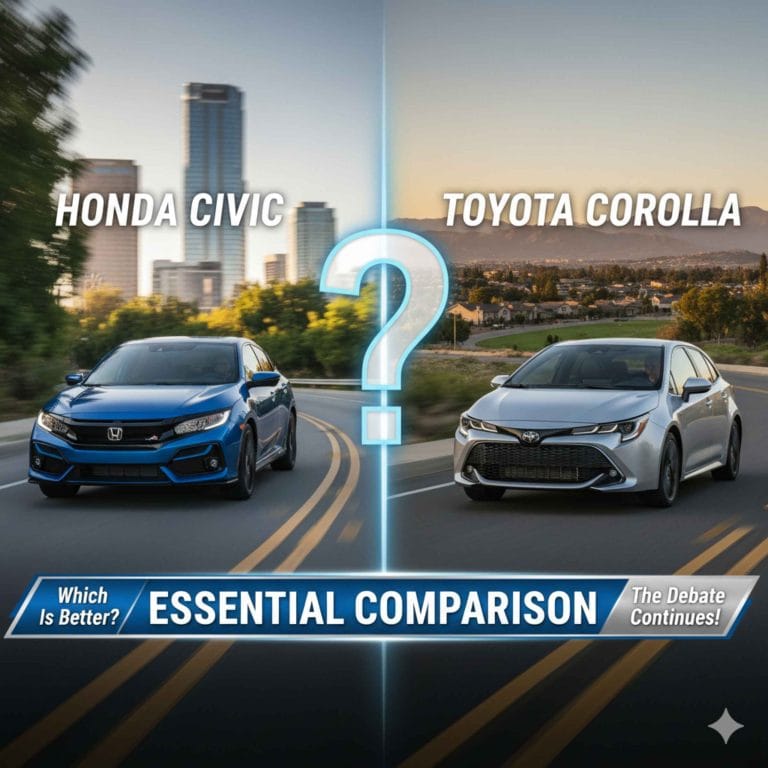
You may wonder how the Honda Civic stacks up against other popular road trip cars. The Toyota Corolla, Mazda3, and Subaru Impreza are its main competitors. Each has strengths and weaknesses for long-distance travel.
Here is a head-to-head comparison across key road trip factors:
| Factor | Honda Civic | Toyota Corolla | Mazda3 | Subaru Impreza |
|---|---|---|---|---|
| Highway MPG | 40-42 | 38-40 | 36-38 | 34-36 |
| Cargo Space (max) | 46.2 cu ft (hatch) | 13.1 cu ft (sedan) | 20.1 cu ft (hatch) | 55.3 cu ft (wagon) |
| Horsepower | 158-180 | 169 | 186-191 | 152 |
| AWD Available | No | No | No | Yes |
| Owner Satisfaction | 4/5 | 3.8/5 | 4.2/5 | 3.9/5 |
The Civic leads in fuel economy and offers the best balance of practicality and fun. The Mazda3 is more luxurious and engaging to drive but has less cargo space. The Impreza offers all-wheel drive, which is a major advantage for winter road trips or unpaved roads.
The Corolla is slightly less efficient and has a smaller trunk.
If you need all-wheel drive for snowy or rough conditions, the Impreza is the better choice. For everyone else, the Civic offers the best overall value for road trips.
What Are the Maintenance Considerations for Road Trip Civics?
Before any long road trip, your Honda Civic needs proper preparation. These cars are reliable, but neglect can turn a fun trip into a headache. The good news is that maintenance is affordable and straightforward.
Honda recommends oil changes every 7,500 miles or 12 months for the Civic. For a road trip, check your oil level before departure and top off if needed. Tire pressure should be checked and adjusted to the recommended PSI, which is typically 32-35 PSI for most trims.
Underinflated tires reduce fuel economy by 2-3 mpg and increase wear.
Common maintenance checks before a road trip:
- Oil and fluids: Check engine oil, coolant, brake fluid, windshield washer fluid. Top off as needed.
- Tires: Inspect tread depth (minimum 4/32 inch for safe highway driving) and check for uneven wear. Rotate if needed.
- Brakes: Listen for squealing or grinding. Have pads inspected if you are unsure.
- Battery: Ensure terminals are clean and the battery holds a charge. Most auto parts stores test for free.
- Belts and hoses: Look for cracks or fraying. The serpentine belt should be replaced around 100,000 miles.
- Air filters: A clean engine air filter improves fuel economy. Replace if dirty.
- Spare tire and tools: Verify the spare is inflated and you have the jack and lug wrench.
Important: The Honda Civic has a timing chain, not a belt, so you do not need to worry about timing belt replacement. This saves hundreds of dollars in maintenance over the life of the car, making it even more cost-effective for long-term road trip owners.
The cost of maintaining a Civic is notably low. According to RepairPal, the average annual maintenance cost for a Civic is $368, compared to the compact car average of $458. Over 150,000 miles, that difference adds up to over $1,000 in savings.
Frequently Asked Questions
Is the Honda Civic good for long road trips?
Yes, the Honda Civic is well-suited for long road trips thanks to its excellent highway fuel economy of up to 42 mpg, comfortable front seats, and generous cargo capacity in the hatchback version. Owners frequently report driving 500-800 miles in a day without discomfort.
Can a Honda Civic handle mountain roads on a road trip?
Yes, the Civic handles mountain roads well. Its responsive steering and well-tuned suspension provide confidence on curves. The turbo engine option (1.5L) offers good low-end torque for climbing grades without constant downshifting.
How much luggage can you fit in a Honda Civic for a road trip?
The sedan trunk holds 14.8 cubic feet, enough for two large suitcases and carry-on bags. The hatchback holds 24.5 cubic feet with seats up and 46.2 cubic feet with seats folded, which can accommodate camping gear, sports equipment, or luggage for a family of four.
What is the best year Honda Civic for road trips?
The 2016 and newer Civics (10th and 11th generations) are the best for road trips. They have improved fuel economy, standard Honda Sensing safety features, Apple CarPlay and Android Auto, and better sound insulation than older models.
Does the Honda Civic have cruise control for highway driving?
Yes, all Honda Civic trims come with cruise control. Higher trims include adaptive cruise control (part of Honda Sensing) that automatically adjusts speed to maintain a safe following distance from the car ahead, which greatly reduces driver fatigue on long highway stretches.
Final Thoughts
The Honda Civic is a strong choice for road trips, especially if you value fuel economy, reliability, and affordable operation. It is not a luxury car, but it delivers where it counts: low fuel costs, good cargo versatility in hatchback form, and a proven track record of durability. For solo travelers, couples, or small families on a budget, the Civic deserves serious consideration for your next long drive.
See also is the honda civic the lowest car ground clearance facts.
Products related to this article
Sponsored / affiliate links. As an Amazon Associate I earn from qualifying purchases. I may earn additional commission from eligible campaigns.