How to Test a Starter Circuit Without Special Equipment
You can check a starter circuit without special equipment by watching the dash lights, listening for relay clicks, and noting whether the engine cranks. Those clues separate a battery, control, wiring, ground, solenoid, or starter-motor fault. Skip that process and you can replace the wrong part, waste money, and miss a simple no-crank cause. This guide shows the basic checks, what each result means, and how to narrow the failed link before you remove anything.
Starter circuit basics
The starter circuit only works when the battery can supply current, the control circuit can pass the start signal, and the starter motor can turn the engine. A no-crank condition can come from any of those links. The first job is to separate an electrical problem from a mechanical one before removing parts.
What the starter circuit includes
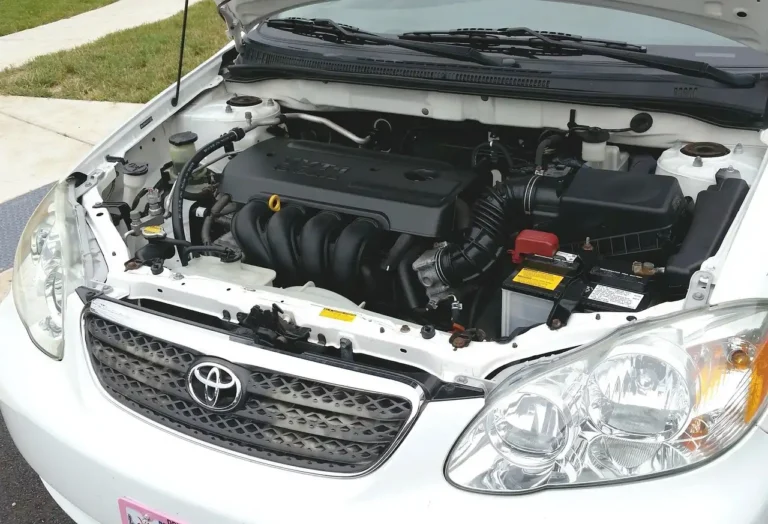
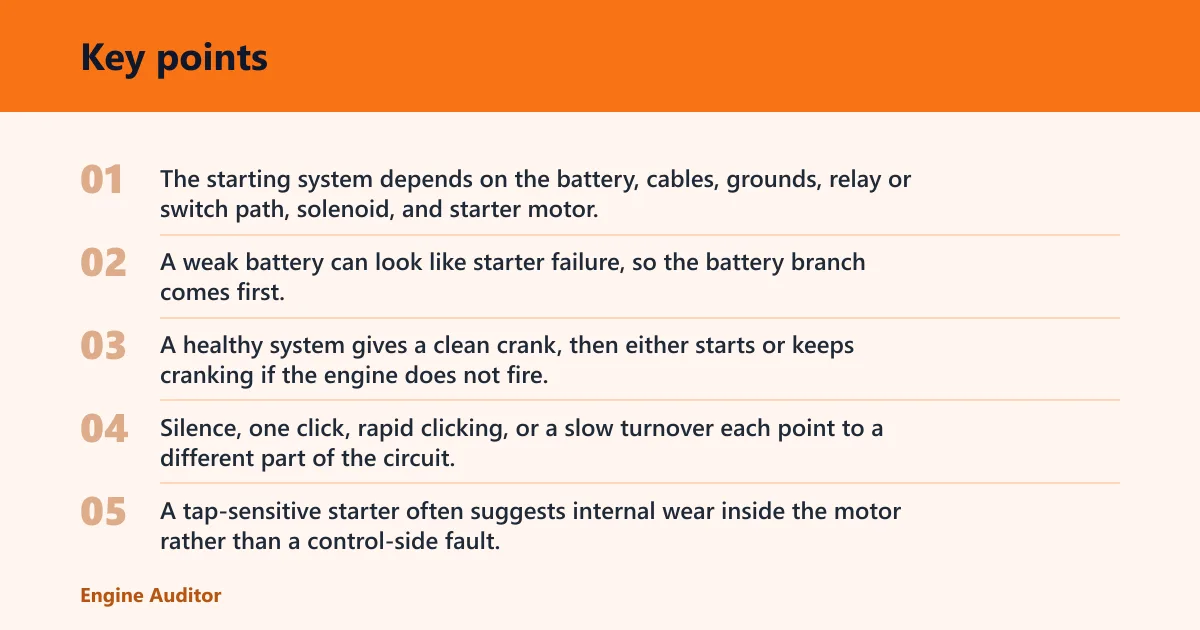
The starting system depends on the battery, cables, grounds, relay or switch path, solenoid, and starter motor. A weak battery can look like starter failure, so the battery branch comes first. The label on the starter matters less than the symptom pattern, because the fault can sit in the feed, control, or motor side.
How cranking should sound and behave
A healthy system gives a clean crank, then either starts or keeps cranking if the engine does not fire. Silence, one click, rapid clicking, or a slow turnover each point to a different part of the circuit. A tap-sensitive starter often suggests internal wear inside the motor rather than a control-side fault.
Why battery condition comes first
Check the battery before you blame the starter. A weak battery can produce relay chatter, slow cranking, or no crank at all, and those symptoms can look like a bad starter motor. If the dash lights dim hard or reset when you turn the key, start with the battery and main connections.
What can you check first?
Start with the simplest clues: dash lights, headlights, key position, and whether the selector is fully in park or neutral. A weak-looking dash, a no-crank with bright lights, or a click with no engine movement each points in a different direction before any parts come off. That is the fastest no-equipment split.
Dash lights and headlight behavior
Turn the key to start and watch the lights. If they go very dim or out, the battery, battery cables, or a main ground is more likely than the starter alone. If the lights stay bright and you still get no crank, the control side or starter circuit moves higher on the list.
Key position and neutral or park check
Make sure the selector is fully in park or neutral, then try again. A neutral safety switch or range switch issue can block the start signal and mimic a dead starter. If the vehicle starts in neutral but not park, the problem is often in the interlock path rather than the starter motor.
Listen for click, churn, or silence
One click usually means the control circuit reached the starter solenoid but the motor did not spin. Rapid clicking often suggests the voltage is dropping under load. Silence can mean the start signal never arrived, the relay did not close, or a cable or ground path is open.
Starter fault decision table
| Symptom | Likely failed component | What to observe | Next DIY check |
|---|---|---|---|
| Single click | Starter motor, solenoid, or high-resistance cable | Dash lights stay on, then the click comes once and the engine does not turn | Try a second start attempt after checking battery terminals and grounds |
| Rapid clicking | Weak battery or poor battery connection | Lights dip and recover quickly in step with the clicks | Check terminal tightness and battery condition first |
| No click | Relay, ignition switch, neutral safety switch, or wiring fault | No sound from the starter area and no crank | Check whether the dash lights change when the key is turned to start |
| Slow crank | Weak battery, bad ground, worn brushes, or dragging starter | Engine turns slowly even though lights may stay on | Inspect cables and watch whether a jump-start condition improves the speed |
| Intermittent crank | Worn starter contacts, brushes, relay, or loose cable | It works sometimes and fails other times, often without a pattern | Check terminals, then note whether tapping the starter changes the result |
| Crank after tap | Starter motor internal wear | A light tap on the starter body makes it work once | Plan removal and inspection of brushes, commutator, and drive parts |
How do the symptom patterns point to the failed part?
Use the sound pattern to narrow the fault. One click points toward the solenoid, motor, or a bad connection that cannot carry current under load. Rapid clicking points first to battery condition. Silence shifts the focus to the start signal path, relay, or switch side.
Single click
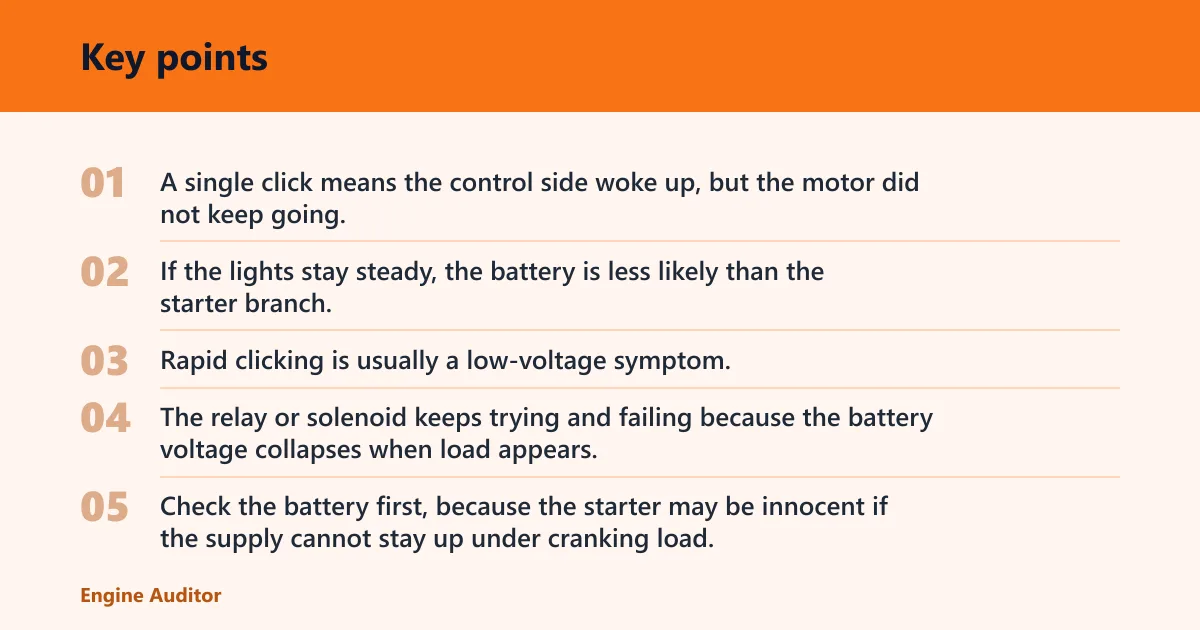
A single click means the control side woke up, but the motor did not keep going. That can happen when the starter motor is worn, the solenoid contacts are burned, or the cable feed cannot supply enough current. If the lights stay steady, the battery is less likely than the starter branch.
Rapid clicking
Rapid clicking is usually a low-voltage symptom. The relay or solenoid keeps trying and failing because the battery voltage collapses when load appears. Check the battery first, because the starter may be innocent if the supply cannot stay up under cranking load.
No click
No click usually means the start command never reached the starter solenoid or relay. That points to the ignition switch path, a fuse or relay issue, a neutral safety switch, or an open wire. If the dash lights remain normal, the battery is less likely to be the direct cause.
Slow crank
Slow cranking can come from a weak battery, bad cable connections, a poor ground, or internal starter wear. A starting system must turn the engine fast enough to draw in fuel and air, so a motor that turns lazily may still fail even though it is not fully dead.
Intermittent crank
An intermittent fault is often a worn contact, loose cable, or starter brush problem. Heat can make the fault show up more often, especially on a hot-start no-crank. If it comes back after a cool-down or after the cables are moved, the fault may be electrical rather than mechanical.
Crank after tap
If a tap on the starter body changes the result, the motor is a strong suspect. That usually points to worn brushes, a sticky commutator, or a drive mechanism that is sticking. It is a clue, not a repair, but it helps separate internal starter wear from a simple cable fault.
How do you check the starter circuit safely?
Keep the vehicle fully secured, follow the vehicle manual, and do not work under a vehicle held only by a jack. Before deeper diagnosis or removal, switch the key off and disconnect the battery. Safety comes first because the engine can move unexpectedly, and a live circuit can create extra damage if shorted.
- Secure the vehicle first. Set the parking brake, place the transmission in park or neutral, and chock the wheels if the manual calls for it. Safety matters before any cranking check because the engine can start unexpectedly.
- Watch the lights. Turn the key to start and note whether the dash lights dim, stay bright, or reset. This tells you whether the battery is sagging or whether the start signal is failing before the motor is asked to work.
- Listen once, then repeat. Count clicks and note whether you hear one click, rapid clicking, or silence. The sound pattern is one of the clearest ways to split battery, relay, and starter faults without special equipment.
- Try neutral or park. Move the selector fully into the other valid start position and try again. If the engine cranks in one position only, the start interlock path is likely the problem.
- Tap only as a clue. If a light tap on the starter body changes the result, treat that as a sign of internal wear. Do not keep tapping as a fix; plan removal and inspection instead.
When should you suspect the starter motor?
Suspect the starter motor when the battery is sound, the cables look secure, the start signal reaches the circuit, and the symptom still points to a no-crank or a tap-sensitive fault. At that point, the starter may need to be removed if testing indicates a fault in the starter motor.
Electrical fault versus mechanical fault
An electrical fault usually shows up as no click, rapid clicking, or a dead response from the relay or solenoid side. A mechanical fault often shows up as a motor that clicks, drags, grinds, or works only after a tap. If the engine never turns, either type remains possible.
Brush, commutator, and bearing wear
Starter motors can have brushes that wear with use, and the commutator can become damaged or dirty. Bearings or bushes can also fail, creating drag or noise. Graphite-bronze bushes are common, while ball bearings appear on some heavy-duty starters.
Solenoid and drive-mechanism clues
Some starters are pre-engaged types with an attached solenoid, so the solenoid may come off with the motor during removal. The starter drive mechanism may be called a Bendix gear, especially on inertia-type starters. If the drive does not engage cleanly, the fault may be in that mechanism rather than the battery feed.
What do starter internals tell you?
Internal wear tells you whether the starter needs repair, replacement, or deeper inspection after removal. Brushes, the commutator, bushes, bearings, and the Bendix gear all matter. If the starting problem changes when the starter is tapped, those internal parts move higher on the list.
Brushes and commutator wear
Brush wear can cause poor contact, weak turning, or a no-crank that comes and goes. The commutator is the contact surface the brushes ride on, so scoring or heavy wear can stop the motor from spinning correctly. That is a removal-and-inspect point, not a driveway guess.
Bushes, bearings, and noise
Dragging bushes or failing bearings can make the starter slow, noisy, or uneven. A worn bearing can also let the armature move out of alignment. If the motor sounds rough before it quits, mechanical wear inside the starter becomes more likely.
Bendix gear and solenoid notes
The Bendix gear is the drive piece that engages the engine. If it sticks, spins without driving, or fails to move out cleanly, the starter can click without turning the engine. On pre-engaged units, the solenoid and drive are closely linked, so removal often reveals both together.
Common mistakes to avoid
Do not blame the starter before checking the battery and cable condition. A weak battery can mimic starter failure, and a bad ground can do the same. Do not confuse rapid clicking with a bad starter motor when the battery is actually the first problem.
Say your headlights stay bright, you hear one solid click, and the engine never turns. That pattern points more toward the starter motor or solenoid than the battery. Suppose the car starts after a tap on the starter housing; that leans toward internal wear, not an ignition switch failure.
Do not keep cranking for long stretches. Repeated attempts can overheat wiring and drain the battery further, which muddies the symptom pattern. If the fault points to the starter motor, stop there and move to removal and inspection.
What you’ll need
- The vehicle owner’s manual
- A fully charged battery in good condition
- Wheel chocks if the manual calls for them
- A way to view the starter area safely from outside the vehicle
- A helper, if you need someone to turn the key while you watch the lights and listen
Must-have
For no-special-equipment diagnosis, the must-have items are sound observation, a battery in good condition, and a safe setup before any deeper work. If the symptom points away from the battery and toward the starter, removal becomes the next step. Follow the manual before you disconnect anything.
 As an Amazon Associate we earn from qualifying purchases. Prices and availability are accurate as of the date shown and are subject to change
VCC Heavy Duty Remote Starter Switch. Based on the published product details, this is the most direct helper for controlled starter circuit checks when you need to trigger cranking from the engine bay. The alligator clips and 5ft wire make it easier to reach, but it still depends on the vehicle layout, and it does not tell you whether the fault is battery, relay, or starter by itself.
Nice-to-have
A second helper is useful if you want to separate voltage-loss symptoms from starter wear more confidently. That said, the basic sound-and-light checks still come first. No extra tool removes the need to listen for click patterns, watch the dash, and confirm park or neutral.
 As an Amazon Associate we earn from qualifying purchases. Prices and availability are accurate as of the date shown and are subject to change
AstroAI Digital Multimeter. This is the more versatile support item for broader electrical troubleshooting, including battery and cable checks. The backlit screen and auto-ranging help with general diagnosis, but it is more than this article requires, and a meter alone still will not repair a worn starter motor, solenoid, or Bendix gear.
Consumables and spares
For this topic, the main consumables are not special products. Battery terminal cleaning, replacement cable ends, or a starter repair kit may be needed later, but only after the symptom pattern points to the right branch. Do not buy internal starter parts before the fault is narrowed down.
Budget setups
| Setup | What it includes | Price |
|---|---|---|
| Starter | Basic observation only | Free |
| Mid | Basic observation + VCC Remote Starter Switch | $22.19 |
| Serious | Basic observation + VCC Remote Starter Switch + AstroAI Digital Multimeter | $52.18 |
Frequently asked questions
How can I test a starter circuit without special equipment?
Watch the dash lights, listen for the click pattern, and note whether the engine cranks at all. Then compare that result with battery condition and selector position in park or neutral. Those three clues usually separate a battery problem, control issue, or starter fault well enough to choose the next step.
What are the easiest checks for a no-crank car?
Check whether the lights dim, whether you hear a click, and whether the gear selector is fully in park or neutral. If the lights stay bright and there is no click, the start signal path moves up the list. If the lights fall hard, the battery or connections deserve the first look.
Can I tell if the starter, battery, or relay is bad by listening?
Yes, often enough to narrow the fault. Rapid clicking usually points to low supply voltage. One click points toward the solenoid or starter motor. Silence points toward the relay, switch, interlock, or wiring path. The sound alone is not final proof, but it is a strong guide.
What does it mean if the starter clicks but won’t crank?
A click with no crank means the control side reached the starter, but the motor did not turn the engine. That can happen from a weak battery, a poor cable or ground, worn brushes, a failed solenoid contact, or a drive fault. The next check is battery and connection condition.
How do I test the starter motor with basic tools only?
Use sound, light behavior, and a safe start attempt in park or neutral. If the motor responds only after a tap, internal wear is likely. If the battery is good and the circuit still gives one click or silence, the starter may need removal for brush, commutator, or drive inspection.
When do I need to remove the starter motor?
Remove the starter when the symptom points to internal starter wear and the battery, cables, relay path, and selector checks do not explain the fault. The starter may need to be removed if testing indicates a fault in the starter motor. Disconnect the battery before removal and follow the manual.
Products related to this article
Sponsored / affiliate links. As an Amazon Associate I earn from qualifying purchases. I may earn additional commission from eligible campaigns.