How to Take Care of Your Car and Make It Last Longer
Taking care of your car properly is the most effective way to extend its lifespan and avoid costly repairs down the road. This guide covers the essential maintenance steps every owner should follow to keep their vehicle running smoothly for years to come.
Simply put, consistent care of your car’s fluids, tires, battery, and body can double its reliable life. Stick to a regular schedule and address small issues before they become big problems.
Key Takeaways
- Taking care of your car means checking fluids, tires, and battery at least once a month.
- Regular oil changes and filter replacements are non-negotiable for engine health.
- Protecting the exterior and interior preserves resale value and prevents rust.
- Avoiding common mistakes like skipping scheduled maintenance saves thousands in repairs.
- Using quality parts and following the owner’s manual ensures maximum longevity.
What You Need to Maintain Your Car
Before you start, gather the right tools and supplies. Having everything on hand makes the process faster and more thorough.
Basic equipment includes a tire pressure gauge, jack and stands, funnel, microfiber cloths, and the correct fluids for your vehicle. For oil changes, you’ll need an oil filter wrench, drain pan, and the recommended oil grade.
- Tire pressure gauge (digital or analog)
- Car jack and jack stands
- Funnel for pouring fluids
- Microfiber cloths and detailing products
- Owner’s manual for specifications
- Fluid-specific containers (coolant, brake fluid, etc.)
- Battery terminal cleaner and brush
Tip: Store these tools in a dedicated bag or box so you can grab them quickly for monthly checks.
| Tool | Purpose | Estimated Cost |
|---|---|---|
| Tire pressure gauge | Check tire inflation | $5 – $15 |
| Oil filter wrench | Remove oil filter | $8 – $20 |
| Multimeter | Test battery voltage | $15 – $30 |
According to AAA, simple tools like these can help you spot problems early, saving an average of $1,200 per year in unexpected repairs.
How to Check and Top Off Fluids
Fluids are the lifeblood of your car. Low or dirty fluids cause friction, overheating, and component failure. Checking them every few weeks is one of the easiest ways to practice taking care of your car.
You’ll need to inspect engine oil, coolant, brake fluid, power steering fluid, transmission fluid, and windshield washer fluid. Each has a dedicated reservoir or dipstick.
- Park on level ground and let the engine cool for 10 minutes.
- Pull the oil dipstick, wipe it clean, reinsert, then check the level. It should be between the two marks.
- Check coolant in the clear overflow tank (never open a hot radiator cap).
- Locate brake fluid reservoir – usually near the firewall – and ensure it’s above the minimum line.
- Inspect power steering and transmission fluids according to your owner’s manual (some require running engine).
- Fill washer fluid as needed with water and a quality concentrate.
| Fluid | Check Interval | Signs of Problem |
|---|---|---|
| Engine oil | Every 2 weeks | Dark, gritty, or burnt smell |
| Coolant | Monthly | Rusty color, low level, sweet smell |
| Brake fluid | Every 3 months | Dark or cloudy appearance |
Important: Use only the fluid type specified in your owner’s manual. Mixing wrong fluids can damage seals and cause expensive leaks.
Consumer Reports notes that regular fluid checks can prevent 90% of common engine and transmission issues. It takes less than five minutes and costs nothing except a clean rag.
How to Keep Your Tires in Great Shape
Tires are the only contact between your car and the road. Proper inflation, rotation, and tread depth dramatically affect safety, fuel economy, and tire life. Taking care of your car includes monitoring tires at least once a month.
Underinflated tires wear faster on the edges and reduce gas mileage by up to 3% according to the U.S. Department of Energy. Overinflated tires wear in the center and make the ride harsh.
- Check pressure when tires are cold (before driving).
- Use the pressure listed on the driver’s door jamb sticker, not the sidewall maximum.
- Rotate tires every 5,000–7,500 miles to even out wear.
- Measure tread depth with a penny: insert Lincoln’s head upside down; if you see the top of his head, replace the tire.
- Balance tires after rotation to prevent vibration.
- Align the wheels if you notice pulling or uneven wear.
Warning: Driving on worn tires increases stopping distance by 30% on wet roads. Replace tires when tread reaches 2/32 inch.
The National Highway Traffic Safety Administration (NHTSA) reports that tire-related crashes cause over 700 fatalities annually. Regular tire care is not just about longevity – it’s a critical safety practice.
Step 3: Maintain the Battery and Electrical System
A weak battery leaves you stranded. Modern cars depend heavily on electrical power for starting, sensors, and infotainment. With proper maintenance, a battery can last 4–6 years instead of 2–3.
Corrosion on terminals is the number one battery killer. Clean the posts with a wire brush and a mixture of baking soda and water. Tighten connections firmly but don’t overtighten.
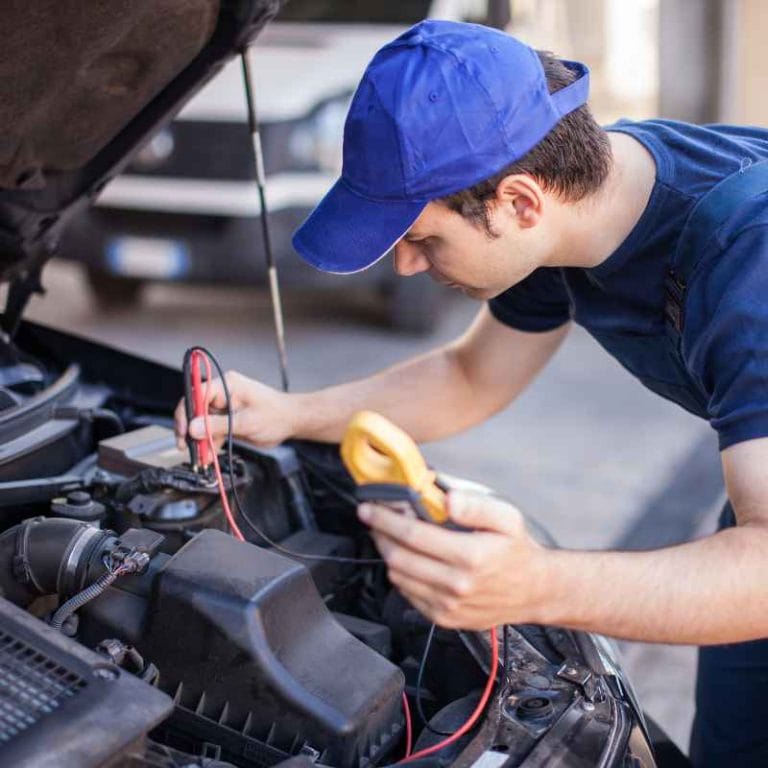
- Test battery voltage with a multimeter: 12.6V or higher is fully charged; below 12.4V needs charging; below 12.0V is near failure.
- Clean corrosion using a terminal brush and baking soda paste.
- Apply a thin layer of petroleum jelly or dielectric grease to terminals to prevent future corrosion.
- Ensure the battery is held down securely to avoid vibration damage.
- Check the alternator belt for cracks or looseness; a squealing belt can signal trouble.
| Battery Voltage | State of Charge | Action Needed |
|---|---|---|
| 12.6V – 12.8V | 100% | None |
| 12.4V – 12.5V | 75% | Charge soon |
| 12.0V – 12.3V | 50% or less | Charge immediately |
According to Interstate Batteries, nearly 40% of battery failures happen in winter. Testing in fall can save you from a dead battery on a cold morning.
Why Regular Oil Changes Matter
Oil lubricates engine parts, reduces friction, and carries away heat and debris. Over time, oil breaks down and loses its protective properties. Skipping changes is the fastest way to ruin an engine.
Most manufacturers recommend an oil change every 5,000–7,500 miles for conventional oil, and up to 10,000 miles for synthetic. Check your owner’s manual for the exact interval. Taking care of your car means never exceeding that limit.
- Use the correct viscosity grade (e.g., 5W-30) as specified.
- Change the oil filter at every oil change – a dirty filter bypasses unfiltered oil.
- Check the oil level weekly – low oil causes catastrophic engine wear.
- Look for metal particles in drained oil – that signals internal damage.
- Keep records of oil changes to maintain warranty and resale value.
Tip: Synthetic oil lasts longer and provides better protection in extreme temperatures. It’s worth the extra cost for high-mileage vehicles.
The Car Care Council states that 22% of vehicles have low or dirty engine oil, which can shorten engine life by 50% or more. A simple $40 oil change beats a $4,000 engine replacement every time.
How to Protect Your Car’s Exterior and Interior
Environmental damage – UV rays, bird droppings, road salt, and dust – degrades paint, upholstery, and plastic trim. Protecting the finish and cabin is essential for both appearance and resale value. Taking care of your car includes regular washing and conditioning.
Wash the car every two weeks using a pH-neutral shampoo. Clay bar treatment removes bonded contaminants that normal washing misses. Apply wax or a ceramic coating twice a year to seal the paint.
- Wash from top down to avoid dragging dirt across the paint.
- Use two buckets – one for soap, one for rinsing your mitt – to minimize swirl marks.
- Dry with a microfiber towel to prevent water spots.
- Apply a quality wax or sealant every 3–4 months.
- Clean leather seats with a mild cleaner and conditioner to prevent cracking.
- Use sunshades on the windshield and tint windows to reduce UV damage to dash and upholstery.
- Vacuum carpets and mats weekly to remove abrasive grit.
| Protection Method | Frequency | Benefit |
|---|---|---|
| Hand wash | Every 2 weeks | Removes corrosive contaminants |
| Wax or ceramic coating | Every 3–6 months | UV protection, water beading |
| Leather conditioner | Every 2 months | Prevents cracking and fading |
Auto detailing experts say a well-protected exterior can retain up to 20% more resale value over five years. It’s a small time investment that pays off at trade-in time.
Common Mistakes That Shorten Your Car’s Life
Even well-intentioned owners make errors that accelerate wear. Avoiding these missteps is just as important as following the maintenance steps above.
- Ignoring dashboard warning lights – especially the check engine light – can allow minor issues to become major.
- Using cheap aftermarket parts that don’t meet manufacturer specifications.
- Revving the engine when cold – wait until the RPM settles.
- Overloading the vehicle beyond its weight capacity, straining brakes and suspension.
- Neglecting to flush coolant and brake fluid as recommended (every 2–3 years).
- Driving on a low fuel tank frequently, which can clog the fuel pump with debris.
- Parking under trees without a cover – tree sap and bird droppings damage paint.
Warning: Skipping timing belt replacement per the manual can lead to catastrophic engine failure. A $500 belt job prevents a $3,000 engine repair.
The Institute of Advanced Motorists reports that proper maintenance can extend a car’s life by an average of 50,000 miles beyond the typical 200,000-mile lifespan. Simple habits make the difference.
Frequently Asked Questions
How often should I take care of my car?
Perform basic checks – fluids, tires, lights – every two weeks. Follow the owner’s manual for oil changes, rotations, and filter replacements. Major services like coolant flushes and transmission service are typically every 30,000–60,000 miles.
What is the most important part of taking care of a car?
Regular oil changes are the single most critical maintenance task. Clean oil protects the engine from wear and overheating. Without it, even a well-maintained car will fail prematurely.
Can I take care of my car myself without special tools?
Yes. Checking fluids, tire pressure, and cleaning the battery require only basic tools you may already have. For oil changes and brake work, a jack, stands, and a few wrenches are sufficient.
Always refer to the manual for safety.
How much does it cost to maintain a car per year?
AAA estimates the average annual maintenance cost at $1,200 to $1,800 for a new car, including tires and routine services. Older cars may cost more due to replacement parts. The key is to follow a schedule to avoid emergency repairs.
Does taking care of your car really make it last longer?
Absolutely. A well-maintained car can easily reach 200,000 miles or more, while a neglected car may fail well before 100,000 miles. Consistent care prevents small issues from becoming expensive failures.
Final Thoughts
Taking care of your car boils down to consistency: check fluids, maintain tires, change oil on time, and protect the body. These simple habits can double your vehicle’s lifespan and save thousands in repairs. Start today with a quick under-hood inspection – your car will thank you for years to come.