What Should You Do After Seeing a Ford Sign Genius Next Moves
When you see a Ford warning light, the genius next move is to identify the light’s color. Red means stop safely as soon as possible. Yellow or amber means caution; check the issue soon. Green or blue is informational. Always check your owner’s manual for the specific meaning and follow its guidance.
Seeing a new light pop up on your Ford’s dashboard can be a little scary. Your mind might start racing. Is something seriously wrong? Is it safe to keep driving? How much will this cost? It’s a common feeling, and you are not alone. These little symbols are your car’s way of talking to you, and I am here to help you understand the language.
Don’t worry. We will walk through this together, step by step. This guide will show you the genius next moves to make after seeing any Ford sign. You will learn what the colors mean, what the most common symbols are telling you, and exactly what to do. You’ll be able to handle this with confidence. Let’s get started.
First Things First: Don’t Panic, Just Prepare
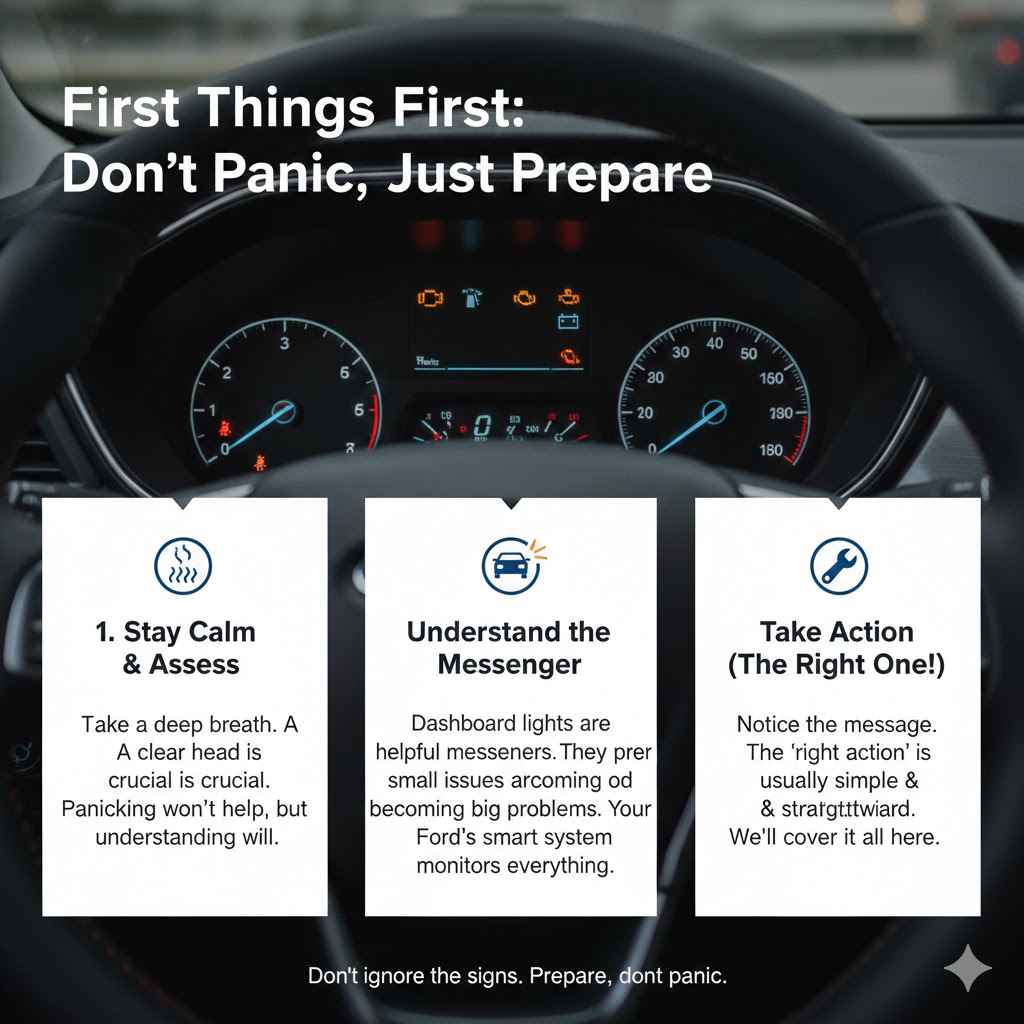
The single most important first step is to take a deep breath and stay calm. Panicking won’t help, but a clear head will. Dashboard warning lights are designed to give you a heads-up, not to cause an accident. Think of them as helpful messengers. They are there to prevent a small issue from becoming a big, expensive problem.

As an Amazon Associate I earn from qualifying purchases.
Your Ford has a smart system that monitors everything from your engine to your tire pressure. When it detects something outside of the normal range, it turns on a light to get your attention. Your job is to notice the message and take the right action. The “right action” is usually simple and straightforward, and we’ll cover it all here.
Cracking the Code: What That Ford Sign’s Color Means
Ford, like most car manufacturers, uses a simple color-coded system to help you quickly understand the urgency of a warning light. It’s like a traffic light for your car’s health. Understanding this system is your first genius move.
- Red Lights: A red light indicates a potentially serious problem or a safety issue. It means “Danger” or “Stop.” You should pull over as soon as it is safe to do so and investigate the problem. Driving with a red warning light on could cause severe damage to your vehicle or be unsafe.
- Yellow or Amber Lights: A yellow or amber light means “Caution.” It’s a heads-up that a system needs attention or service soon. You typically don’t need to pull over immediately, but you should not ignore it. Plan to get it checked out by a professional or investigate it yourself in the near future.
- Green or Blue Lights: These lights are usually informational. They are not warnings. They simply let you know that a system is on and working correctly, like your headlights, turn signals, or cruise control.
Here is a simple table to help you remember the color code.
| Light Color | Meaning | Immediate Action Required |
|---|---|---|
| Red | Serious Issue / Safety Hazard | Stop the car safely as soon as possible. Turn off the engine. |
| Yellow / Amber | Caution / Service Needed | Schedule a check-up soon. Drive with care. |
| Green / Blue | System is Active / Information | No action needed. This is normal operation. |
The Most Common Ford Signs and What They Mean
Now that you understand the colors, let’s look at some of the most common symbols you might see on your Ford’s dashboard. Knowing what they mean will give you the confidence to make the right call.
Red Alert! Signs That Mean “Stop Now”
If you see one of these red symbols, your top priority is to find a safe place to pull over, stop your car, and turn off the engine. Ignoring these can lead to major engine damage or a serious safety risk.
- Engine Temperature Warning: This light looks like a thermometer dipped in liquid. It means your engine is overheating. This is a critical warning. Continuing to drive could cause catastrophic engine damage. Pull over, turn off the engine, and let it cool down completely before checking coolant levels.
- Oil Pressure Warning: This light looks like an old-fashioned oil can. It means your engine has lost oil pressure. This is another very serious warning. Without proper oil pressure, your engine can’t lubricate itself, leading to severe damage in a matter of minutes. Stop the car immediately and do not restart it until the oil level is checked.
- Brake System Warning: This light usually shows the word “BRAKE” or an exclamation point inside a circle. It can mean a few things: your parking brake is on, your brake fluid is low, or there is a more serious issue with your braking system. Check your parking brake first. If it’s off and the light is still on, have your vehicle towed to a mechanic. Do not risk driving with a potential brake failure.
- Charging System/Battery Warning: This light looks like a car battery. It indicates that your car’s electrical system is not charging the battery properly. This could be a problem with the alternator, the battery itself, or the wiring. Your car will run on battery power for a short time, but it will eventually die, leaving you stranded.
Amber Cautions: Signs That Mean “Check Soon”
These yellow or amber lights are less urgent than red ones, but they should never be ignored. They signal that something needs your attention.
- Check Engine Light: This is probably the most famous (and most misunderstood) warning light. It looks like the outline of an engine. It can light up for dozens of reasons, from something as simple as a loose gas cap to a more complex issue like a faulty oxygen sensor. If it’s solid, you can continue driving but should get it checked soon. If it’s flashing, it indicates a more severe problem, like a misfire, that could damage your catalytic converter. In that case, reduce your speed and get it serviced immediately.
- Tire Pressure Monitoring System (TPMS): This light looks like a flat tire with an exclamation point in it. It means the air pressure in one or more of your tires is significantly low. You should check your tire pressures as soon as possible and inflate them to the recommended level found on the sticker inside your driver’s door jamb.
- ABS Warning Light: This light shows the letters “ABS” inside a circle. It means there is an issue with your Anti-lock Braking System. Your regular brakes will still work, but the anti-lock feature, which prevents skidding during hard braking, will be disabled. Drive more cautiously and have the system serviced.
- Traction Control/Stability Control Light: This symbol often looks like a car with squiggly lines behind it. If it’s flashing, it means the system is actively working to help you maintain control on a slippery surface. If it stays on steadily, it means there’s a fault in the system.
Green and Blue Lights: Just So You Know
Seeing these lights is perfectly normal. They are simply there to confirm a system is active.
- Headlight Indicators: A blue light that looks like a headlight with straight lines means your high beams are on. A green light with angled lines indicates your regular headlights or parking lights are on.
- Cruise Control: This light, often looking like a speedometer, will light up green to show that the cruise control system is on and ready.
- Turn Signals: These are the green flashing arrows that let you know your turn signals are active.
Your Genius Next Moves: A Step-by-Step Action Plan
Okay, a light has come on. You’ve identified the color. Now what? Here is a clear, step-by-step plan for your genius next moves.
- Identify the Light’s Color and Symbol: The first thing to do is note the color. Is it red, amber, or green? Then, look at the symbol. Match it to the descriptions above or in your owner’s manual.
- Check for Other Symptoms: Pay attention to how your car is behaving. Do you hear any strange noises? Are there any unusual smells? Does the car feel different to drive? Is there a loss of power? These clues can help you or your mechanic diagnose the problem faster.
- Pull Over Safely (If It’s Red): If a red warning light appears, your immediate priority is safety. Signal your intention to pull over, check your mirrors, and move to the side of the road or into a parking lot. Avoid slamming on the brakes. Once stopped, put your car in park and turn on your hazard lights. For more tips on roadside safety, you can consult resources like the National Highway Traffic Safety Administration (NHTSA).
- Consult Your Owner’s Manual: This is your car’s official instruction book. It will have a dedicated section that shows every single dashboard light, what it means, and what Ford recommends you do. If you can’t find your physical copy, you can usually download a PDF version for free from Ford’s official website.
- Perform Basic Checks (If Safe): For some amber lights, you can do a quick check yourself. If the check engine light is on, your first and easiest check is the gas cap. Make sure it’s tight. A loose gas cap can trigger this light. If the TPMS light is on, a visual check of your tires might reveal one that is obviously low.
- Decide Your Next Move: Drive or Tow?: Based on the light’s color and what your manual says, make a decision. Red lights almost always mean you should call for a tow. A solid amber light often means you can drive carefully to your home or a nearby auto shop. A flashing amber check engine light means you should limit your driving and get to a shop as soon as possible.
The DIY Genius Move: Using an OBD-II Scanner
If you have an amber check engine light and want to feel truly empowered, your next genius move is to use an OBD-II scanner. It might sound technical, but it’s an incredibly simple and affordable tool that can save you a lot of money and stress.
An OBD-II (On-Board Diagnostics) scanner is a small device that plugs into a port under your dashboard. It reads the trouble codes that your car’s computer has stored. These codes point directly to the system that is having a problem.
How to Use an OBD-II Scanner:
- Find the OBD-II Port: In most Fords, it’s located under the dashboard on the driver’s side, usually near the steering column.
- Plug in the Scanner: With the car off, plug the scanner into the port.
- Turn the Key: Turn the ignition key to the “On” position, but don’t start the engine.
- Read the Codes: Follow the instructions on your scanner to read the diagnostic trouble codes (DTCs). It will give you a code that starts with a letter, like “P0442.”
- Look Up the Code: The scanner may give you a brief description, or you can look up the code online. It will tell you what the code means, for example, “P0442 – Evaporative Emission Control System Leak Detected (Small Leak).” This often points to a loose gas cap!
Using a scanner gives you valuable information before you even talk to a mechanic. You’ll know what the issue is, which helps you have a more informed conversation and avoid unnecessary repairs.
Here’s a simplified table of what some common code families mean.
| Code Prefix | System | Common Example Problem |
|---|---|---|
| P01xx | Fuel and Air Metering | Mass air flow sensor or oxygen sensor issue |
| P03xx | Ignition System | Engine misfire, spark plugs, or ignition coil issue |
| P04xx | Auxiliary Emission Controls | Gas cap leak or EVAP system issue |
| P07xx | Transmission | Transmission sensor or solenoid issue |
When to Call the Pros: Finding a Trustworthy Mechanic
While an OBD-II scanner is a fantastic tool, it doesn’t fix the car for you. Some jobs are best left to professionals. Your next genius move is knowing when to call for help and how to find someone you can trust.
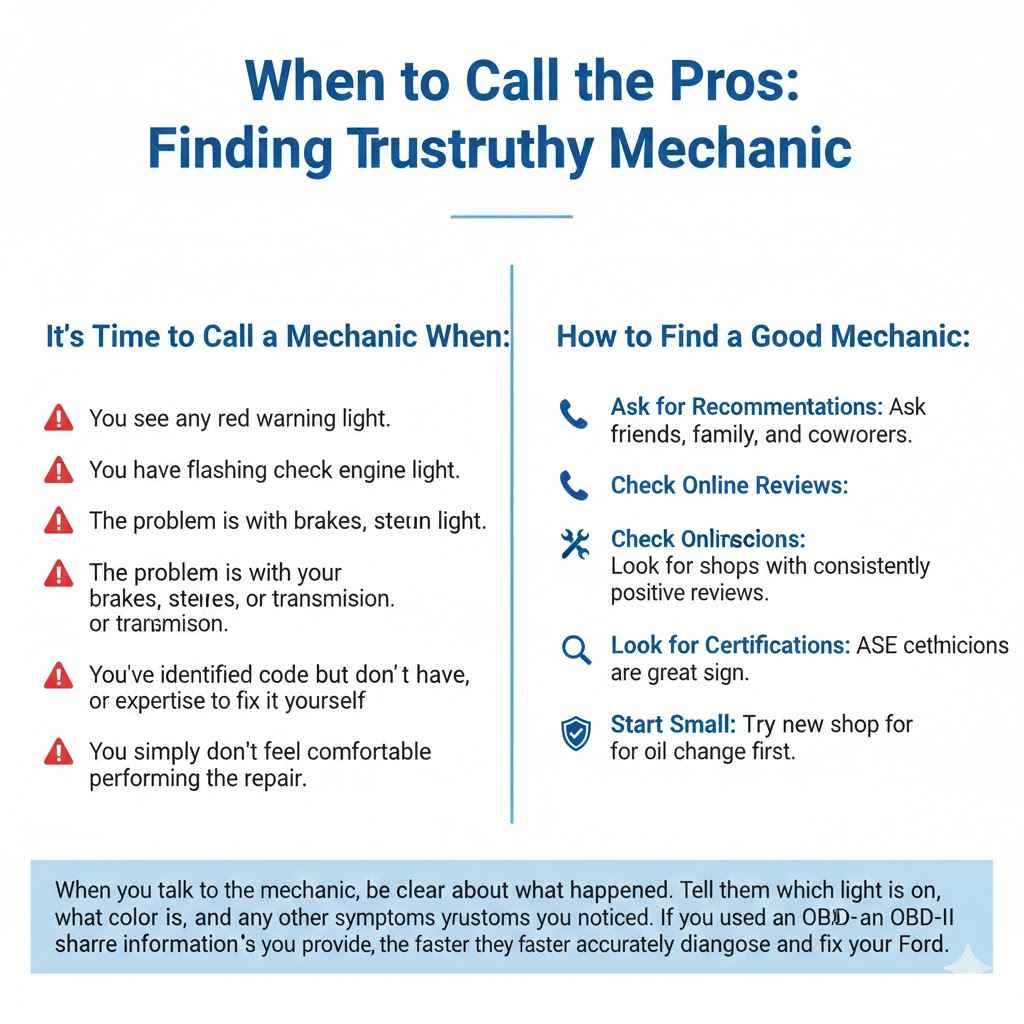
It’s Time to Call a Mechanic When:
- You see any red warning light.
- You have a flashing check engine light.
- The problem is with your brakes, steering, or transmission.
- You’ve identified the code but don’t have the tools, time, or expertise to fix it yourself.
- You simply don’t feel comfortable performing the repair.
How to Find a Good Mechanic:
- Ask for Recommendations: Ask friends, family, and coworkers who they trust with their cars.
- Check Online Reviews: Look for shops with consistently positive reviews on Google, Yelp, or dedicated auto repair review sites.
- Look for Certifications: A shop with ASE (Automotive Service Excellence) certified technicians is a great sign. This means the mechanics have passed rigorous tests and are highly skilled.
- Start Small: Try a new shop for a simple service like an oil change to see how they operate before you need a major repair.
When you talk to the mechanic, be clear about what happened. Tell them which light is on, what color it is, and any other symptoms you noticed (noises, smells, etc.). If you used an OBD-II scanner, share the code you found. The more information you provide, the faster they can accurately diagnose and fix your Ford.
Frequently Asked Questions (FAQ)
Can I just ignore a warning light if my car feels fine?
You should never ignore a warning light, especially if it’s red or amber. Even if your car feels normal, the light is on for a reason. Ignoring it can allow a small, inexpensive issue to turn into a large, costly repair down the road.
What’s the difference between a flashing and a solid check engine light?
A solid check engine light means a non-urgent fault has been detected. You should get it checked soon. A flashing check engine light indicates a serious problem, like an engine misfire, that could be dumping unburned fuel into the exhaust system. This can quickly damage the catalytic converter, a very expensive part. If it’s flashing, reduce your speed and get it to a mechanic as soon as possible.
How much does it cost to diagnose a warning light?
Most auto shops charge a diagnostic fee, which typically ranges from $50 to $150. This fee covers the technician’s time to hook up a professional-grade scanner and investigate the source of the problem. Many shops will apply this fee toward the cost of the repair if you have them do the work.
Can I reset a warning light myself?
Yes, you can often clear the code and turn off the light using an OBD-II scanner or by disconnecting the car’s battery for a few minutes. However, this is not a fix! If you don’t address the underlying problem, the light will just come back on. It’s always better to find and fix the cause of the issue.
Will my Ford tell me when it needs an oil change?
Yes, most modern Fords are equipped with an Intelligent Oil-Life Monitor system. Instead of a fixed mileage interval, the system monitors your driving habits to determine the best time for an oil change. A message like “Oil Change Required” or a wrench symbol will appear on your dashboard when it’s time for service.
Is it safe to drive with the tire pressure (TPMS) light on?
It’s best to address it as soon as you can. Driving on a significantly under-inflated tire can cause poor handling, reduced fuel economy, and excessive tire wear. In a worst-case scenario, it can lead to a dangerous tire blowout. Find a gas station with an air pump and check all your tires.
Where is the OBD-II port in my Ford?
The OBD-II port is almost always located on the driver’s side, underneath the dashboard. Look for it near the steering column or above the pedals. It’s a 16-pin trapezoid-shaped connector. Federal law requires it to be within three feet of the driver and easily accessible without tools.
Conclusion: You’re in the Driver’s Seat
Seeing a new warning light on your Ford’s dashboard doesn’t have to be a moment of panic. Now you know the genius next moves. You can stay calm, identify the light’s color and meaning, assess the situation, and follow a clear plan of action.
Remember the simple color code: red means stop, amber means caution, and green means go. Your owner’s manual is your best friend, and an affordable OBD-II scanner can make you a more informed and confident car owner. By knowing what to do, you are in control. You can save money, prevent bigger problems, and most importantly, keep yourself and your passengers safe on the road. You’ve got this.
Related pick: Check today's price on Amazon
Products related to this article
Sponsored / affiliate links. As an Amazon Associate I earn from qualifying purchases. I may earn additional commission from eligible campaigns.