How to Check If a Car Battery Is Fully Charged
A 12-volt car battery is fully charged when it rests at about 12.6 to 12.8 volts after the surface charge is removed, and it should hold above 9.6 volts during a 15-second load test. Checking it the wrong way can hide a weak battery, strand you with a no-start, or send you after the wrong fault. This guide shows how to remove surface charge, read voltage correctly, and use a simple voltage-and-load decision tree to tell full charge from a false pass.
Before you start

Do the test with the engine off and the battery at rest. A recent drive or charge can leave a surface charge on the plates, which can make a weak battery look healthier than it is. That is why a resting reading matters more than a fresh one.
Use the same approach for AGM, flooded, and sealed 12-volt batteries: measure resting voltage first, then check cranking behavior if needed. Only flooded lead-acid batteries are typically checked with electrolyte specific gravity.
📊 A fully charged battery is between 1.270 and 1.290 specific gravity. Source: Howacarworks.
What you’ll need
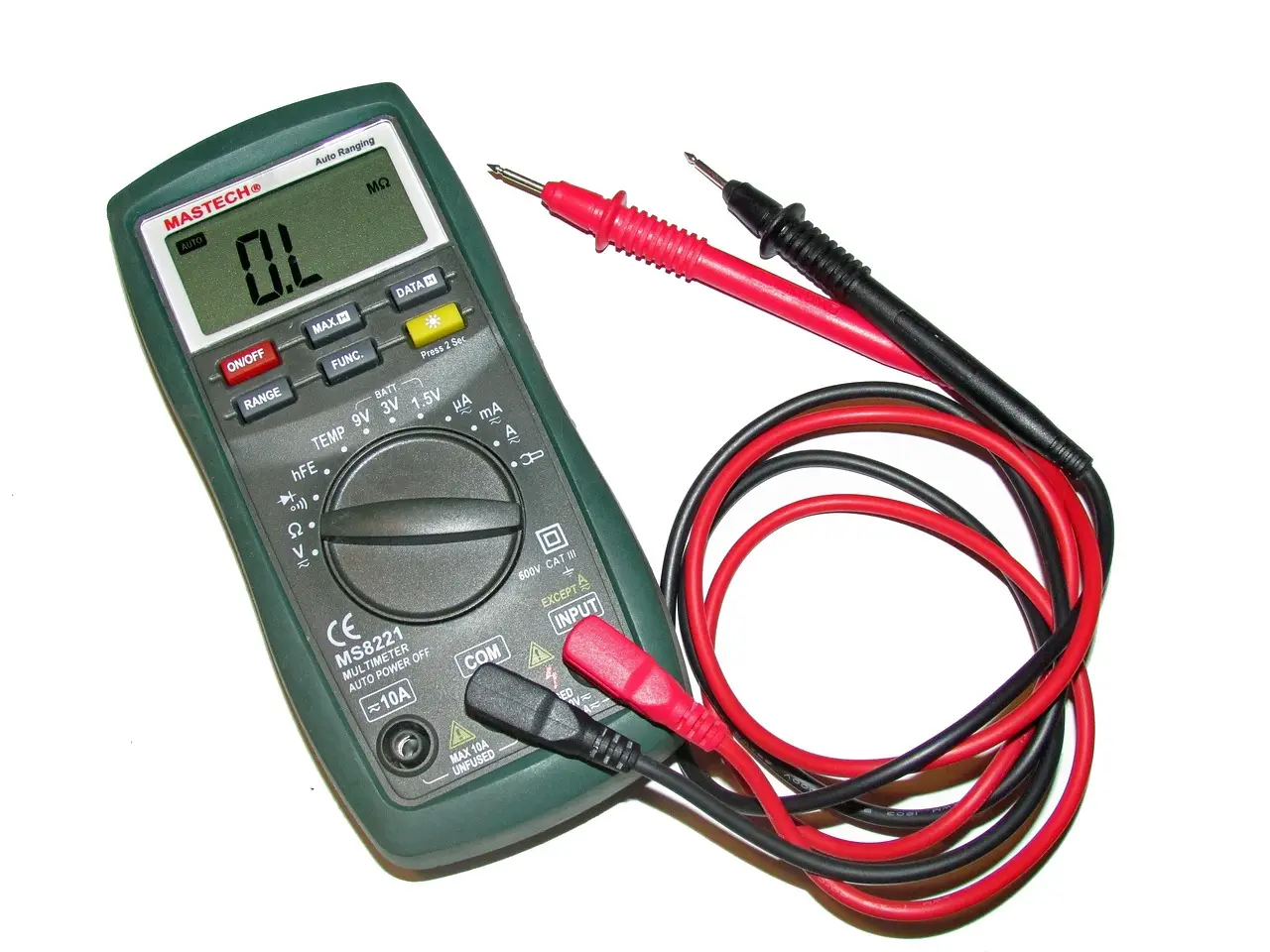
- Digital multimeter with DC voltage mode and a 20V range or auto-ranging
- Access to the battery posts, not just the cable clamps
- Battery charger, if the reading is low
- Safety glasses and gloves if you plan to inspect a flooded lead-acid battery
- Hydrometer, only for flooded lead-acid batteries
- Flashlight for looking at terminals, clamps, and the case
How do you know if a car battery is fully charged?
A fully charged 12-volt battery reads about 12.6V to 12.8V at rest, after surface charge is gone. If it has only been driven or charged recently, that reading can be falsely high. A quick cranking check helps separate true charge from a battery that only looks full on paper.
Use a digital multimeter
- Set the meter. Turn the multimeter to DC volts and choose the 20V range, or let an auto-ranging meter pick the scale. That keeps the reading in the correct range for a 12-volt automotive battery.
- Touch the posts. Put the red probe on the positive post marked with a + and often a red cover. Put the black probe on the negative post marked with a – and often a black cover.
- Read the resting voltage. Test on the battery posts, not on corroded clamps. If the battery has rested for at least an hour, the number is much more useful as a state-of-charge check.
- Match the number. About 12.4V means roughly 75% charged, 12.2V means about 50% capacity, 12.0V means severely discharged, and 11.9V or below suggests a discharged battery with a possible dead internal cell.
No-multimeter fallback checks
Without a meter, you can only make a rough call. Slow cranking, dim lights at key-on, or a charger that says full after several hours are clues, not proof. Use them as a fallback, then confirm with a voltage reading as soon as you can.
Say your headlights look dim at idle and the starter turns slowly after an overnight sit. That points toward a low battery or a connection problem, but it does not tell you which one yet.
How to remove surface charge
Surface charge is the temporary voltage boost that can appear right after charging or driving. It can create a false high reading, so you need to remove it before judging state of charge. The fix is simple: let the battery rest, or briefly load it.
After charging or driving
- Let it sit. Leave the car turned off for at least an hour. That rest period lets the surface charge fade so the reading reflects the battery’s actual state of charge.
- Or use a brief load. If you need a quicker check, switch the headlights to high beam for 15 seconds, then wait two minutes before measuring. That short load helps pull off the surface charge.
After a short rest period
Picture a battery that shows 12.7 volts right after a 20-minute drive. That number may still be inflated by surface charge. If it settles lower after an hour, the first reading was not a true full-charge reading.
Battery charge decision table
Use this table as the quick path from voltage and symptoms to the next action. It works best after the battery has rested, or after surface charge has been removed.
| Resting voltage | Surface-charge symptom | Cranking behavior | Action |
|---|---|---|---|
| 12.6V to 12.8V or higher | No recent charge or drive, or the reading stayed steady after a rest | Cranks normally and voltage stays above 9.6V | Fully charged |
| 12.4V to 12.5V | May have been recently charged or driven | Cranks normally but the battery is not at full charge | Charge and retest |
| 12.2V to 12.3V | May still show a decent no-load reading | Cranking drops hard, slows, or sounds strained | Load-test for weak battery |
| 12.0V or below | Fresh charging may hide the real number | Slow crank, clicking, or no-start; check belt, terminals, and charging output after recharge | Inspect alternator/connection issues |
What if the battery reads full but still starts poorly?
A battery can read fully charged and still be weak under starter demand. That is a battery-health problem, not a state-of-charge problem. If the resting voltage looks good but the engine still struggles, the next step is a cranking check and then a connection or charging-system check.
Check cranking voltage
- Watch the meter. Leave the probes on the battery posts and have someone crank the engine for 2 to 3 seconds. Watch the lowest voltage, not the resting number before the key turns.
- Judge the drop. A battery that stays above the low-load threshold is behaving better than one that drops sharply. If the voltage sags hard while the starter draws current, the battery may be weak even if it read full at rest.
Inspect the charging path
- Check the connections. Look for corrosion, loose clamps, and damaged casing. Clean, tight terminal contact matters because a battery can be healthy and still fail to deliver current through a bad connection.
- Recheck after charging. If the battery is low, charge it with a battery charger first, then test again after several hours or overnight. Many chargers deliver about two to six amps, so the job can take several hours or even overnight.
Suppose the battery sits at 12.7 volts after charging, but the starter still labors and the lights dip hard when the key turns. That points away from simple charge level and toward weak battery behavior under load, poor terminal contact, or a charging-system problem.
Common mistakes
Most bad calls come from testing at the wrong time or in the wrong place. Avoid these errors and the reading becomes much more useful.
- Measuring right after a drive or charge without removing surface charge
- Testing on corroded clamps instead of the battery posts
- Using resting voltage alone to judge battery health
- Calling a battery “good” because it reads about 12.6V once
- Skipping the cranking check when the car still starts poorly
- Using a hydrometer on AGM or sealed batteries; it applies to flooded lead-acid only
Frequently asked questions
How to check if a car battery is fully charged
First remove surface charge, then measure across the battery posts with a multimeter. If the battery rests at about 12.6V to 12.8V or higher and holds up during cranking, it is fully charged. If it reads high only right after charging, that can be a false pass.
What voltage should a car battery read when fully charged?
A fully charged 12-volt car battery should read about 12.6V to 12.8V or higher at rest. If it is at 12.4V, it is closer to 75% charged. At 12.2V, it is about 50% charged, and 12.0V means it needs immediate charging.
Products related to this article
Sponsored / affiliate links. As an Amazon Associate I earn from qualifying purchases. I may earn additional commission from eligible campaigns.