Best Quiet Cars for a Smooth Ride: Based on Specs and Reviews
The Lucid Air is the quietest highway benchmark here, with the Mercedes-Benz S-Class close behind and the Hyundai Tucson Hybrid the budget-friendly pick. On coarse pavement, the real divider is not idle hush; it is how well the cabin blocks tire roar, wind rush, and suspension thump at 55 to 70 mph.
Quick comparison
| Product | Badge | Best for | Price | ||
|---|---|---|---|---|---|
 |
CUKWUYBY Butyl Sound Deadening 80mil 36sqft Sound DeadeningCUKWUYBY | Our pick | 80mil · 36sqft · 33 Count · Peel-Stick | $44.09
Price as of 25 Oct 2026
|
View |
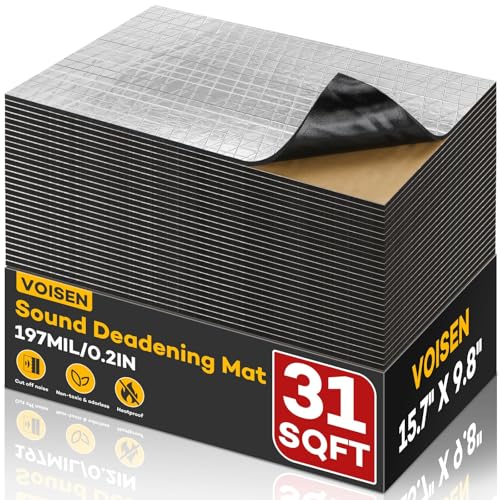 |
VOISEN Sound Deading Material for Cars,197 mil(5mm) 31 sqftVOISEN | Budget pick | 197mil · 31sqft · 28 Pcs · Thick foam | $31.99
Price as of 25 Oct 2026
|
View |
This comparison focuses on highway cabin noise, not showroom silence. A car can sound calm at idle, then get much louder once tire pattern, wheel size, and road texture start working against it.
📊 Consumer Reports says it evaluates interior noise with more than 50 objective and subjective tests. Source: Quietest Midsized Sedans.
How we chose
These picks prioritize repeatable highway quietness, not brand prestige. The strongest comparisons use measured cabin noise at a steady speed, because that is where tire and wind noise become the main factors.
We also weighed trim changes that can make the same model louder, especially larger wheels and lower-profile tires. Finally, the list keeps one eye on comfort tradeoffs, since the quietest setups are often softer riding and costlier to replace.
| Model | Speed used | Measured dB | Tire / wind / engine notes | Buyer takeaway |
|---|---|---|---|---|
| Lucid Air Dream | 55 mph | 54.5 dB | Acoustic laminated glass, PNCS acoustic tires, low cabin intrusion from tire and wind noise | Best benchmark for quiet EV highway cruising |
| Mercedes-Benz S-Class | 55 mph | 55.1 dB | Acoustic glass, active noise control, strong isolation from wind and road noise | Best luxury sedan benchmark if you want calm at speed |
| Tesla Model S Plaid | 55 mph | 58.2 dB | Active noise cancellation helps, but tire and wind noise remain more obvious than in the Lucid | Quiet for an EV, but not class-leading in this comparison |
| Hyundai Tucson Hybrid | Public-road highway pace | Not cited here | Composed handling and cushioned ride, with more dependence on trim and tire choice than luxury flagships | Best affordable quiet pick for mainstream shoppers |
Is an electric car always quieter than gas?
No. EVs usually remove engine noise from the equation, but highway quietness still depends on tires, wheel wells, glass, seals, and aerodynamics. At speed, road noise and wind noise often dominate, so a loud-tire EV can sound busier than a well-insulated gasoline sedan.
The Lucid Air shows the upside clearly. Quietest uses 1,200+ miles of testing and compares vehicles at 55 mph for apples-to-apples results, where the Lucid Air Dream posts 54.5 dB. That is a strong result, but it is not “silent”; tire and wind noise still exist.
By contrast, a gasoline luxury sedan can still be exceptionally quiet if the body shell, glass, and tire package are tuned well. The S-Class remains a benchmark for that reason, with a cited 55.1 dB figure and active noise control helping trim low-frequency noise.
Say your daily route includes rough concrete and expansion joints at 70 mph. An EV with large wheels may sound sharper there than a smaller-wheeled gasoline sedan with more sidewall and better sealing, even if the EV wins at idle.
What makes a cabin quieter?
Three things matter most: blocking noise at the source, absorbing what gets through, and stopping vibration from turning into cabin boom. Acoustic laminated glass, better seals, more insulation, and tire tuning all help, but none of them fixes every type of noise on its own.
Acoustic laminated glass
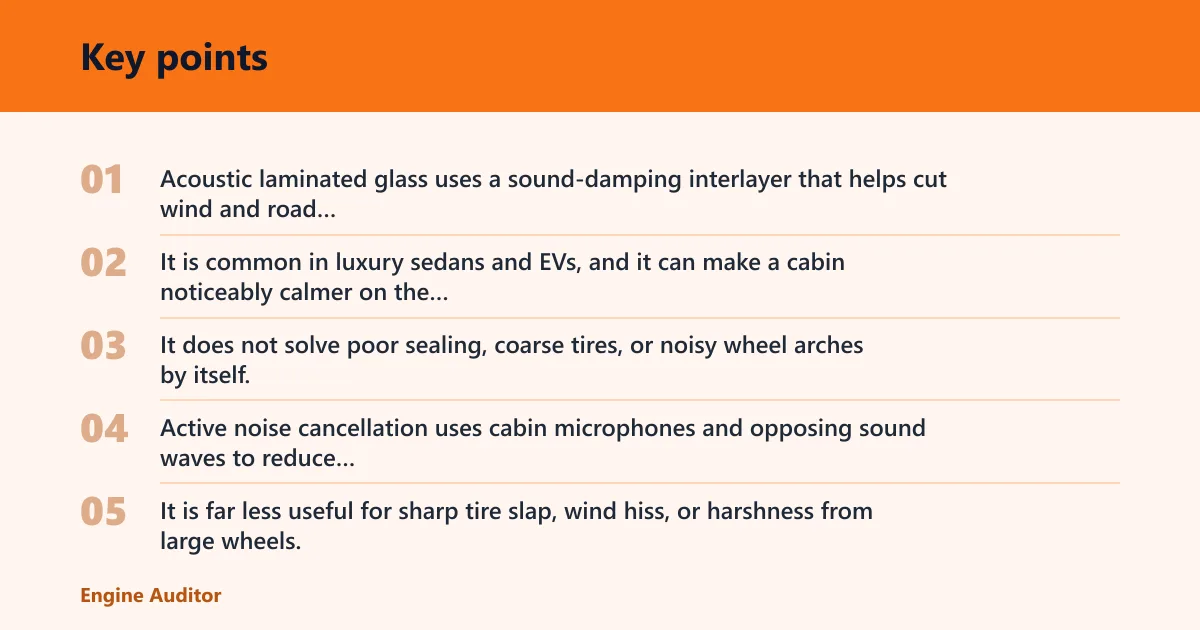
Acoustic laminated glass uses a sound-damping interlayer that helps cut wind and road noise. It is common in luxury sedans and EVs, and it can make a cabin noticeably calmer on the highway. It does not solve poor sealing, coarse tires, or noisy wheel arches by itself.
Active noise cancellation
Active noise cancellation uses cabin microphones and opposing sound waves to reduce low-frequency noise, much like noise-cancelling headphones. It works best on droning sounds. It is far less useful for sharp tire slap, wind hiss, or harshness from large wheels.
Tires, seals, insulation, and wheel size
Tire compound and tread pattern often change highway noise more than buyers expect. The same car can sound quieter on 18-inch wheels than on 20-inch wheels because the taller sidewall usually softens impact and reduces harshness.
Seals and insulation matter too. Thick glass can help, but if door seals, underbody treatment, or mirror shape are weak, wind noise can still creep in at freeway pace.
Lucid Air: best for EV silence
The Lucid Air is the quietest highway benchmark in the sourced comparison data, with a cited mid-50 dB result at 55 mph. That matters because the test speed is fixed and repeatable, which makes the result useful for shoppers comparing real cruising noise rather than showroom impressions.
It stands out for acoustic laminated glass and PNCS acoustic tires, both of which help keep tire roar and wind noise in check. That is the kind of hardware that pays off on coarse pavement, where a cabin can go from hushed to tiring very quickly.
The drawback is simple: it is still an EV, so its quiet advantage is mostly about removing engine noise. As speed rises, tire and aero noise remain, and wheel or tire changes can still make the car louder than a buyer expects.
Mercedes-Benz S-Class: best for highway isolation
The Mercedes-Benz S-Class remains a standard comparison point for quiet luxury sedans, with a cited low-55 dB figure and strong highway isolation. It is the kind of car that stays composed when the road surface gets rough and the speed climbs.
Acoustic glass and active noise control are the main tools here. Together, they help suppress the low-frequency drone that can wear on long drives, while the rest of the cabin package keeps wind noise from becoming the main story.
The tradeoff is cost. U.S. News lists the 2025 Mercedes-Benz S-Class at $117,750 to start, so this is a premium answer to a comfort problem. Buyers also need to watch trim and wheel choices, because larger wheels can erode the calm ride that makes the car special.
Lexus LS and Genesis G90: best quiet luxury value
The Lexus LS has a long-standing reputation for a quiet cabin and long-highway comfort, helped by acoustic laminated glass and a body tuned for easy cruising. The Genesis G90 follows a similar formula, with thick acoustic glass and extra sound insulation that make it feel expensive on the move.
These two matter because they show how quietness is not limited to the most expensive German sedans. The Genesis G90 especially is worth attention as a value play versus established rivals, while still aiming for the kind of isolation that reduces fatigue on long commutes.
The Lexus LS is usually the safer bet if you want a familiar quiet-sedan formula with a strong comfort reputation. The G90 can be the smarter buy if you want that same calm-first mission with more equipment for the money.
Suppose a buyer likes the way a flagship sedan glides over patched freeway pavement but wants to avoid the highest German price tag. A G90 with the right wheel package may be the better fit than a more expensive badge with larger, noisier wheels.
Hyundai Tucson Hybrid: best affordable quiet pick
The 2026 Hyundai Tucson Hybrid is U.S. News’s Best Budget Option, and it belongs in a quiet-cabin conversation because it is more composed than many shoppers expect. A commonly reported starting price is around $32K, which puts it in reach for buyers who cannot stretch to luxury-sedan money.
Its strengths are a cushioned ride and composed handling, not luxury-grade isolation. That still matters. A well-damped mainstream SUV can feel calm enough for commuting if the tires are sensible and the trim avoids oversized wheels.
The drawback is that it will not match the hush of an S-Class or Lucid Air on coarse pavement. Budget buyers should expect more road noise than in the flagship cars, even when the ride quality is good.
Choose Lucid Air if… / Choose Mercedes-Benz S-Class if…
Choose the Lucid Air if you want the quietest highway cabin in this comparison, care about low tire and wind noise at a steady 55 mph, and want an EV with acoustic glass and acoustic tires working together.
Choose the Mercedes-Benz S-Class if you want a luxury sedan benchmark, prefer the feel of an isolation-first gasoline car, and value active noise control plus acoustic glass over outright EV silence.
Choose the Lucid Air if you drive long freeway stretches and want the strongest measured quietness in the sourced data.
Choose the S-Class if you want a quieter-living sedan with a more traditional luxury feel and do not want to track every wheel-size change on the options sheet.
How do Consumer Reports and other testers measure cabin noise?
Consumer Reports says it evaluates interior noise with more than 50 objective and subjective tests. It measures wind, road, engine, and tire noise on track and on public roads, which is the right approach because highway noise comes from more than one source.
Quietest uses a different but still repeatable method: 1,200+ miles of testing, with all comparison runs done at 55 mph. That kind of steady-speed figure is useful because a clean sound reading at one speed is easier to compare than a vague “feels quiet” impression.
Decibel numbers help, but they are not the whole story. Frequency content matters, too. A cabin can post a decent dB figure yet still sound annoying if the remaining noise is a harsh tire buzz or a booming low-frequency drone.
Which quiet cars are still affordable?
The best affordable quiet pick in this group is the Hyundai Tucson Hybrid. It will not beat the flagship sedans on cabin hush, but it brings a cushioned ride and composed behavior at a price that is much easier to reach than luxury alternatives.
Among luxury models, the Lexus LS and Genesis G90 are the main “value versus quiet” choices, though neither is truly budget-priced. Buyers who want a quiet cabin without flagship money should focus first on trim and wheel selection, then on the model itself.
A common first-timer mistake is assuming that the base version of a quiet model stays quiet in every trim. A 19-inch wheel package can be fine, while a 21-inch package on the same vehicle can bring more noise and a firmer ride.
What should I look for if I want less wind and tire noise?
Start with the windshield, side glass, and door seals. Then check wheel size, tire model, roof rails, and whether the car has a panoramic sunroof, because those items often change cabin noise more than marketing copy suggests.
- Test the same route at 55 to 70 mph on coarse pavement and smoother asphalt.
- Compare 18- or 19-inch wheels with larger options on the same model.
- Ask which tire brand and model are fitted from the factory.
- Listen for wind noise around mirrors, A-pillars, and roof rails.
- Check whether the trim adds acoustic laminated glass or active noise control.
- Open and close the windows, then listen for seal noise and body resonance.
Do not stop at idle. A car can sound hushed in a dealership lot and still drone badly on coarse pavement. The goal is to find the trim that stays calm where you actually drive.
Which quiet car is best for long commutes?
The best long-commute choice is usually the one that stays calm at steady speed and does not punish you with tire roar or harshness after an hour on the interstate. For the quietest overall highway cabin, the Lucid Air is the cleanest benchmark. For a luxury sedan, the S-Class is the safe standard.
If budget matters, the Tucson Hybrid is the practical answer. It will not be as hushed as the flagships, but it gives mainstream shoppers a quieter ride than many compact SUVs, especially when the wheel package is kept sensible.
Do luxury sedans ride quieter than SUVs?
Usually yes, but not automatically. Luxury sedans often have lower rooflines, better aero, and a calmer body structure, which helps reduce wind noise at speed. Still, a well-tuned SUV with the right tires can beat a sedan on real-world quietness if the sedan is fitted with larger wheels.
The better question is which version of each vehicle you are comparing. A sedan on 18-inch wheels can be quieter than an SUV on 21-inch wheels, and the reverse can happen when the SUV gets the quieter tire package.
What features make a car cabin quieter?
Acoustic laminated glass, extra insulation, tighter seals, quieter tires, and active noise cancellation are the main tools. Of those, tires and wheel size are the easiest to overlook, and they can change the cabin more than buyers expect.
Active noise cancellation helps most with low-frequency drone. Acoustic glass helps wind and road noise. Neither one fully fixes coarse-surface tire roar, and neither can fully cancel the harshness that comes from a big wheel and a thin tire sidewall.
Quiet cabin products
CUKWUYBY Butyl Sound Deadening 80mil 36sqft Sound Deadening Mat: best for basic floor and door damping
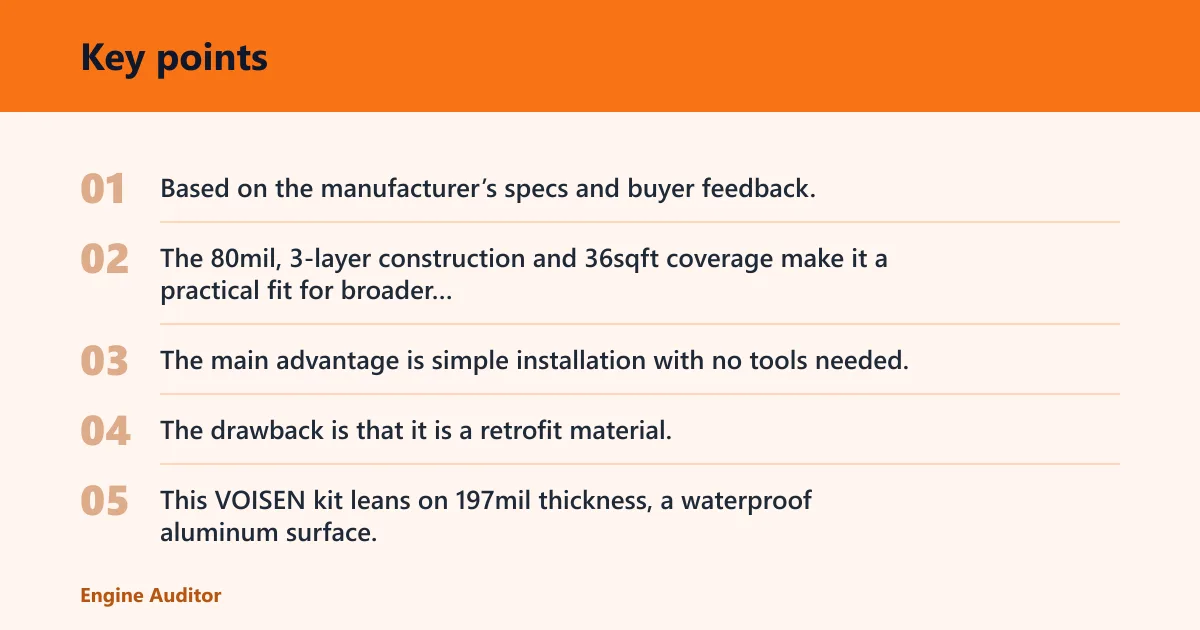
Based on the manufacturer’s specs and buyer feedback, this peel-stick mat is aimed at reducing vibration and road noise rather than changing the car’s design-level NVH. The 80mil, 3-layer construction and 36sqft coverage make it a practical fit for broader coverage jobs on doors, floors, or a cargo area.
The main advantage is simple installation with no tools needed. The drawback is that it is a retrofit material, so it cannot match the effect of factory acoustic glass, tire tuning, or body sealing on its own.
VOISEN Sound Deading Material for Cars: best for thicker closed-cell coverage
This VOISEN kit leans on 197mil thickness, a waterproof aluminum surface, and closed-cell foam to help block vibration, heat, and some sound transmission. It is the sort of product that can help reduce panel resonance and soften some road noise when installed well.
The drawback is that installation quality matters a lot, and it is still only one layer in the noise-control stack. It can help with some buzz and echo, but it will not eliminate tire roar from aggressive tires or a noisy wheel package.
Frequently asked questions
Which cars have the quietest cabins on the highway?
The quietest highway cabins usually come from luxury sedans and top EVs with acoustic glass, insulation, and quieter tire packages. In the sourced comparison data, the Lucid Air Dream at 54.5 dB at 55 mph and the Mercedes-Benz S-Class at 55.1 dB are the clearest reference points.
Is an electric car always quieter than a gas car?
No. EVs remove engine noise, but wind and tire noise still dominate at speed. A well-insulated gas sedan can be quieter than a poorly shod EV once coarse pavement, wheel size, and aero noise become the main factors.
Products related to this article
Sponsored / affiliate links. As an Amazon Associate I earn from qualifying purchases. I may earn additional commission from eligible campaigns.