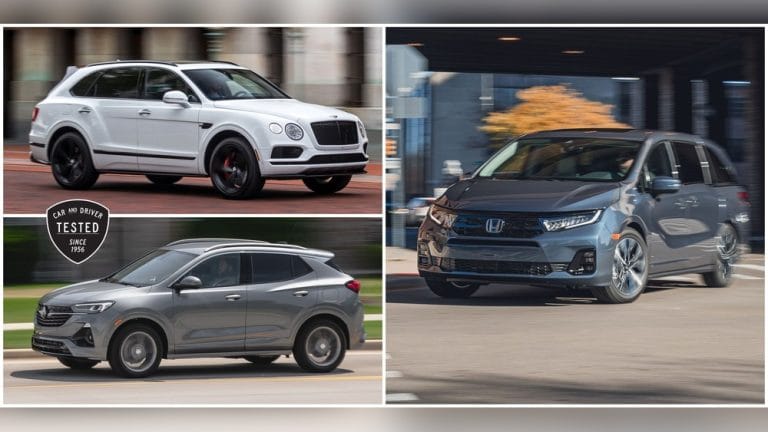
Best Crossover vs SUV: What Buyers Should Choose
Choose a crossover if you mostly commute, carry four or fewer people, and tow under 3,500 pounds. Choose a true SUV if you need heavier towing, rough-road durability, or regular seven-passenger use. If you want the short version: commuters usually save money with a crossover, towers usually need a body-on-frame SUV, and three-row buyers should decide based on how often the third row will really be occupied. This guide breaks down commute miles, passenger needs, towing, winter use, parking limits, and ownership costs so you can sort crossover, SUV, or either.
| Factor | Best crossover | SUV | Winner |
|---|---|---|---|
| Daily commute | Usually quieter, lighter, and easier to place in traffic | Works, but is larger and often firmer over broken pavement | Best crossover |
| Fuel use | Usually better mpg; the 2026 Honda CR-V Hybrid is about 43 mpg combined, according to EPA estimates | Usually lower mpg; the 2026 Chevrolet Tahoe lands near 19 mpg combined, according to EPA estimates | Best crossover |
| Towing | Typically 1,500–3,500 lbs | Typically 6,000–9,300 lbs; the 2026 Ford Expedition can tow up to 9,300 lbs, according to Ford | SUV |
| Ride and handling | More car-like, with a lower center of gravity | Higher stance, firmer feel, more truck-like behavior | Best crossover |
| Rough roads and ground clearance | Fine for snow, gravel, and mild dirt | Better when clearance and drivetrain hardware matter more | SUV |
| 5-year cost direction | Usually lower on fuel, tires, and depreciation | Usually higher on fuel, tires, and purchase price | Best crossover |
What is the difference between a crossover and an SUV?

The core difference is construction. Crossovers use a unibody, car-based structure with the body and frame integrated, while traditional SUVs use a body-on-frame chassis with a separate frame underneath. That split usually makes crossovers lighter and smoother, while body-on-frame SUVs are built to handle higher towing loads and harder use.
That is why the market gets messy. Many vehicles marketed as SUVs are actually crossovers, while true body-on-frame examples are a smaller subset. The badge alone does not tell you much.
How the platform changes the vehicle
Unibody construction usually gives you lower weight, more efficient packaging, and a ride that feels closer to a sedan or wagon. Body-on-frame construction usually brings more towing headroom, a taller stance, and a tougher setup for rough use.
Car and Driver says crossover and SUV are essentially interchangeable terms in the market, but you still need to separate compact crossovers, three-row crossovers, and true body-on-frame SUVs before shopping.
Why the distinction matters
The platform affects what you feel and what you pay for: ride quality, handling, fuel use, cargo layout, ground clearance, and towing margin. A crossover can be enough for a family and a ski trip, while a body-on-frame SUV makes more sense for a camper, boat, or regular seven-passenger load.
Say your trailer weighs 2,800 pounds and you only tow a few times a year. A properly equipped crossover can fit that job. Say the trailer jumps to 6,500 pounds and the trips happen monthly. That is where a body-on-frame SUV becomes the safer pick.
📊 Car and Driver ranks crossovers using roughly 200 data points. Source: Best Crossover SUVs for 2026, Tested.
Which is better for daily driving, a crossover or an SUV?
For most daily driving, a crossover wins. It is usually easier to park, easier to live with in city traffic, and more comfortable on broken pavement because the structure is lighter and the center of gravity sits lower than on a truck-based SUV.
An SUV can still work for commuting, but it tends to feel larger, sit higher, and ride firmer. If your weekdays are mostly school runs, grocery trips, and highway miles, the crossover usually fits better.
Ride quality and handling
Crossovers ride more car-like. That matters on patched asphalt, expansion joints, and stop-and-go roads where a lighter body and lower stance usually cut the busy, truckish feel.
Body-on-frame SUVs often sit around 9–10 inches off the ground, which helps with clearance and visibility but can add step-up effort and a taller feel in corners. The higher center of gravity also matters when the road gets twisty.
Parking, visibility, and entry height
Crossovers are typically easier to fit into tight parking spots and garage openings. They also tend to make loading kids, pets, and groceries simpler because the lift-over height is usually lower.
An SUV gives you a higher seating position and often a broader view over traffic, but that advantage comes with more bulk to maneuver. For many city drivers, the smaller footprint matters more than the tall stance.
City use and commuting
For urban use, the crossover usually makes fewer trade-offs. Fewer fuel stops, easier parking, and a smoother commute all add up over time.
If your daily route includes narrow streets, apartment parking, or frequent parallel parking, the smaller, lighter body style is the easier tool.
Which gets better fuel economy, a crossover or an SUV?
Crossovers usually get better fuel economy. They are lighter, usually more aerodynamic, and often sold with front-wheel drive or all-wheel drive setups that prioritize efficiency. Body-on-frame SUVs usually return lower mpg because they carry more mass and use truck-based hardware.
Trim and drivetrain matter. A front-drive crossover can beat an all-wheel-drive version, and a V8 SUV will burn more fuel than a smaller turbocharged one. Hybrid crossovers sit at the efficiency end of the category.
Where hybrid crossovers fit
The 2026 Honda CR-V Hybrid is about 43 mpg combined, and the 2026 Toyota RAV4 Hybrid is about 39 mpg combined, based on current EPA estimates. Those figures show why hybrid crossovers are the default choice for buyers who rack up miles and want lower fuel costs without moving into an EV.
At the other end, the 2026 Chevrolet Tahoe lands near 19 mpg combined, based on current EPA estimates. That gap matters over 3 to 5 years, especially if you drive a lot.
How drivetrain and trim change mpg
AWD usually trims efficiency compared with FWD because it adds weight and drivetrain drag. On SUVs, 4WD and RWD setups can cost more at the pump too, though the trade-off may be worth it if towing or loose-surface traction is the goal.
That means the badge alone never settles the fuel question. The exact engine, drivetrain, and tire size can shift results enough to matter in ownership math.
Towing and rough-road use
If towing matters, the gap widens fast. Crossovers typically tow 1,500–3,500 lbs, while body-on-frame SUVs typically tow 6,000–9,300 lbs. That difference is large enough to decide the purchase on its own if you pull a boat, camper, or heavy trailer with any regularity.
The safer choice is the vehicle that leaves margin after passengers, cargo, and tongue weight are included. If you are near the limit, move up to the SUV side.
Typical crossover towing limits
A crossover can handle small utility trailers, light cargo trailers, and some compact campers if the specific trim is rated for it. Tow package, drivetrain, axle ratio, and engine matter a lot.
That is where many buyers make mistakes. A model that looks capable on paper can fall short once passengers, gear, and trailer tongue weight are all counted together.
When a body-on-frame SUV makes more sense
For heavier boats, bigger campers, horse trailers, and frequent towing, the body-on-frame SUV is the right class. The frame, drivetrain hardware, and higher tow ratings are there for that job.
The Chevrolet Tahoe is a clear benchmark here, with up to 8,400 lbs of towing, according to GM estimates. The Ford Expedition goes higher, at up to 9,300 lbs, according to Ford. Those are not crossover numbers.
Ground clearance and drivetrain choices
Crossovers often use AWD or FWD, which helps in rain, snow, and light dirt. SUVs often use 4WD or RWD, which better suits towing, steep boat ramps, and deeper traction needs.
Ground clearance also matters, but more clearance does not solve everything. It helps with ruts and snowpack, yet it can raise the step-in height and the center of gravity, which affects handling.
Recommendation table for crossover vs. SUV
This table turns the decision into a quick rule set. Use the row that most closely matches your real-world needs.
| Buyer need | Choose crossover | Choose SUV | Choose either |
|---|---|---|---|
| Annual mileage | About 8,000+ miles a year, especially if fuel costs matter | Lower mileage if capability matters more than operating cost | Under about 8,000 miles if the rest of the use case is mixed |
| Passenger count | Four or fewer most of the time | Five to seven regularly, especially if adults use the third row | Five occasionally, with the third row only as backup seating |
| Towing breakpoint | Under 3,500 lbs, with a confirmed tow package rating | Over 3,500 lbs, or whenever you want extra margin | Never tow, or tow only very small loads once in a while |
| Parking and garage size | Tight garage, narrow city spaces, frequent parallel parking | Large driveway or open parking where size is less of an issue | If you can comfortably fit either body style |
| Winter-road severity | Plowed roads, moderate snow, and normal suburban driving | Deeper snow, steep driveways, rural roads, or frequent unplowed access | Mild winters with occasional storms and good road maintenance |
| 5-year cost direction | Usually lower fuel, tire, brake, and depreciation costs | Usually higher fuel and tire spend, with more purchase price exposure | If annual miles are low and the price gap is small |
Choose the best crossover or SUV if…
Choose the best crossover if your top needs are comfort, efficiency, and easy daily use. It is the better fit if you commute a lot, park in tight spaces, carry four or fewer people most of the time, and tow under 3,500 pounds.
Choose the best SUV if you need higher towing headroom, more ground clearance, or regular three-row duty. It is also the better call for boat ramps, campers, rough access roads, and buyers who want more margin than a crossover can provide.
Either can work if your driving is mixed, towing is rare, and you care more about the specific trim than the badge. In that case, compare the exact drivetrain, safety scores, cargo layout, and tow rating before you decide.
Are crossovers cheaper to buy and own than SUVs?
Usually yes. A crossover usually costs less to buy and own than an SUV because it tends to use less fuel, need smaller tires, and carry lower depreciation risk over 3 to 5 years. Insurance can also be friendlier, though that varies by model and trim.
The sticker price alone does not tell the full story. The 2026 Chevrolet Trax starts at $23,495, the 2026 Honda CR-V Hybrid starts at $37,180, and the 2026 Porsche Macan starts at $67,650. Those prices show how wide the crossover market can stretch. (Caranddriver)
Body-on-frame SUVs can cost more to fuel, and tires and brakes can be pricier because the vehicles are heavier. If you drive high annual miles, those costs add up quickly.
Which is safer: a crossover or an SUV?
Neither body style wins automatically. Model-specific NHTSA and IIHS results matter more than the badge, and both crossovers and SUVs can score highly. The real difference is in trade-offs: SUVs often sit taller, which can help visibility, but rollover risk remains a consideration because of the higher center of gravity.
Crossovers usually sit lower and can feel more settled in sudden lane changes. That does not make them automatically safer, but it does reduce some of the height-related trade-offs that come with truck-based SUVs.
Crash ratings, rollover risk, and visibility
Check the exact model and trim, not just the nameplate. Safety tech can vary by trim, and crash-test scores can differ by drivetrain or body length.
A higher seating position helps you see farther ahead, but it can also make curb placement and nearby cars harder to judge. A lower crossover may be easier to place accurately in traffic and parking lots.
What SUV type is better for towing and off-road use?
Body-on-frame SUVs are the better choice for towing and hard use. If you need to pull more than 3,500 pounds, travel on rough roads often, or want a vehicle that can tolerate repeated loading, a truck-based SUV gives you the right hardware.
The Ford Expedition, with up to 9,300 lbs of towing, and the Chevrolet Tahoe, with up to 8,400 lbs, are the kind of benchmarks to use when crossover limits are too low. Ground clearance, drivetrain choice, and tow package details matter as much as the badge.
When an SUV is the safer bet
Choose the SUV when payload and trailer weight are close to the limit, when the road to the campsite is rough, or when the third row will be used often by adults. That extra capacity provides margin, which is the point of stepping up in size and cost.
Which crossovers are best if I want comfort and efficiency?
The best crossover choices for comfort and efficiency are usually hybrids with strong fuel economy and a ride tuned for daily use. The 2026 Honda CR-V Hybrid is about 43 mpg combined, and the 2026 Toyota RAV4 Hybrid is about 39 mpg combined, so both sit near the top of the practical-efficiency range.
If you want a lower entry price and simple city use, the 2026 Chevrolet Trax is a budget-minded starting point at $23,495, though it does not aim at the same efficiency sweet spot as the hybrids. If you want EV range instead of gasoline mpg, the 2026 Hyundai Ioniq 5 is listed with an estimated range of 245–318 miles, depending on configuration.
Which SUVs are best if I need space and capability?
For space and capability, look at full-size body-on-frame SUVs such as the Chevrolet Tahoe and Ford Expedition. They bring the towing numbers, cargo room, and road-going toughness that crossovers cannot match once the job becomes heavy or frequent.
If you need a family hauler that still tows well, start with those benchmarks and then check the exact trim’s tow package, axle ratio, and drivetrain. That is where the real capability lives.
Frequently asked questions
How much can a crossover tow versus a body-on-frame SUV?
Crossovers typically tow 1,500–3,500 lbs. Body-on-frame SUVs typically tow 6,000–9,300 lbs. Tow package, engine, drivetrain, and axle ratio can shift the exact rating, so you should verify the specific trim before buying for a trailer, boat, or camper.
Products related to this article
Sponsored / affiliate links. As an Amazon Associate I earn from qualifying purchases. I may earn additional commission from eligible campaigns.