How to Restore Black Car Trim That Turned Gray
To restore black car trim that turned gray, clean it first, then use a trim restorer or coating if the plastic is still sound; replace it if the surface is cracked, pitted, or has lost its texture. UV exposure is a major driver of oxidation on unpainted exterior plastics, while road film and silicone residue can make the fade look worse (manufacturer trim care guidance; detailing reference standards for exterior plastics). Ignoring the cause wastes product and can leave trim blotchy, greasy, or permanently faded. This guide shows how to identify the trim material, judge damage, and pick the safest fix from cleaning to replacement.
| Trim type | Visible symptoms | Safest method | Avoid this method | Expected durability range | Replace instead when |
|---|---|---|---|---|---|
| Unpainted textured plastic | Gray cast, dull finish, light chalking | Clean, then use a trim dressing or light restorer; step up to a coating after full prep | Heavy heat or thick product layers that collect in texture | About 2 to 8 weeks for dressings; about 3 to 12 months for restorer/coating systems, depending on UV and wash exposure (manufacturer TDS/directions) | The surface is cracked, brittle, pitted, or missing texture |
| Unpainted smooth plastic | Uniform fading, little texture loss | Trim restorer or coating after degreasing and masking | Aggressive abrasion that can haze the part | About 3 to 12 months for restorer/coating systems; shorter for simple dressings (manufacturer TDS/directions) | The plastic is chalky through the surface or failing in flakes |
| Painted gloss-black trim | Haze, swirls, dull clearcoat, not gray plastic fade | Treat as paint: wash, inspect, and correct as needed before any protection | Plastic trim dyes, permanent trim recolorants, or high heat | Varies by paint correction and protection method | The finish is delaminating, peeling, or the substrate is damaged |
| Severely chalked or cracked trim | Heavy gray chalk, roughness, deep cracks | Permanent trim dye only if the part is still structurally sound | Dressings that only darken the surface temporarily | Variable; poor on damaged trim | Texture is gone, cracks are spreading, or the part is brittle |
What you’ll need


- Trim cleaner or degreaser labeled safe for exterior plastics
- Plastic-safe masking tape
- Foam or microfiber applicator pad
- Clean microfiber towels
- Disposable gloves
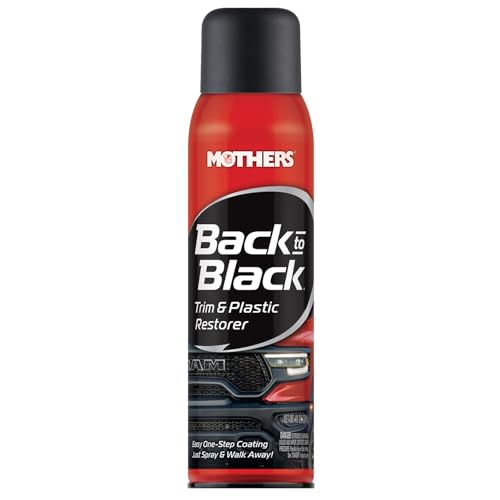
- Trim restorer, dressing, or coating matched to the trim condition
- Optional UV protectant for maintenance
Why black trim turns gray
Oxidized black plastic trim often turns gray from UV exposure, heat, road film, and wash chemistry. Sunlight breaks down the surface of unpainted plastic trim on bumpers, mirror caps, grilles, and window surrounds. That UV-driven oxidation is the core failure mode documented in many OEM plastic-care instructions and trim-restoration technical sheets. Road film and silicone residue then sit on top and make the fade look worse.
Painted gloss-black trim can look dull or hazy for a different reason. That surface may need polishing or refinishing, not a plastic restorer. If the part is smooth and painted, treat it like paint. If it is molded, textured, and unpainted, treat it like plastic trim.
How to tell trim material before you start
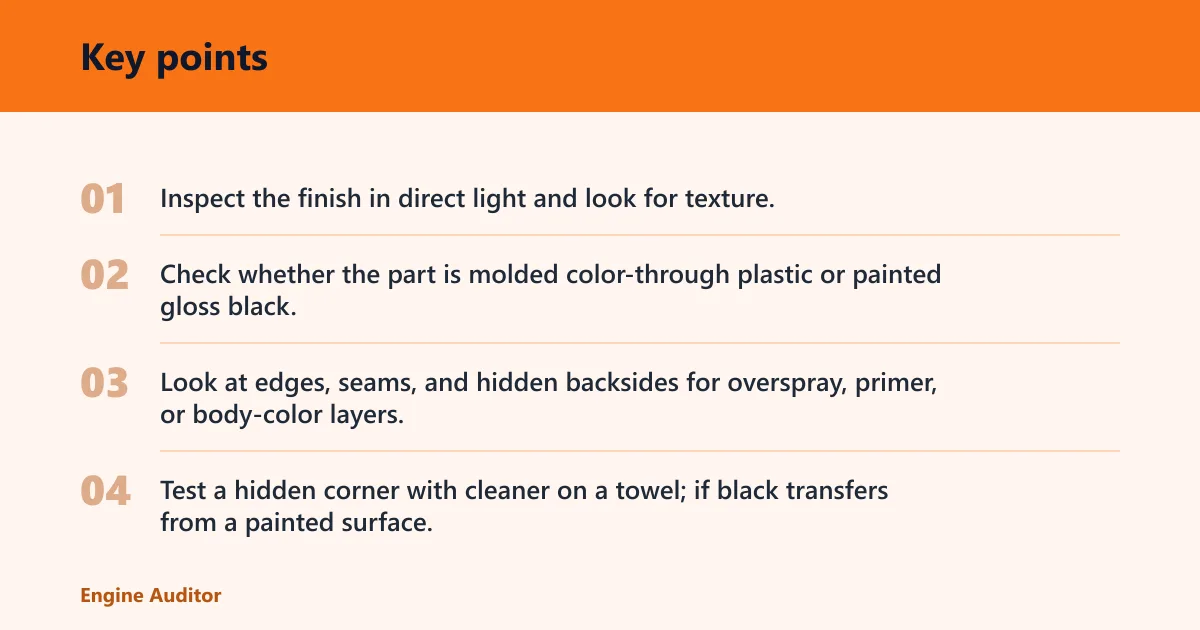
- Inspect the finish in direct light and look for texture.
- Check whether the part is molded color-through plastic or painted gloss black.
- Look at edges, seams, and hidden backsides for overspray, primer, or body-color layers.
- Test a hidden corner with cleaner on a towel; if black transfers from a painted surface, stop and treat it as paint, not trim.
Textured exterior trim is harder to recolor evenly than smooth plastic. It absorbs product unevenly and shows streaking more easily, especially on trucks and SUVs with large textured bumper caps and rocker trim. If a label says “restore,” “renew,” or “protect,” it usually indicates a dressing or coating-style finish. If it says “dye,” “color coat,” or “permanent recolor,” it is closer to a recoloring system than a surface protectant. Some aerosol or wipe-on products are simple dressings with silicone or polymer gloss; others are more durable coating systems. Read the directions for prep, cure time, and reapplication language before buying.
If you need a broader walk-through on prep, product selection, and matching the method to the damage, this guide to restore faded plastic trim can help you narrow the safest approach before you apply anything.
Compatibility warning before you choose a product
Textured trim tends to trap residue and can streak if a product is applied too heavily. Glossy piano-black trim is not the same as unpainted plastic trim; it behaves like a painted surface and can haze if you use a trim restorer on it. Previously dressed trim may also repel new product, so degrease fully before recoating or the finish may look blotchy.
Signs the trim is beyond a simple cosmetic fix
Cracks, deep pitting, missing texture, and chalk that wipes away in heavy black dust point to severe damage. At that stage, temporary dressing can darken the part for a short time, but it will not rebuild texture. Replacement is often the better choice when the surface is failing, not just faded.
Black trim restoration checklist
A good result depends on the prep as much as the product. Clean the trim thoroughly, mask adjacent surfaces, and use an applicator that keeps the product on the part instead of the paint or glass. That matters most on textured trim, where heavy application leaves shiny patches and dry edges. Choose the method based on trim type, visible symptoms, and whether you need short-term color or longer-term protection.
| Condition tier | Safest method | Main risk | Expected durability | Replace instead when |
|---|---|---|---|---|
| Light fading | Trim dressing or light trim restorer | Streaking if applied too heavily | About 2 to 8 weeks | The surface is cracked or rough to the touch |
| Moderate oxidation | Trim restorer or coating after full prep | Uneven color on textured plastic | About 3 to 12 months | The plastic has deep chalking or has lost texture |
| Severe chalking or cracking | Permanent trim dye or coating only if the part is still structurally sound | Patchy color, peeling, or failure to bond | Variable; often poor on damaged trim | The trim is cracked, brittle, pitted, or missing texture |
Can you restore gray trim without replacing it?
Yes, but only when the trim is faded rather than structurally damaged. Light fading often responds to a dressing or light restorer. Moderate oxidation usually needs a true trim restorer or a coating. Severe chalking or cracking usually needs replacement, because color alone will not fix the surface.
Light fading: dressing or light restorer
If the trim still feels smooth and only looks dull, a trim dressing can restore color for a short period. A plastic trim restorer is usually better if you want a longer hold. Manufacturer directions for many dressings describe short maintenance intervals, while trim restorers and coating-style products generally advertise longer durability when fully cured and properly prepped. These products act as a sacrificial coating or dye-like finish, and they come as liquid, gel, aerosol, or wipe-on formulas.
Moderate oxidation: trim restorer or coating
For gray but intact plastic, a trim restorer gives a more durable result than a basic dressing. A coating-based product usually lasts longer because it bonds more firmly and resists washing better. Durability still depends on wash frequency, weather exposure, and whether the vehicle sits in direct sun. That is why product labels and technical sheets often separate maintenance dressings from longer-life coating systems.
Severe chalking or cracking: replace it
If the trim is chalky, brittle, cracked, or stripped of texture, restoration is often a short-term disguise. Permanent trim dye or coating can help only if the surface still has enough structure to accept it. If not, replacement saves time and usually gives a cleaner finish.
How to apply trim restorer
Apply a thin coat and work in sections. A foam or microfiber applicator gives better control on textured trim and cuts the chance of product reaching paint or glass. Thick coats often look better for a few minutes, then dry unevenly and leave shiny spots or streaks.
Apply a thin test coat first
- Choose a hidden area and apply a small test patch.
- Wait the label’s set time and check the color match.
- Continue only if the patch dries evenly and does not smear.
Work in small sections on textured trim
- Load the applicator lightly with product.
- Spread it across a section about 12 to 18 inches wide.
- Push the product into texture with light, even passes.
Wipe excess and check for streaks
- Wait the product’s flash time, then level any visible buildup with a clean towel.
- Add one more thin pass only where the trim still looks gray.
- Recheck from several angles in full daylight.
Say your truck has faded black bumper trim on one side only, and the passenger side sits in shade most of the day. That difference often points to UV exposure, not a bad product. A good restorer can even out the look, but the shaded side may still need less product to avoid a glossy mismatch.
Does heat work on faded trim?
Heat can revive some oxidized black plastic trim, but it is not a universal fix. It tends to work best on lightly faded, uncracked, unpainted plastic. It can also make problems worse by warping the part, blotching the gloss, or creating uneven color that looks worse than the original gray. Safety references for heat tools and common detailing guidance both stress low-to-moderate heat, constant motion, and careful distance from the part.
When heat can revive oxidized plastic
Heat may darken dry, faded surface oxidation when the plastic still has intact texture and no structural cracks. It is most useful on solid, plain black molded parts where the fade is shallow. Even then, it is a last-resort option, not the first step.
Heat risks: warping, blotching, and uneven gloss
Too much heat can soften the plastic and distort edges. It can also create hot spots that turn shiny while nearby areas stay gray. Once that happens, later product application often looks patchy because the surface no longer absorbs evenly. Heat-gun use is especially risky near thin edges, emblems, lenses, and painted trim because the temperature rise can be fast and uneven.
When to skip heat and use a product instead
Skip heat on painted gloss-black trim, cracked trim, thin edges, and parts near lenses or emblems. Use a trim restorer or coating instead when the part has visible chalking or when you need controlled, repeatable color rather than a risky color shift.
Common mistakes
Heavy coats, product on paint or glass, and skipped cure time cause most bad results. The other common error is using the wrong method on badly chalked or cracked trim. That usually creates a darker patch for a week, then the fade returns unevenly.
- Applying too much product: Use thin coats and add another only if the first pass looks dry after the label’s set time.
- Skipping masking: Protect paint, glass, body lines, and emblems before you start.
- Using a dressing on severe damage: Move to a coating or replacement if the surface is cracked or missing texture.
- Ignoring cure time: Let the product set fully before washing the vehicle or driving in heavy rain.
- Relying on harsh wash chemistry: Strong degreasers and repeated abrasion shorten product life and pull color down faster.
Suppose a grille insert is already chalky and uneven, and you keep adding dressing every few days to chase the gray spots. That usually hides the problem for only a short time. A permanent trim dye or coating is a better match if the plastic is still sound; replacement is better if the surface is breaking down.
How do I make car trim black again?
Clean it first, then match the product to the trim type and damage level. Use dressing for light fading, a trim restorer or coating for moderate oxidation, and replacement for cracked or heavily chalked parts. Painted gloss-black trim may need paint correction, not a plastic product.
How do I restore black trim on a truck?
Truck trim is often textured and more visible, so prep and even application matter more. Wash, degrease, mask nearby panels, then apply a thin coat with a foam or microfiber pad. Work in small sections and expect textured bumper and wheel-arch trim to absorb unevenly if you rush.
What is the best way to restore faded black plastic trim?
The best method is the least aggressive one that matches the damage. Light fading usually needs a dressing. Moderate oxidation does better with a trim restorer or coating. Severe chalking or cracking usually needs replacement, because the surface itself has failed.
Do trim restorers actually work on gray plastic?
Yes, on unpainted plastic that is faded rather than broken down. They darken the surface and leave a sacrificial layer or dye-like finish. They do not rebuild cracked texture, and they work less well on trim that has been stripped by weather, heat, or harsh cleaners.
How long does black trim restorer last?
It depends on formula and exposure. Dressings are usually short-term maintenance products, while coating-based restorers are designed for much longer service. Frequent washing, strong detergents, sun exposure, and repeated abrasion shorten that life. A UV protectant and gentle maintenance help slow re-fading.
How do I stop black trim from fading again?
Use a UV protectant after restoration, wash with mild products, and avoid harsh chemical stripping on the trim. Do not scrub textured plastic with abrasive pads. Reapply maintenance products before the surface turns gray again, not after the fade is already deep.
Frequently asked questions
Can I restore black trim without buying a product?
Only in a limited sense. Light oxidation may look better after cleaning and gentle heat, but that is temporary and risky on some plastics. If the trim is gray from UV damage, a trim dressing, restorer, or coating gives a more controlled result than heat alone.
What is the difference between trim restorer and dressing?
A dressing usually sits on top of the surface and gives short-term darkening. A trim restorer is built to last longer and often bonds more tightly, sometimes with a dye-like or coating-style finish. That is why restorers usually outlast dressings under normal washing and weather.
How do I prep trim before applying restorer?
Wash off dirt, remove road film, degrease wax residue and silicone, dry the trim, and mask adjacent paint and glass. Then test a hidden spot. If the test patch flashes unevenly or smears, clean again before applying the full coat.
Why does black trim turn gray in the first place?
UV exposure can break down the top layer of unpainted plastic, and heat can speed the process. Road film and wash chemistry add a dull, chalky look on top. That is why a trim may look gray even when the underlying plastic is still structurally intact.
Products related to this article
Sponsored / affiliate links. As an Amazon Associate I earn from qualifying purchases. I may earn additional commission from eligible campaigns.