Front vs Rear Winter Brake Problems
Front vs rear winter brake problems usually announce themselves differently: front issues tend to show up as steering-wheel shake, a nose dip, or a pull while braking, while rear issues more often feel like drag, rear-end instability, or a parking brake that sticks after a cold night. If you sort the symptom pattern first, you can narrow the axle, avoid guesswork, and decide whether the car is still safe to drive.
| Symptom | Likely axle | Likely component | Quick confirmation | Safe to inspect at home | Tow or stop driving |
|---|---|---|---|---|---|
| Pull left or right during braking | Front | Caliper, slide pins, pad wear, hose | Compare front rotor heat and pad thickness left to right | Yes, with stands and chocks | If the pull is sudden or severe, yes |
| Steering-wheel vibration under braking | Front | Rotor scoring or thickness variation | Look for rotor grooves and blue spots | Yes | If braking distance grows, yes |
| Grinding after snow or slush | Front or rear | Pad wear to metal, rusted rotor, debris | Check pad thickness and rotor surface before more driving | Yes, if the car still moves normally | If the grind is constant, yes |
| One wheel hot after a short drive | Front or rear | Sticking caliper or brake hose; rear parking brake drag | Use an infrared thermometer on all four wheels | Yes, after cooling | If smoke or odor is present, yes |
| Rear drag after parking | Rear | Parking brake cable, shoe hardware, electronic parking brake | Check whether the rear wheels spin freely after release | Yes, if the wheel can be safely lifted | If the rear wheels will not turn, yes |
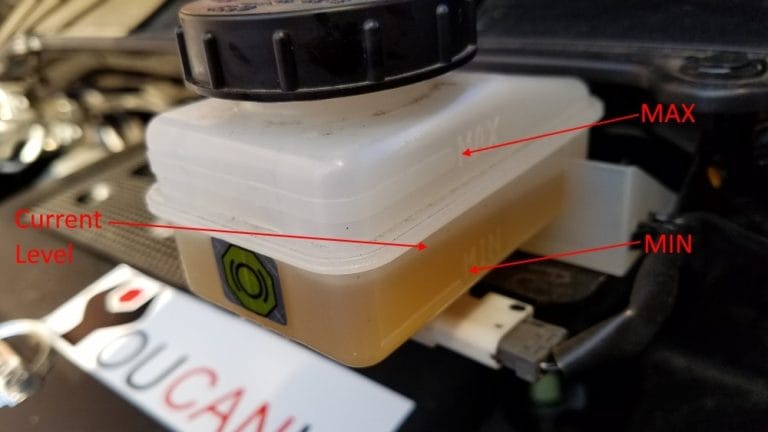
| Soft or low pedal | Either | Hydraulic issue, air, fluid loss, hose fault | Check fluid level and for leaks before further driving | Yes, for visual checks only | If the pedal sinks or goes near the floor, yes |
| ABS light on with winter traction noise | Neither by itself | Wheel-speed sensor or traction behavior | Scan for codes and compare whether the brake drag exists with the car stopped | Yes | No, unless braking feels unsafe |
| Parking brake stuck applied | Rear | Cable freeze, lever, rear shoe or caliper mechanism | Check rear wheel rotation with the parking brake released | Yes | If the car drags hard or will not roll, yes |
Diagnosis overview
Front brake problems usually change steering feel first, while rear problems usually change stability first. If the wheel shake lives in the steering wheel or the car pulls hard when you press the pedal, begin with the front axle. If the rear feels draggy, the parking brake sticks, or the back of the car feels unsettled, start at the rear.
How front-brake symptoms usually point to the front axle
The front axle carries most braking load, so front pads, rotors, calipers, and hoses are often the first parts to suspect. A pull, a steering-wheel shake, or a grinding sound that appears during braking fits a front pad or rotor problem more closely than a rear one.
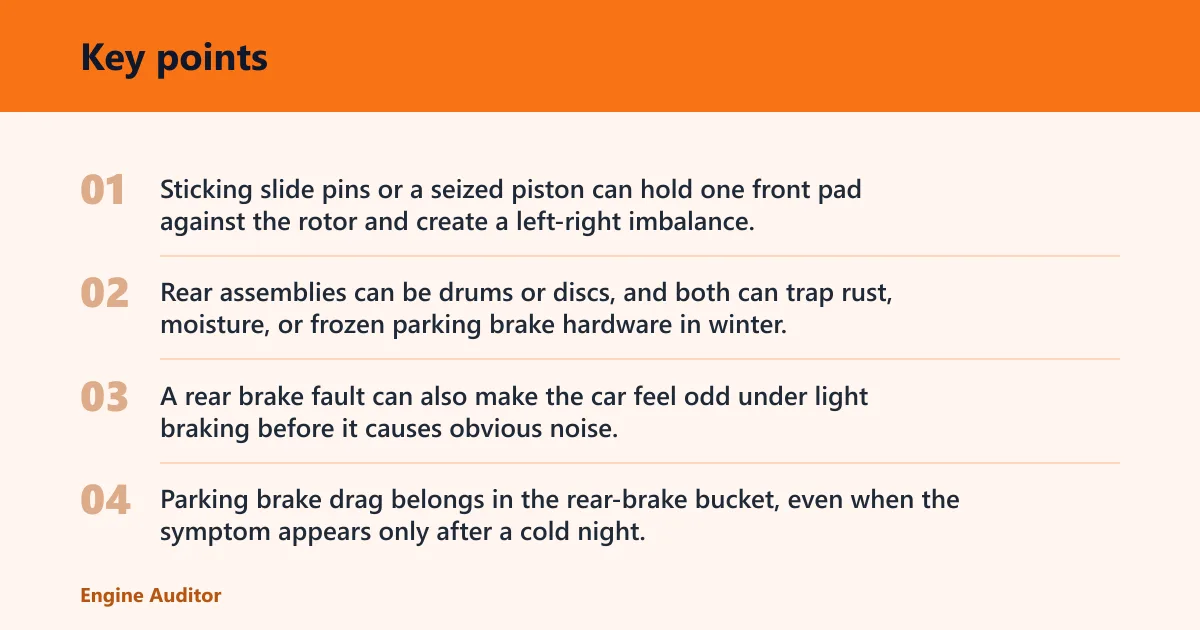
Look for uneven pad thickness, blue or scored rotor faces, and one front wheel that feels much hotter after a short drive. Sticking slide pins or a seized piston can hold one front pad against the rotor and create a left-right imbalance.
How rear-brake symptoms usually point to the rear axle
Rear brake issues usually show up as drag, a parking brake that will not fully release, or a rear-end feel that gets loose or unstable on snow. Rear assemblies can be drums or discs, and both can trap rust, moisture, or frozen parking brake hardware in winter.
If the rear wheels resist rotation more than the front, or if a rear wheel is hot after a short drive with little pedal use, focus on the rear calipers, drum parts, or parking brake cables. A rear brake fault can also make the car feel odd under light braking before it causes obvious noise.
How parking brake problems fit into the pattern
Parking brake drag belongs in the rear-brake bucket, even when the symptom appears only after a cold night. A frozen cable, stuck lever, or seized rear shoe hardware can leave the brake partly applied without obvious pedal symptoms.
Manual and electronic systems fail in different ways, but the pattern is similar: the rear wheels resist turning, the car may feel sluggish, and the rear brakes run hotter than expected. If the problem appears right after parking in slush or freezing rain, the parking brake deserves attention before the service brakes do.
Symptom matrix
Use the matrix below to match what you feel to the axle that deserves the first look. It is not a replacement for a full brake inspection, but it helps separate front rotor and caliper problems from rear drag and parking brake issues. When more than one clue points the same way, trust the pattern rather than a single symptom.
| Decision factor | Front | Rear winter brake problems | What it usually suggests |
|---|---|---|---|
| Most common symptom pattern | Pull, steering shake, vibration under braking, grinding at the front axle | Rear drag, rear-end instability, parking brake stick, noise after cold weather | Start with the axle that matches the symptom pattern most closely |
| Likely winter fault | Sticking caliper, seized slide pins, rotor scoring, pad contamination | Frozen parking brake, rear caliper drag, drum hardware rust, cable sticking | Moisture, salt, and cold often expose an existing weak spot |
| Ease of home confirmation | Wheel heat check, pad wear view, rotor condition, wheel rotation with the car lifted | Wheel heat check, rear wheel rotation, parking brake release check, cable behavior | Temperature, rotation, and wear should be checked together |
| Risk if ignored | Rotor damage, pad loss, pull into traffic, longer stopping on icy roads | Overheated rear brakes, stuck parking brake, unstable braking, reduced traction control feel | Dragging brakes can become unsafe quickly on slick roads |
Step-by-step inspection
Use jack stands and wheel chocks any time a wheel is lifted. Never rely on the jack alone. Lift one axle at a time so left and right can be compared without mixing front and rear signals. If the parking brake seems stuck, keep the vehicle secured and inspect the rear hardware first.
What you’ll need
- Jack stands
- Wheel chocks
- Infrared thermometer
- Flashlight
- Gloves
- Tire iron or wheel wrench
-
Park and secure.
Set the vehicle on level ground, chock the opposite wheels, and release the parking brake only if the symptom is not a suspected parking brake drag. -
Check the symptom pattern.
Note whether the problem is pull, vibration, grinding, drag, or a soft pedal. Pull and steering shake point forward more often; drag and parking brake behavior point rearward more often. -
Scan the wheels visually.
Look through the wheel openings for pad thickness, rotor scoring, rust film, and uneven wear. Surface rust after snowfall can be normal, but deep grooves, glazed pads, or one pad much thinner than the other are not. -
Compare wheel heat.
After a short drive, point an infrared thermometer at each wheel center and compare left to right on the same axle. A hot wheel outlier can point to a dragging caliper, stuck parking brake, or a hose that traps pressure. -
Lift and spin one axle.
Raise one axle on jack stands and spin each wheel by hand. A wheel that stops fast or feels rough can point to drag; a free-spinning wheel on one side and a hard-to-turn wheel on the other is a useful clue. -
Inspect pad and rotor clues.
Check pad thickness, rotor thickness near the minimum spec if visible, and any glaze or contamination from salt or moisture. Uneven inner-versus-outer pad wear often points to sticking slide pins or a seized piston. -
Release and recheck parking brake.
Cycle the parking brake and then repeat the wheel-spin test. If the rear wheel still drags after release, suspect cable freezing, shoe hardware, or an electronic parking brake fault rather than the service brakes alone.
Winter causes
Cold weather does not create a new brake fault as often as it exposes one that was already there. Moisture, salt, and freezing temperatures add rust film, stiffen slide pins, and can make rear parking brake hardware stick. Snow and ice also make ABS intervene more often, which can sound or feel like a brake problem.
How road salt and moisture create rust film, sticking parts, and uneven friction
After snowfall, a thin rust film on rotors is common and may scrape off in the first few stops. That is different from deep scoring, a heavy lip, or a rotor that stays rough after a few miles.
Salt and moisture can also contaminate pads, glaze the friction face, and corrode caliper hardware. If one pad is much thinner than the other on the same wheel, the slide pins or piston deserve attention before the rotor does.
How freezing can affect rear parking brake hardware
Rear parking brake cables, drums, shoes, and lever parts sit low and collect slush. When they freeze, the rear brake can stay partly applied even after the cabin lever or switch is released.
Manual systems usually show a stiff lever or cable. Electronic systems may release in the cabin but leave the rear hardware partly bound if moisture, corrosion, or a weak actuator is involved.
How ABS behavior can mimic a brake fault on snow or ice
ABS can pulse the pedal or buzz the chassis when a wheel-speed sensor sees slip on ice. That is not the same as a dragging caliper or frozen parking brake, because the sensation appears only during active braking and disappears when the car rolls normally.
If the ABS light is on, read the code before assuming a mechanical brake fault. A bad wheel-speed sensor can affect traction behavior without making one wheel hot or hard to spin.
Stop-driving signs
Stop driving if the car pulls hard, one wheel smells hot, the pedal sinks, or a wheel will not spin freely after the brake is released. Those signs fit a stuck caliper, collapsed hose, or dragging rear brake and can turn into rotor damage or a loss of control on ice.
Signs that point to a stuck caliper, collapsed hose, or dragging rear brake
A stuck caliper often shows one hot wheel, uneven pad wear, and a pull toward the cooler side. An internally collapsed hose can act like a one-way valve, trapping pressure at one wheel after the pedal is released.
If the rear brakes stay hot after a short drive, suspect the parking brake or a rear caliper before the front axle. A brake hose fault can live on either axle, but a single-wheel temperature outlier is the clue.
Signs that point to an ABS issue rather than mechanical brake drag
An ABS warning light, a traction-control message, or pulsing on snow by itself does not prove a seized caliper. If all four wheels spin freely at rest and no wheel runs hot, the fault may be in a wheel-speed sensor or related wiring rather than the brake hardware.
Use a scan tool if the light stays on. A code for a sensor circuit points away from pad, rotor, or caliper replacement as the first move.
Verdict: Front or rear Winter brake Problems?
Choose Front if the steering wheel shakes under braking, the car pulls left or right when you press the pedal, or you notice a nose dip and grinding at the front axle after snow or slush.
Choose Rear Winter Brake Problems if the car feels draggy after parking, the parking brake sticks after a cold night, or the rear end feels unstable and the rear wheels resist rotation after release.

FAQ
These quick answers cover the most common winter brake questions. Use them as a final filter after you compare heat, wheel rotation, and the way the pedal or steering wheel behaves. If the symptoms point to a dragging wheel or a soft pedal, treat the issue as urgent.
How can I tell if the front brakes or rear brakes are causing the problem?
Compare three clues: where the symptom is felt, which wheel is hot, and which axle is harder to spin. Steering shake and pull lean front; rear drag and parking brake trouble lean rear. A temperature gap of one wheel versus its pair is often the clearest home clue.
Why do my brakes only act up when it’s cold or snowy?
Cold weather can thicken rust, stiffen brake hardware, and freeze moisture in parking brake cables. Snow also makes ABS intervene more often. If the symptom disappears once the car dries out and warms up, look for corrosion or sticking parts that winter exposed.
Does a pulling brake issue mean a stuck caliper or brake hose?
It can be either. A stuck caliper often leaves uneven pad wear and one hot wheel; an internally collapsed hose can trap pressure and create the same pull. Compare left-right heat and pad wear before replacing parts.
Can rear brakes freeze or seize in winter?
Yes. Rear parking brake cables, drum hardware, and rear calipers can freeze after slush or freezing rain. If the rear wheels drag after release, inspect the parking brake first, then the rear caliper or shoe mechanism.
How do I check brake pads, rotors, and calipers without removing everything?
Use a flashlight through the wheel openings, then compare pad thickness, rotor grooves, and any blue or rusty spots. A thin inner pad, a scored rotor, or one hot wheel after a short drive can point to a caliper problem without a full teardown.
When is a brake problem urgent enough to stop driving?
Stop driving if the pedal sinks, one wheel smokes or smells hot, the car pulls sharply, or a wheel will not spin freely with the brake released. Those signs point to an unsafe drag or hydraulic fault and are tow-level problems.
Products related to this article
Sponsored / affiliate links. As an Amazon Associate I earn from qualifying purchases. I may earn additional commission from eligible campaigns.